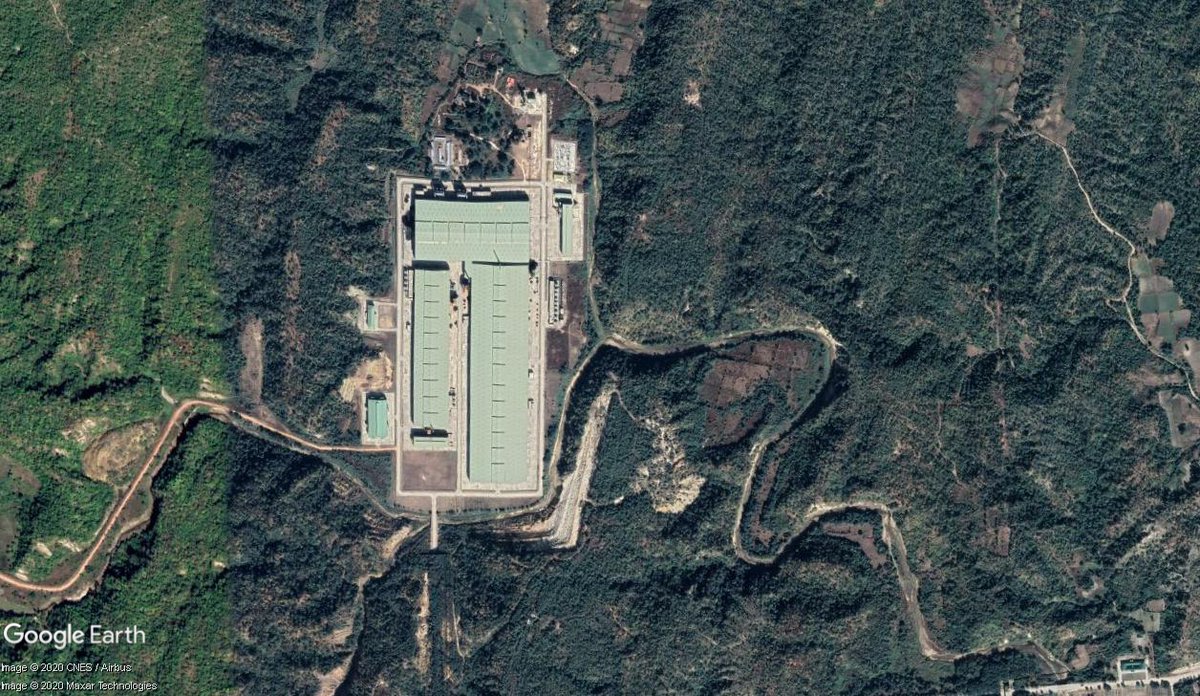
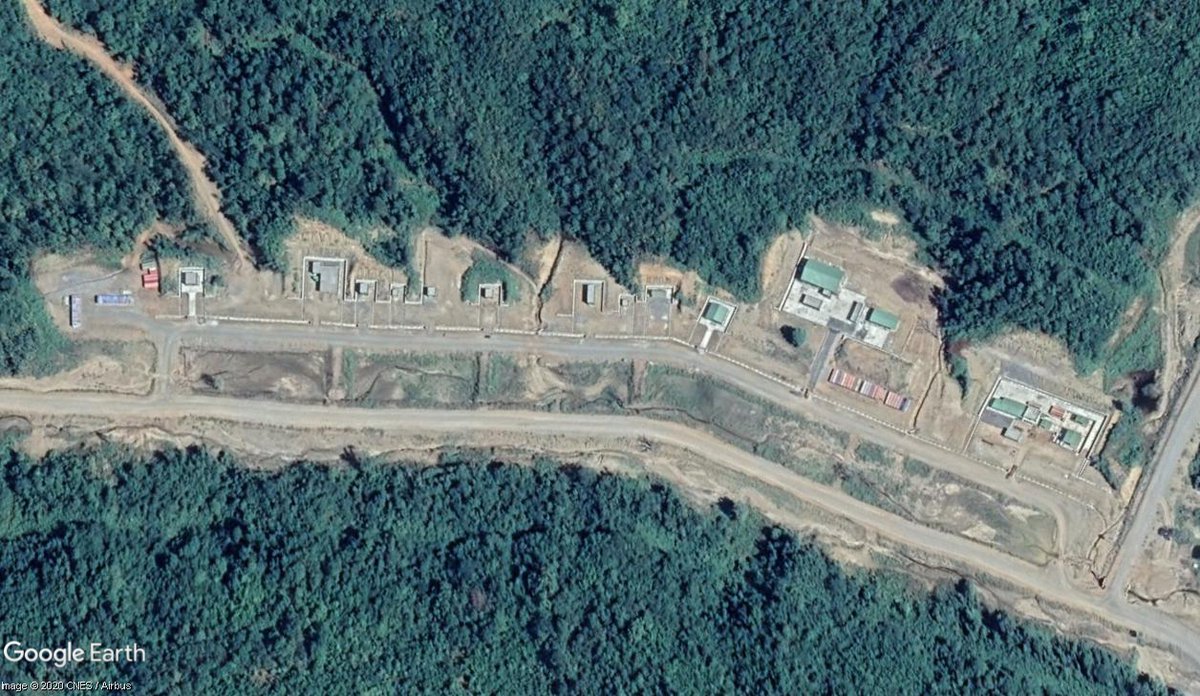
Merry Christmas everyone! What better way to distract yourself these days than a long thread about the largely unnoticed establishment of a vast military production infrastructure in Myanmar!

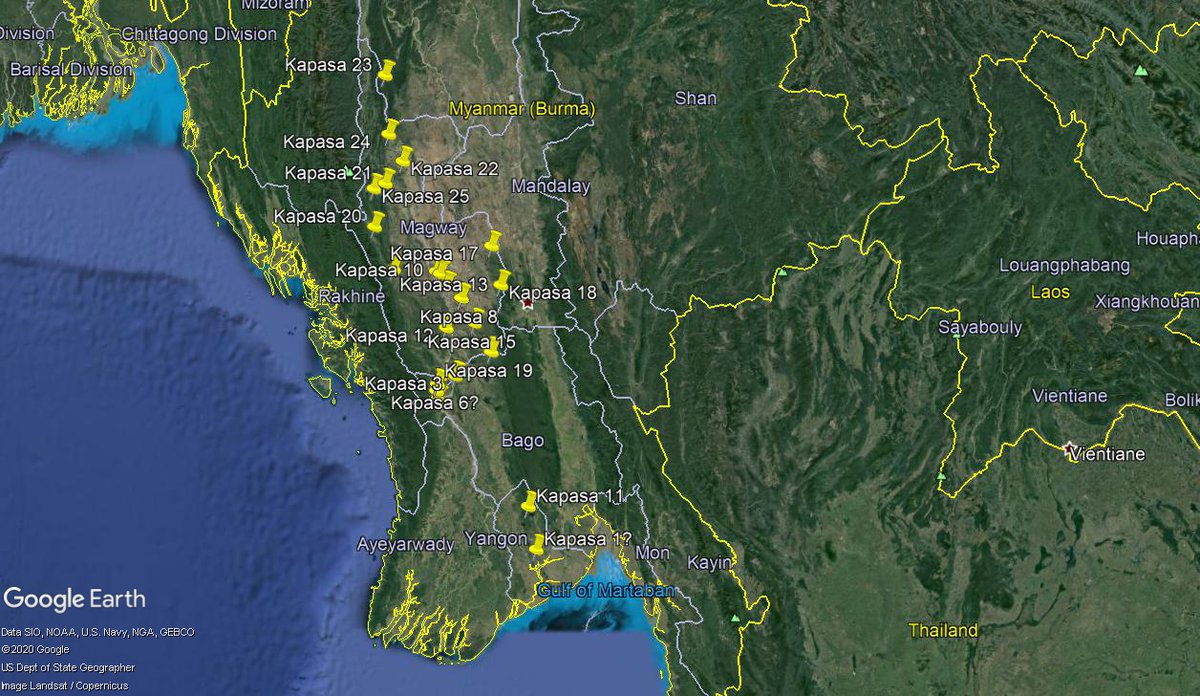
While Myanmar has maintained some military production capabilities for along time, these have traditionally been rather limited. Only in the last two decades has this infrastructure been vastly expanded with the country now mustering at least 25 factories.
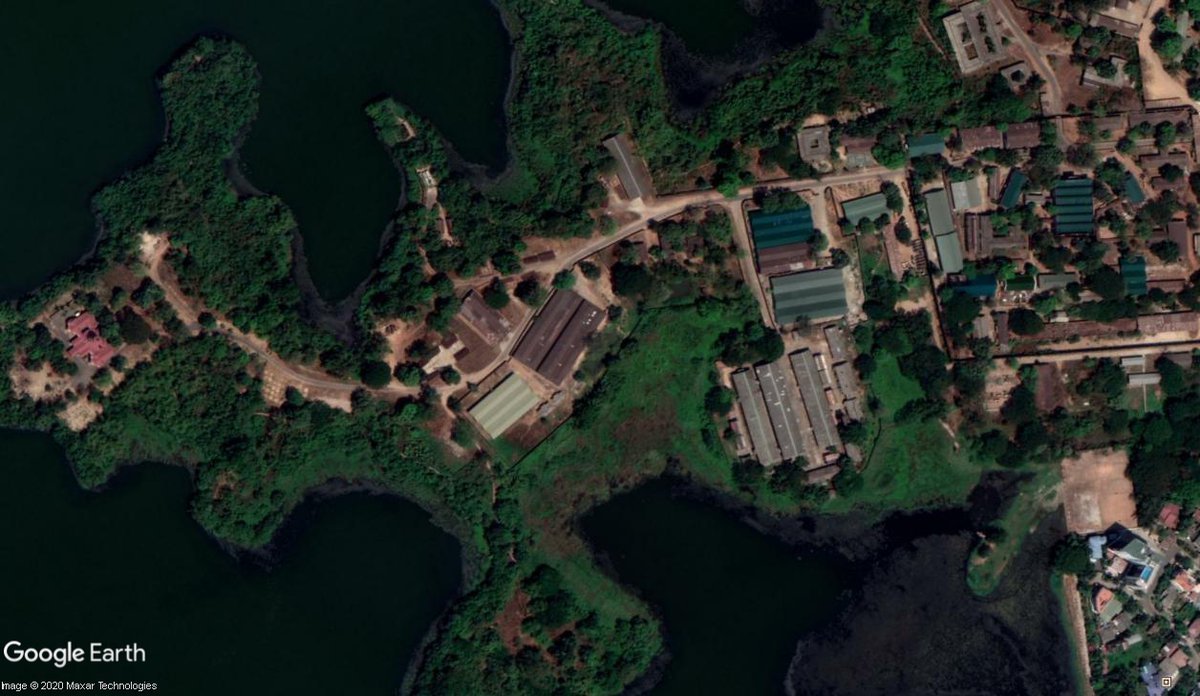
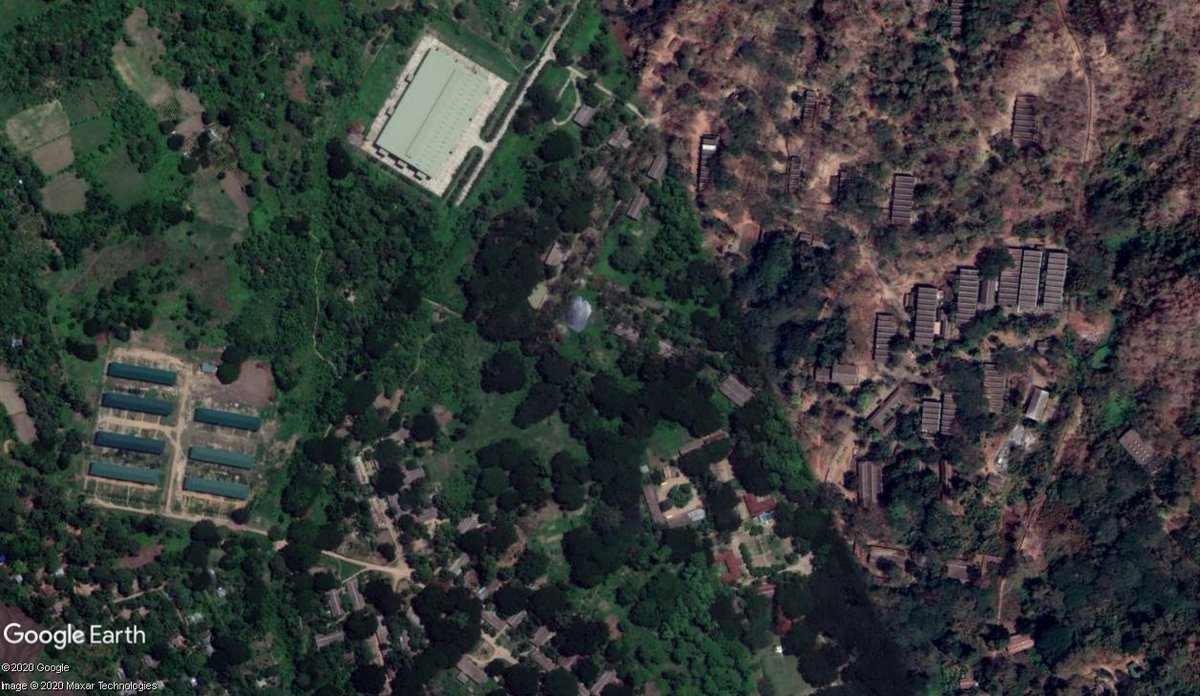
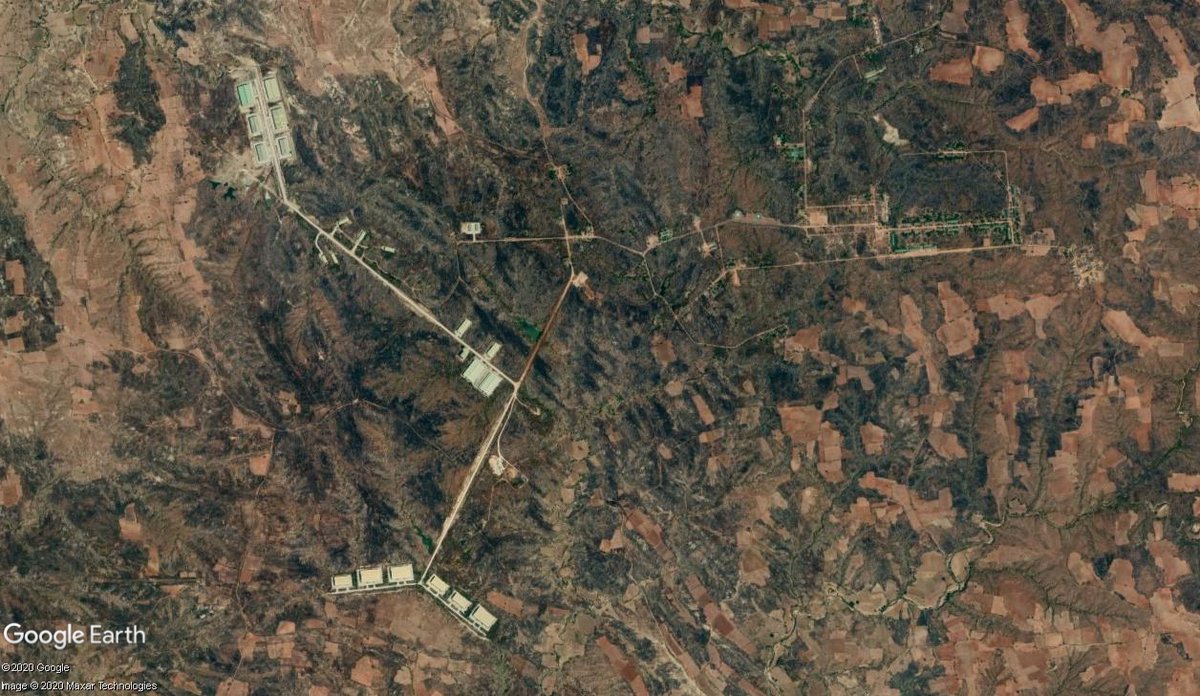
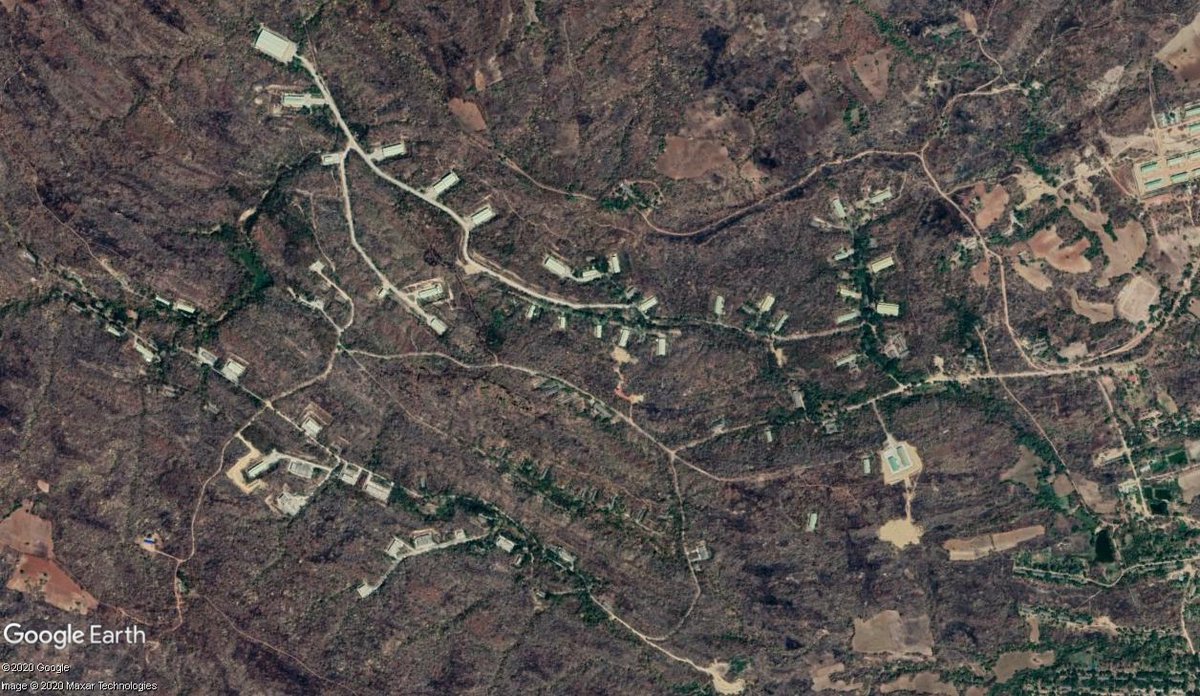
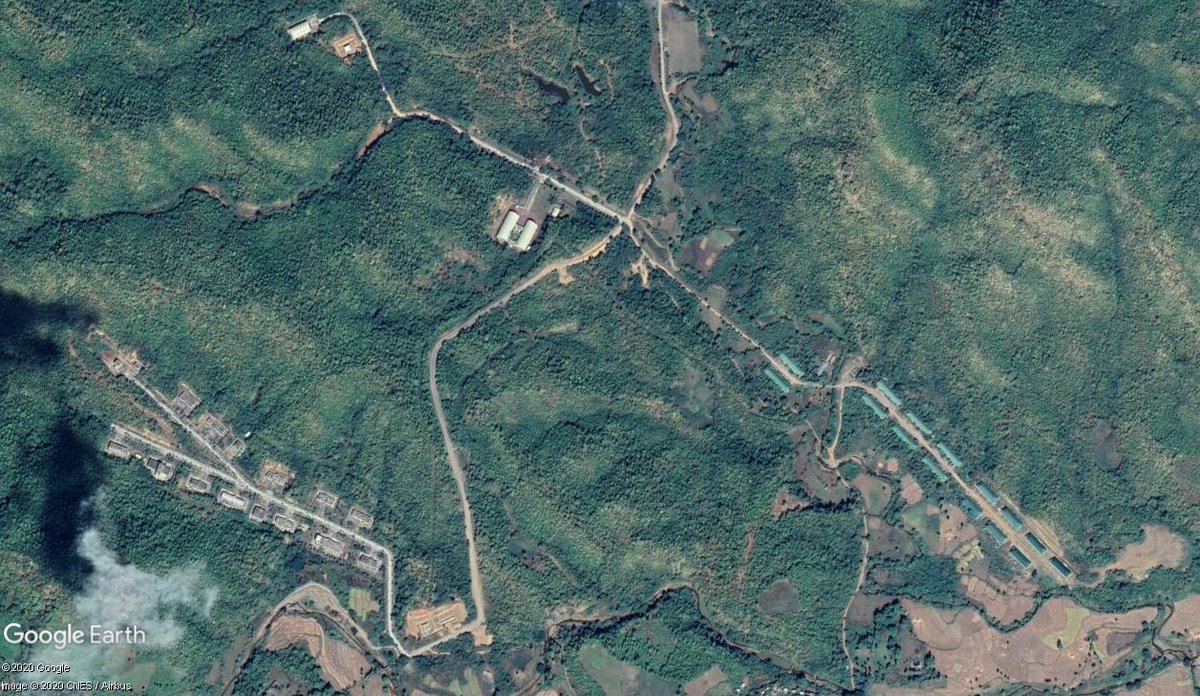
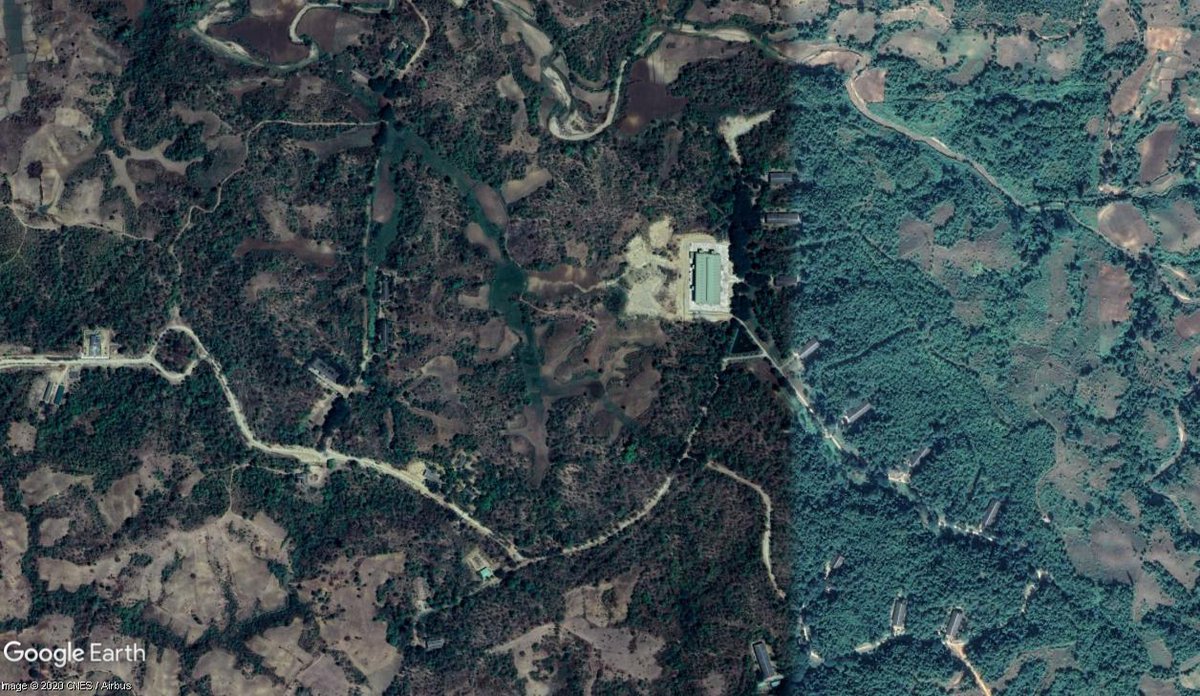
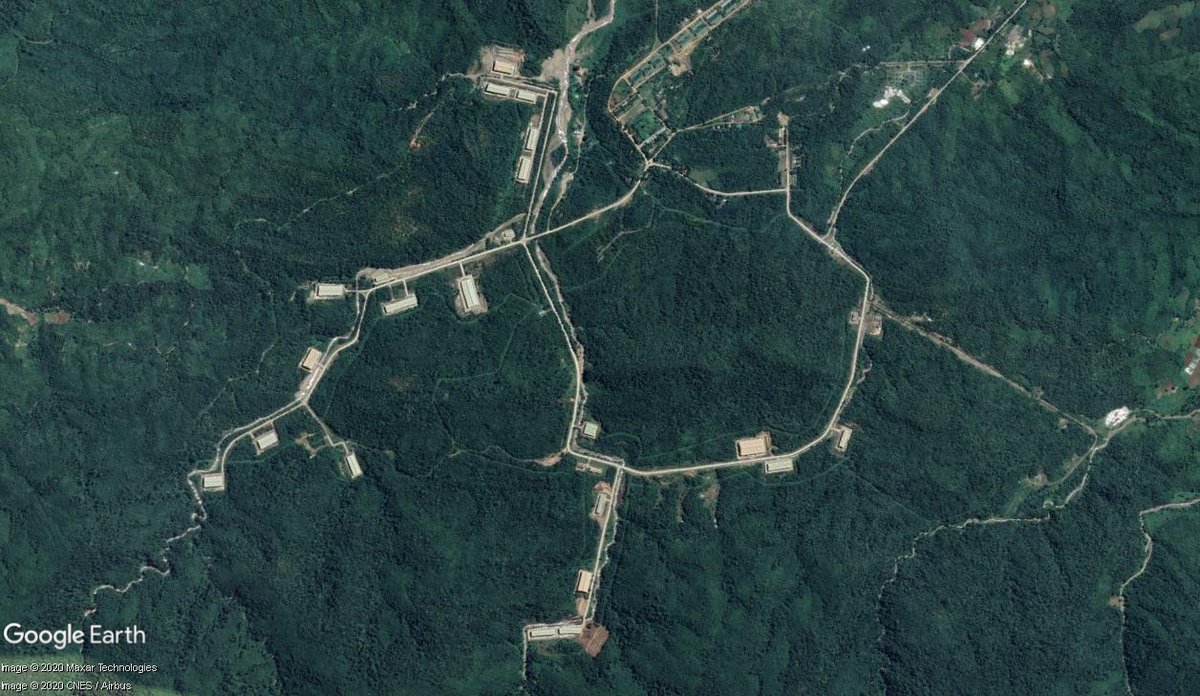
These facilities are surprisingly large and usually built in remote jungle areas of the country with on-site housing for workers. Maintained by the Directorate of Defence Industries, they are known by their Burmese acronym Ka Pa Sa and numbered.
Different sources were used for geolocation. A few sites have previously been discussed in the OSINT community. Some locations were mentioned in media reports involving land disputes, others were included in reports about Myanmar's national electricity grid.
This highly recommended article by Bertil Lintner also included several locations. So here we go...
https://t.co/pOkUV5H7LS
Ka Pa Sa 1. 16.838736° 96.149553°
Ka Pa Sa 2. 19.928915° 95.009777°
Ka Pa Sa 3. 18.789831° 95.196294°
Ka Pa Sa 5. 18.530709° 94.992593°
Ka Pa Sa 6 and 16 should be located in this broader area 18.687068° 94.985989°
Ka Pa Sa 8. 19.659741° 95.265244°
Potentially, the location of Ka Pa Sa 9. 18.618588° 94.974167°
The vast Ka Pa Sa 10 complex. 19.955830° 94.955285°
Potentially, the location of Ka Pa Sa 11. 17.326922° 96.059000°
Ka Pa Sa 12. 19.332532° 95.090041°
Ka Pa Sa 13. 19.792797° 95.085368°
Ka Pa Sa 14. This site has been alleged to be a North Korean-built missile factory. 19.988155° 94.444311°
https://t.co/G39GzLoo2E
Ka Pa Sa 15. 19.382914° 95.426527°
Ka Pa Sa 17. 20.240501° 95.621074°
Ka Pa Sa 18.19.801689° 95.739490°
Ka Pa Sa 19. 19.070693° 95.639281°
Ka Pa Sa 20. 20.465197° 94.203017°
Ka Pa Sa 21, whose area stretches for almost 10km. 20.949352° 94.348304°
The vast Ka Pa Sa 22 facility. 21.199831° 94.544206°
Ka Pa Sa 23. 22.142037° 94.307229°
Ka Pa Sa 24. This facility has previously been discussed as a potential CW production site. 21.498840° 94.368768°
https://t.co/9LbfEnpELf
Ka Pa Sa 25. 20.879103° 94.201113°
End.

More from Government

Which metric is a better predictor of the severity of the fall surge in US states?

1) Margin of Democrat victory in Nov 2020 election
or
2) % infected through Sep 1, 2020

Can you guess which plot is which?


The left plot is based on the % infected through Sep 1, 2020. You can see that there is very little correlation with the % infected since Sep 1.

However, there is a *strong* correlation when using the margin of Biden's victory (right).

Infections % from
https://t.co/WcXlfxv3Ah.


This is the strongest single variable I've seen in being able to explain the severity of this most recent wave in each state.

Not past infections / existing immunity, population density, racial makeup, latitude / weather / humidity, etc.

But political lean.

One can argue that states that lean Democrat are more likely to implement restrictions/mandates.

This is valid, so we test this by using the Government Stringency Index made by @UniofOxford.

We also see a correlation, but it's weaker (R^2=0.36 vs 0.50).

https://t.co/BxBBKwW6ta


To avoid look-ahead bias/confounding variables, here is the same analysis but using 2016 margin of victory as the predictor. Similar results.

This basically says that 2016 election results is a better predictor of the severity of the fall wave than intervention levels in 2020!

You May Also Like

MDZS is laden with buddhist references. As a South Asian person, and history buff, it is so interesting to see how Buddhism, which originated from India, migrated, flourished & changed in the context of China. Here's some research (🙏🏼 @starkjeon for CN insight + citations)

1. LWJ’s sword Bichen ‘is likely an abbreviation for the term 躲避红尘 (duǒ bì hóng chén), which can be translated as such: 躲避: shunning or hiding away from 红尘 (worldly affairs; which is a buddhist teaching.) (
https://t.co/zF65W3roJe) (abbrev. TWX)

2. Sandu (三 毒), Jiang Cheng’s sword, refers to the three poisons (triviṣa) in Buddhism; desire (kāma-taṇhā), delusion (bhava-taṇhā) and hatred (vibhava-taṇhā).

These 3 poisons represent the roots of craving (tanha) and are the cause of Dukkha (suffering, pain) and thus result in rebirth.

Interesting that MXTX used this name for one of the characters who suffers, arguably, the worst of these three emotions.

3. The Qian kun purse “乾坤袋 (qián kūn dài) – can be called “Heaven and Earth” Pouch. In Buddhism, Maitreya (मैत्रेय) owns this to store items. It was believed that there was a mythical space inside the bag that could absorb the world.” (TWX)