The power helped the attorney general to manage this system - knitting adjudications, rulemaking, & other decisions into one coherent immigration policy framework.
Even those casually following immigration are likely aware of the active role Trump's attorneys general played.
This participation entailed unprecedented use of "referral & review"... a power with a problematic & twisted journey beyond Trump...
More in my report out today⬇️
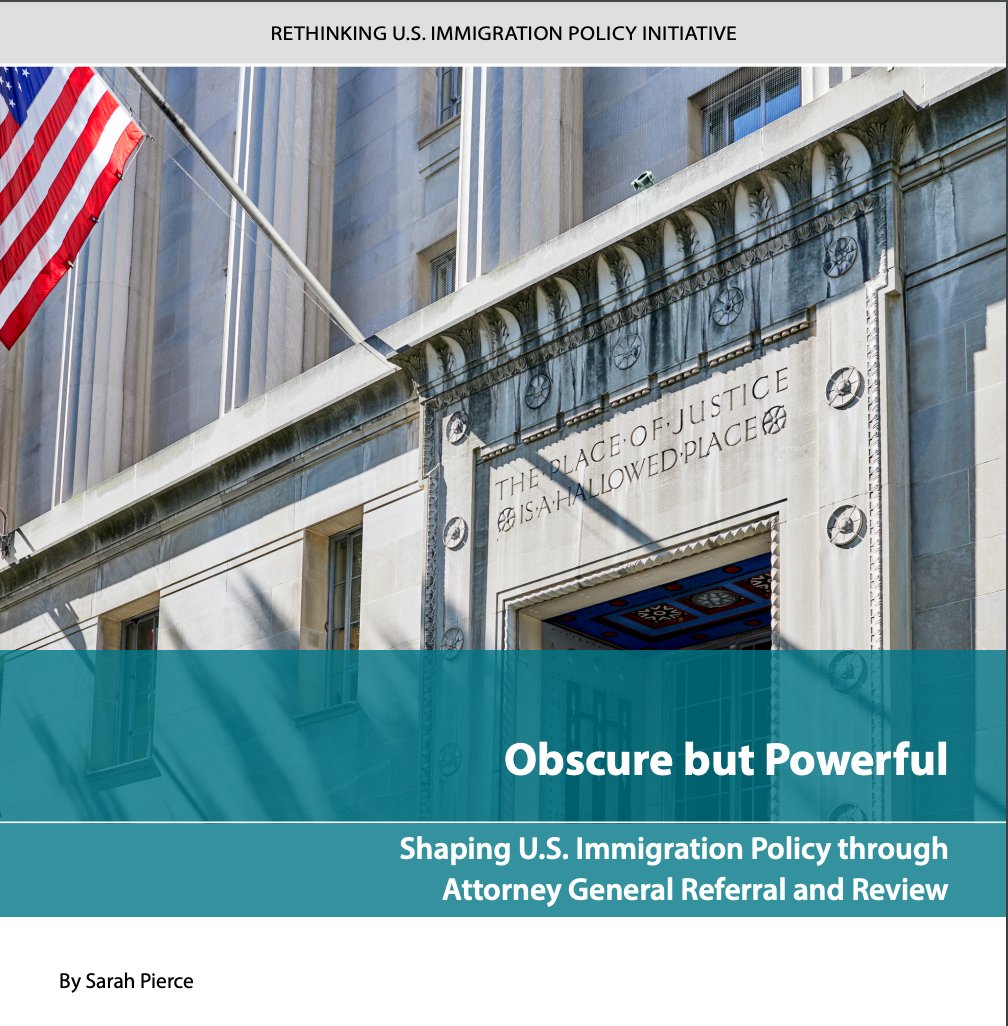
The power helped the attorney general to manage this system - knitting adjudications, rulemaking, & other decisions into one coherent immigration policy framework.
Allowing the attorney general—the country’s chief law enforcement officer—to intercede in individual immigration cases has raised questions about the true independence of the immigration adjudication system.
Under the government restructuring following the 9/11 terrorist attacks, most of the immigration system was moved out of the Justice Department.
The attorney general was left with the immigration court system and...referral & review.
It became their tool to affect policy.
These decisions even bind DHS, now the lead agency on immigration.
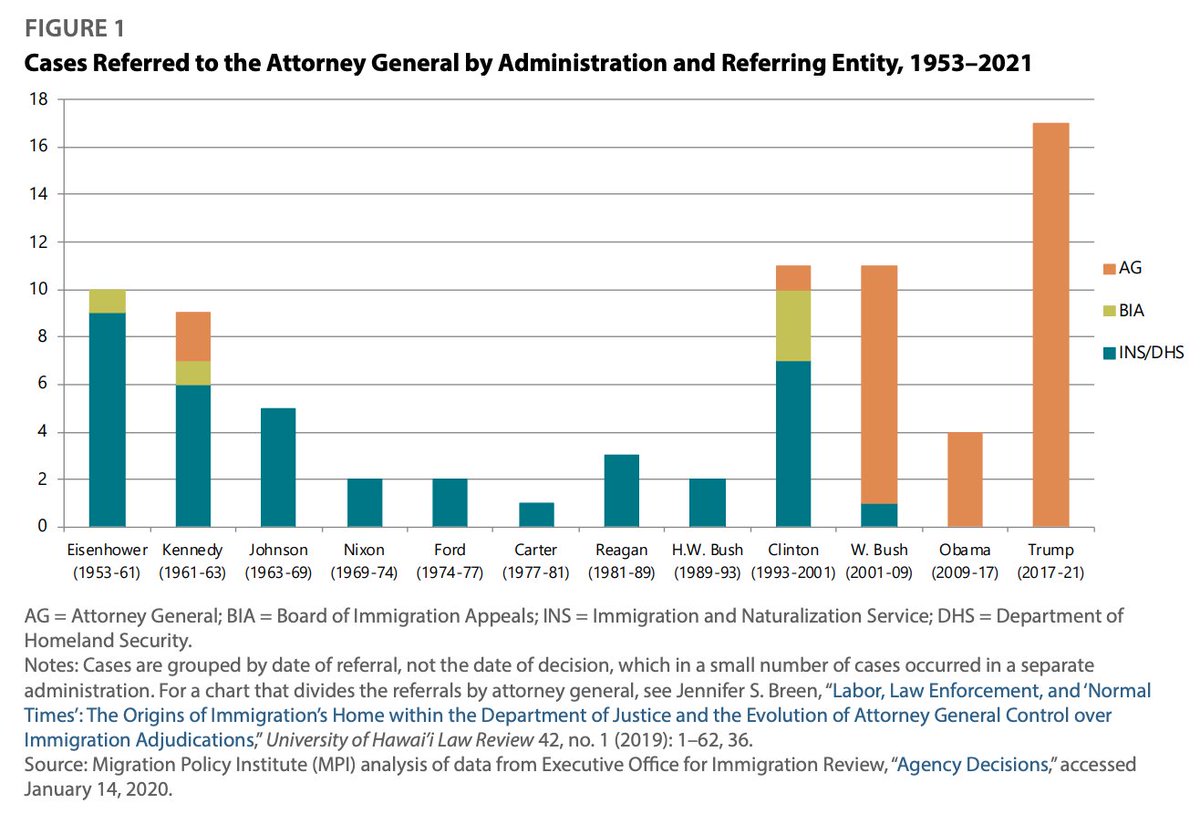
With the Trump administration's aggressive immigration agenda & strategy of pursuing a wide range of administrative tools, attorneys general under Trump self-refer more decisions than under any prior administration.
This compares to 4 during the entirety of the Obama
administration and 10 under George W. Bush (both administrations that lasted two terms rather than one).
Given its speed and flexibility, referral & review could be a huge help.
A mandatory process requiring transparency & briefing could be an important step in the right direction.
https://t.co/ndMANPaj5o
More from Government

How does a government put a legislation on 'hold'? Is there any constitutional mechanism for the executive to 'pause' a validly passed legislation? Genuine Koshan.
So a committee of 'wise men/women' selected by the SC will stand in judgement over the law passed by
Here is the thing - a law can be stayed based on usual methods, it can be held unconstitutional based on violation of the Constitution. There is no shortcut to this based on the say so of even a large number of people, merely because they are loud.
Tomorrow can all the income tax payers also gather up at whichever maidan and ask for repealing the income tax law? It hurts us and we can protest quite loudly.
How can a law be stayed or over-turned based on the nuisance value of the protestors? It is anarchy to allow that.
CJI: our intention is to see if we can bring about an amicable resolution to the problem. That is why we asked you why don't you put the #FarmBills on hold. You want time for negotiation. If there is some sense of responsibility showing that you will not implement the laws
— Bar & Bench (@barandbench) January 11, 2021
So a committee of 'wise men/women' selected by the SC will stand in judgement over the law passed by
CJI: .....then we can form a committee with ICAR members to look into this. Till then you can continue to put the law on hold. Why will you insist on continuing the law anyhow
— Bar & Bench (@barandbench) January 11, 2021
Here is the thing - a law can be stayed based on usual methods, it can be held unconstitutional based on violation of the Constitution. There is no shortcut to this based on the say so of even a large number of people, merely because they are loud.
AG Venugopal: none of the petitions point to any provision of three farm acts stating that it is unconstitutional
— Bar & Bench (@barandbench) January 11, 2021
CJI: we are not declaring it unconstitutional
AG: laws cannot be stayed. This is drastic
Tomorrow can all the income tax payers also gather up at whichever maidan and ask for repealing the income tax law? It hurts us and we can protest quite loudly.
How can a law be stayed or over-turned based on the nuisance value of the protestors? It is anarchy to allow that.