It wasn’t as much that Grandpa Krittr (GK) didn’t understand her as he didn’t understand women in general. GK was the youngest of 8 kids born to a Volga German wheat farming family in Eastern Washington. He was the only one born in the US after 1/
This will be my writing project for the day - hold on...
Fair warning: the Krittr family saga is not The Crown. Not even close. OTOH, it's not the Kartrashians either.
It wasn’t as much that Grandpa Krittr (GK) didn’t understand her as he didn’t understand women in general. GK was the youngest of 8 kids born to a Volga German wheat farming family in Eastern Washington. He was the only one born in the US after 1/
[Side note: how the Volga Germans got to the US is an interesting story by itself. Short version is that they were all
Great grandpa Krittr (GGK) died long before I was born, but supposedly he was a good farmer, terrible to his wife and children,
So, the formative incident in GK’s life: as an elementary school boy, he had a mad crush on the somewhat older girl who lived on the farm next door. She was in high school, so it was always going to be hopeless for him.
GK was devastated. Never set foot in a church
He and several brothers volunteered for WWI. One brother was wounded in the face & had an interesting but kind of dashing scar.
“Join the Navy and see the world” posters spent 10 years in the Navy traveling literally all over the world. South Pacific, Australia, South America, Yangtze river boat, Europe, everywhere.
He came back in 1927.
Ma Krittr (MK) came right before the Depression, fortunately GK was talented mechanically and was never unemployed
[Hold on, forgot to include obligatory photo of GK during Navy days.]

GK didn’t understand women, especially girls, didn’t have time for MK as he was by the mid 1930s becoming very involved in the Seattle trade unionist movement. Very involved. Very very involved. So, yeah, she never got the attention
[Years after GK retired, I ended up working for a couple years as a laborer for the company he worked for while I attended college at night. There were still a few people there who remembered him - to a man,
MK ended up marrying someone (Fucked Up Birth Father - FUBF) that GK couldn’t have hated any more than he did.
Anyway, I came along when FUBF was finishing his residency. My earliest memories are that I hated him. Stone cold psychopath. Physically abusive. Threw a knife at my
We moved into a tiny
[Swear to god this is almost done.]
MK eventually remarried, this time
Finally, to get to the point, yeah, MK always had an issue that I’d become close to GK - I
[Are you sorry you asked?]
[Grandpa Krittr and mini-me.]

More from For later read

A name has caught the radar of agencies investigating #GretaToolkit- FRIEDRICH PIETER. Delhi Police expressed shock over the appearance of Pieter's name as "Who to Follow" in g-doc as he is under cops' scanner since 2006 for his Anti-India activities. Some shocking details..
1/9
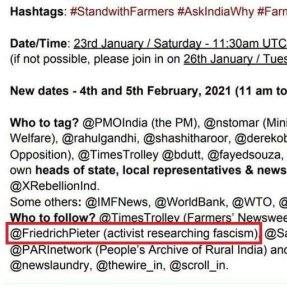
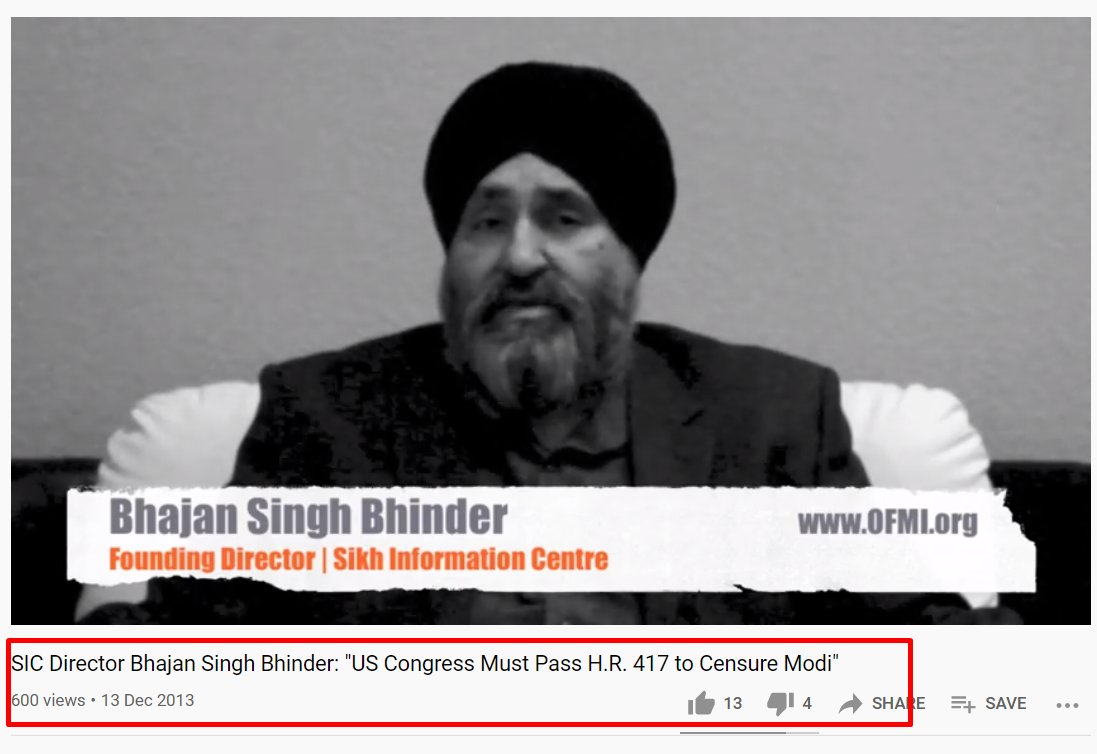
Pieter is close associate (read hired by) Bhajan Singh Bhindar, founder of OFMI (Org for Minorities of India) that considers itself an anti-Gandhi 'crusader' & is Pro-Khalistan. They also campaigned to free Bhullar (convicted Khalistani terr0r!st) & lobby against Modi in US.
2/9
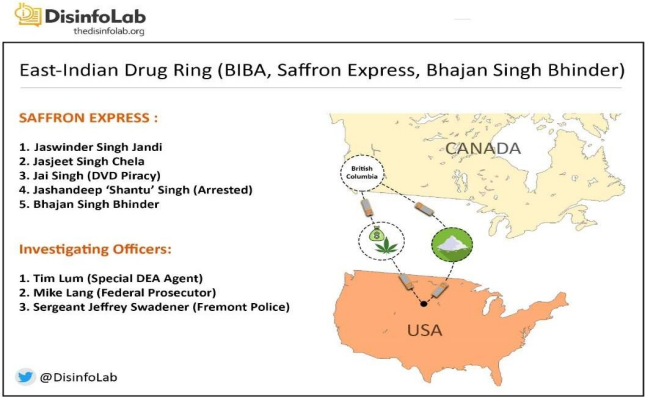
Bhinder has alleged connection with ISI & had records of owning inter-state drugs cartel & DVD piracy for terr0r funding. They also took control Fremont Gurudwara, US back in 2003 for millions of donation. Details of this 'Info-War' by @DisinfoLab
https://t.co/oIDFSoaDX2
3/9
Back to Pieter. Take a glance at his work. His TL is filled with anti-BJP/RSS/Modi propaganda. From his speeches to articles, everything have few keywords in common- RSS/Fascism/gen0c!de/k!ll!ing/Kashmir/Hindutva, as if running a non-stop unrest in India is his bread & butter
4/9
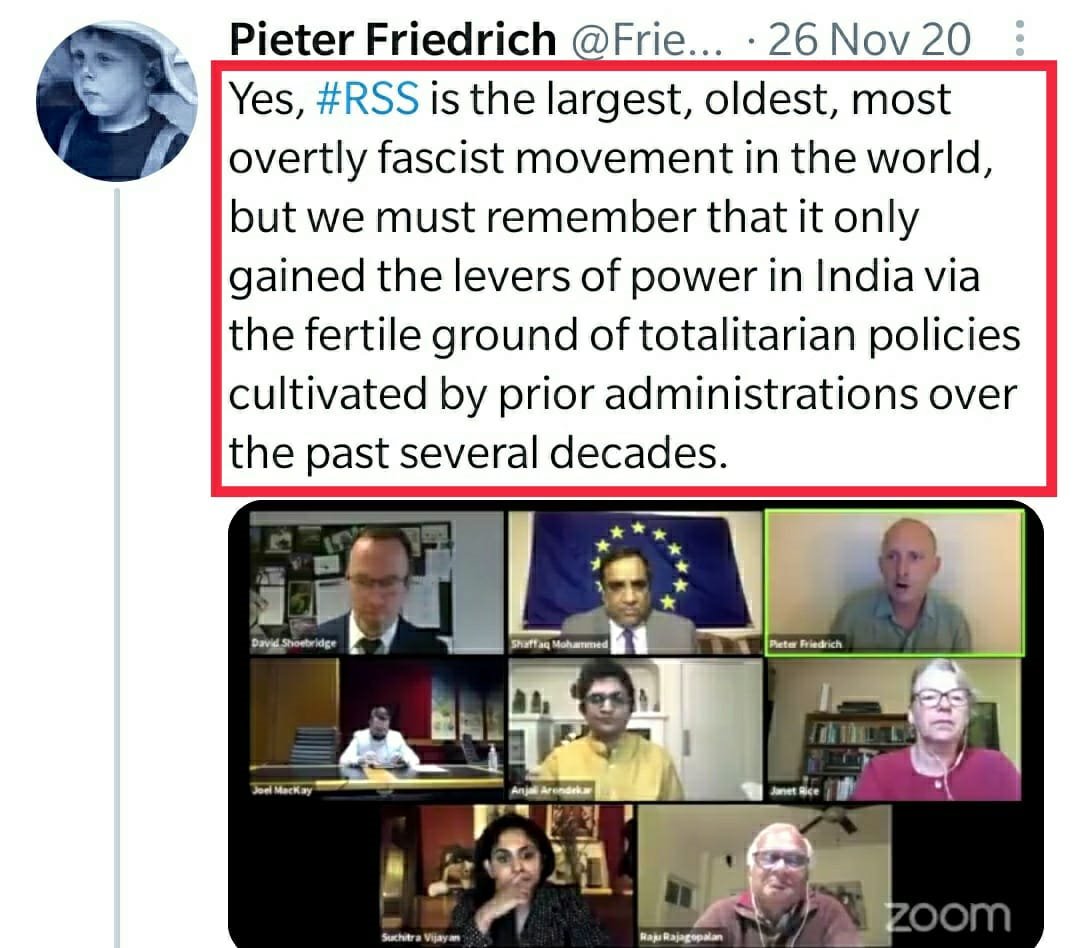
He picks every topic with an extreme narrative that potentially hurts integrity of nation, be it Kashmir,CAA,1984 & with his recent projects- Farmer protest & campaigning heavily against Sri Kulkarni. Despite all, Kulkarni appointed as Chief of Ext Affairs at Biden admin.
5/9
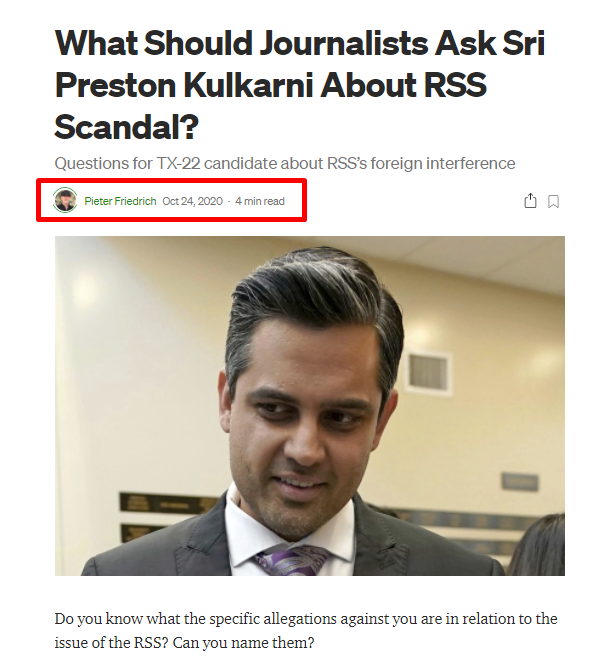
1/9
Pieter is close associate (read hired by) Bhajan Singh Bhindar, founder of OFMI (Org for Minorities of India) that considers itself an anti-Gandhi 'crusader' & is Pro-Khalistan. They also campaigned to free Bhullar (convicted Khalistani terr0r!st) & lobby against Modi in US.
2/9
Bhinder has alleged connection with ISI & had records of owning inter-state drugs cartel & DVD piracy for terr0r funding. They also took control Fremont Gurudwara, US back in 2003 for millions of donation. Details of this 'Info-War' by @DisinfoLab
https://t.co/oIDFSoaDX2
3/9
Back to Pieter. Take a glance at his work. His TL is filled with anti-BJP/RSS/Modi propaganda. From his speeches to articles, everything have few keywords in common- RSS/Fascism/gen0c!de/k!ll!ing/Kashmir/Hindutva, as if running a non-stop unrest in India is his bread & butter
4/9
He picks every topic with an extreme narrative that potentially hurts integrity of nation, be it Kashmir,CAA,1984 & with his recent projects- Farmer protest & campaigning heavily against Sri Kulkarni. Despite all, Kulkarni appointed as Chief of Ext Affairs at Biden admin.
5/9


Wow, Morgan McSweeney again, Rachel Riley, SFFN, Center for Countering Digital Hate, Imran Ahmed, JLM, BoD, Angela Eagle, Tracy-Ann Oberman, Lisa Nandy, Steve Reed, Jon Cruddas, Trevor Chinn, Martin Taylor, Lord Ian Austin and Mark Lewis. #LabourLeaks #StarmerOut 24 tweet🧵
Morgan McSweeney, Keir Starmer’s chief of staff, launched the organisation that now runs SFFN.
The CEO Imran Ahmed worked closely with a number of Labour figures involved in the campaign to remove Jeremy as leader.
Rachel Riley is listed as patron. https://t.co/nGY5QrwBD0

SFFN claims that it has been “a project of the Center For Countering Digital Hate” since 4 May 2020. The relationship between the two organisations, however, appears to date back far longer. And crucially, CCDH is linked to a number of figures on the Labour right. #LabourLeaks
Center for Countering Digital Hate registered at Companies House on 19 Oct 2018, the organisation’s only director was Morgan McSweeney – Labour leader Keir Starmer’s chief of staff. McSweeney was also the campaign manager for Liz Kendall’s leadership bid. #LabourLeaks #StarmerOut
Sir Keir - along with his chief of staff, Morgan McSweeney - held his first meeting with the Jewish Labour Movement (JLM). Deliberately used the “anti-Semitism” crisis as a pretext to vilify and then expel a leading pro-Corbyn activist in Brighton and Hove
Morgan McSweeney, Keir Starmer’s chief of staff, launched the organisation that now runs SFFN.
The CEO Imran Ahmed worked closely with a number of Labour figures involved in the campaign to remove Jeremy as leader.
Rachel Riley is listed as patron. https://t.co/nGY5QrwBD0
SFFN claims that it has been “a project of the Center For Countering Digital Hate” since 4 May 2020. The relationship between the two organisations, however, appears to date back far longer. And crucially, CCDH is linked to a number of figures on the Labour right. #LabourLeaks
Center for Countering Digital Hate registered at Companies House on 19 Oct 2018, the organisation’s only director was Morgan McSweeney – Labour leader Keir Starmer’s chief of staff. McSweeney was also the campaign manager for Liz Kendall’s leadership bid. #LabourLeaks #StarmerOut
Sir Keir - along with his chief of staff, Morgan McSweeney - held his first meeting with the Jewish Labour Movement (JLM). Deliberately used the “anti-Semitism” crisis as a pretext to vilify and then expel a leading pro-Corbyn activist in Brighton and Hove