its really a vaporwave time rn

no other genre of music is going to fit the many overlapping things that are materializing or pressing into ur life in general, for the foreseeable future, from where im standing. if youre unacquainted or only know the hits u can start here:

i know people feel like its “played out” or that “it happened” already but really its the opposite. vaporwave was premonitory. it was seeing into an aspect of the future (now present) that is never going away. it illuminates this in a unique way, honestly, as only it can
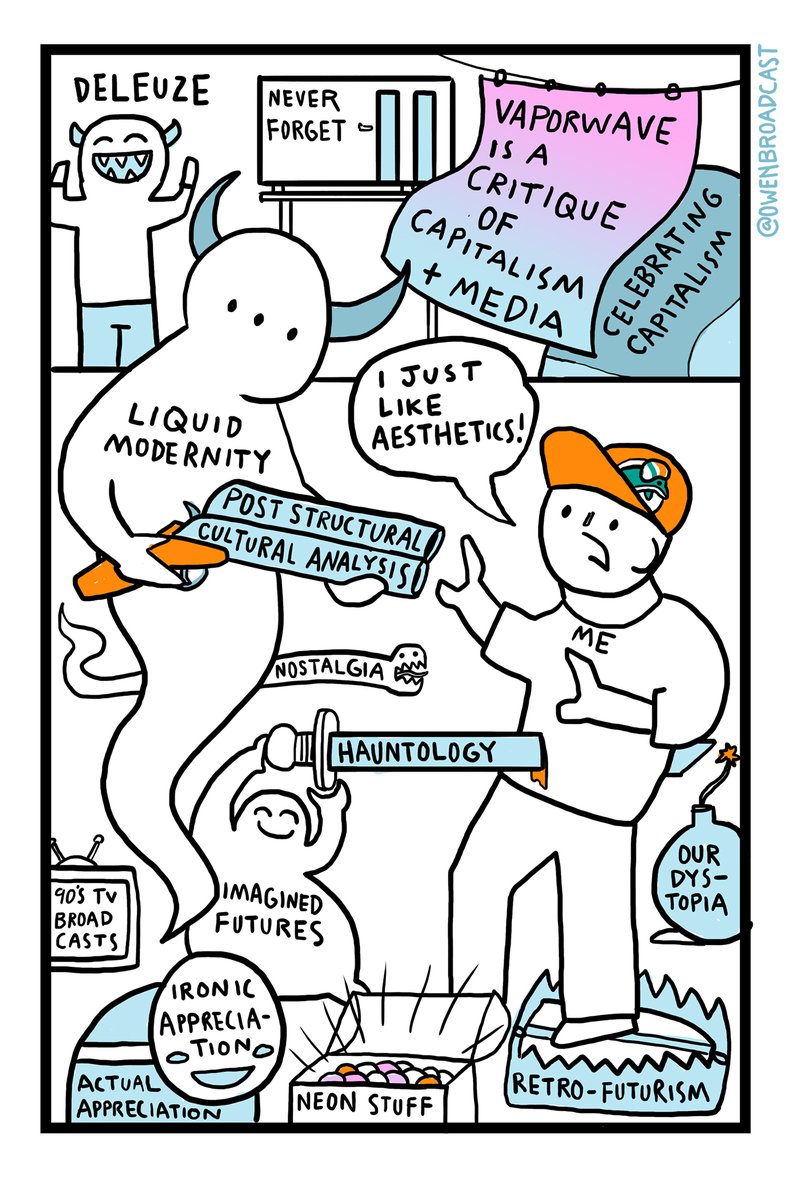
people talk about how vaporwave is like a critique of consumerism or has XYZ view on capitalism but thats really not it imo. overall it is metapolitical and i think trying to shoehorn a political position into it is kind of missing what it points to, which is now everywhere
imo vaporwave in general (visual, music, the vibe in general) is about being [spiritually in exile] from [the reality of the future], that reality being opposed to [the idea or former idea of the future]. i try and not go full word salad but thats the most simple way to phrase it
physically, youre here, youre in this time and place. but spiritually, you, are in some form of exile or at least altered state. theres all this tech, and new modes of life, but somewhere along the way the path forked, + physically, ur here, but spiritually, ur on the other path
that is at least how i experience it. most aesthetics are in some way about being together, they contain at least in some ways modes of social interaction within them, even if its subtextual. vaporwave is the aesthetic of being alone in a post future stage. thats just what it is
this is very “class in modernity 101” so some people are like “i know, i read liquid modernity” but some people dont know about that stuff or havent played out the full ramifications of it. the future happened, and its kind of lame, thats what vaporwave is about to me.
i think that although in some ways this has “been covered” by certain academics i actually think that was all theoretical and now we’re seeing how it actually is manifesting for the average person in real time. the unique thing from my view is that it is a spiritual phenomena.
imo we have also just very recently crossed over another threshold in terms of the internet-ization of society. i have posted a lot about how the internet is more real than real life, but now that the internet has become social media theres a second “wave” of that happening.
does everyone need a reminder that if you have any remembrance of pre-internet life OR if you have any metacognition about how the internet affects you, you are basically another “type” of person, distinct from those who still think we’re in “real life”, when clearly, we’re not
could go on but i have some stuff to do (that means sitting at my computer, because, u know). anyway its all just worth keeping in mind because making things cliche is part of how theyre assumed into the general consensus + then no one “really” thinks about it, that happens often
rerun
(the theological and spiritual implications of all this have not been well explored)

More from For later read

I’ve asked Byers to clarify, but as I read this tweet, it seems that Bret Stephens included an unredacted use of the n-word in his column this week to make a point, and the column got spiked—maybe as a result?


Four times. The column used the n-word (in the context of a quote) four times. https://t.co/14vPhQZktB


For context: In 2019, a Times reporter was reprimanded for several incidents of racial insensitivity on a trip with high school students, including one in which he used the n-word in a discussion of racial slurs.

That incident became public late last month, and late last week, after 150 Times employees complained about how it had been handled, the reporter in question resigned.

In the course of all that, the Times' executive editor said that the paper does not "tolerate racist language regardless of intent.” This was the quote that Bret Stephens was pushing back against in his column. (Which, again, was deep-sixed by the paper.)

You May Also Like

Great article from @AsheSchow. I lived thru the 'Satanic Panic' of the 1980's/early 1990's asking myself "Has eveyrbody lost their GODDAMN MINDS?!"


The 3 big things that made the 1980's/early 1990's surreal for me.

1) Satanic Panic - satanism in the day cares ahhhh!

2) "Repressed memory" syndrome

3) Facilitated Communication [FC]

All 3 led to massive abuse.

"Therapists" -and I use the term to describe these quacks loosely - would hypnotize people & convince they they were 'reliving' past memories of Mom & Dad killing babies in Satanic rituals in the basement while they were growing up.

Other 'therapists' would badger kids until they invented stories about watching alligators eat babies dropped into a lake from a hot air balloon. Kids would deny anything happened for hours until the therapist 'broke through' and 'found' the 'truth'.

FC was a movement that started with the claim severely handicapped individuals were able to 'type' legible sentences & communicate if a 'helper' guided their hands over a keyboard.
“We don’t negotiate salaries” is a negotiation tactic.

Always. No, your company is not an exception.

A tactic I don’t appreciate at all because of how unfairly it penalizes low-leverage, junior employees, and those loyal enough not to question it, but that’s negotiation for you after all. Weaponized information asymmetry.

Listen to Aditya


And by the way, you should never be worried that an offer would be withdrawn if you politely negotiate.

I have seen this happen *extremely* rarely, mostly to women, and anyway is a giant red flag. It suggests you probably didn’t want to work there.

You wish there was no negotiating so it would all be more fair? I feel you, but it’s not happening.

Instead, negotiate hard, use your privilege, and then go and share numbers with your underrepresented and underpaid colleagues. […]