
FUCK YEAH, AMERICA!!!!
You know what?
I *will* without a doubt regret this.
But I'm going to watch Mike Pence read out the last returns before I go to sleep.
"Joseph Biden and Kamala Harris will be the President and Vice President according to the ballots given to us."
More from Mike Dunford
Yes, I have seen the thing about Texas suing other states over the election. Yes, the US Supreme Court has original and exclusive jurisdiction over cases between states.
No, this is not a thing that will change the election. At all.
If this is real - and I do emphasize the if - it is posturing by the elected Republican "leadership" of Texas in an attempt to pander to a base that has degraded from merely deplorable to utterly despicable.
Apparently, it is real. For a given definition of real, anyway. As Steve notes, the Texas Solicitor General - that's the lawyer who is supposed to represent the state in cases like this - has noped out and the AG is counsel of
Although - again - I'm curious as to the source. I'm seeing no press release on the Texas AG's site; I'm wondering if this might not be a document released by whoever the "special counsel" to the AG is - strange situation.
Doesn't matter. The Supreme Court is Supremely Unlikely to take this case - their jurisdiction is exclusive, but it's also discretionary.
Meaning, for nonlawyers:
SCOTUS is the only place where one state can sue another, but SCOTUS can and often does decline to take the case.
No, this is not a thing that will change the election. At all.
If this is real - and I do emphasize the if - it is posturing by the elected Republican "leadership" of Texas in an attempt to pander to a base that has degraded from merely deplorable to utterly despicable.
Apparently, it is real. For a given definition of real, anyway. As Steve notes, the Texas Solicitor General - that's the lawyer who is supposed to represent the state in cases like this - has noped out and the AG is counsel of
It looks like we have a new leader in the \u201ccraziest lawsuit filed to purportedly challenge the election\u201d category:
— Steve Vladeck (@steve_vladeck) December 8, 2020
The State of Texas is suing Pennsylvania, Georgia, Michigan, and Wisconsin *directly* in #SCOTUS.
(Spoiler alert: The Court is *never* going to hear this one.) pic.twitter.com/2L4GmdCB6I
Although - again - I'm curious as to the source. I'm seeing no press release on the Texas AG's site; I'm wondering if this might not be a document released by whoever the "special counsel" to the AG is - strange situation.
Doesn't matter. The Supreme Court is Supremely Unlikely to take this case - their jurisdiction is exclusive, but it's also discretionary.
Meaning, for nonlawyers:
SCOTUS is the only place where one state can sue another, but SCOTUS can and often does decline to take the case.
This is an excellent question, and it's something that I've thought about some over the last couple of months.
Honestly, I think the answer is that the rationales for these rulings are not likely to unreasonably harm meritorious progressive OR conservative challenges.
The first thing to keep in mind is that, by design, challenges to the outcomes of elections are supposed to be heard by state courts, through the process set out in state law.
That happened this year, and the majority of those challenges were heard on the merits.
The couple of cases where laches determined the outcome of state election challenges were ones where it was pretty clear that the challenges were brought in bad faith - where ballots cast in good faith in reliance on laws that had been in force for some time were challenged.
The PA challenge to Act 77 is one example. The challengers, some of whom had voted for passage of the bill, didn't make use of the initial, direct-to-PA-SCt challenge built into the law or sue pre-election; they waited until post-election.
The WI case is another. That one had a challenge to ballots cast using a form that had been in use for a literal decade.
Those are cases where laches is clear - particularly the prejudice element.
Honestly, I think the answer is that the rationales for these rulings are not likely to unreasonably harm meritorious progressive OR conservative challenges.
Any merit to the notion that the rationales for some of these rulings will harm progressive challenges in future elections?
— Andrew Broering (@AndrewBroering) January 3, 2021
One says laches, another moot, another standing, sometimes with almost the same type of plaintiff.
The first thing to keep in mind is that, by design, challenges to the outcomes of elections are supposed to be heard by state courts, through the process set out in state law.
That happened this year, and the majority of those challenges were heard on the merits.
The couple of cases where laches determined the outcome of state election challenges were ones where it was pretty clear that the challenges were brought in bad faith - where ballots cast in good faith in reliance on laws that had been in force for some time were challenged.
The PA challenge to Act 77 is one example. The challengers, some of whom had voted for passage of the bill, didn't make use of the initial, direct-to-PA-SCt challenge built into the law or sue pre-election; they waited until post-election.
The WI case is another. That one had a challenge to ballots cast using a form that had been in use for a literal decade.
Those are cases where laches is clear - particularly the prejudice element.
Election Litigation Thread - Georgia:
OK, so since my attempt to sit back while Akiva does all the work of going through the latest proof that not only the pro se have fools for lawyers has backfired, let's take a stroll through the motion for injunctive relief.
At the start, I'd note that the motion does not appear to be going anywhere fast - despite the request that they made over 80 hours ago to have the motion heard within 48 hours.
The most recent docket entries are all routine start-of-case stuff.

Why isn't it going anywhere quickly? Allow me to direct your attention to something that my learned colleague Mr. Cohen said
Now I'm not a litigator, but if I had an emergency thing that absolutely had to be heard over a holiday weekend, I'd start by reading the relevant part of the local rules for the specific court in which I am filing my case.
In this case, this bit, in particular, seems relevant:

My next step, if I had any uncertainty at all, would be to find and use the court's after-hours emergency contact info. I might have to work some to find it, but it'll be there. Emergencies happen; there are procedures for them.
And then I'd do exactly what they tell me to do.
OK, so since my attempt to sit back while Akiva does all the work of going through the latest proof that not only the pro se have fools for lawyers has backfired, let's take a stroll through the motion for injunctive relief.
They've also got a brief in support of their injunction motion, but I've got client work that needs doing. Hopefully @questauthority has you covered
— Akiva Cohen (@AkivaMCohen) January 4, 2021
At the start, I'd note that the motion does not appear to be going anywhere fast - despite the request that they made over 80 hours ago to have the motion heard within 48 hours.
The most recent docket entries are all routine start-of-case stuff.
Why isn't it going anywhere quickly? Allow me to direct your attention to something that my learned colleague Mr. Cohen said
Folks, judges DO NOT read complaints or petitions when they are filed, and they DO NOT just up and act on the "requests for relief". If you want something, you need to actually ask the court for it by a motion, not just put it in your "here's what we want if we win" section
— Akiva Cohen (@AkivaMCohen) January 4, 2021
Now I'm not a litigator, but if I had an emergency thing that absolutely had to be heard over a holiday weekend, I'd start by reading the relevant part of the local rules for the specific court in which I am filing my case.
In this case, this bit, in particular, seems relevant:
My next step, if I had any uncertainty at all, would be to find and use the court's after-hours emergency contact info. I might have to work some to find it, but it'll be there. Emergencies happen; there are procedures for them.
And then I'd do exactly what they tell me to do.
I've been trying to think that through - not just legally, but judicially.
The more thinking I do the less serious - and more ludicrous - the entire thing looks. And the more obvious it becomes that this is the proposal of deeply unwell individuals who are not thinking clearly.
On the legal side, I read through the list of emergency powers - the whole list - that was assembled by the Brennan Center. Nothing on that list fits. Nothing comes even
It seems extraordinarily unlikely that any executive order along the lines of what has been discussed would be legal. In this case, it can be taken as a given that one or more targeted jurisdictions would dash right off to the courthouse.
Standing would not, it should go without saying, be likely to be an issue. I doubt redressability would either. I think it's very likely that restraining orders and injunctions would be swiftly issued.
That's the legal side, to the extent it's possible to speculate on that at all at this point. Basically, there's no readily apparent legal basis for such a thing, so it probably wouldn't be legal.
That's the easy part. Now for the nuttier side - the logistics.
The more thinking I do the less serious - and more ludicrous - the entire thing looks. And the more obvious it becomes that this is the proposal of deeply unwell individuals who are not thinking clearly.
Can you game out where it would go it theoretically Trump did enact some EO demanding the impounding of voting machines? As that\u2019s clearly the game. Like he signs it, then what? Do marshals listen or refuse? Do states sue and get an emergency injunction and that\u2019s the end?
— Bryan Duva (@duva60) December 21, 2020
On the legal side, I read through the list of emergency powers - the whole list - that was assembled by the Brennan Center. Nothing on that list fits. Nothing comes even
It seems extraordinarily unlikely that any executive order along the lines of what has been discussed would be legal. In this case, it can be taken as a given that one or more targeted jurisdictions would dash right off to the courthouse.
Standing would not, it should go without saying, be likely to be an issue. I doubt redressability would either. I think it's very likely that restraining orders and injunctions would be swiftly issued.
That's the legal side, to the extent it's possible to speculate on that at all at this point. Basically, there's no readily apparent legal basis for such a thing, so it probably wouldn't be legal.
That's the easy part. Now for the nuttier side - the logistics.
More from For later read


Every single public defender. Every single day.
Bail arguments, motions, oral arguments, hearings. Judges don’t know, follow, or care about the law. Prosecutors are willing to take advantage of it. And mandatory minimums, withheld evidence, & pretrial detention coerces people to plead before trial. When theres a jury. A shot.
But defenders still fight. And still win. Most times wins aren’t “Justice.” It’s power of repetition of argument in front of same judges. Introducing those in power to the people they oppress. Not just a RAP sheet or words on a page. Defenders make it harder to be brutal & cruel.
I worked as a public defender at an office as well resourced as any in the country. Social workers, team of investigators, a reentry team, support staff, specialist attorneys in immigration, housing, education, family. Relatively low caseloads (80-100). And yet still injustice.
Most think that balancing the scales of justice means more funding for defenders. Thats part of it. Enough a attorneys to actually be at bail hearings. Wrap around services to be able to help people trapped in the system end up better off in their communities. Lower caseloads.
Raise your hand if you\u2019ve lost a case despite having the law, facts, quality lawyering, and justice on your side.
— Jon Feinberg (@JonFeinberg) February 13, 2021
Bail arguments, motions, oral arguments, hearings. Judges don’t know, follow, or care about the law. Prosecutors are willing to take advantage of it. And mandatory minimums, withheld evidence, & pretrial detention coerces people to plead before trial. When theres a jury. A shot.
But defenders still fight. And still win. Most times wins aren’t “Justice.” It’s power of repetition of argument in front of same judges. Introducing those in power to the people they oppress. Not just a RAP sheet or words on a page. Defenders make it harder to be brutal & cruel.
I worked as a public defender at an office as well resourced as any in the country. Social workers, team of investigators, a reentry team, support staff, specialist attorneys in immigration, housing, education, family. Relatively low caseloads (80-100). And yet still injustice.
Most think that balancing the scales of justice means more funding for defenders. Thats part of it. Enough a attorneys to actually be at bail hearings. Wrap around services to be able to help people trapped in the system end up better off in their communities. Lower caseloads.

Excited we finally have a draft of this paper, which attempts to provide a 'unifying theory' of the long economic divergence between the Middle East & Western Europe
As we see it, there are 3 recent theories that hit on important aspects of the divergence...
1/
One set of theories focus on the legitimating power of Islam (Rubin, @prof_ahmetkuru, Platteau). This gave religious clerics greater power, which pulled political resources away form those encouraging economic development
But these theories leave some questions unanswered...
2/
Religious legitimacy is only effective if people
care what religious authorities dictate. Given the economic consequences, why do people remain religious, and thereby render religious legitimacy effective? Is religiosity a cause or a consequence of institutional arrangements?
3/
Another set of theories focus on the religious proscriptions of Islam, particular those associated with Islamic law (@timurkuran). These laws were appropriate for the setting they formed but had unforeseeable consequences and failed to change as economic circumstances changed
4/
There are unaddressed questions here, too
Muslim rulers must have understood that Islamic law carried proscriptions that hampered economic development. Why, then, did they continue to use Islamic institutions (like courts) that promoted inefficiencies?
5/
As we see it, there are 3 recent theories that hit on important aspects of the divergence...
1/
New CEPR Discussion Paper - DP15802
— CEPR (@cepr_org) February 14, 2021
Culture, Institutions & the Long Divergence@albertobisin @nyuniversity, Jared Rubin @jaredcrubin @ChapmanU, Avner Seror @SerorAvner @amseaixmars @univamu, Thierry Verdier @PSEinfohttps://t.co/lhs6AJb7jE#CEPR_DE, #CEPR_EH, #CEPR_ITRE pic.twitter.com/FtMzAELljJ
One set of theories focus on the legitimating power of Islam (Rubin, @prof_ahmetkuru, Platteau). This gave religious clerics greater power, which pulled political resources away form those encouraging economic development
But these theories leave some questions unanswered...
2/
Religious legitimacy is only effective if people
care what religious authorities dictate. Given the economic consequences, why do people remain religious, and thereby render religious legitimacy effective? Is religiosity a cause or a consequence of institutional arrangements?
3/
Another set of theories focus on the religious proscriptions of Islam, particular those associated with Islamic law (@timurkuran). These laws were appropriate for the setting they formed but had unforeseeable consequences and failed to change as economic circumstances changed
4/
There are unaddressed questions here, too
Muslim rulers must have understood that Islamic law carried proscriptions that hampered economic development. Why, then, did they continue to use Islamic institutions (like courts) that promoted inefficiencies?
5/
You May Also Like


Keep dwelling on this:
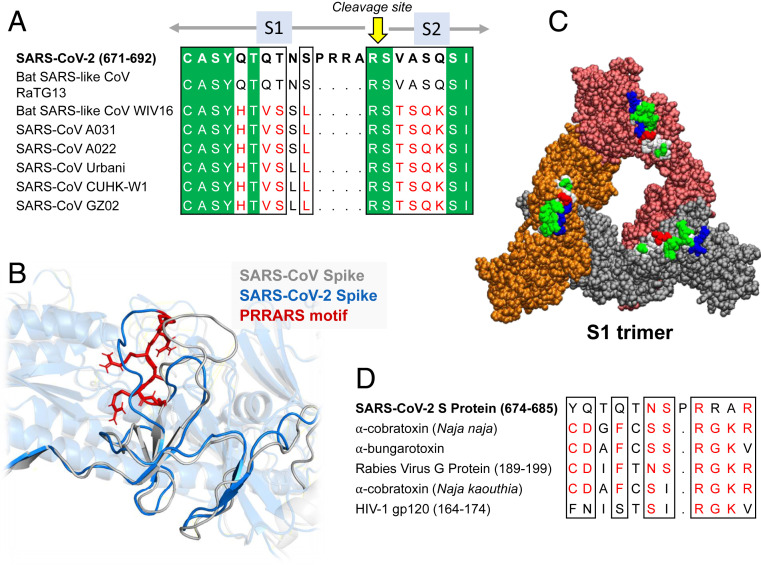
Further Examination of the Motif near PRRA Reveals Close Structural Similarity to the SEB Superantigen as well as Sequence Similarities to Neurotoxins and a Viral SAg.
The insertion PRRA together with 7 sequentially preceding residues & succeeding R685 (conserved in β-CoVs) form a motif, Y674QTQTNSPRRAR685, homologous to those of neurotoxins from Ophiophagus (cobra) and Bungarus genera, as well as neurotoxin-like regions from three RABV strains
(20) (Fig. 2D). We further noticed that the same segment bears close similarity to the HIV-1 glycoprotein gp120 SAg motif F164 to V174.
https://t.co/EwwJOSa8RK
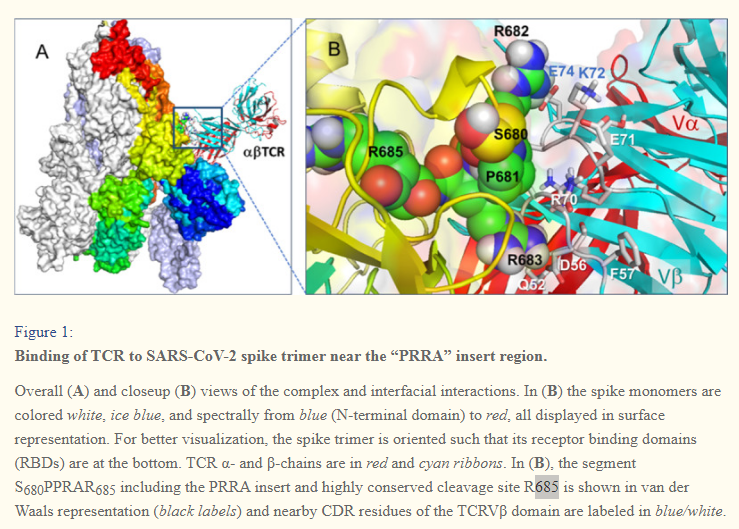
In (B), the segment S680PPRAR685 including the PRRA insert and highly conserved cleavage site *R685* is shown in van der Waals representation (black labels) and nearby CDR residues of the TCRVβ domain are labeled in blue/white
https://t.co/BsY8BAIzDa
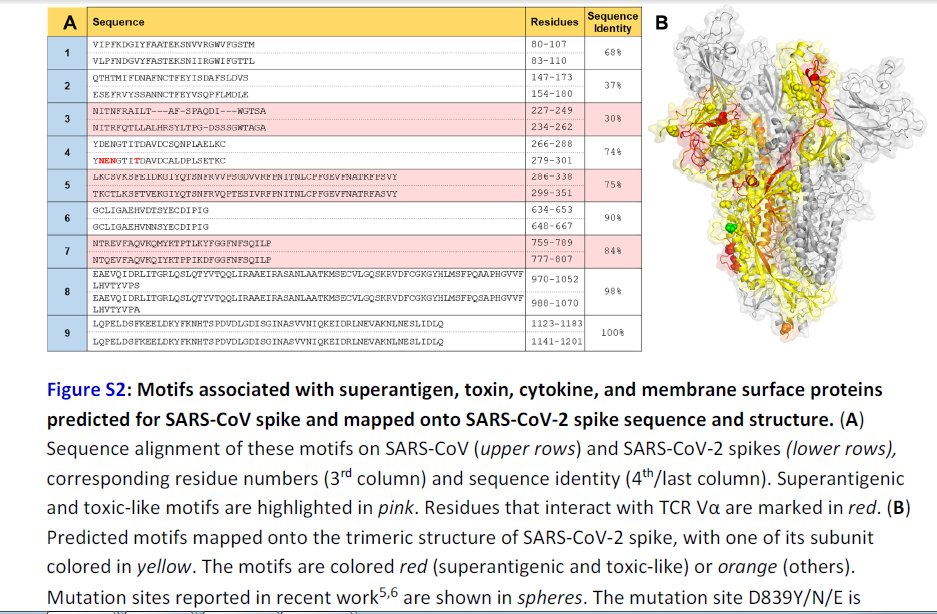
Sequence Identity %
https://t.co/BsY8BAIzDa
Y674 - QTQTNSPRRA - R685
Similar to neurotoxins from Ophiophagus (cobra) & Bungarus genera & neurotoxin-like regions from three RABV strains
T678 - NSPRRA- R685
Superantigenic core, consistently aligned against bacterial or viral SAgs
Further Examination of the Motif near PRRA Reveals Close Structural Similarity to the SEB Superantigen as well as Sequence Similarities to Neurotoxins and a Viral SAg.
The insertion PRRA together with 7 sequentially preceding residues & succeeding R685 (conserved in β-CoVs) form a motif, Y674QTQTNSPRRAR685, homologous to those of neurotoxins from Ophiophagus (cobra) and Bungarus genera, as well as neurotoxin-like regions from three RABV strains
(20) (Fig. 2D). We further noticed that the same segment bears close similarity to the HIV-1 glycoprotein gp120 SAg motif F164 to V174.
https://t.co/EwwJOSa8RK
In (B), the segment S680PPRAR685 including the PRRA insert and highly conserved cleavage site *R685* is shown in van der Waals representation (black labels) and nearby CDR residues of the TCRVβ domain are labeled in blue/white
https://t.co/BsY8BAIzDa
Sequence Identity %
https://t.co/BsY8BAIzDa
Y674 - QTQTNSPRRA - R685
Similar to neurotoxins from Ophiophagus (cobra) & Bungarus genera & neurotoxin-like regions from three RABV strains
T678 - NSPRRA- R685
Superantigenic core, consistently aligned against bacterial or viral SAgs

@franciscodeasis https://t.co/OuQaBRFPu7
Unfortunately the "This work includes the identification of viral sequences in bat samples, and has resulted in the isolation of three bat SARS-related coronaviruses that are now used as reagents to test therapeutics and vaccines." were BEFORE the

chimeric infectious clone grants were there.https://t.co/DAArwFkz6v is in 2017, Rs4231.
https://t.co/UgXygDjYbW is in 2016, RsSHC014 and RsWIV16.
https://t.co/krO69CsJ94 is in 2013, RsWIV1. notice that this is before the beginning of the project
starting in 2016. Also remember that they told about only 3 isolates/live viruses. RsSHC014 is a live infectious clone that is just as alive as those other "Isolates".
P.D. somehow is able to use funds that he have yet recieved yet, and send results and sequences from late 2019 back in time into 2015,2013 and 2016!
https://t.co/4wC7k1Lh54 Ref 3: Why ALL your pangolin samples were PCR negative? to avoid deep sequencing and accidentally reveal Paguma Larvata and Oryctolagus Cuniculus?
Unfortunately the "This work includes the identification of viral sequences in bat samples, and has resulted in the isolation of three bat SARS-related coronaviruses that are now used as reagents to test therapeutics and vaccines." were BEFORE the
chimeric infectious clone grants were there.https://t.co/DAArwFkz6v is in 2017, Rs4231.
https://t.co/UgXygDjYbW is in 2016, RsSHC014 and RsWIV16.
https://t.co/krO69CsJ94 is in 2013, RsWIV1. notice that this is before the beginning of the project
starting in 2016. Also remember that they told about only 3 isolates/live viruses. RsSHC014 is a live infectious clone that is just as alive as those other "Isolates".
P.D. somehow is able to use funds that he have yet recieved yet, and send results and sequences from late 2019 back in time into 2015,2013 and 2016!
https://t.co/4wC7k1Lh54 Ref 3: Why ALL your pangolin samples were PCR negative? to avoid deep sequencing and accidentally reveal Paguma Larvata and Oryctolagus Cuniculus?