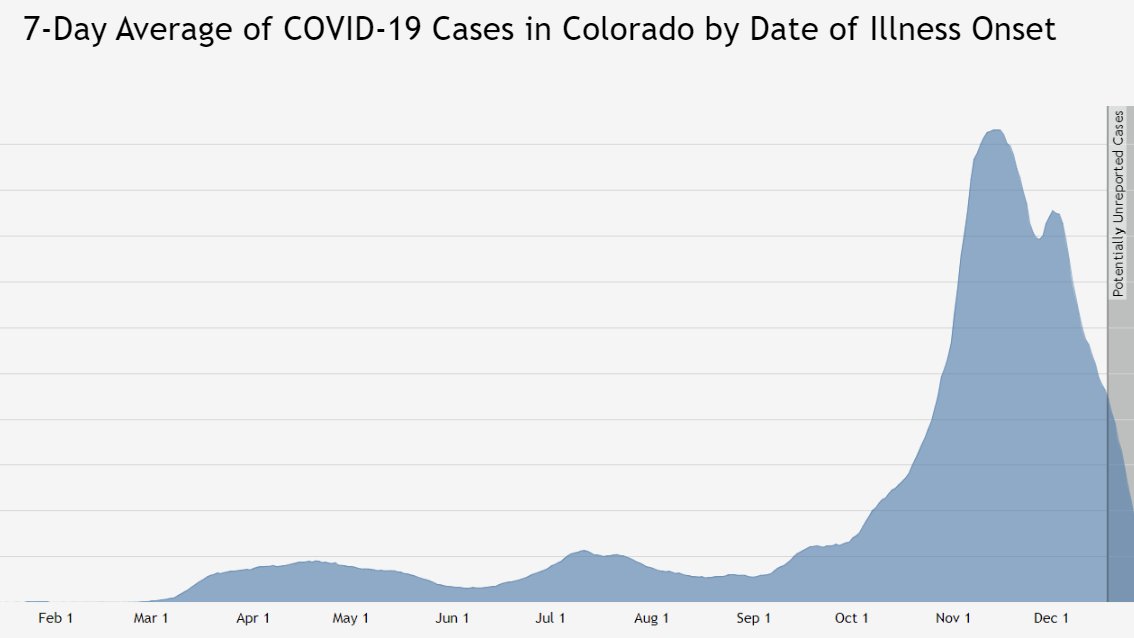
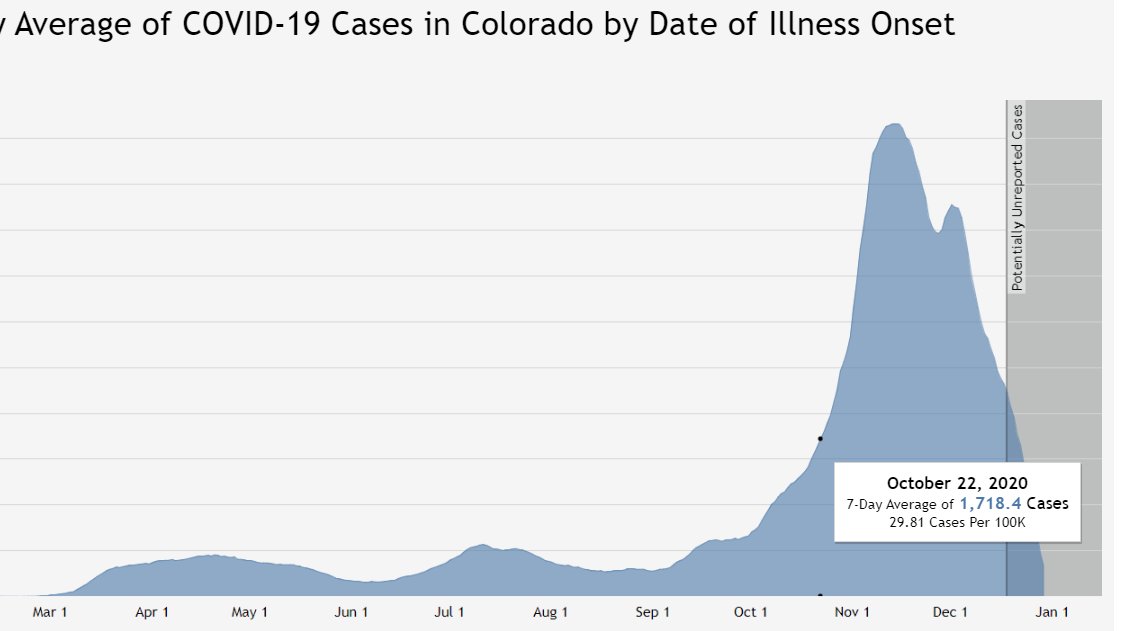
IMHO, this article — https://t.co/wLiWDOZrvm — is an important corrective to fatalism about the new strain. As in, "welp, there are probably already at least a handful of cases of the new strain already here, so no matter what we do now, it's gonna spread." Not necessarily so.

"10 to 20 percent of infected people may be responsible for...80 to 90 percent of transmission."

"An early run of bad [or good!] luck...can produce dramatically different outcomes."

New Zealand had 277 separate introductions; only 19% of them led to more than 1 additional case.
That's all referring to the original COVID strain, but I haven't read anything suggesting that the same pattern doesn't apply to the new variant. Not sure if we know yet, but it's at least possible a lot of people don't spread it (while the few that do, spread it *A LOT* a lot).
Here's what we know, or think we know:

* The new variant is here, with probably at least a handful of undetected cases.

* The new variant is so wildly contagious that, once it gains a foothold, cases WILL spike.

* Cases stopped rising steeply around Nov. 10 (by onset day).
It seems like 1 of 2 things is true:

1) New variant arrived in October or earlier, and helped cause our November spike. We then reined it in, without even realizing it was here.

2) New-variant community spread is low-level thus far, at least thru ~Xmas. No superspreaders yet.
Dunno if we've done enough genomic testing yet to effectively rule out #1. It doesn't strike me as the more likely scenario (arrival by ~mid-October seems pretty early), but it's certainly the more optimistic one!

If it's #2, tho, we might still be at a VERY high-variance moment
FWIW, the steep part of the case curve started around 10/22 (by illness onset date). So really we'd be talking about wide community spread by the first half of October, to produce that. And the variant supposedly only dates back to Sept. 20 *in the U.K.* So I'm skeptical. But...
...we don't actually know for sure that it originated in the U.K. It's possible the variant arose somewhere else, and spread from there to the U.K. in late September, and to Colorado within a week or two of that.

Again, I'm skeptical. But this would be the optimistic scenario.
The less-optimistic scenario is that it arrived more recently, which means it clearly hasn't gained a foothold yet (or hadn't as of last week, anyway), given our current case trends. But unless we act fast & also get lucky, it'll gain a foothold soon and then we'll be in trouble.

More from For later read

The common understanding of propaganda is that it is intended to brainwash the masses. Supposedly, people get exposed to the same message repeatedly and over time come to believe in whatever nonsense authoritarians want them to believe /1

And yet authoritarians often broadcast silly, unpersuasive propaganda.

Political scientist Haifeng Huang writes that the purpose of propaganda is not to brainwash people, but to instill fear in them /2


When people are bombarded with propaganda everywhere they look, they are reminded of the strength of the regime.

The vast amount of resources authoritarians spend to display their message in every corner of the public square is a costly demonstration of their power /3

In fact, the overt silliness of authoritarian propaganda is part of the point. Propaganda is designed to be silly so that people can instantly recognize it when they see it


Propaganda is intended to instill fear in people, not brainwash them.

The message is: You might not believe in pro-regime values or attitudes. But we will make sure you are too frightened to do anything about it.

You May Also Like

I’m torn on how to approach the idea of luck. I’m the first to admit that I am one of the luckiest people on the planet. To be born into a prosperous American family in 1960 with smart parents is to start life on third base. The odds against my very existence are astronomical.


I’ve always felt that the luckiest people I know had a talent for recognizing circumstances, not of their own making, that were conducive to a favorable outcome and their ability to quickly take advantage of them.

In other words, dumb luck was just that, it required no awareness on the person’s part, whereas “smart” luck involved awareness followed by action before the circumstances changed.

So, was I “lucky” to be born when I was—nothing I had any control over—and that I came of age just as huge databases and computers were advancing to the point where I could use those tools to write “What Works on Wall Street?” Absolutely.

Was I lucky to start my stock market investments near the peak of interest rates which allowed me to spend the majority of my adult life in a falling rate environment? Yup.