
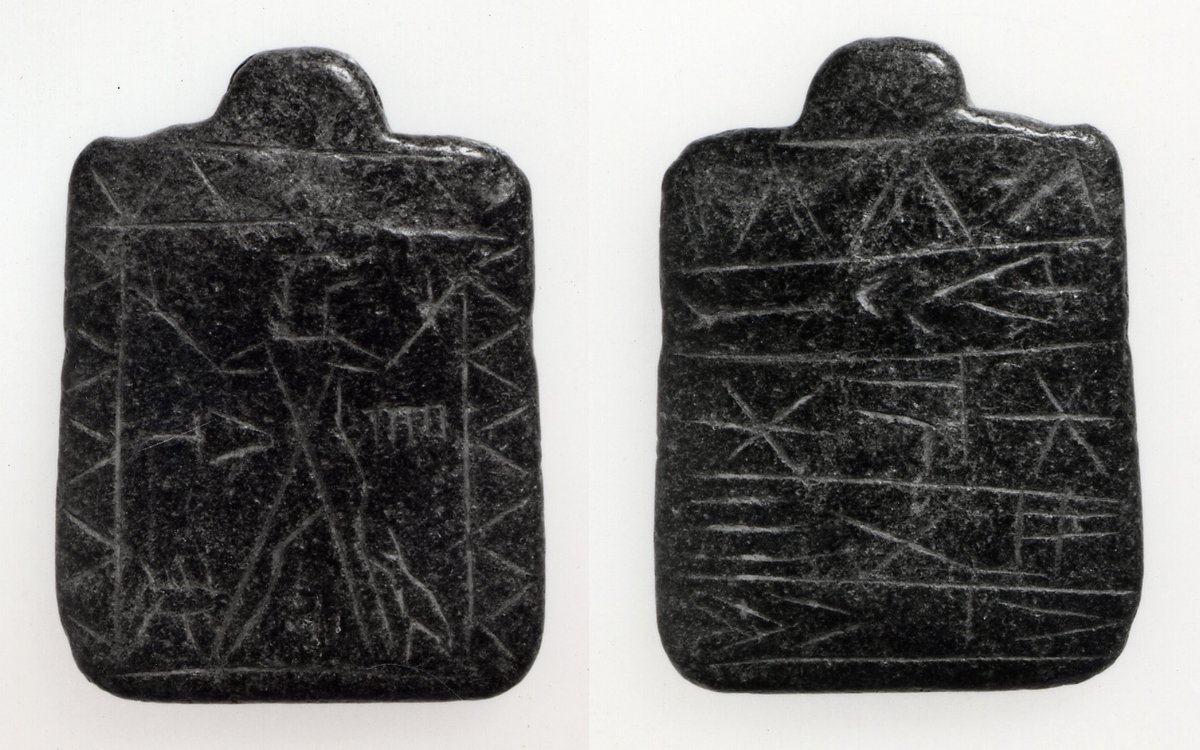
Fact 23: Not all "cuneiform writing" actually meant something. Sometimes just imitating the general appearance of cuneiform-like signs could be enough — why bother to learn the whole complex writing system if others can't read it anyway?

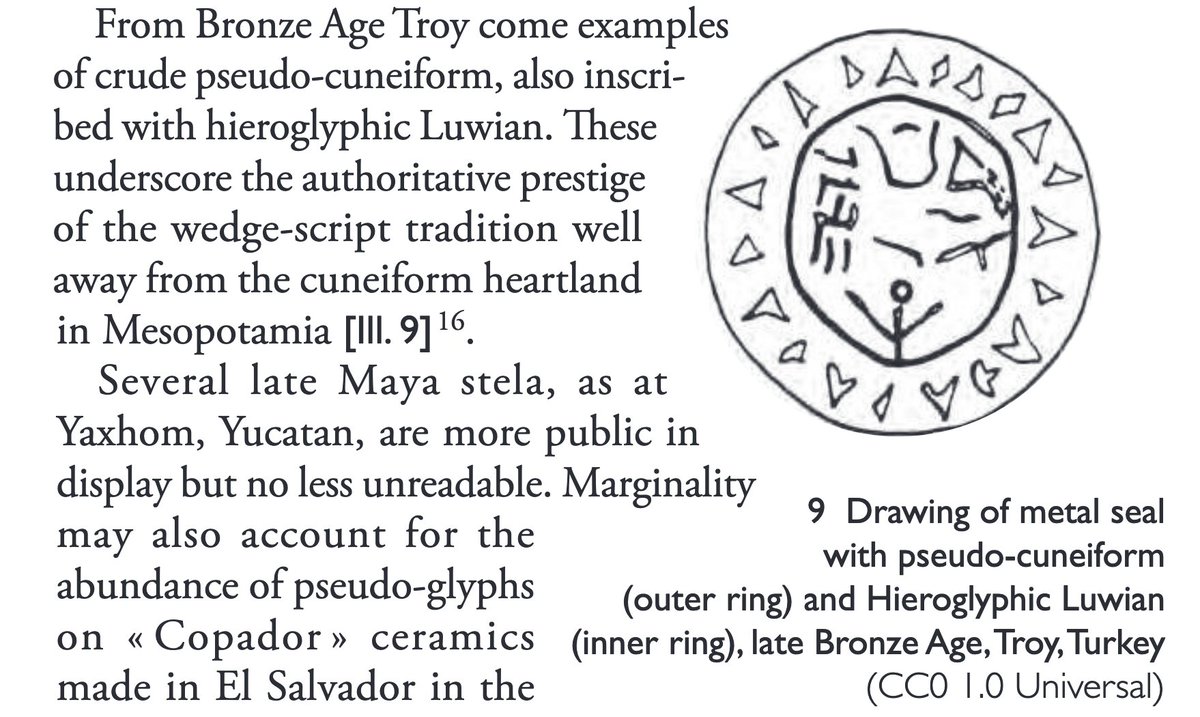
Fact 20: Cuneiform tablets have been forged for ages! Ancient forgeries are often more difficult to identify, while modern fakes can sometimes be pretty clumsy. Here\u2019s a short thread on cuneiform forgery. #AdventCalendar pic.twitter.com/zPKSfCmNLQ
— Team Cuneiform (@cooleiform) December 20, 2020
More from For later read

How I created content in 2020
A thread...
Back in Aug 2016, I started creating content to share my experiences as an entrepreneur.
Over 3 years I had put out 1,200+ hours of content - posting every week without
Little did I know that something I started almost 4 years back would give my life an entirely new direction.
At the end of 2019, my biggest platform was LinkedIn with ~700K followers.
In Jan 2020, I decided to build a team that would help me with the content.
I ran a month long recruitment drive to hire a team of interns.
It comprised 4 detailed rounds - starting with my loved 20 questions, then an assignment, then a WhatsApp video round and finally F2F.
Through 1,200+ applications, I finally selected 6 profiles, starting March.
I am a firm believer in @peterthiel's one task, one person philosophy
So the team was structured such that everyone was responsible for ONLY one task
1. Content ideas
2. Videography
3. Video editing
4. LinkedIn (+TikTok) distribution
5. FB+IG distribution
6. YouTube distribution
A thread...
Back in Aug 2016, I started creating content to share my experiences as an entrepreneur.
Over 3 years I had put out 1,200+ hours of content - posting every week without
August 2016.
— Ankur Warikoo (@warikoo) October 2, 2020
It has been 3 months since LinkedIn had launched its video feature.
And I had been waiting for it to be activated on my profile.
A thread...
Little did I know that something I started almost 4 years back would give my life an entirely new direction.
At the end of 2019, my biggest platform was LinkedIn with ~700K followers.
In Jan 2020, I decided to build a team that would help me with the content.
I ran a month long recruitment drive to hire a team of interns.
It comprised 4 detailed rounds - starting with my loved 20 questions, then an assignment, then a WhatsApp video round and finally F2F.
Through 1,200+ applications, I finally selected 6 profiles, starting March.
I am a firm believer in @peterthiel's one task, one person philosophy
So the team was structured such that everyone was responsible for ONLY one task
1. Content ideas
2. Videography
3. Video editing
4. LinkedIn (+TikTok) distribution
5. FB+IG distribution
6. YouTube distribution


You May Also Like

https://t.co/6cRR2B3jBE
Viruses and other pathogens are often studied as stand-alone entities, despite that, in nature, they mostly live in multispecies associations called biofilms—both externally and within the host.
https://t.co/FBfXhUrH5d

Microorganisms in biofilms are enclosed by an extracellular matrix that confers protection and improves survival. Previous studies have shown that viruses can secondarily colonize preexisting biofilms, and viral biofilms have also been described.

...we raise the perspective that CoVs can persistently infect bats due to their association with biofilm structures. This phenomenon potentially provides an optimal environment for nonpathogenic & well-adapted viruses to interact with the host, as well as for viral recombination.

Biofilms can also enhance virion viability in extracellular environments, such as on fomites and in aquatic sediments, allowing viral persistence and dissemination.

Viruses and other pathogens are often studied as stand-alone entities, despite that, in nature, they mostly live in multispecies associations called biofilms—both externally and within the host.
https://t.co/FBfXhUrH5d
Microorganisms in biofilms are enclosed by an extracellular matrix that confers protection and improves survival. Previous studies have shown that viruses can secondarily colonize preexisting biofilms, and viral biofilms have also been described.
...we raise the perspective that CoVs can persistently infect bats due to their association with biofilm structures. This phenomenon potentially provides an optimal environment for nonpathogenic & well-adapted viruses to interact with the host, as well as for viral recombination.
Biofilms can also enhance virion viability in extracellular environments, such as on fomites and in aquatic sediments, allowing viral persistence and dissemination.

Took me 5 years to get the best Chartink scanners for Stock Market, but you’ll get it in 5 mminutes here ⏰
Do Share the above tweet 👆
These are going to be very simple yet effective pure price action based scanners, no fancy indicators nothing - hope you liked it.
https://t.co/JU0MJIbpRV
52 Week High
One of the classic scanners very you will get strong stocks to Bet on.
https://t.co/V69th0jwBr
Hourly Breakout
This scanner will give you short term bet breakouts like hourly or 2Hr breakout
Volume shocker
Volume spurt in a stock with massive X times
Do Share the above tweet 👆
These are going to be very simple yet effective pure price action based scanners, no fancy indicators nothing - hope you liked it.
https://t.co/JU0MJIbpRV
52 Week High
One of the classic scanners very you will get strong stocks to Bet on.
https://t.co/V69th0jwBr
Hourly Breakout
This scanner will give you short term bet breakouts like hourly or 2Hr breakout
Volume shocker
Volume spurt in a stock with massive X times

I think a plausible explanation is that whatever Corbyn says or does, his critics will denounce - no matter how much hypocrisy it necessitates.
Corbyn opposes the exploitation of foreign sweatshop-workers - Labour MPs complain he's like Nigel
He speaks up in defence of migrants - Labour MPs whinge that he's not listening to the public's very real concerns about immigration:
He's wrong to prioritise Labour Party members over the public:
He's wrong to prioritise the public over Labour Party
One of the oddest features of the Labour tax row is how raising allowances, which the media allowed the LDs to describe as progressive (in spite of evidence to contrary) through the coalition years, is now seen by everyone as very right wing
— Tom Clark (@prospect_clark) November 2, 2018
Corbyn opposes the exploitation of foreign sweatshop-workers - Labour MPs complain he's like Nigel
He speaks up in defence of migrants - Labour MPs whinge that he's not listening to the public's very real concerns about immigration:
He's wrong to prioritise Labour Party members over the public:
He's wrong to prioritise the public over Labour Party

