ORT. Final chapter. Atto XXXIII
I regard consciousness as fundamental. I regard matter as a derivative of consciousness. We cannot get behind consciousness. Everything that we talk about, everything that we regard as existing, suggests consciousness. Max Planck

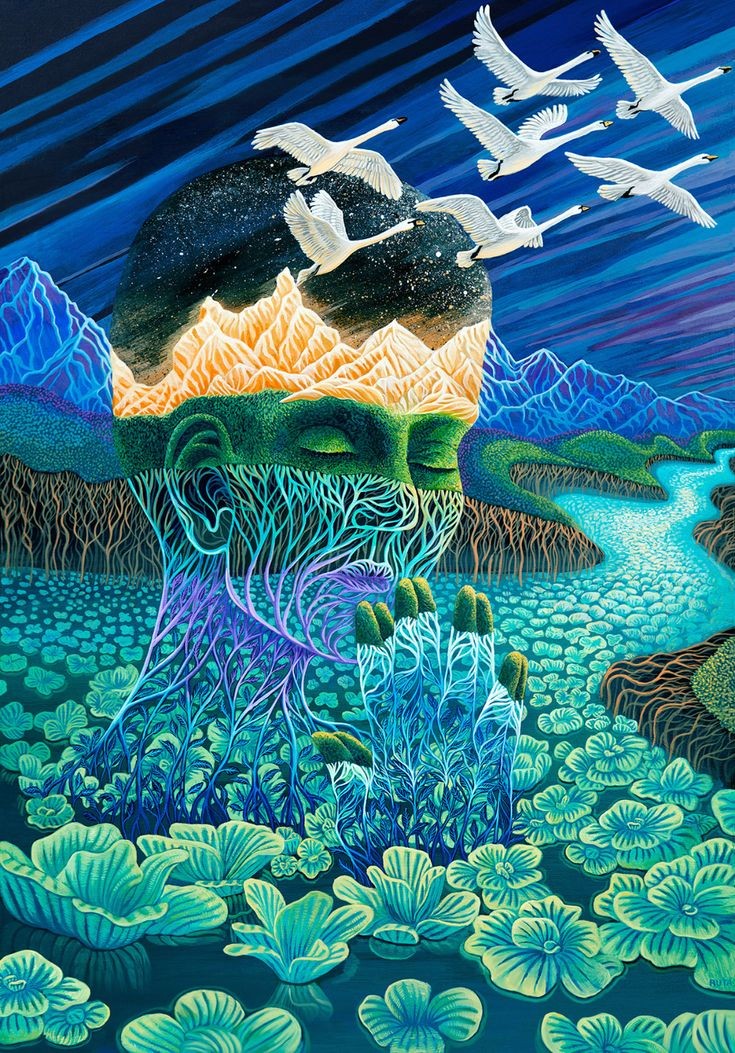
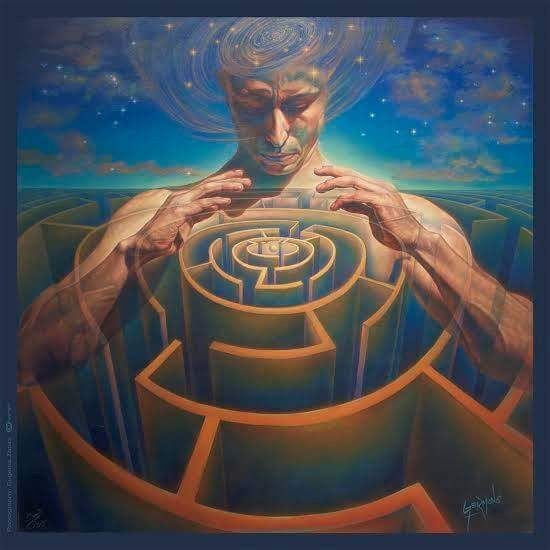
There is an abundance of speculations and theories about the Mysteries that await beyond Death's ivory Gate. Science, after a long battle, is coming to terms with Spirituality.
In one of the previous threads, I wrote about Biocentrism and its advo, Dr Lanza. His theory has now
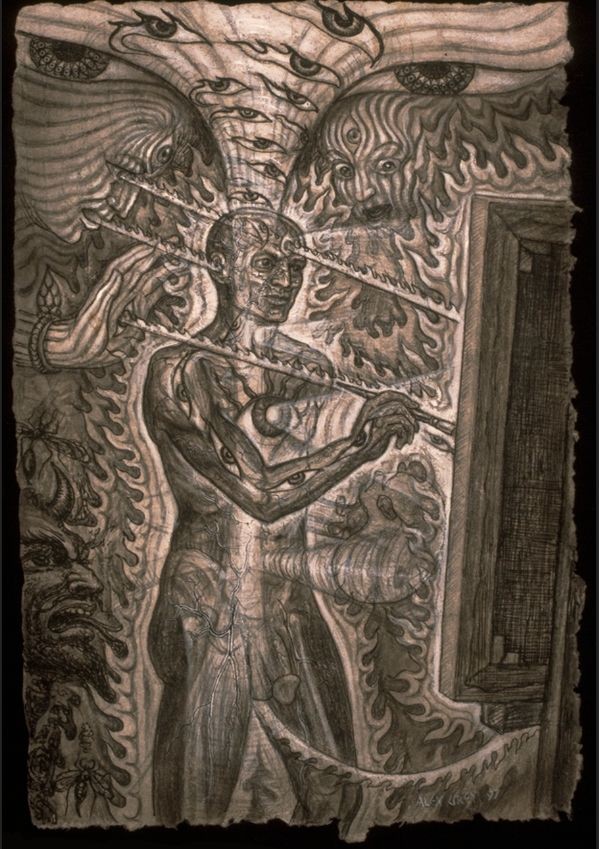
been validated by a recent scientific discovery. A review and update of a controversial 20-year-old theory of consciousness published in Physics of Life Reviews claims that consciousness derives from deeper level, finer scale activities inside brain neurons.
The subject matter are the microtubules. Introducing Sir Roger Penrose, a well-known British physicist and expert in mathematics from Oxford, and Professor Stuart Hameroff from the University of Arizona. They have no doubts about the existence of an eternal soul.
They both believe that consciousness does not perish after death. According to them, the human brain is the perfect quantum computer, and the soul, or consciousness, is simply information stored at the quantum level. It can be transferred, following the death of the body;
quantum information carried by consciousness merges with our universe and exists infinitely. In his turn, Lanza claims that the soul migrates to another universe. That is the main difference his theory has from similar ones. Together, scientists are developing quantum theory to
explain the phenomenon of consciousness. They believe that they have found carriers of consciousness, the elements that accumulate information during life, and transfer consciousness somewhere else after death. These elements are located inside protein-based microtubules
(neuronal microtubules), which previously have been attributed to a simple role of reinforcement and transport channeling inside a living cell. Based on their structure, microtubules are best suited to function as carriers of quantum properties inside the brain. That is mainly
because they are able to retain quantum states for a long time, meaning they can function as elements of a quantum computer. The recent discovery of quantum vibrations in "microtubules" inside brain neurons corroborates this theory, the two scientists suggest that EEG rhythms
(brain waves) also derive from deeper level microtubule vibrations, and that from a practical standpoint, treating brain microtubule vibrations could benefit a host of mental, neurological, and cognitive conditions.The theory is called orchestrated objective reduction('Orch OR')
To be continued. Good night. Consider this, if you will, the real self is dangerous: dangerous for the established church, dangerous for the state, dangerous for the crowd, dangerous for tradition, because once a man knows his real self, he becomes an individual.

More from Alex Dalassio

More from For later read

1. The death of Silicon Valley, a thread

How did Silicon Valley die? It was killed by the internet. I will explain.

Yesterday, my friend IRL asked me "Where are good old days when techies were


2. In the "good old days" Silicon Valley was about understanding technology. Silicon, to be precise. These were people who had to understand quantum mechanics, who had to build the near-miraculous devices that we now take for granted, and they had to work

3. Now, I love libertarians, and I share much of their political philosophy. But you have to be socially naive to believe that it has a chance in a real society. In those days, Silicon Valley was not a real society. It was populated by people who understood quantum mechanics

4. Then came the microcomputer revolution. It was created by people who understood how to build computers. One borderline case was Steve Jobs. People claimed that Jobs was surrounded by a "reality distortion field" - that's how good he was at understanding people, not things

5. Still, the heroes of Silicon Valley were the engineers. The people who knew how to build things. Steve Jobs, for all his understanding of people, also had quite a good understanding of technology. He had a libertarian vibe, and so did Silicon Valley
How I created content in 2020

A thread...

Back in Aug 2016, I started creating content to share my experiences as an entrepreneur.
Over 3 years I had put out 1,200+ hours of content - posting every week without


Little did I know that something I started almost 4 years back would give my life an entirely new direction.

At the end of 2019, my biggest platform was LinkedIn with ~700K followers.

In Jan 2020, I decided to build a team that would help me with the content.

I ran a month long recruitment drive to hire a team of interns.

It comprised 4 detailed rounds - starting with my loved 20 questions, then an assignment, then a WhatsApp video round and finally F2F.

Through 1,200+ applications, I finally selected 6 profiles, starting March.

I am a firm believer in @peterthiel's one task, one person philosophy
So the team was structured such that everyone was responsible for ONLY one task

1. Content ideas
2. Videography
3. Video editing
4. LinkedIn (+TikTok) distribution
5. FB+IG distribution
6. YouTube distribution

You May Also Like