That's summarily the question this thread seeks to illuminate as per Islamic perspective. It doesn't matter if you're a Muslim or not. So far you're a knowledge-seeker and here for that, be my guest.
It's been hot takes on LGBTQ. Let's get some Islamic edu on "gender nonconformity" i.e. "identifying as a gender different from what was assigned at birth."
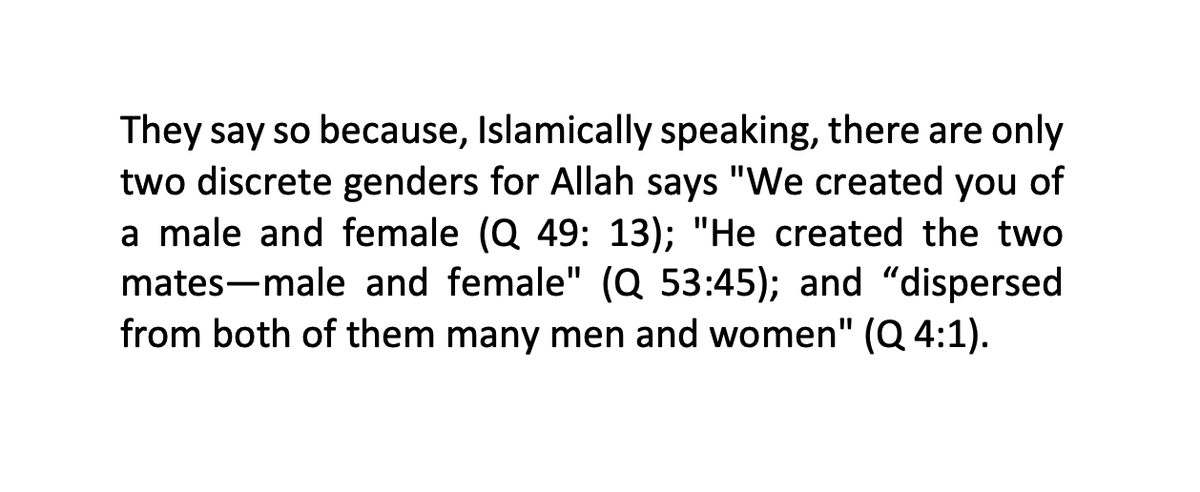
There're 64 genders* today—not just male/female anymore. Anything of such & how's gender established in Islam?
THREAD
That's summarily the question this thread seeks to illuminate as per Islamic perspective. It doesn't matter if you're a Muslim or not. So far you're a knowledge-seeker and here for that, be my guest.
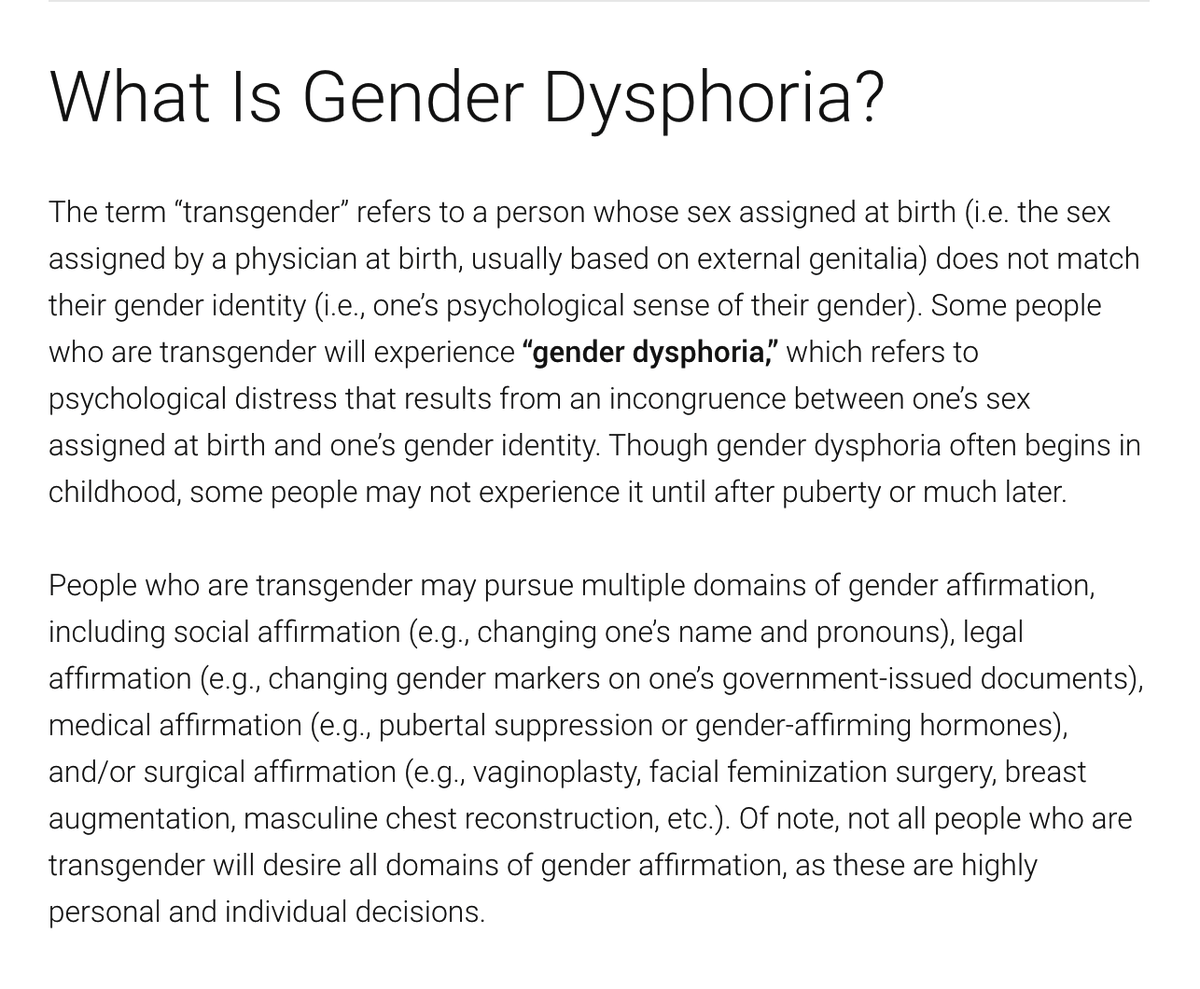
This problem is called gender dysphoria.
See attachments on gender identity, gender expression & sexual orientation. All.. different things.
1. The ambiguous khunthā (al-khunthā al-mushkil)
2. The congenital mukhannath (al-mukhannath al-khilqī)
3. The non-congenital mukhannath (al-mukhannath ghayr al-khilqī)
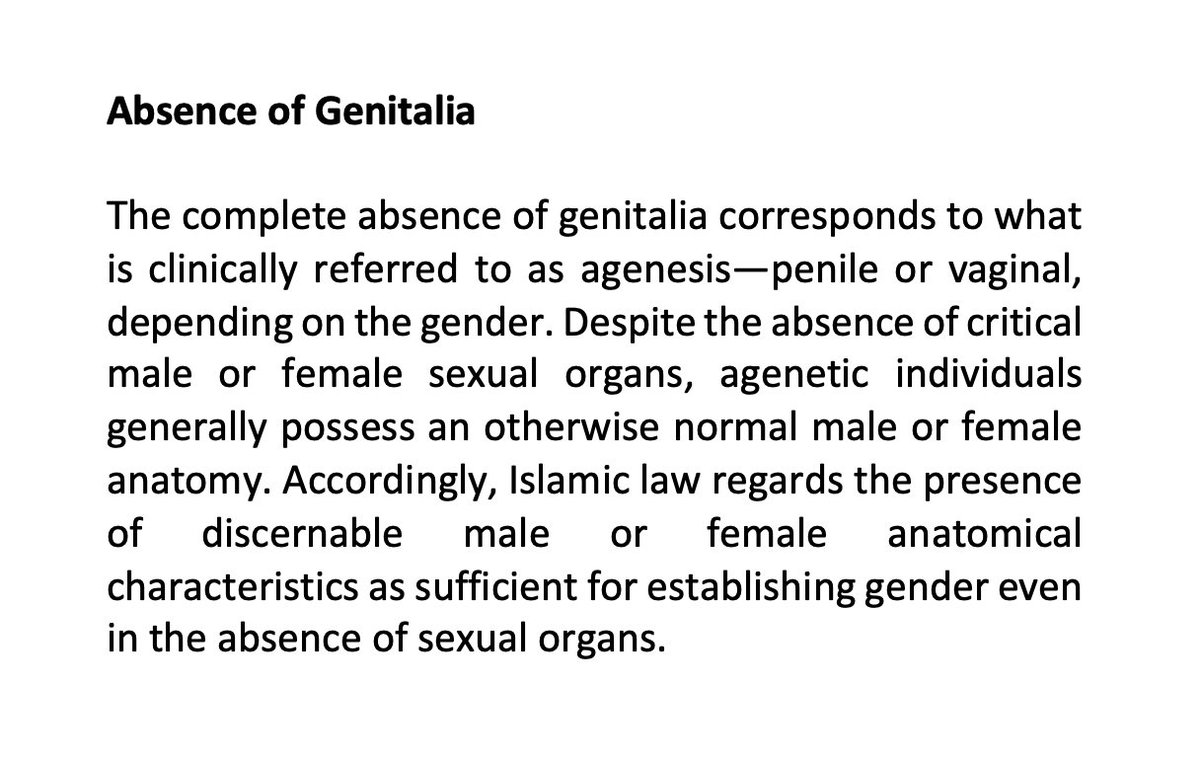
An ambiguous khunthā is someone who possesses both male & female organs or one who possesses none thus urinating from an opening in the body.
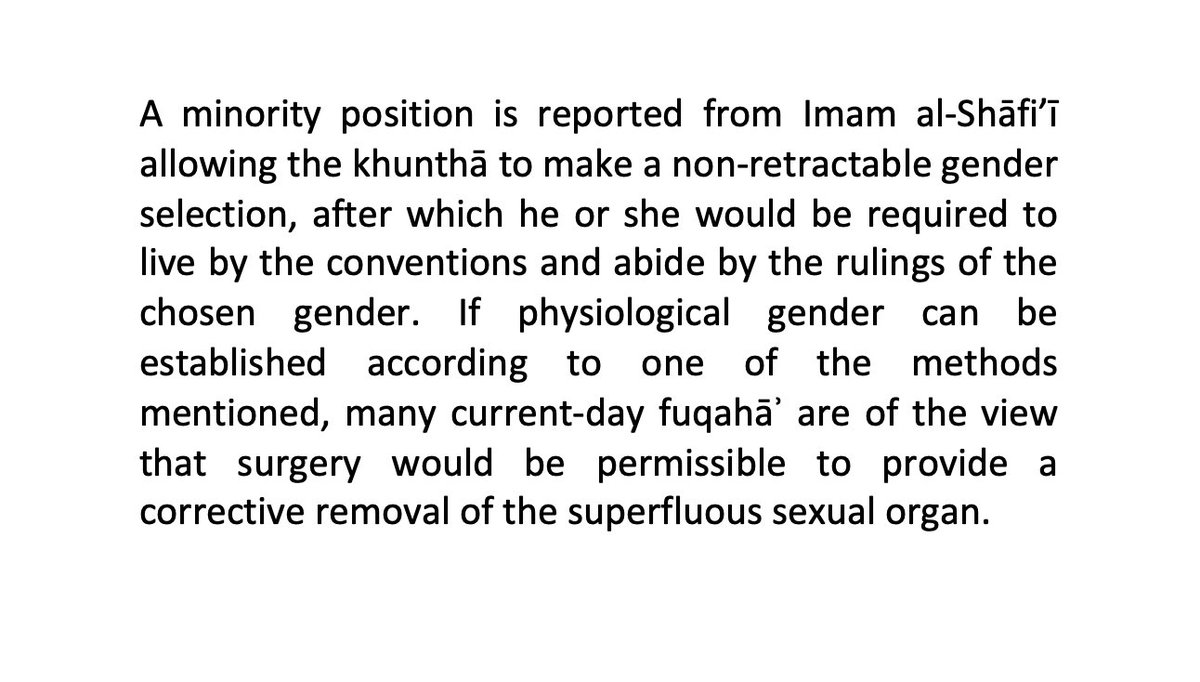
This problem nonetheless, scholars say the true gender must be ascertained. Why? See attachment.
Once gender is established, the individual is no more ambiguous. He or she is male or female.
Unlike the ambiguous khunthā, the mukhannath is unambiguously male i.e. has no anatomical or developmental ambiguities but uncontrollably has the mannerisms and affectations of females e.g. voice pitch, gait among other feminite attributes.
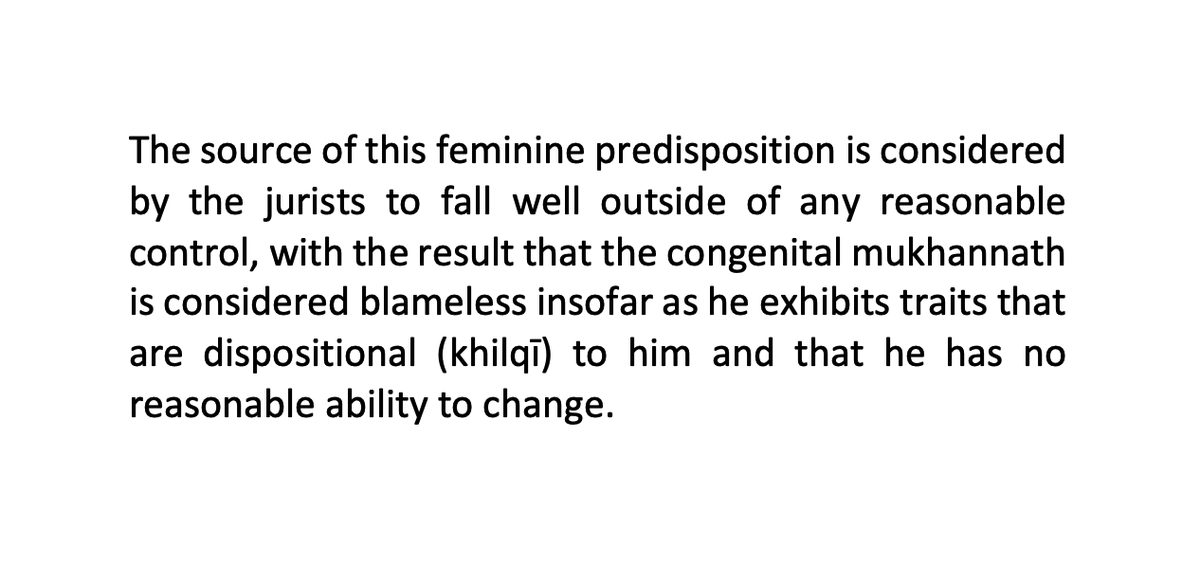
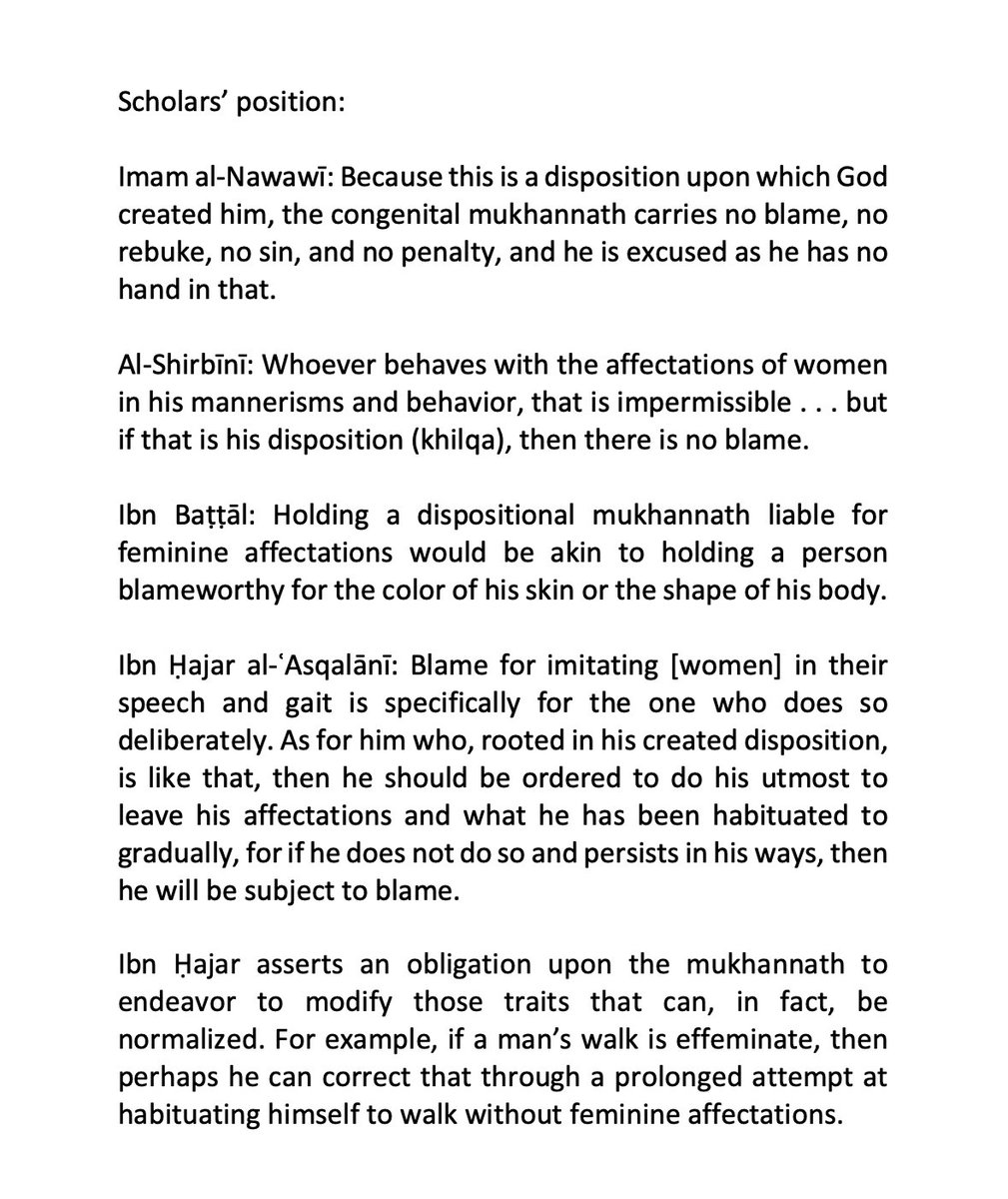
NB. the Prophet cursed the mukhannathun & their female equivalents and ordered their expulsion from homes.
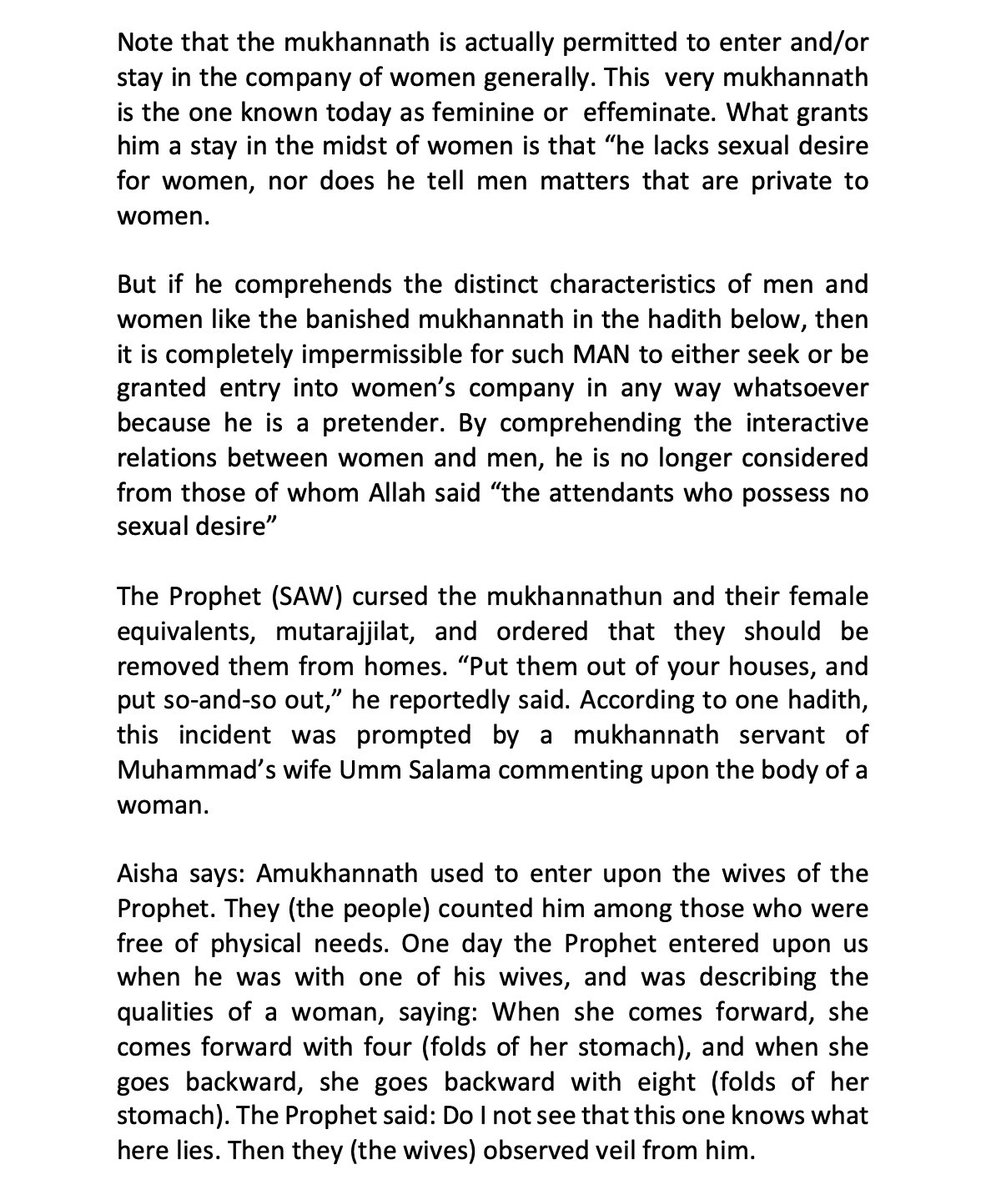
The non-congenital mukhannath, unlike those congenitally effeminate, who deliberately chooses to adopt such affectations. Long story short, this set of persons are cursed. Hadith: “God has cursed effeminate men and mannish women.”
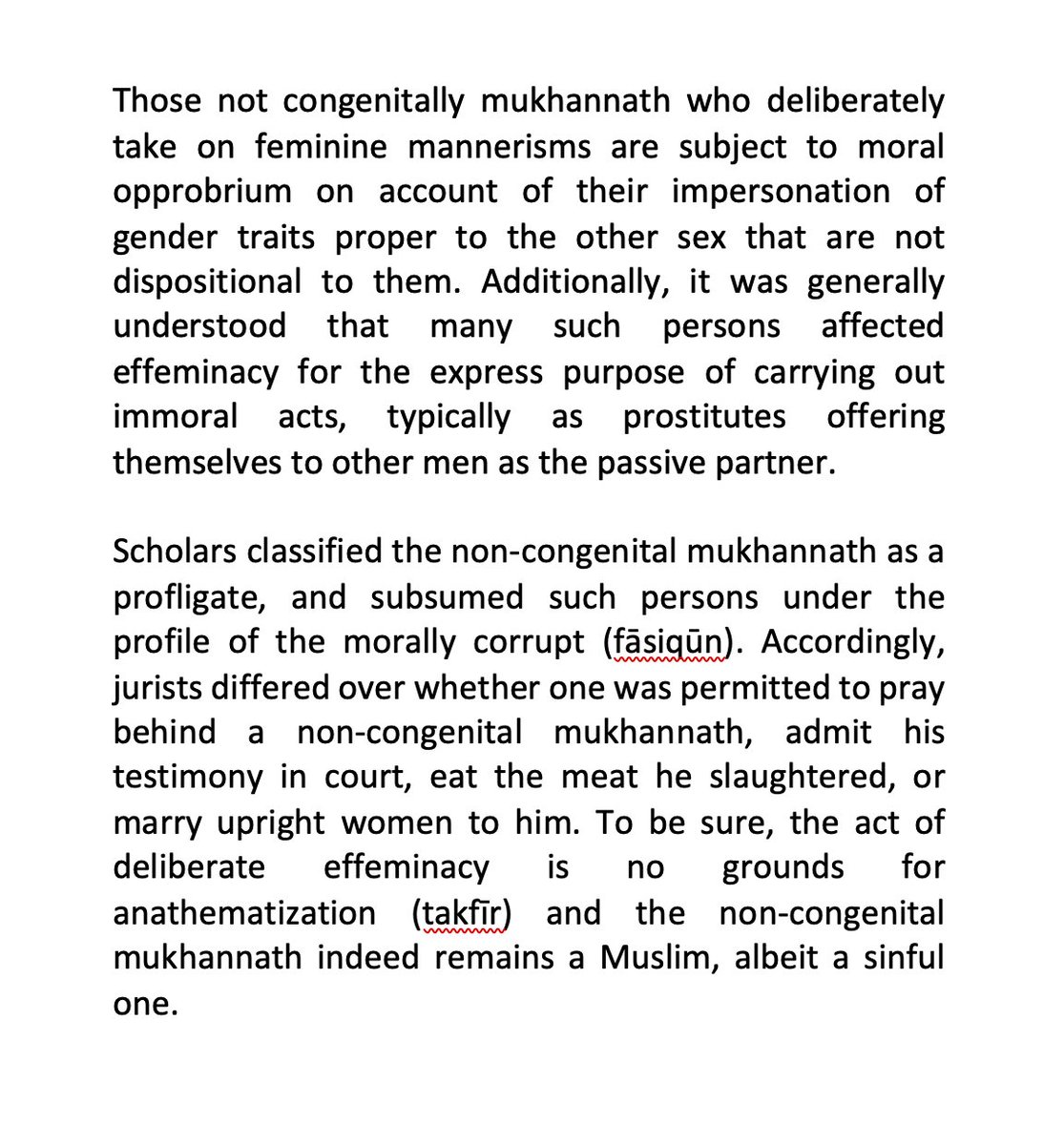
This thread explains Gender in Islam, 90% gleaned from a research piece by Mobeen Vaid. Aside from the congenital mukhannath whom some scholars say could consider a medical operation to get rid of one of the sexual organs, LGBTQ+ is haram and accursed act in Islam.
Thanks for reading🙂
The essay:
https://t.co/zUafbmNKq0
More from Education


Last month I presented seven sentences in seven different languages, all written in a form of the Chinese-character script. The challenge was to identify the languages and, if possible, provide a
Here again are those seven sentences:
1) 他的剑从船上掉到河里去
2) 於世𡗉番𧡊哭唭𢆥尼歲㐌外四𨑮
3) 入良沙寢矣見昆腳烏伊四是良羅
4) 佢而家喺邊喥呀
5) 夜久毛多都伊豆毛夜幣賀岐都麻碁微爾夜幣賀岐都久流曾能夜幣賀岐袁
6) 其劍自舟中墜於水
7) 今天愛晚特語兔吃二魚佛午飯
Six of those seven sentences are historically attested. One is not: I invented #7. I’m going to dive into an exploration of that seventh sentence in today’s thread.
Sentence #7 is an English-language sentence written sinographically — that is, using graphs that originate in the Chinese script. I didn’t do this for fun (even though it is fun), or as a proposal for a new way to write
I did it as a thought experiment. Why? Because thinking about how the modern Chinese script might be adapted to write modern English can give us valuable insights into historical instances of script borrowing, like those that took place centuries ago in Japan, Korea, and Vietnam.
\U0001f17b\U0001f130\U0001f17d\U0001f176\U0001f184\U0001f130\U0001f176\U0001f174 \U0001f180\U0001f184\U0001f178\U0001f189
— zev handel (@ZevHandel) December 17, 2020
The following sentences are in seven different languages, all written in Chinese-character script (or a modification of it). Can you identify the languages?
Sentences are in thread.
(1/3)
Here again are those seven sentences:
1) 他的剑从船上掉到河里去
2) 於世𡗉番𧡊哭唭𢆥尼歲㐌外四𨑮
3) 入良沙寢矣見昆腳烏伊四是良羅
4) 佢而家喺邊喥呀
5) 夜久毛多都伊豆毛夜幣賀岐都麻碁微爾夜幣賀岐都久流曾能夜幣賀岐袁
6) 其劍自舟中墜於水
7) 今天愛晚特語兔吃二魚佛午飯
Six of those seven sentences are historically attested. One is not: I invented #7. I’m going to dive into an exploration of that seventh sentence in today’s thread.
Sentence #7 is an English-language sentence written sinographically — that is, using graphs that originate in the Chinese script. I didn’t do this for fun (even though it is fun), or as a proposal for a new way to write
7) \u4eca\u5929\u611b\u665a\u7279\u8a9e\u5154\u5403\u4e8c\u9b5a\u4f5b\u5348\u98ef \u2013 Modern English
— zev handel (@ZevHandel) December 21, 2020
Today I want you to each two fish for lunch.
That this sentence is a written form of English is undeniable, as the sentence is made up entirely of English words following the rules of English grammar. 23/
I did it as a thought experiment. Why? Because thinking about how the modern Chinese script might be adapted to write modern English can give us valuable insights into historical instances of script borrowing, like those that took place centuries ago in Japan, Korea, and Vietnam.

It appears to be a combination of some of these factors, along with others not mentioned here. Ibn Khaldun’s analysis appears to be a good foundation to go off. [Thread]
Ibn Khaldun makes an important distinction between what he calls العُمران الحضري and العمران البدوي, which, for convenience’s sake, I’ll translate as urban civilisation and rural/Bedouin lifestyle.
He notes that the rural world is largely nomadic, and, as such, Bedouins build character traits that assist the survivalist lifestyle — e.g. the fact that they have to kill snakes that might pop up at any time during their travels helps them build courage and bravery.
The lack of stability and a proper settlement means they don’t really have the luxury of sitting down to let their minds wonder around. They thus build a preservation mindset, which manifests itself through emphasis on memorisation and transmission.
Inhabitants of urban world, on the other hand, are largely settled and established. This means they face less attacks from snakes, lions or danger of human attack from other tribes. Thus, they don’t build the courage and bravery of the Bedouins.
I am yet to find a fully convincing account of what caused the emergence of the two contrasting schools of Ahl Al-\u1e24ad\u012bth in the \u1e24ij\u0101z and Ahl Al-Ra'\u012b in Al-K\u016bfa.
— Amir Aboguddah \u0623\u0645\u064a\u0631 \u0623\u0628\u0648\u063a\u062f\u0629 (@Amir_Aboguddah) January 20, 2021
My issue with the accounts are as follows:
Ibn Khaldun makes an important distinction between what he calls العُمران الحضري and العمران البدوي, which, for convenience’s sake, I’ll translate as urban civilisation and rural/Bedouin lifestyle.
He notes that the rural world is largely nomadic, and, as such, Bedouins build character traits that assist the survivalist lifestyle — e.g. the fact that they have to kill snakes that might pop up at any time during their travels helps them build courage and bravery.
The lack of stability and a proper settlement means they don’t really have the luxury of sitting down to let their minds wonder around. They thus build a preservation mindset, which manifests itself through emphasis on memorisation and transmission.
Inhabitants of urban world, on the other hand, are largely settled and established. This means they face less attacks from snakes, lions or danger of human attack from other tribes. Thus, they don’t build the courage and bravery of the Bedouins.

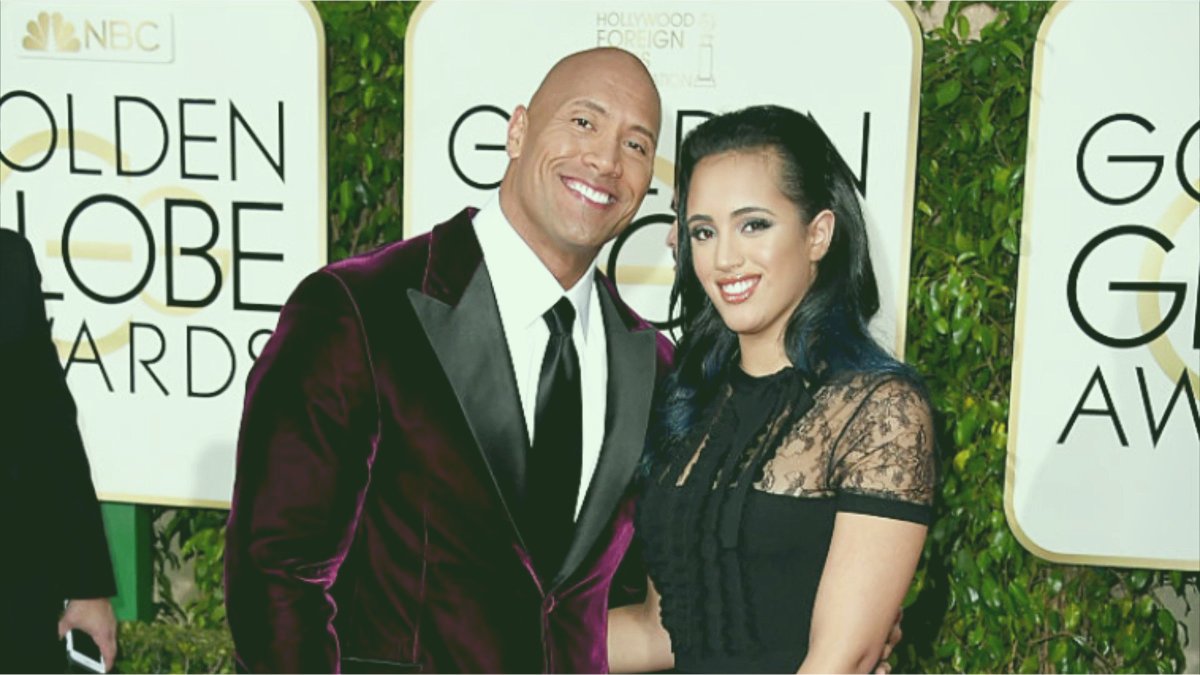
Trending news of The Rock's daughter Simone Johnson's announcing her new Stage Name is breaking our Versus tool because "Wrestling Name" isn't in our database!
Here's the most useful #Factualist comparison pages #Thread 🧵
What is the difference between “pseudonym” and “stage name?”
Pseudonym means “a fictitious name (more literally, a false name), as those used by writers and movie stars,” while stage name is “the pseudonym of an entertainer.”
https://t.co/hT5XPkTepy #english #wiki #wikidiff
People also found this comparison helpful:
Alias #versus Stage Name: What’s the difference?
Alias means “another name; an assumed name,” while stage name means “the pseudonym of an entertainer.”
https://t.co/Kf7uVKekMd #Etymology #words
Another common #question:
What is the difference between “alias” and “pseudonym?”
As nouns alias means “another name; an assumed name,” while pseudonym means “a fictitious name (more literally, a false name), as those used by writers and movie
Here is a very basic #comparison: "Name versus Stage Name"
As #nouns, the difference is that name means “any nounal word or phrase which indicates a particular person, place, class, or thing,” but stage name means “the pseudonym of an
Here's the most useful #Factualist comparison pages #Thread 🧵
What is the difference between “pseudonym” and “stage name?”
Pseudonym means “a fictitious name (more literally, a false name), as those used by writers and movie stars,” while stage name is “the pseudonym of an entertainer.”
https://t.co/hT5XPkTepy #english #wiki #wikidiff
People also found this comparison helpful:
Alias #versus Stage Name: What’s the difference?
Alias means “another name; an assumed name,” while stage name means “the pseudonym of an entertainer.”
https://t.co/Kf7uVKekMd #Etymology #words
Another common #question:
What is the difference between “alias” and “pseudonym?”
As nouns alias means “another name; an assumed name,” while pseudonym means “a fictitious name (more literally, a false name), as those used by writers and movie
Here is a very basic #comparison: "Name versus Stage Name"
As #nouns, the difference is that name means “any nounal word or phrase which indicates a particular person, place, class, or thing,” but stage name means “the pseudonym of an