
The basics are that the enemy knows that he 👇
The Maoist struggle session is the only known end point for the traitors who will soon challenge us.
The time is coming when many of us will have to stand up to co-parents, school head teachers etc when they challenge us with what they know to be falsehoods.
The struggle👇
The basics are that the enemy knows that he 👇
The challenge that is coming, whether it is about vaccines being the only route to ‘herd immunity’ or how illness is spread by asymptomatic (healthy) people will one based on bogus scientific doctrine.
But do *not* focus on the untruths.👇
The traitors have also been trained to make you feel that you’re under observation. They will make 👇
Remember throughout any such episodes that you are watching a rehearsed performance. This is not a person in front of you.
You know the truth. 👇
Make sure that this is the *only* transaction you ever offer.
If you stick to the truth and are not 👇
Remember that the interaction is not with a person - it is with a programme. Once it runs through enough times without submission or provocation (engagement), it will stop.
Stand your ground calmly in self possession. 👇
More from Education

New from me:
I’m launching my Forecasting For SEO course next month.
It’s everything I’ve learned, tried and tested about SEO forecasting.
The course: https://t.co/bovuIns9OZ
Following along 👇
Why forecasting?
Last year I launched https://t.co/I6osuvrGAK to provide reliable forecasts to SEO teams.
It went crazy.
I also noticed an appetite for learning more about forecasting and reached out on Twitter to gauge interest:
The interest encouraged me to make a start...
I’ve also been inspired by what others are doing: @tom_hirst, @dvassallo and @azarchick 👏👏
And their guts to be build so openly in public.
So here goes it...
In the last 2 years I’ve only written 3 blog posts on my site.
- Probabilistic thinking in SEO
- Rethinking technical SEO audits
- How to deliver better SEO strategies.
I only write when I feel like I’ve got something to say.
With forecasting, I’ve got something to say. 💭
There are mixed feelings about forecasting in the SEO industry.
Uncertainty is everywhere. Algorithm updates impacting rankings, economic challenges impacting demand.
It’s difficult. 😩
I’m launching my Forecasting For SEO course next month.
It’s everything I’ve learned, tried and tested about SEO forecasting.
The course: https://t.co/bovuIns9OZ
Following along 👇
Why forecasting?
Last year I launched https://t.co/I6osuvrGAK to provide reliable forecasts to SEO teams.
It went crazy.
I also noticed an appetite for learning more about forecasting and reached out on Twitter to gauge interest:
The interest encouraged me to make a start...
I’ve also been inspired by what others are doing: @tom_hirst, @dvassallo and @azarchick 👏👏
And their guts to be build so openly in public.
So here goes it...
In the last 2 years I’ve only written 3 blog posts on my site.
- Probabilistic thinking in SEO
- Rethinking technical SEO audits
- How to deliver better SEO strategies.
I only write when I feel like I’ve got something to say.
With forecasting, I’ve got something to say. 💭
There are mixed feelings about forecasting in the SEO industry.
Uncertainty is everywhere. Algorithm updates impacting rankings, economic challenges impacting demand.
It’s difficult. 😩

When the university starts sending out teaching evaluation reminders, I tell all my classes about bias in teaching evals, with links to the evidence. Here's a version of the email I send, in case anyone else wants to poach from it.
1/16
When I say "anyone": needless to say, the people who are benefitting from the bias (like me) are the ones who should helping to correct it. Men in math, this is your job! Of course, it should also be dealt with at the institutional level, not just ad hoc.
OK, on to my email:
2/16
"You may have received automated reminders about course evals this fall. I encourage you to fill the evals out. I'd be particularly grateful for written feedback about what worked for you in the class, what was difficult, & how you ultimately spent your time for this class.
3/16
However, I don't feel comfortable just sending you an email saying: "please take the time to evaluate me". I do think student evaluations of teachers can be valuable: I have made changes to my teaching style as a direct result of comments from student teaching evaluations.
4/16
But teaching evaluations have a weakness: they are not an unbiased estimator of teaching quality. There is strong evidence that teaching evals tend to favour men over women, and that teaching evals tend to favour white instructors over non-white instructors.
5/16
1/16
When a teaching award is based solely on teaching evals and then only men get it. pic.twitter.com/szIBkCvTe9
— Dr. Marissa Kawehi (@MarissaKawehi) February 12, 2021
When I say "anyone": needless to say, the people who are benefitting from the bias (like me) are the ones who should helping to correct it. Men in math, this is your job! Of course, it should also be dealt with at the institutional level, not just ad hoc.
OK, on to my email:
2/16
"You may have received automated reminders about course evals this fall. I encourage you to fill the evals out. I'd be particularly grateful for written feedback about what worked for you in the class, what was difficult, & how you ultimately spent your time for this class.
3/16
However, I don't feel comfortable just sending you an email saying: "please take the time to evaluate me". I do think student evaluations of teachers can be valuable: I have made changes to my teaching style as a direct result of comments from student teaching evaluations.
4/16
But teaching evaluations have a weakness: they are not an unbiased estimator of teaching quality. There is strong evidence that teaching evals tend to favour men over women, and that teaching evals tend to favour white instructors over non-white instructors.
5/16

Time for some thoughts on schools given the revised SickKids document and the fact that ON decided to leave most schools closed. ON is not the only jurisdiction to do so, but important to note that many jurisdictions would not have done so -even with higher incidence rates.
As outlined in the tweet by @NishaOttawa yesterday, the situation is complex, and not a simple right or wrong https://t.co/DO0v3j9wzr. And no one needs to list all the potential risks and downsides of prolonged school closures.
On the other hand: while school closures do not directly protect our most vulnerable in long-term care at all, one cannot deny that any factor potentially increasing community transmission may have an indirect effect on the risk to these institutions, and on healthcare.
The question is: to what extend do schools contribute to transmission, and how to balance this against the risk of prolonged school closures. The leaked data from yesterday shows a mixed picture -schools are neither unicorns (ie COVID free) nor infernos.
Assuming this data is largely correct -while waiting for an official publication of the data, it shows first and foremost the known high case numbers at Thorncliff, while other schools had been doing very well -are safe- reiterating the impact of socioeconomics on the COVID risk.
A group of Ontario experts led by SickKids has updated its guidance for school operation during the COVID-19 pandemic. The living document, COVID-19: Updated Guidance for School Operation During the Pandemic, can be read here: https://t.co/rotLqDqkQh pic.twitter.com/q7kVezAPoG
— SickKids_TheHospital (@SickKidsNews) January 21, 2021
As outlined in the tweet by @NishaOttawa yesterday, the situation is complex, and not a simple right or wrong https://t.co/DO0v3j9wzr. And no one needs to list all the potential risks and downsides of prolonged school closures.
1/It's the eve of provincial announcements on schools reopening for in-person instruction.
— Nisha Thampi (@NishaOttawa) January 20, 2021
Households are under stress and experts are divided on whether schools are unicorns or infernos.
Everyone wants to do right by kids, who have borne so much throughout this pandemic.
On the other hand: while school closures do not directly protect our most vulnerable in long-term care at all, one cannot deny that any factor potentially increasing community transmission may have an indirect effect on the risk to these institutions, and on healthcare.
The question is: to what extend do schools contribute to transmission, and how to balance this against the risk of prolonged school closures. The leaked data from yesterday shows a mixed picture -schools are neither unicorns (ie COVID free) nor infernos.
Assuming this data is largely correct -while waiting for an official publication of the data, it shows first and foremost the known high case numbers at Thorncliff, while other schools had been doing very well -are safe- reiterating the impact of socioeconomics on the COVID risk.

This seems like a positive base from which to #BuildBackBetter
https://t.co/OwpgNh8mEu
https://t.co/7eOi1Bv3bM
https://t.co/GhxVgLuWJE
https://t.co/ymHp910wrC
Hearing laughter &banter from lessons in the background every day. Yesterday at end of \u201c school\u201d she rushed out for snack, had to be quick as she wanted to join peer zoom doing art... her pals are thinking of doing afterschool yoga/ book club/ gardening, low/no cost ideas
— Ruth knight (@ruth_rmknig) January 29, 2021
https://t.co/OwpgNh8mEu
Helped prepare my teenagers for online life postschoolc. My daughter engaged with a health professional on teams this week with no input from me. They are well prepared for workplaces where online learning and e-learning are increasingly the norm. Life skills
— Sughra Nazir \U0001f499 (@Care_excellence) January 29, 2021
https://t.co/7eOi1Bv3bM
I have reconnected with my children as we have never had this time together before. We have had time to talk without the hustle and bustle of work, car journeys etc. No hassling over uniform washing has been a bonus too. \U0001f600
— Sughra Nazir \U0001f499 (@Care_excellence) January 29, 2021
https://t.co/GhxVgLuWJE
Prompted to try to have a day of positive talk about our children and young people today.
— Little Hoppy Saul \U0001f499#SafeEdForAll (@HoppySaul) January 29, 2021
Let\u2019s stop the alarmist headlines of LOST LEARNING
DAMAGE OF SCHOOL \u2018CLOSURES\u2019
Let\u2019s look at the opportunities and positives of temporary remote education & hope for a long-term strategy https://t.co/ODBqdZzSw2
https://t.co/ymHp910wrC
Like I say, I\u2019m a shy student and I always have been! I\u2019ve loved not having that pressure on top of me and I agree that it\u2019s helped us flourish!
— Hear Our Voices (@HearTheStudent) January 29, 2021

You May Also Like


THREAD: 12 Things Everyone Should Know About IQ
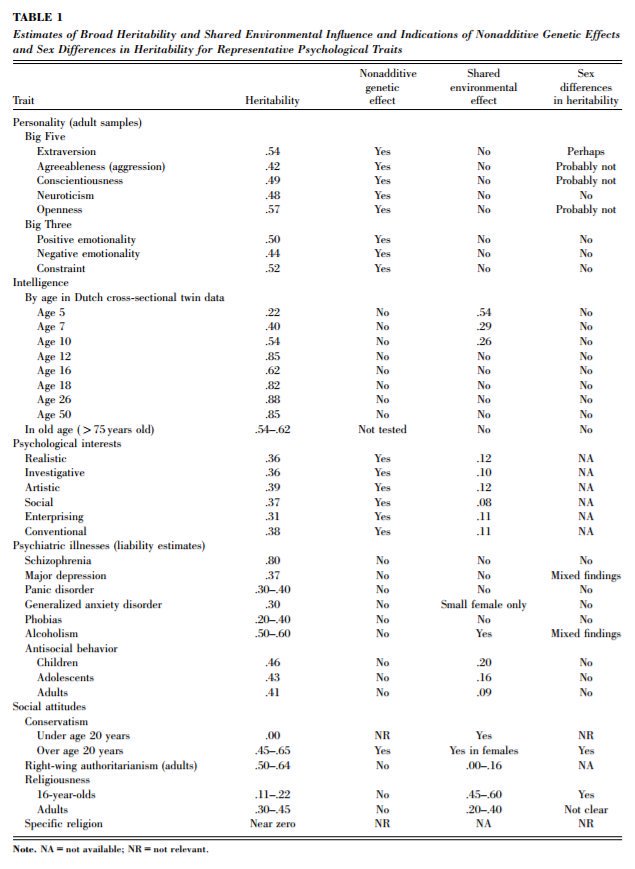
1. IQ is one of the most heritable psychological traits – that is, individual differences in IQ are strongly associated with individual differences in genes (at least in fairly typical modern environments). https://t.co/3XxzW9bxLE
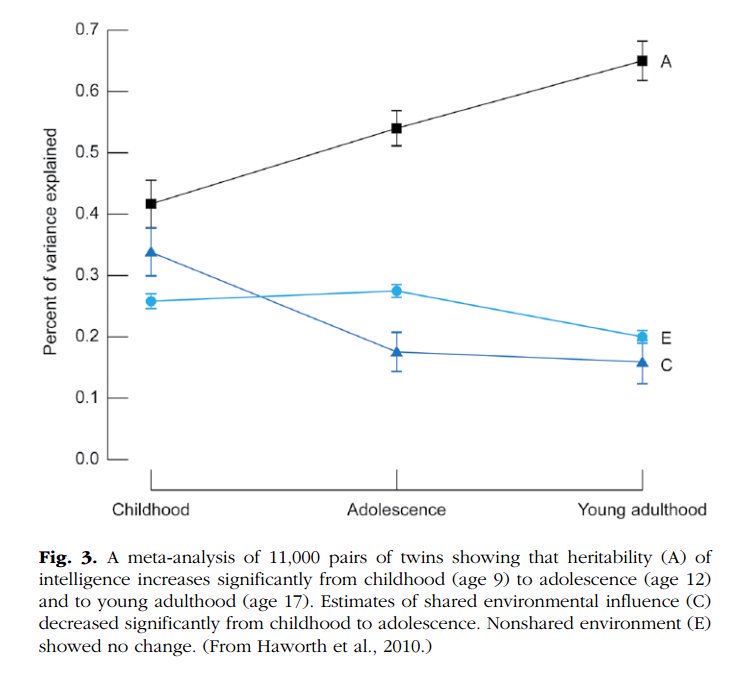
2. The heritability of IQ *increases* from childhood to adulthood. Meanwhile, the effect of the shared environment largely fades away. In other words, when it comes to IQ, nature becomes more important as we get older, nurture less. https://t.co/UqtS1lpw3n
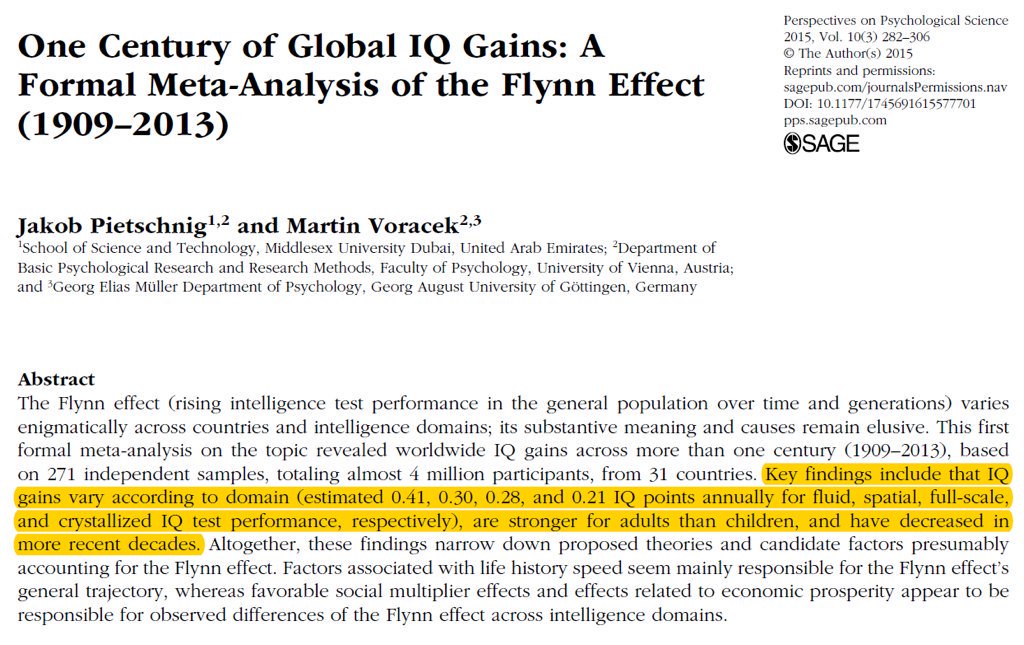
3. IQ scores have been increasing for the last century or so, a phenomenon known as the Flynn effect. https://t.co/sCZvCst3hw (N ≈ 4 million)
(Note that the Flynn effect shows that IQ isn't 100% genetic; it doesn't show that it's 100% environmental.)
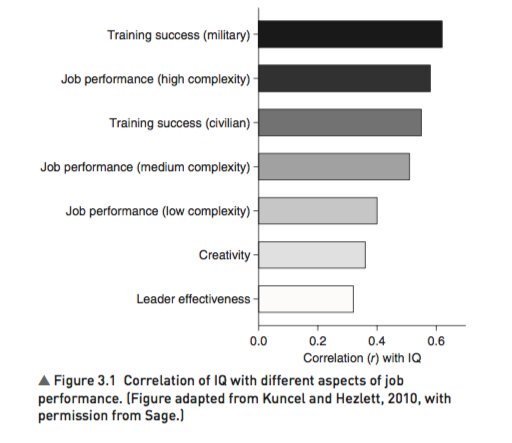
4. IQ predicts many important real world outcomes.
For example, though far from perfect, IQ is the single-best predictor of job performance we have – much better than Emotional Intelligence, the Big Five, Grit, etc. https://t.co/rKUgKDAAVx https://t.co/DWbVI8QSU3
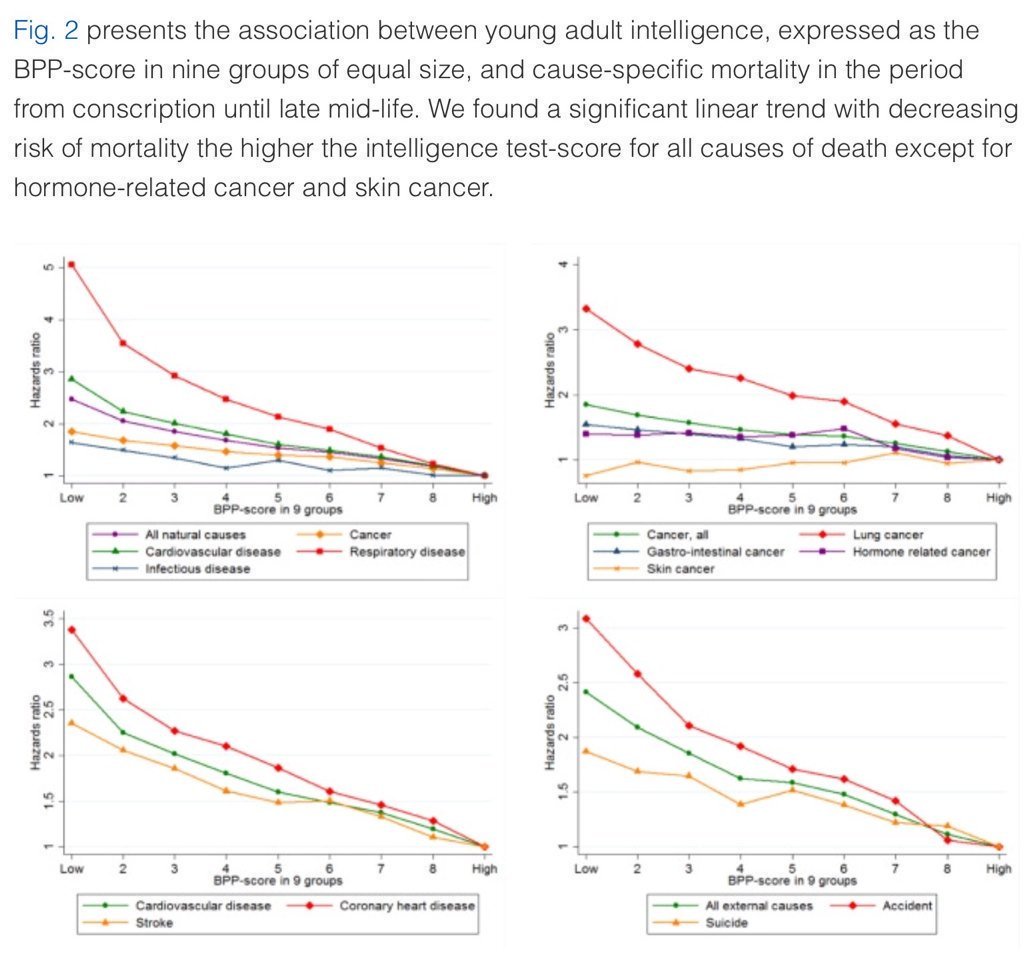
5. Higher IQ is associated with a lower risk of death from most causes, including cardiovascular disease, respiratory disease, most forms of cancer, homicide, suicide, and accident. https://t.co/PJjGNyeQRA (N = 728,160)
1. IQ is one of the most heritable psychological traits – that is, individual differences in IQ are strongly associated with individual differences in genes (at least in fairly typical modern environments). https://t.co/3XxzW9bxLE
2. The heritability of IQ *increases* from childhood to adulthood. Meanwhile, the effect of the shared environment largely fades away. In other words, when it comes to IQ, nature becomes more important as we get older, nurture less. https://t.co/UqtS1lpw3n
3. IQ scores have been increasing for the last century or so, a phenomenon known as the Flynn effect. https://t.co/sCZvCst3hw (N ≈ 4 million)
(Note that the Flynn effect shows that IQ isn't 100% genetic; it doesn't show that it's 100% environmental.)
4. IQ predicts many important real world outcomes.
For example, though far from perfect, IQ is the single-best predictor of job performance we have – much better than Emotional Intelligence, the Big Five, Grit, etc. https://t.co/rKUgKDAAVx https://t.co/DWbVI8QSU3
5. Higher IQ is associated with a lower risk of death from most causes, including cardiovascular disease, respiratory disease, most forms of cancer, homicide, suicide, and accident. https://t.co/PJjGNyeQRA (N = 728,160)





On the occasion of youtube 20k and Twitter 70k members
A small tribute/gift to members
Screeners
technical screeners - intraday and positional both
before proceeding - i have helped you , can i ask you so that it can help someone else too
thank you
positional one
run - find #stock - draw chart - find levels
1- Stocks closing daily 2% up from 5 days
https://t.co/gTZrYY3Nht
2- Weekly breakout
https://t.co/1f4ahEolYB
3- Breakouts in short term
https://t.co/BI4h0CdgO2
4- Bullish from last 5
intraday screeners
5- 15 minute Stock Breakouts
https://t.co/9eAo82iuNv
6- Intraday Buying seen in the past 15 minutes
https://t.co/XqAJKhLB5G
7- Stocks trading near day's high on 5 min chart with volume BO intraday
https://t.co/flHmm6QXmo
Thank you
A small tribute/gift to members
Screeners
technical screeners - intraday and positional both
before proceeding - i have helped you , can i ask you so that it can help someone else too
thank you
positional one
run - find #stock - draw chart - find levels
1- Stocks closing daily 2% up from 5 days
https://t.co/gTZrYY3Nht
2- Weekly breakout
https://t.co/1f4ahEolYB
3- Breakouts in short term
https://t.co/BI4h0CdgO2
4- Bullish from last 5
intraday screeners
5- 15 minute Stock Breakouts
https://t.co/9eAo82iuNv
6- Intraday Buying seen in the past 15 minutes
https://t.co/XqAJKhLB5G
7- Stocks trading near day's high on 5 min chart with volume BO intraday
https://t.co/flHmm6QXmo
Thank you