Something I want to flag for #MAEdu this morning:

The Board of Ed meets next Tuesday; agenda is here:

You will note the second item on the agenda is "Proposed Amendments to Student Learning Time Regulations, 603 CMR 27.00 (Standards for Remote Learning and Hybrid Learning) — Discussion and Vote to Adopt Emergency Regulations"

You will also note there is no backup as yet:
In other words, the actual proposed emergency regulations that the Commissioner will be asking the Board to adopt on the spot next Tuesday are not actually publicly available as yet.

Note that the deadline to file to comment next Tuesday is today at 5 pm.
The Board passing regulations is roughly equivalent to school committees passing policy changes, something which generally goes through multiple readings at multiple meetings (or passes through subcommittees or both) because public process is super important.
Not so much, here.

Let me share the bit that I do know (there is, of course, nothing as yet in writing, because...see above).
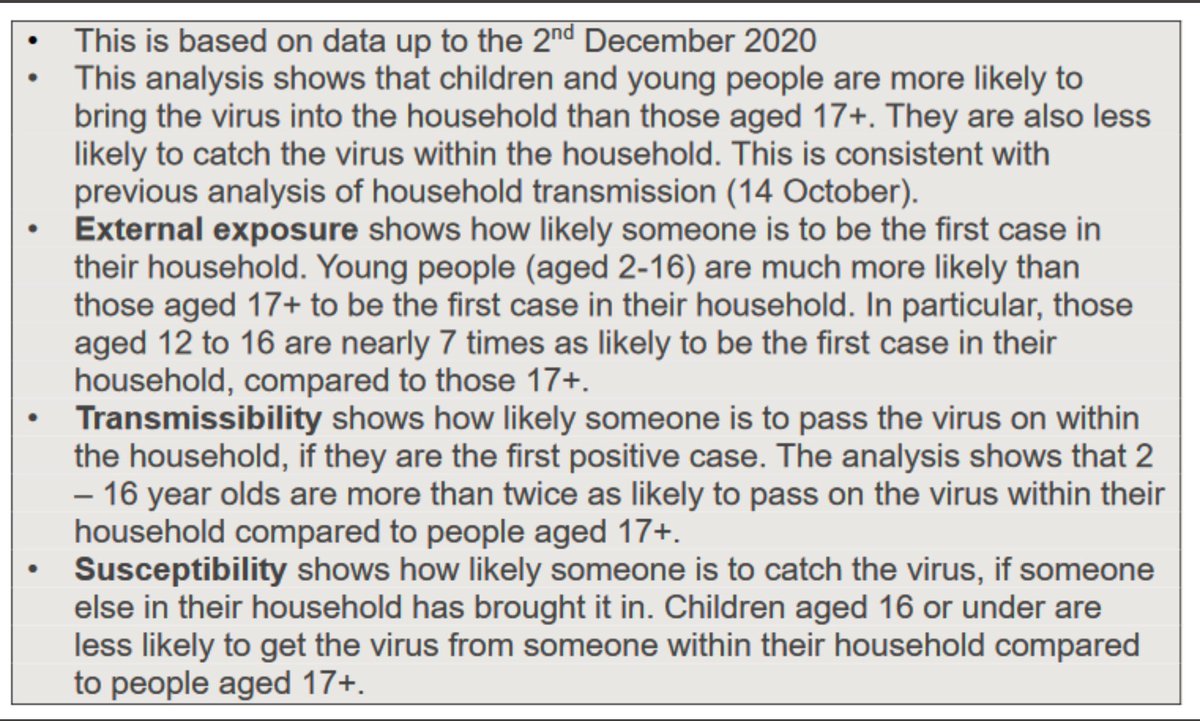
You might recall that last month, the Department required all districts to fill out documentation on how they were providing education to students right now: hours in classrooms, hours of synchronous online, hours of asynchronous online, sampling by grade with exceptions noted.
What superintendents were told--and I am very clear on this part--was that it was so the Department could adequately respond to concerns being expressed that X district was doing this...in other words, to respond to hearsay about what was being provided by districts.
(You might also recall that I ever said that this made some sense, as it aligned with DESE's general "collect information about what districts are doing so as to have the story straight" mode.)

Yes, well...
The emergency regulations are, as I understand it, going to lay our requirements on precisely how remote and hybrid learning are to be provided: required numbers of hours of synchronous learning, over required number of days.
This is, of course, coming from the Department--and I could go on at length about this but will not here--that has not engaged in any meaningful way with districts that are remote learning on what is successful, what is not, and why they have made the choices they have.
I could easily dig up quotes from this Commissioner on how he intended to engage with districts, with superintendents, with teachers, with the local level in ways that were a break from past practice.
I won't because A) it's too easy and B) I have actual work to do this morning.
I will say that I am angry and sick about this.

And so so so tired.
#MAEdu
but yeah, reporters, might want to look into that.
@threadreaderapp unroll

More from Education

Last month I presented seven sentences in seven different languages, all written in a form of the Chinese-character script. The challenge was to identify the languages and, if possible, provide a


Here again are those seven sentences:

1) 他的剑从船上掉到河里去
2) 於世𡗉番𧡊哭唭𢆥尼歲㐌外四𨑮
3) 入良沙寢矣見昆腳烏伊四是良羅
4) 佢而家喺邊喥呀
5) 夜久毛多都伊豆毛夜幣賀岐都麻碁微爾夜幣賀岐都久流曾能夜幣賀岐袁
6) 其劍自舟中墜於水
7) 今天愛晚特語兔吃二魚佛午飯

Six of those seven sentences are historically attested. One is not: I invented #7. I’m going to dive into an exploration of that seventh sentence in today’s thread.

Sentence #7 is an English-language sentence written sinographically — that is, using graphs that originate in the Chinese script. I didn’t do this for fun (even though it is fun), or as a proposal for a new way to write


I did it as a thought experiment. Why? Because thinking about how the modern Chinese script might be adapted to write modern English can give us valuable insights into historical instances of script borrowing, like those that took place centuries ago in Japan, Korea, and Vietnam.

You May Also Like