
1) Well, also there is this:
For 400 years inflation has NOT been in a "mountain range" of up and down, but rather stair-stepped in giant increases, always associated with major transformations in economic arrangements.
The only way that debt comes down is if rest of world flips to trade deficit status w/US (I.e., trades accumulates $USD from prior trade surpluses w/US for actual goods & services). Not likely anytime soon. $USD as global reserve currency requires massive public debt.
— David "Most Vicious Dogs & Ominous Weapons" Herr (@davidcherr) January 15, 2021
More from Larry Schweikart
2) The time for faith is not when you are getting your way, when everything is going well, when all your "prayers are answered."
3) That's the exact opposite of faith.
How We Can Keep the Faith in America When Everything Is Shaken https://t.co/gJKWXJYdnc @DailySignal #AAG #AAG2020
— All American Girl (@AIIAmericanGirI) January 14, 2021
More from Economy



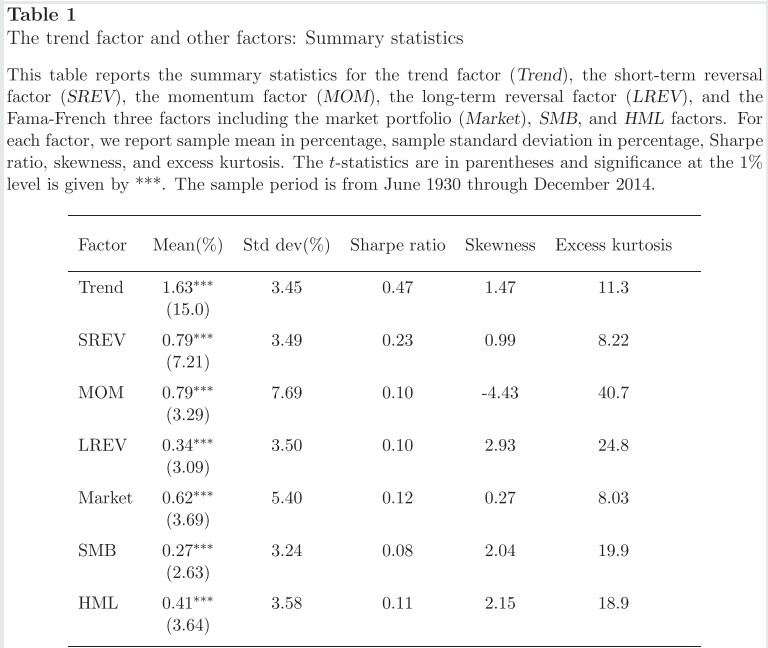
"A trend factor using multiple time lengths outperforms ST reversal, momentum, and LT reversal, which are based on the three price trends separately."
https://t.co/udkvsdw2Lz
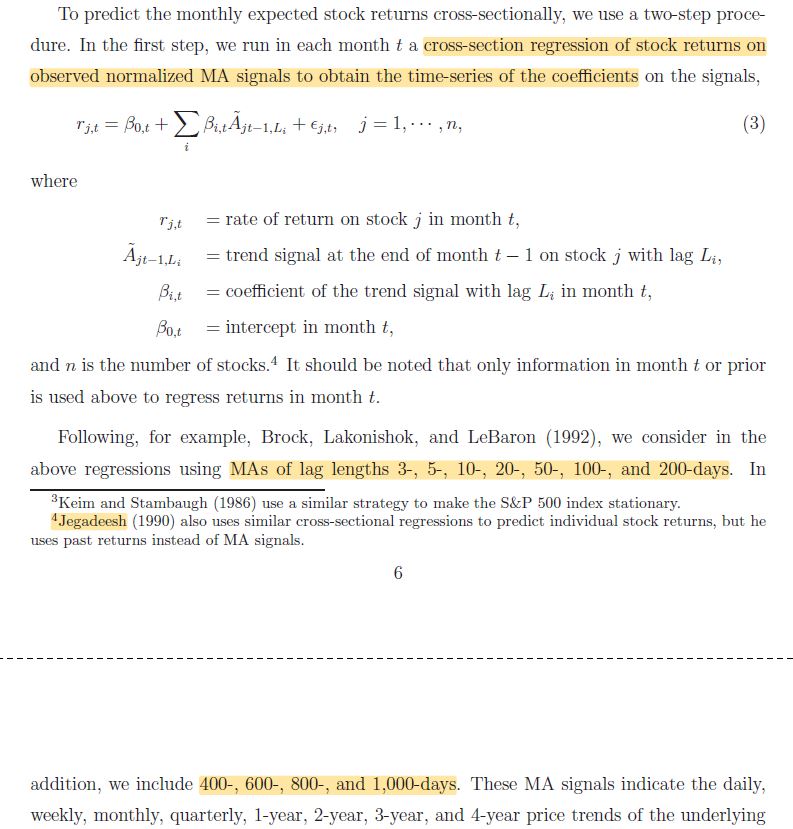
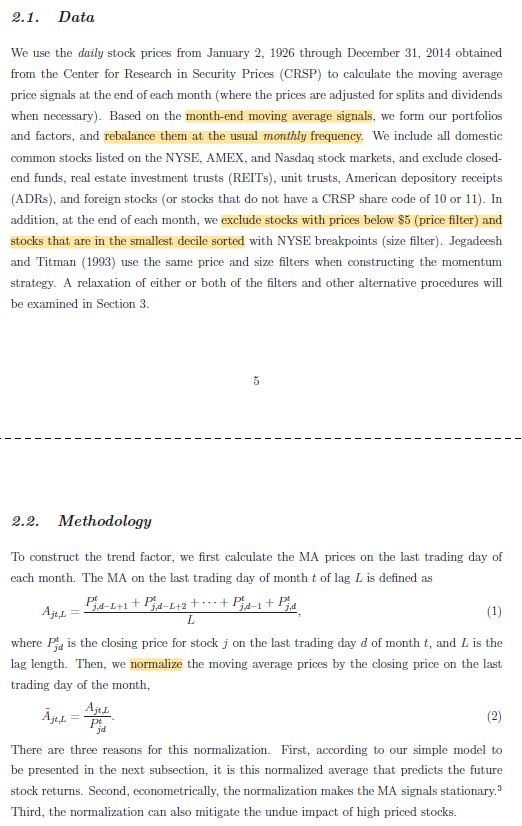
2/ This resembles combining multiple measures of ST reversal, momentum, and LT reversal (forecasts determined by walking forward rather than using signs from the full sample).
Unlike normal moving average signals, these are *cross-sectional.* More below:
https://t.co/wkIFLg9jtK
1/ Cross-Sectional and Time-Series Tests of Return Predictability: What Is the Difference? (Goyal, Jegadeesh)
— Darren \U0001f95a (@ReformedTrader) June 18, 2019
"The difference between the performances of TS and CS strategies is largely due to a time-varying net-long investment in risky assets."https://t.co/CSIn3ujN2R pic.twitter.com/XHnVmIart4
3/ Unsurprisingly, the Trend factor formed by this approach outperforms benchmarks in terms of both Sharpe ratio and tail metrics. It's combining momentum with two factors that are negatively correlated to it AND using multiple specifications.
More here:
https://t.co/x8Tloz3iyL
1/ An Executive Summary (in Tweet form) of our new paper
— Adam Butler (@GestaltU) March 27, 2019
Dual Momentum \u2013 A Craftsman\u2019s Perspective
Download here: https://t.co/Y9GlGNohBg
Everything that follows in this thread is based on HYPOTHETICAL AND SIMULATED RESULTS. pic.twitter.com/9m5YJnTdtq
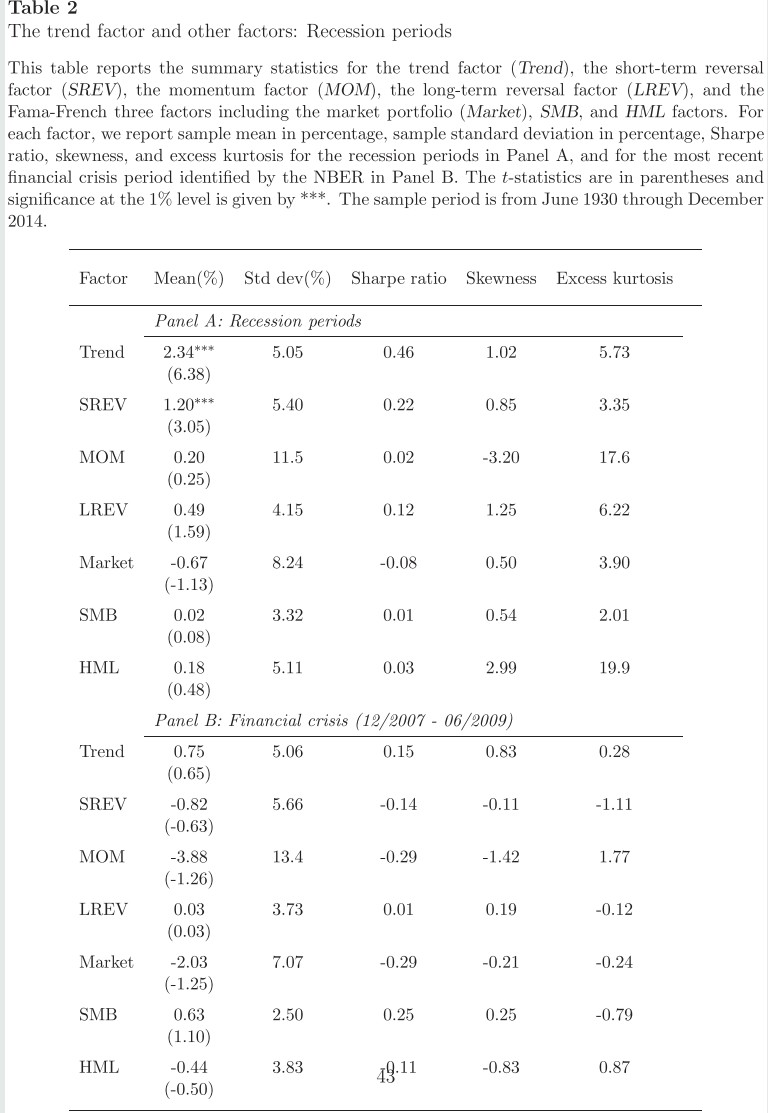
4/ "Average return and volatility of the trend factor are both higher in recession periods. However, the Sharpe ratio is virtually the same.
"Interestingly, all of the factors still have positive average returns.
"Momentum experiences the greatest increase in volatility."
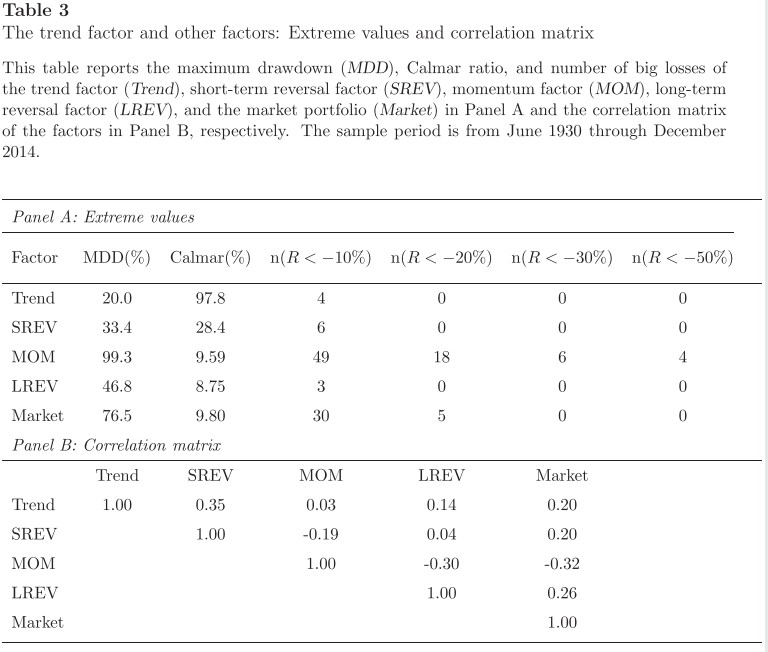
5/ "In terms of maximum drawdown and the Calmar ratio, the trend factor performs the best.
"The trend factor is correlated with the short-term reversal factor (35%), long-term reversal factor (14%), and the market (20%) but is virtually uncorrelated with the momentum factor."

The first thing to understand is that energy is not globally fungible. Electricity decays as it leaves its point of origin; it’s expensive to transport. There is a huge excess (hydro) in many areas.
Let's discuss the environmental cost of bitcoin. Because despite all the push for sustainable and green investment in the tech sector, there's a giant smoldering Chernobyl sitting at the heart of Silicon Valley which a lot of investors would prefer you remain quiet about. \U0001f9f5 (1/)
— Stephen Diehl (@smdiehl) January 17, 2021
In other words, it can also be variable. It's estimated that in Sichuan there is twice as much electricity produced as is needed during the rainy season. Indeed, there is seasonality to how Bitcoin mining works. You can see here:
Bitcoin EXPORTS energy in this scenario. Fun fact, most industrial nations would steer this excess capacity towards refining aluminum by melting bauxite ore, which is very energy intensive.
You wouldn't argue that we are producing *too much* electricity from renewables, right?
"But what about the carbon footprint! ITS HUGE!"
Many previous estimates have quite faulty methods and don't take into account the actual energy sources. Is it fair to put a GHG equivalent on hydro or solar power? That would seem a bit disingenuous, no?
Well that's exactly what some have done.
You May Also Like












Five billionaires share their top lessons on startups, life and entrepreneurship (1/10)
I interviewed 5 billionaires this week
— GREG ISENBERG (@gregisenberg) January 23, 2021
I asked them to share their lessons learned on startups, life and entrepreneurship:
Here's what they told me:
10 competitive advantages that will trump talent (2/10)
To outperform, you need serious competitive advantages.
— Sahil Bloom (@SahilBloom) March 20, 2021
But contrary to what you have been told, most of them don't require talent.
10 competitive advantages that you can start developing today:
Some harsh truths you probably don’t want to hear (3/10)
I\u2019ve gotten a lot of bad advice in my career and I see even more of it here on Twitter.
— Nick Huber (@sweatystartup) January 3, 2021
Time for a stiff drink and some truth you probably dont want to hear.
\U0001f447\U0001f447
10 significant lies you’re told about the world (4/10)
THREAD: 10 significant lies you're told about the world.
— Julian Shapiro (@Julian) January 9, 2021
On startups, writing, and your career: