
Valuation


More from Economy


I know I’ve been beating this redlining and wealth gap drum for 20+ years but here is a GREAT cliffs notes version.
But don’t take @ambermruffin’s word for it. You should get references...
A thread
How homes in Black neighborhoods are undervalued by $156
Every major bank in the US has been sued for mortgage discrimination and a study that included every mortgage in America found that Banks charge higher interest rates to nonblack customers
https://t.co/sx9tWWB98s
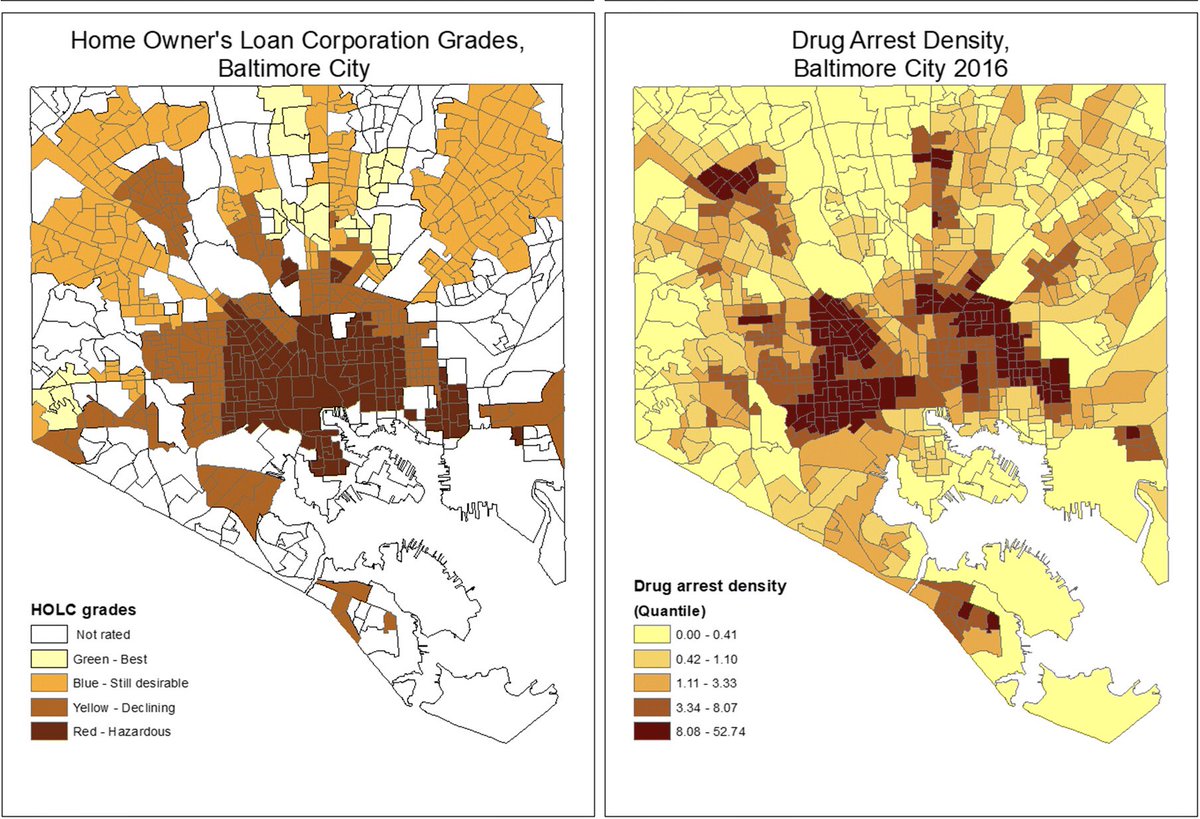
Baltimore redlined areas in 1935 vs Baltimore Drug arrests in 2016
But don’t take @ambermruffin’s word for it. You should get references...
A thread
How did systemic racism get so dang strong? Find out a few of the like bajilliondy ways in our new segment, How Did We Get Here! pic.twitter.com/f4HfISckXh
— amber ruffin (@ambermruffin) January 30, 2021
How homes in Black neighborhoods are undervalued by $156
Every major bank in the US has been sued for mortgage discrimination and a study that included every mortgage in America found that Banks charge higher interest rates to nonblack customers
https://t.co/sx9tWWB98s
Baltimore redlined areas in 1935 vs Baltimore Drug arrests in 2016

You May Also Like









So it's now October 10, 2018 and....Rod Rosenstein is STILL not fired.
He's STILL in charge of the Mueller investigation.
He's STILL refusing to hand over the McCabe memos.
He's STILL holding up the declassification of the #SpyGate documents & their release to the public.
I love a good cover story.......
The guy had a face-to-face with El Grande Trumpo himself on Air Force One just 2 days ago. Inside just about the most secure SCIF in the world.
And Trump came out of AF1 and gave ol' Rod a big thumbs up!
And so we're right back to 'that dirty rat Rosenstein!' 2 days later.
At this point it's clear some members of Congress are either in on this and helping the cover story or they haven't got a clue and are out in the cold.
Note the conflicting stories about 'Rosenstein cancelled meeting with Congress on Oct 11!"
First, rumors surfaced of a scheduled meeting on Oct. 11 between Rosenstein & members of Congress, and Rosenstein just cancelled it.
He's STILL in charge of the Mueller investigation.
He's STILL refusing to hand over the McCabe memos.
He's STILL holding up the declassification of the #SpyGate documents & their release to the public.
I love a good cover story.......
The guy had a face-to-face with El Grande Trumpo himself on Air Force One just 2 days ago. Inside just about the most secure SCIF in the world.
And Trump came out of AF1 and gave ol' Rod a big thumbs up!
And so we're right back to 'that dirty rat Rosenstein!' 2 days later.
At this point it's clear some members of Congress are either in on this and helping the cover story or they haven't got a clue and are out in the cold.
Note the conflicting stories about 'Rosenstein cancelled meeting with Congress on Oct 11!"
First, rumors surfaced of a scheduled meeting on Oct. 11 between Rosenstein & members of Congress, and Rosenstein just cancelled it.
Rep. Andy Biggs and Rep. Matt Gaetz say DAG Rod Rosenstein cancelled an Oct. 11 appearance before the judiciary and oversight committees. They are now calling for a subpoena. pic.twitter.com/TknVHKjXtd
— Ivan Pentchoukov \U0001f1fa\U0001f1f8 (@IvanPentchoukov) October 10, 2018


