The U.S. is divided into three grids: one covers the eastern states, another the western states, and then there’s the Texas grid, ERCOT, which covers nearly the entire state.
Last month, Texas resident Royce Peirce paid $387.70 to heat his two-story house. This month, he owes $8,162.73 — and counting.
Amid freezing temperatures and another looming winter storm, Texans are facing a second crisis: astronomical power
The U.S. is divided into three grids: one covers the eastern states, another the western states, and then there’s the Texas grid, ERCOT, which covers nearly the entire state.
If you’re familiar with the state’s history and public policy, you probably already know the answer. In short, Texas has its own grid to avoid dealing with the federal government.
https://t.co/SBIV5ThNNs
Amid freezing temperatures, the imbalance between Texas’s staggering electricity demand and its limited supply caused prices to skyrocket from $20 per megawatt hour to $9,000 per megawatt hour — a 450% increase.
CEO Michael Fallquist told Griddy’s 29,000 customers to abandon his service and switch providers: “We want what’s right by our consumers, so we are encouraging them to leave.”
https://t.co/Fv12irm0xG
“This is becoming the worst state-level policy disaster since the Flint water crisis … This is not the breakdown of the system. This is a system that is broken down by design.”
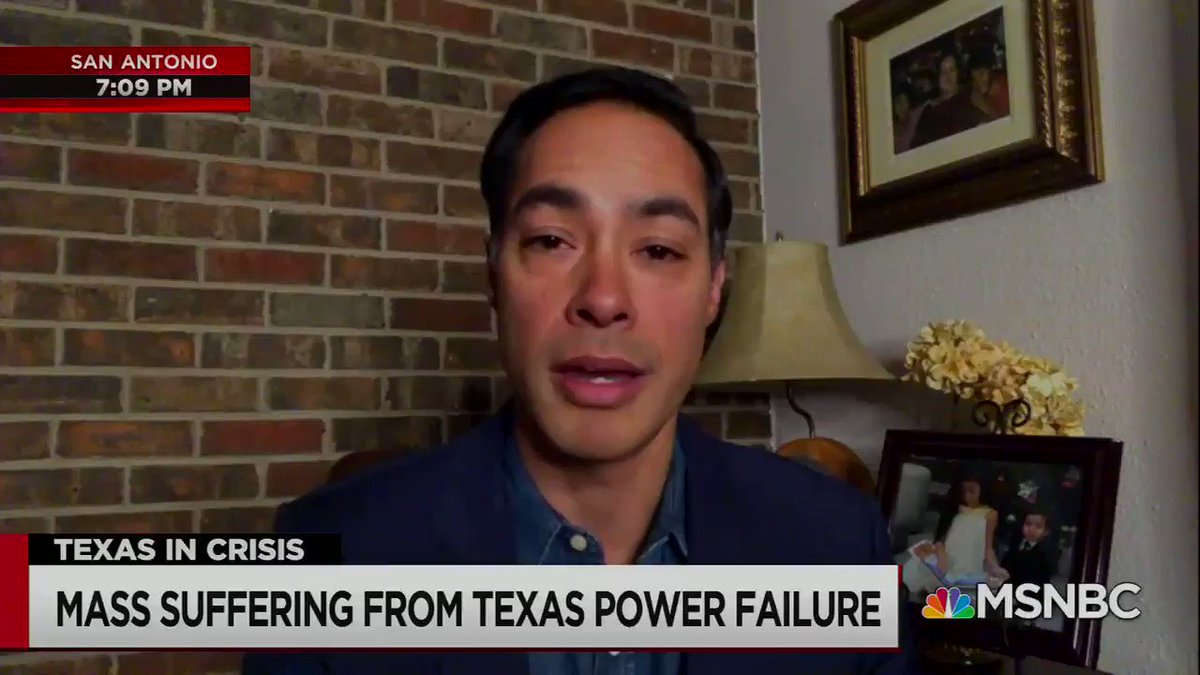
He hopes a relief package from the state will help cover the costs.
More from Economy


1. HUGE DISCOVERY!
What would have been exposed if @GenFlynn hadn't been impeded by corrupt FBI, DOJ and the Obama White house?
He'd have exposed CHINA and their laundering of IRANIAN OIL MONEY!
Read the thread below for the back story on how they went after Flynn.
What would have been exposed if @GenFlynn hadn't been impeded by corrupt FBI, DOJ and the Obama White house?
He'd have exposed CHINA and their laundering of IRANIAN OIL MONEY!
Read the thread below for the back story on how they went after Flynn.
1. As promised.
— \U0001f1fa\U0001f1f8 \U0001d7dc\U0001d7d8\u210d\U0001d556\U0001d552\U0001d555 \U0001f1fa\U0001f1f8 \u2b50\u2b50\u2b50 \U0001f1fa\U0001f1f8 (@40_head) December 2, 2020
A deep dig covering years of research. This is going to take you committing some real time to get through. What's THIS all about?
A coup. Murder. Treason. Laundering gold for Iran...I think it will blow your mind.


You May Also Like



@franciscodeasis https://t.co/OuQaBRFPu7
Unfortunately the "This work includes the identification of viral sequences in bat samples, and has resulted in the isolation of three bat SARS-related coronaviruses that are now used as reagents to test therapeutics and vaccines." were BEFORE the

chimeric infectious clone grants were there.https://t.co/DAArwFkz6v is in 2017, Rs4231.
https://t.co/UgXygDjYbW is in 2016, RsSHC014 and RsWIV16.
https://t.co/krO69CsJ94 is in 2013, RsWIV1. notice that this is before the beginning of the project
starting in 2016. Also remember that they told about only 3 isolates/live viruses. RsSHC014 is a live infectious clone that is just as alive as those other "Isolates".
P.D. somehow is able to use funds that he have yet recieved yet, and send results and sequences from late 2019 back in time into 2015,2013 and 2016!
https://t.co/4wC7k1Lh54 Ref 3: Why ALL your pangolin samples were PCR negative? to avoid deep sequencing and accidentally reveal Paguma Larvata and Oryctolagus Cuniculus?
Unfortunately the "This work includes the identification of viral sequences in bat samples, and has resulted in the isolation of three bat SARS-related coronaviruses that are now used as reagents to test therapeutics and vaccines." were BEFORE the
chimeric infectious clone grants were there.https://t.co/DAArwFkz6v is in 2017, Rs4231.
https://t.co/UgXygDjYbW is in 2016, RsSHC014 and RsWIV16.
https://t.co/krO69CsJ94 is in 2013, RsWIV1. notice that this is before the beginning of the project
starting in 2016. Also remember that they told about only 3 isolates/live viruses. RsSHC014 is a live infectious clone that is just as alive as those other "Isolates".
P.D. somehow is able to use funds that he have yet recieved yet, and send results and sequences from late 2019 back in time into 2015,2013 and 2016!
https://t.co/4wC7k1Lh54 Ref 3: Why ALL your pangolin samples were PCR negative? to avoid deep sequencing and accidentally reveal Paguma Larvata and Oryctolagus Cuniculus?