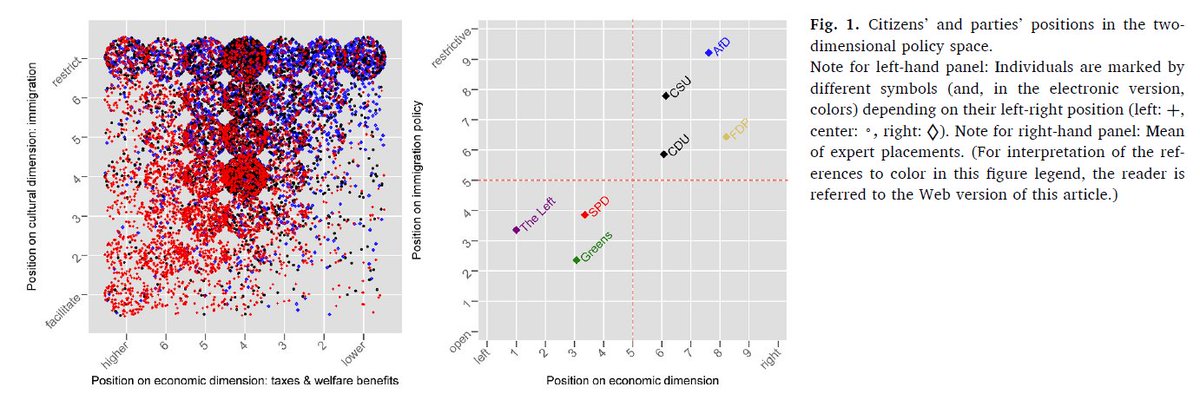
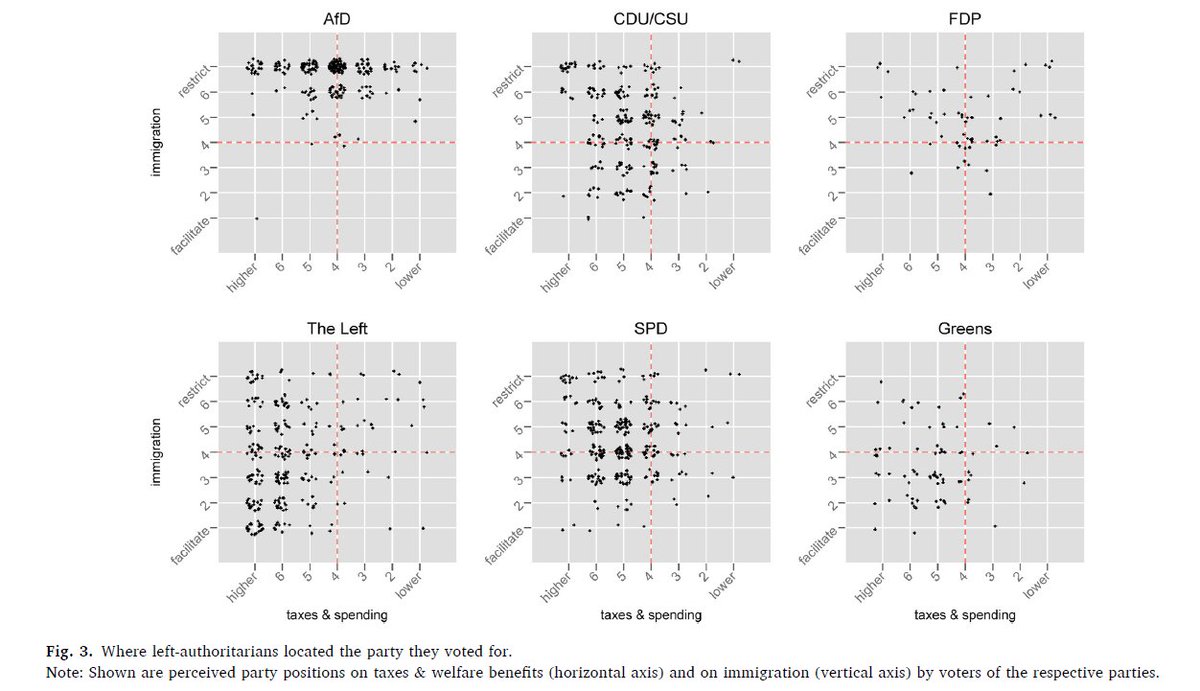
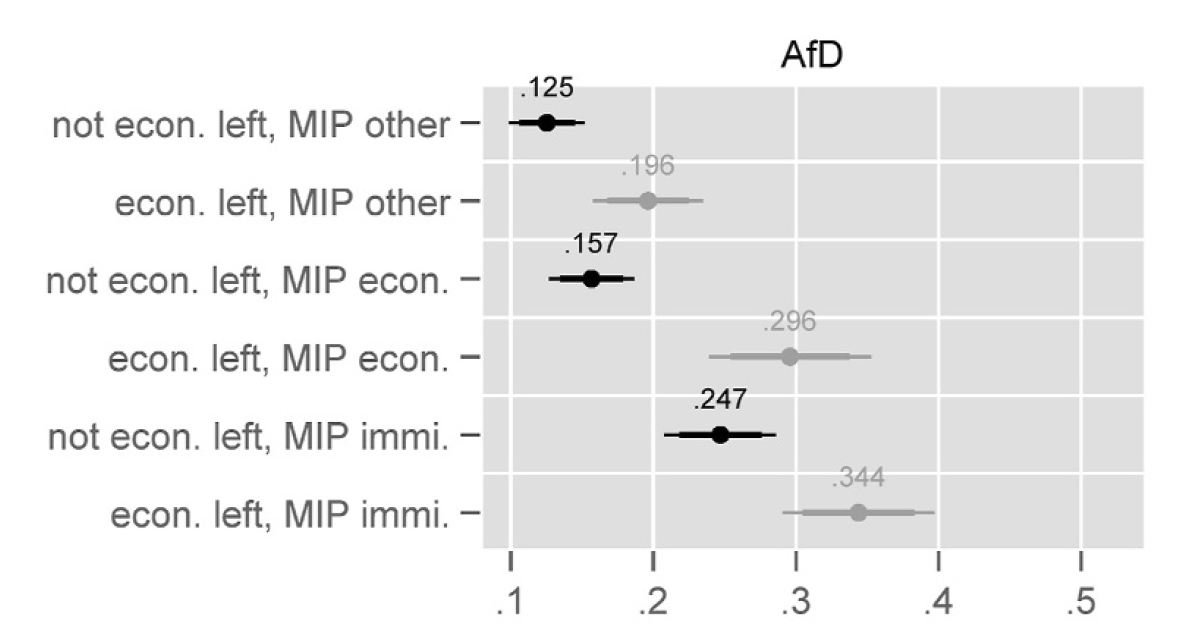
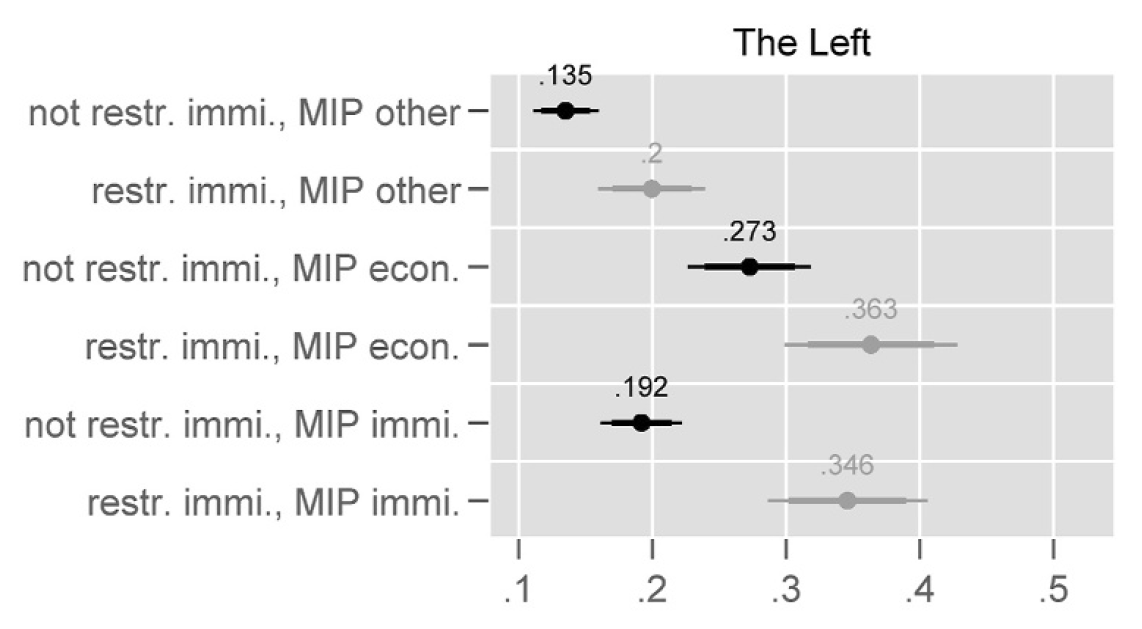
In this paper, we study vote choices of voters who are left-wing on economic issues and authoritarian/nationalist on cultural issues, especially immigration. For these voters, there is no often party combining positions in this way.
Vol 70 Apr | '#Vote choices of left-#authoritarians: Misperceived congruence and issue #salience' by @NilsSteiner and Sven Hillen is now available @ches_data @german_gles #Germany https://t.co/pmCoP5t7CL pic.twitter.com/Vl8rCahcZL
— Electoral Studies (@ElectoralStdies) January 30, 2021
More from Economy

$600/wk Unemployment Insurance cannot deliver the benefits of a $600/wk Job Guarantee. From the outset, I should say JG is not a replacement for UI, no matter what you may have heard. I’ll get to this later, but read this long 🧶 w/ that in mind.
Automatic stabilization: Both $600/wk UI and JG will provide counter cyclical spending. But UI will be weaker. Counter-cyclical stabilization is not just about the absence of income. It is also about the transmission and structure of economy
Firms don't like to hire the unemployed. Mass and long-term unemployment make the problem worse. JG would recover labor markets much faster than a UI of the same amount, both b/c of the higher direct, induced & tertiary employment effects & b/c of private firm hiring preferences.
JG stabilizes spending patterns better. Uncertain job prospects may mean more cautious spending from the unemployed compared to those w/ guaranteed jobs.
UI is temporary, which makes matters worse. Even if it were permanent, it still won't resolve the problem of job scarcity.
Nations who once achieved tight full employment through active labor market policies demonstrate that unemployment does NOT fluctuate the same way it does w/o them. Direct employment, ELR type policies diminish drastically/even eliminate these amplitudes (eg postwar Japan/Sweden)
Surprised so many smart people bought into the idea that $600/wk UI is the same as $600/wk job guarantee (or better) or that JG jobs must be inherently inessential. I\u2019ve addressed this many times & will post a thread later. Trying not to spend precious family time on Twitter.
— Pavlina R Tcherneva (@ptcherneva) December 29, 2020
Automatic stabilization: Both $600/wk UI and JG will provide counter cyclical spending. But UI will be weaker. Counter-cyclical stabilization is not just about the absence of income. It is also about the transmission and structure of economy
Firms don't like to hire the unemployed. Mass and long-term unemployment make the problem worse. JG would recover labor markets much faster than a UI of the same amount, both b/c of the higher direct, induced & tertiary employment effects & b/c of private firm hiring preferences.
JG stabilizes spending patterns better. Uncertain job prospects may mean more cautious spending from the unemployed compared to those w/ guaranteed jobs.
UI is temporary, which makes matters worse. Even if it were permanent, it still won't resolve the problem of job scarcity.
Nations who once achieved tight full employment through active labor market policies demonstrate that unemployment does NOT fluctuate the same way it does w/o them. Direct employment, ELR type policies diminish drastically/even eliminate these amplitudes (eg postwar Japan/Sweden)