
But the essay itself commits that sin. We can't observe *something*--problems in medicine--without expanding it to *everything*; & we can't observe *anything* without saying we can "fix it."
1/36 A thread on Alana Newhouse's Tablet essay. I'm sorry to criticize an essay framed around a writer's ill child.
But my dream for the 2020s is to read big, serious essays whose premises aren't "everything is broken," & that don't say "how to fix
But the essay itself commits that sin. We can't observe *something*--problems in medicine--without expanding it to *everything*; & we can't observe *anything* without saying we can "fix it."
I looked inside.
The cover was an ad, and the "thing" that changed everything turned out to be a Dolce & Gabbana-branded Smeg toaster.
This is a really bad problem, though, not just the minor price of admission to public life.
I say "philosophy, not "tactic," b/c if we use it enough, it becomes a mindset.
Is it different to claim “everything is broken” than it is to say “the world fell apart under Obama"?
This is a privileged fantasy.
Some SA friends gave me side-eye. They would move to the US.
"They don't look like they're suffering like my family is suffering," one said bluntly.
But then she backtracks--or forward-tracks and traces the bad things to the Obama administration.
Institutions on which we could depend?
I remember academia touting Communism for seven decades, and the NYT stating in 1954 that Ho Chi Minh was "over."
Honestly, this sounds like a description of the academy and the NYT 1946-2000 to me.
The US economic system retreats to being the elephant in the room.
Mandated by whom? Amazon is no less of a “cultural vehicle” than HBO.
There's a reason economics is avoided after halfway--investigating it would upend the advice.
Unless you're really careful and do an exceptional job, you have to erect a false world to describe "everything" about it in a few thousand words.
It's the known way to cut through noise. Most of my editors now title my articles "The Key to X" or "Everything Is Y." The more hyperbolic, alarmist, or sweeping magazine articles get, the better they do, financially--and they're struggling.
More from Culture

Best books I read in 2020
1. Atomic Habits by @JamesClear
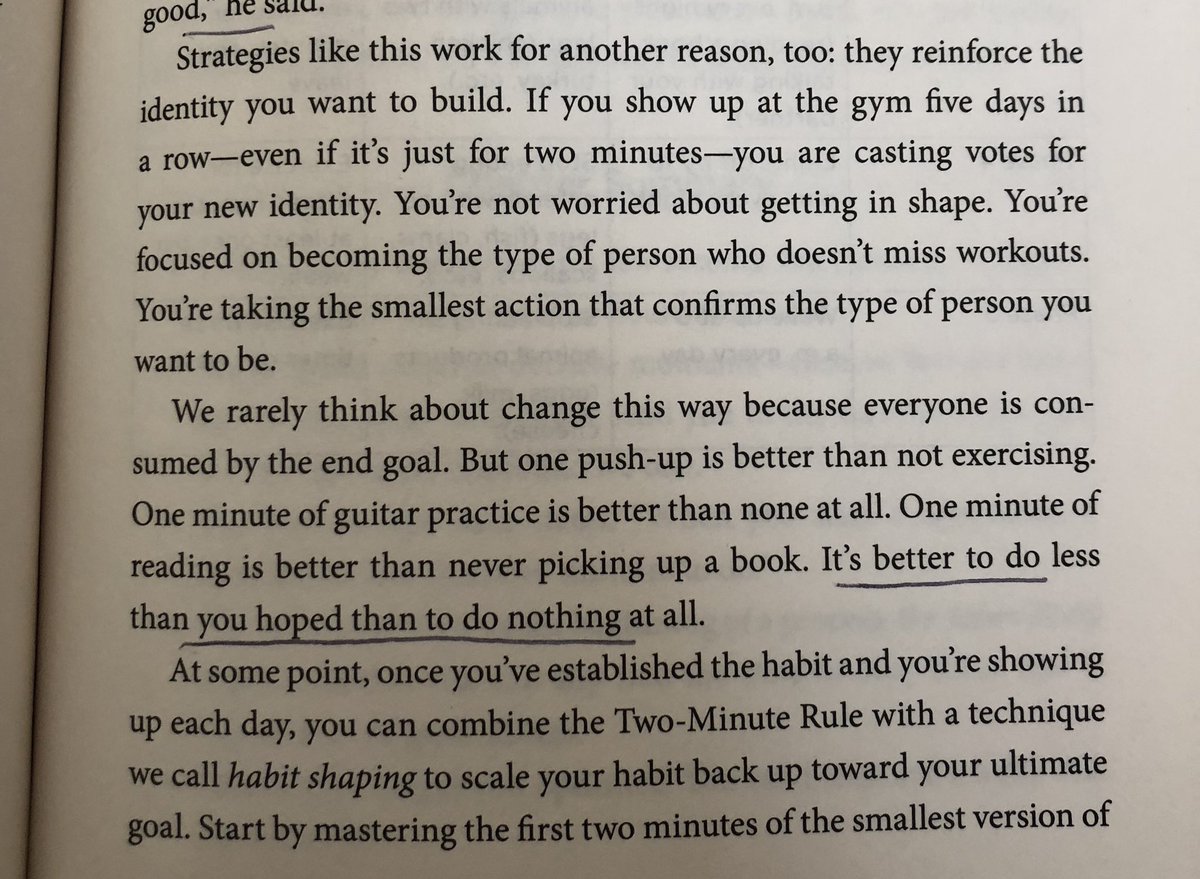
“If you show up at the gym 5 days in a row—even for 2 minutes—you're casting votes for your new identity. You’re not worried about getting in shape. Youre focused on becoming the type of person who doesn’t miss workouts”
Good Reasons for Bad Feelings
https://t.co/KZDqte19nG
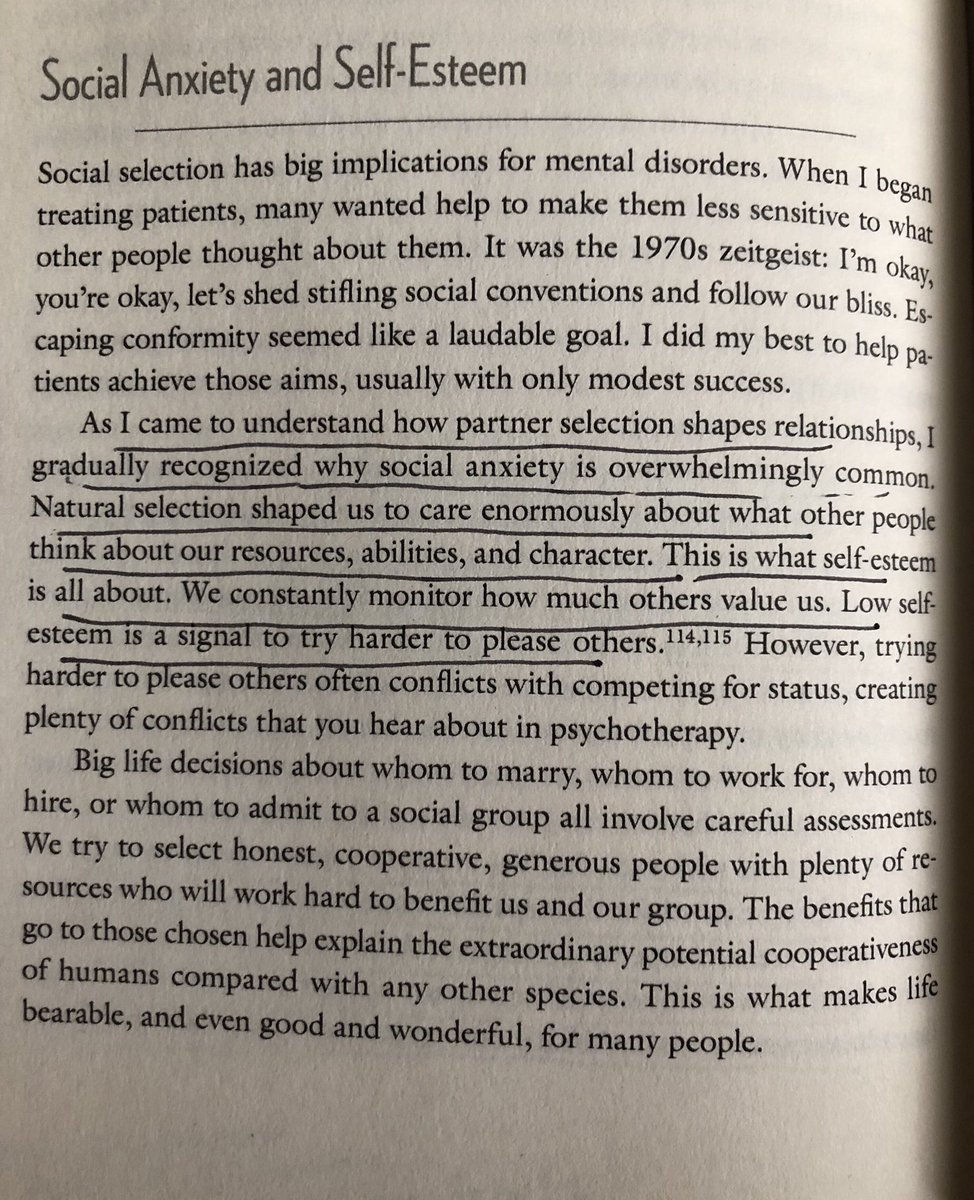
2. “social anxiety is overwhelmingly common. Natural selection shaped us to care enormously what other people think..We constantly monitor how much others value us..Low self-esteem is a signal to try harder to please others”
The True Believer by Eric Hoffer
https://t.co/uZT4kdhzvZ
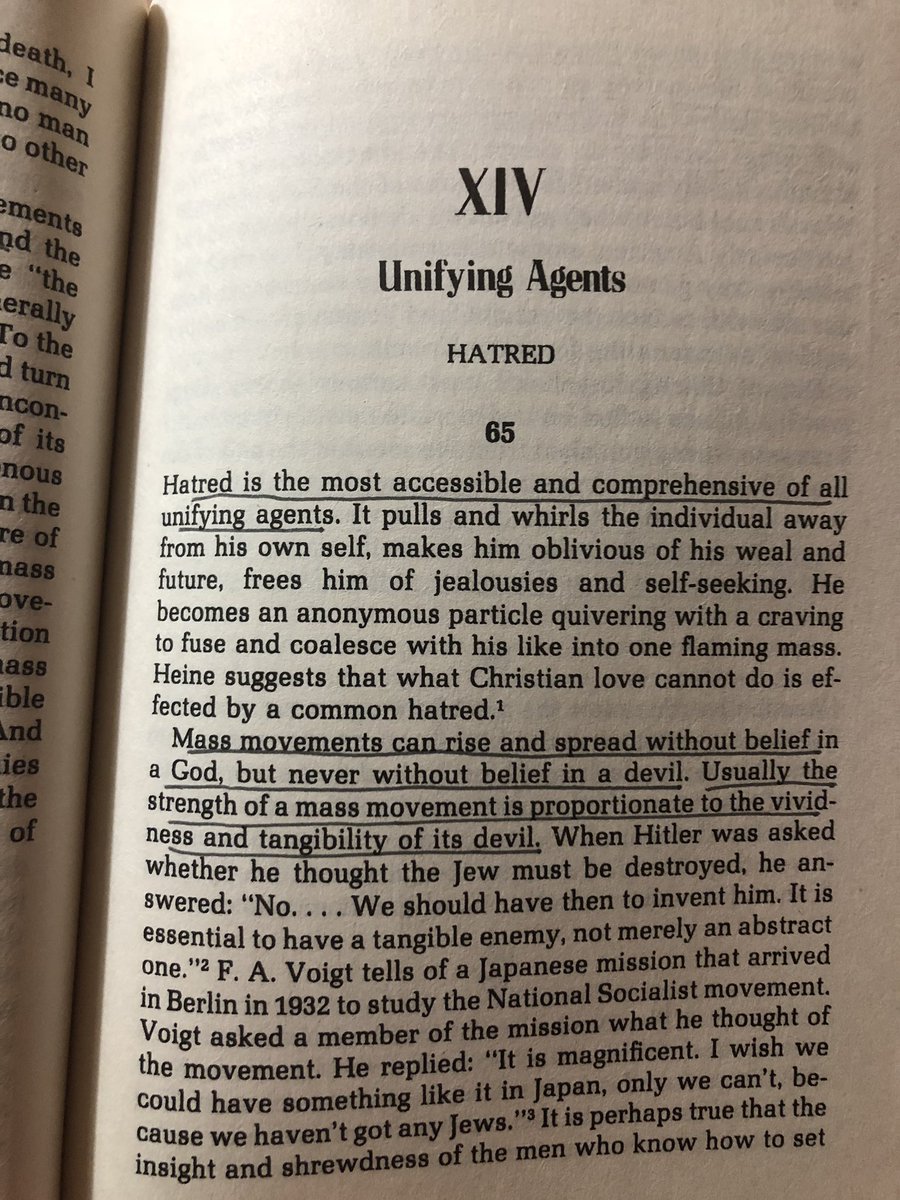
“Hatred is the most accessible and comprehensive of all unifying agents...Mass movements can rise and spread without belief in a God, but never without a believe in a devil.”
Grandstanding
https://t.co/4Of58AZUj8
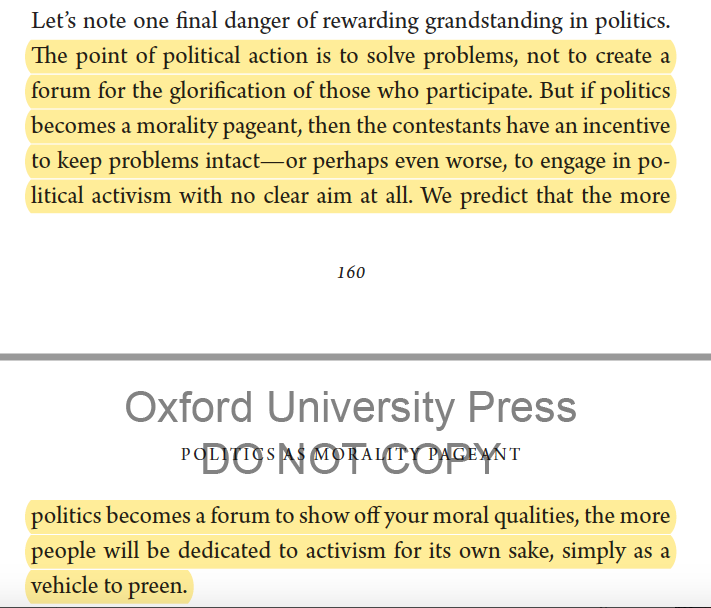
"if politics becomes a morality pageant, then the contestants have an incentive to keep problems intact...politics becomes a forum to show off moral qualities...people will be dedicated to activism for its own sake, as a vehicle to preen"
Warriors and Worriers by Joyce Benenson
https://t.co/yLC4eGHEd4
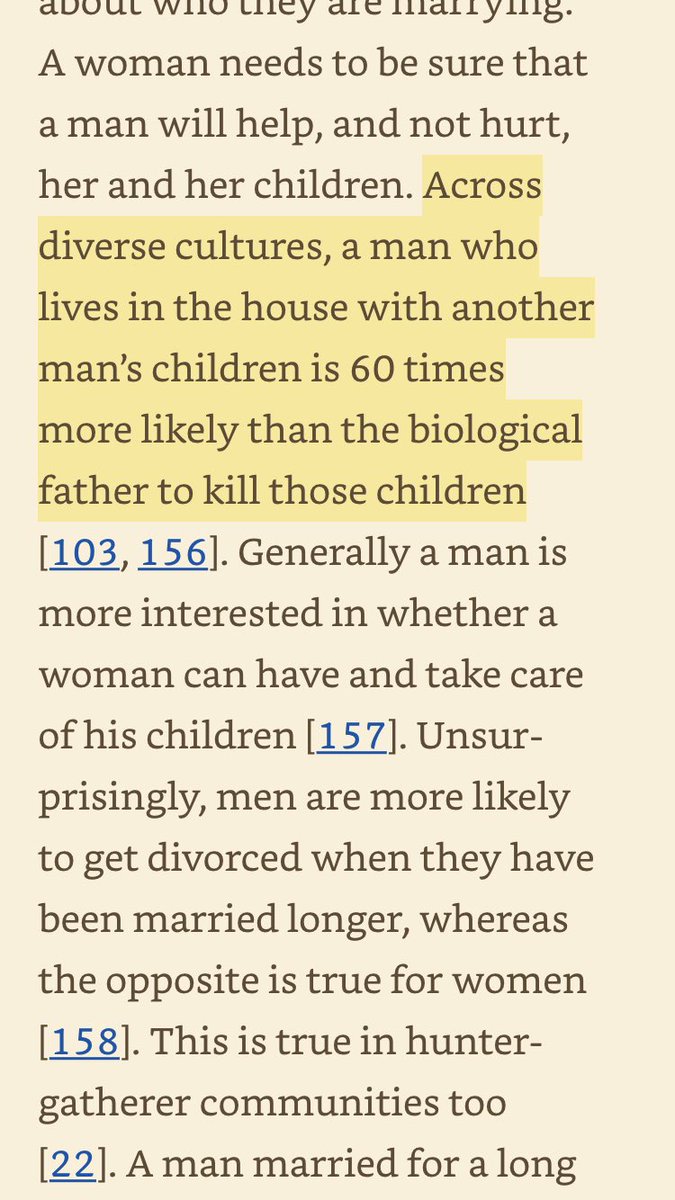
“Across diverse cultures, a man who lives in the house with another man’s children is about 60 times more likely than the biological father to kill those children.”
1. Atomic Habits by @JamesClear
“If you show up at the gym 5 days in a row—even for 2 minutes—you're casting votes for your new identity. You’re not worried about getting in shape. Youre focused on becoming the type of person who doesn’t miss workouts”
Good Reasons for Bad Feelings
https://t.co/KZDqte19nG
2. “social anxiety is overwhelmingly common. Natural selection shaped us to care enormously what other people think..We constantly monitor how much others value us..Low self-esteem is a signal to try harder to please others”
The True Believer by Eric Hoffer
https://t.co/uZT4kdhzvZ
“Hatred is the most accessible and comprehensive of all unifying agents...Mass movements can rise and spread without belief in a God, but never without a believe in a devil.”
Grandstanding
https://t.co/4Of58AZUj8
"if politics becomes a morality pageant, then the contestants have an incentive to keep problems intact...politics becomes a forum to show off moral qualities...people will be dedicated to activism for its own sake, as a vehicle to preen"
Warriors and Worriers by Joyce Benenson
https://t.co/yLC4eGHEd4
“Across diverse cultures, a man who lives in the house with another man’s children is about 60 times more likely than the biological father to kill those children.”


I just finished Eric Adler's The Battle of the Classics, and wanted to say something about Joel Christiansen's review linked below. I am not sure what motivates the review (I speculate a bit below), but it gives a very misleading impression of the book. 1/x
The meat of the criticism is that the history Adler gives is insufficiently critical. Adler describes a few figures who had a great influence on how the modern US university was formed. It's certainly critical: it focuses on the social Darwinism of these figures. 2/x
Other insinuations and suggestions in the review seem wildly off the mark, distorted, or inappropriate-- for example, that the book is clickbaity (it is scholarly) or conservative (hardly) or connected to the events at the Capitol (give me a break). 3/x
The core question: in what sense is classics inherently racist? Classics is old. On Adler's account, it begins in ancient Rome and is revived in the Renaissance. Slavery (Christiansen's primary concern) is also very old. Let's say classics is an education for slaveowners. 4/x
It's worth remembering that literacy itself is elite throughout most of this history. Literacy is, then, also the education of slaveowners. We can honor oral and musical traditions without denying that literacy is, generally, good. 5/x
As someone\u2019s who\u2019s read the book, this review strikes me as tremendously unfair. It mostly faults Adler for not writing the book the reviewer wishes he had! https://t.co/pqpt5Ziivj
— Teresa M. Bejan (@tmbejan) January 12, 2021
The meat of the criticism is that the history Adler gives is insufficiently critical. Adler describes a few figures who had a great influence on how the modern US university was formed. It's certainly critical: it focuses on the social Darwinism of these figures. 2/x
Other insinuations and suggestions in the review seem wildly off the mark, distorted, or inappropriate-- for example, that the book is clickbaity (it is scholarly) or conservative (hardly) or connected to the events at the Capitol (give me a break). 3/x
The core question: in what sense is classics inherently racist? Classics is old. On Adler's account, it begins in ancient Rome and is revived in the Renaissance. Slavery (Christiansen's primary concern) is also very old. Let's say classics is an education for slaveowners. 4/x
It's worth remembering that literacy itself is elite throughout most of this history. Literacy is, then, also the education of slaveowners. We can honor oral and musical traditions without denying that literacy is, generally, good. 5/x

One of the authors of the Policy Exchange report on academic free speech thinks it is "ridiculous" to expect him to accurately portray an incident at Cardiff University in his study, both in the reporting and in a question put to a student sample.
Here is the incident Kaufmann incorporated into his study, as told by a Cardiff professor who was there. As you can see, the incident involved the university intervening to *uphold* free speech principles:
Here is the first mention of the Greer at Cardiff incident in Kaufmann's report. It refers to the "concrete case" of the "no-platforming of Germaine Greer". Any reasonable reader would assume that refers to an incident of no-platforming instead of its opposite.

Here is the next mention of Greer in the report. The text asks whether the University "should have overruled protestors" and "stepped in...and guaranteed Greer the right to speak". Again the strong implication is that this did not happen and Greer was "no platformed".
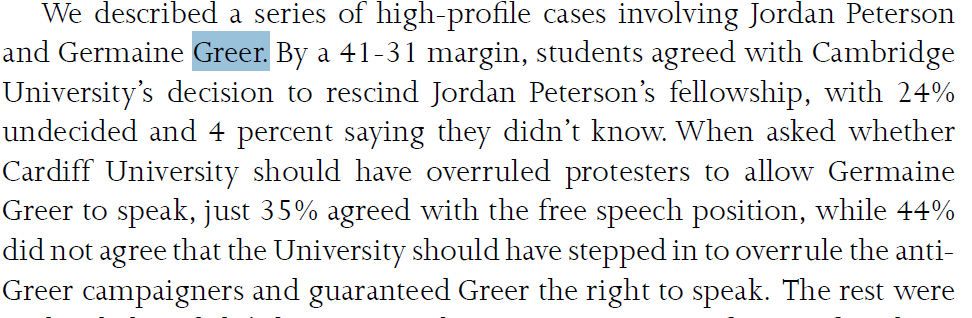
The authors could easily have added a footnote at this point explaining what actually happened in Cardiff. They did not.
This is ridiculous. Students were asked for their views on this example and several others. The study findings and conclusions were about student responses not the substance of each case. Could\u2019ve used hypotheticals. The responses not the cases were the basis of the conclusions.
— Eric Kaufmann (@epkaufm) February 17, 2021
Here is the incident Kaufmann incorporated into his study, as told by a Cardiff professor who was there. As you can see, the incident involved the university intervening to *uphold* free speech principles:
The UK govt\u2019s paper on free speech in Unis (with implications for Wales) is getting a lot of attention.
— Richard Wyn Jones (@RWynJones) February 16, 2021
Worth noting then that an important part of the evidence-base on which it rests relates to (demonstrably false) claims about my own institution
1/https://t.co/buoGE7ocG7
Here is the first mention of the Greer at Cardiff incident in Kaufmann's report. It refers to the "concrete case" of the "no-platforming of Germaine Greer". Any reasonable reader would assume that refers to an incident of no-platforming instead of its opposite.
Here is the next mention of Greer in the report. The text asks whether the University "should have overruled protestors" and "stepped in...and guaranteed Greer the right to speak". Again the strong implication is that this did not happen and Greer was "no platformed".
The authors could easily have added a footnote at this point explaining what actually happened in Cardiff. They did not.

OK. Chapter 7 of Book 4 of #WealthOfNations is tough going. It's long. It's serious. It's all about colonies.
We can take comfort, though, in knowing that the chapter #AdamSmith says is about colonies is, in fact, about colonies. (IV.vii) #WealthOfTweets #SmithTweets

Colonies were a vexed subject when #AdamSmith was writing, and they’re even more complicated now. So, before we even get to the tweeting, here’s a link to that thread on Smith and “savage nations.” (IV.vii) #WealthOfTweets
The reason for the ancient Greeks and Romans to settle colonies was straightforward: they didn’t have enough space for their growing populations. Their colonies were treated as “emancipated children”—connected but independent. (IV.vii.a.2) #WealthOfTweets #SmithTweets
(Both these things are in contrast to the European colonies, as we'll see.) (IV.vii.a.2) #WealthOfTweets #SmithTweets
Ancient Greeks and Romans needed more space because the land was owned by an increasingly small number of citizens and farming and nearly all trades and arts were performed by slaves. It was hard for a poor freeman to improve his life. (IV.vii.a.3) #WealthOfTweets #SmithTweets
We can take comfort, though, in knowing that the chapter #AdamSmith says is about colonies is, in fact, about colonies. (IV.vii) #WealthOfTweets #SmithTweets
Colonies were a vexed subject when #AdamSmith was writing, and they’re even more complicated now. So, before we even get to the tweeting, here’s a link to that thread on Smith and “savage nations.” (IV.vii) #WealthOfTweets
We have to pause now, because we have to have a whole new tweet thread on #AdamSmith and \u201csavage nations,\u201d because he\u2019s going to keep using this kind of phrase, so we need to talk about it. #WealthOfTweets #SmithTweets
— @AdamSmithWorks (@adamsmithworks) January 4, 2021
The reason for the ancient Greeks and Romans to settle colonies was straightforward: they didn’t have enough space for their growing populations. Their colonies were treated as “emancipated children”—connected but independent. (IV.vii.a.2) #WealthOfTweets #SmithTweets
(Both these things are in contrast to the European colonies, as we'll see.) (IV.vii.a.2) #WealthOfTweets #SmithTweets
Ancient Greeks and Romans needed more space because the land was owned by an increasingly small number of citizens and farming and nearly all trades and arts were performed by slaves. It was hard for a poor freeman to improve his life. (IV.vii.a.3) #WealthOfTweets #SmithTweets
You May Also Like

**Thread on Bravery of Sikhs**
(I am forced to do this due to continuous hounding of Sikh Extremists since yesterday)
Rani Jindan Kaur, wife of Maharaja Ranjit Singh had illegitimate relations with Lal Singh (PM of Ranjit Singh). Along with Lal Singh, she attacked Jammu, burnt - https://t.co/EfjAq59AyI

Hindu villages of Jasrota, caused rebellion in Jammu, attacked Kishtwar.
Ancestors of Raja Ranjit Singh, The Sansi Tribe used to give daughters as concubines to Jahangir.

The Ludhiana Political Agency (Later NW Fronties Prov) was formed by less than 4000 British soldiers who advanced from Delhi and reached Ludhiana, receiving submissions of all sikh chiefs along the way. The submission of the troops of Raja of Lahore (Ranjit Singh) at Ambala.
Dabistan a contemporary book on Sikh History tells us that Guru Hargobind broke Naina devi Idol Same source describes Guru Hargobind serving a eunuch
YarKhan. (ref was proudly shared by a sikh on twitter)
Gobind Singh followed Bahadur Shah to Deccan to fight for him.

In Zafarnama, Guru Gobind Singh states that the reason he was in conflict with the Hill Rajas was that while they were worshiping idols, while he was an idol-breaker.
And idiot Hindus place him along Maharana, Prithviraj and Shivaji as saviours of Dharma.

(I am forced to do this due to continuous hounding of Sikh Extremists since yesterday)
Rani Jindan Kaur, wife of Maharaja Ranjit Singh had illegitimate relations with Lal Singh (PM of Ranjit Singh). Along with Lal Singh, she attacked Jammu, burnt - https://t.co/EfjAq59AyI
Tomorrow again same thing happens bcoz fudus like you are creating a narrative oh Khalistan. when farmers are asking MSP. (RSS ki tatti khane wale Kerni sena ke kutte).
— Ancient Economist (@_stock_tips) December 5, 2020
U kill sikhs in 1984 just politics. To BC low IQ fudu Saale entire history was politics.
Hindu villages of Jasrota, caused rebellion in Jammu, attacked Kishtwar.
Ancestors of Raja Ranjit Singh, The Sansi Tribe used to give daughters as concubines to Jahangir.
The Ludhiana Political Agency (Later NW Fronties Prov) was formed by less than 4000 British soldiers who advanced from Delhi and reached Ludhiana, receiving submissions of all sikh chiefs along the way. The submission of the troops of Raja of Lahore (Ranjit Singh) at Ambala.
Dabistan a contemporary book on Sikh History tells us that Guru Hargobind broke Naina devi Idol Same source describes Guru Hargobind serving a eunuch
YarKhan. (ref was proudly shared by a sikh on twitter)
Gobind Singh followed Bahadur Shah to Deccan to fight for him.
In Zafarnama, Guru Gobind Singh states that the reason he was in conflict with the Hill Rajas was that while they were worshiping idols, while he was an idol-breaker.
And idiot Hindus place him along Maharana, Prithviraj and Shivaji as saviours of Dharma.


