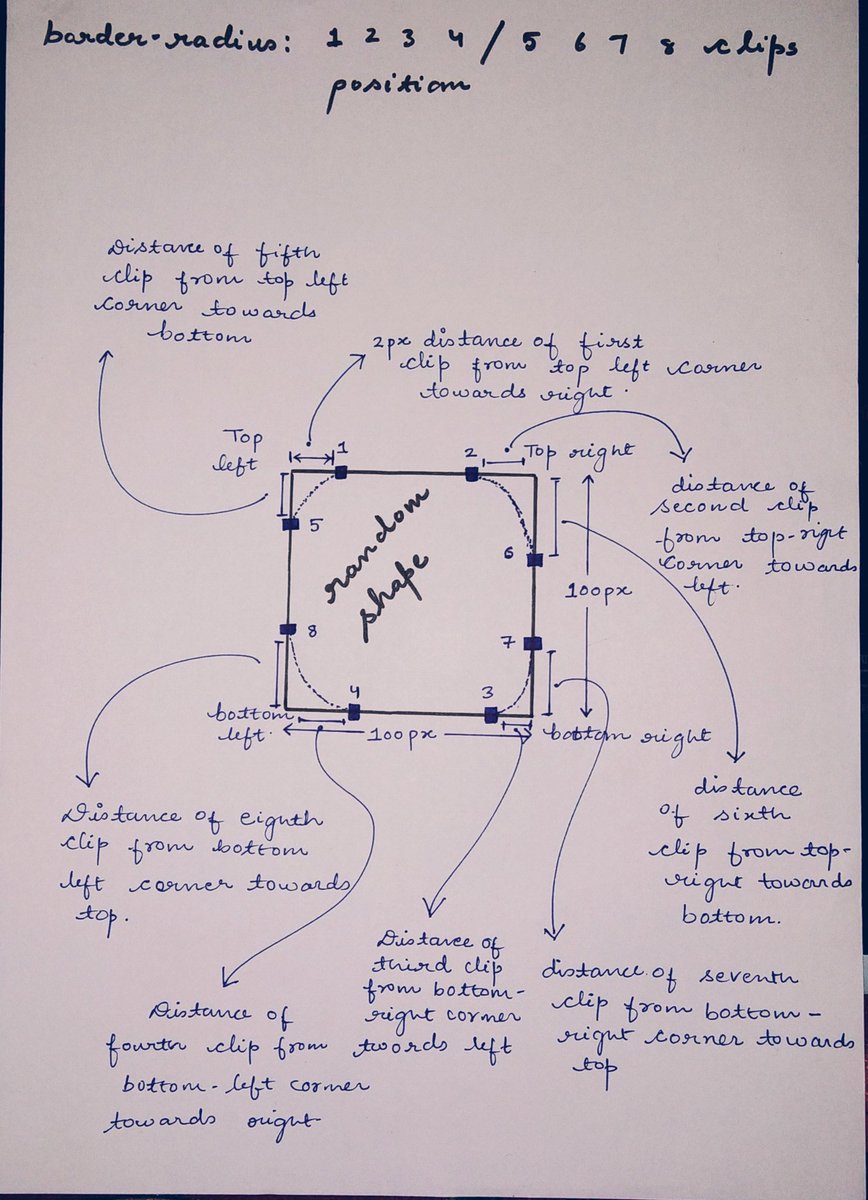
A compiled tweet of the CSS cheats sheet I created in the last few days
🧵👇


More from Pratham 👨💻🚀


5 great gradient background sites for every web developer and designer 🎨
🧵👇🏻

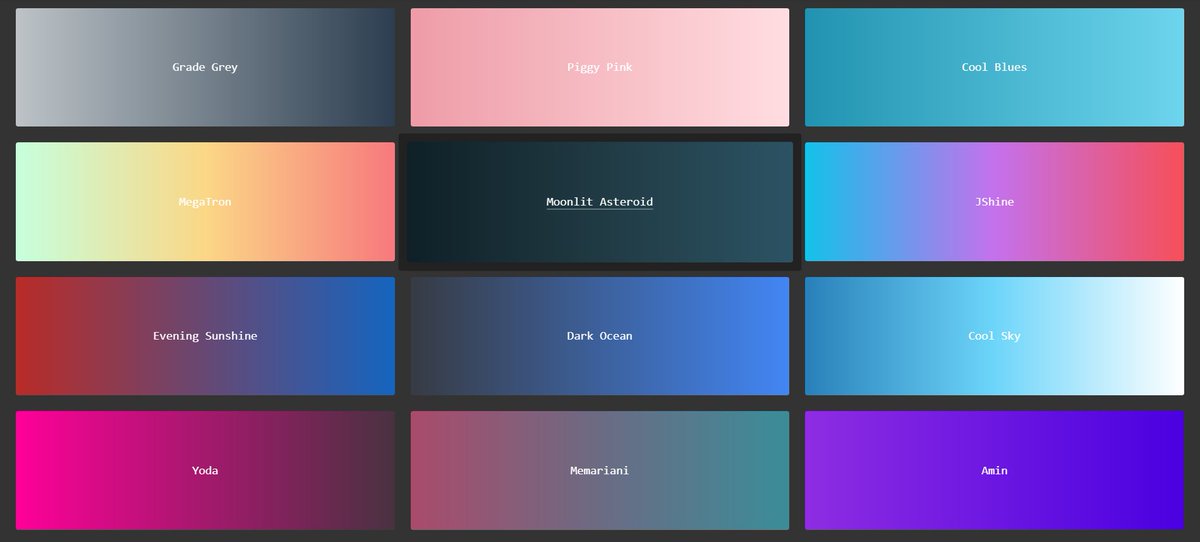
1️⃣ uiGradients
- A handpicked collection of beautiful color gradients for designers and developers.
🔗 https://t.co/EainhiePop
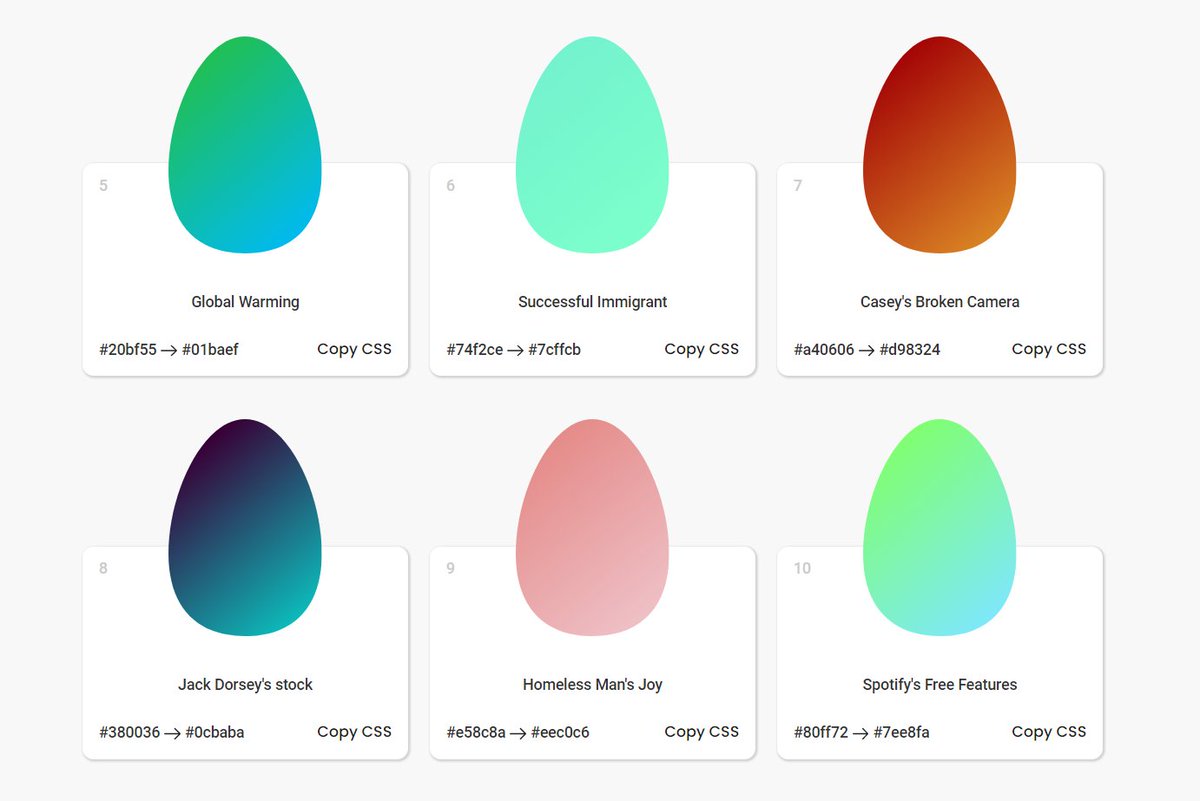
2️⃣ Eggradient
- Ready to use gradient background colors. ✓ Cool Gradients are prepared according to the latest design trends
🔗 https://t.co/F0uYVsZbA4
3️⃣ Mesh Gradients
- Create beautiful gradient like aurora UI in few clicks
🔗 https://t.co/MV8PT7q3Kz
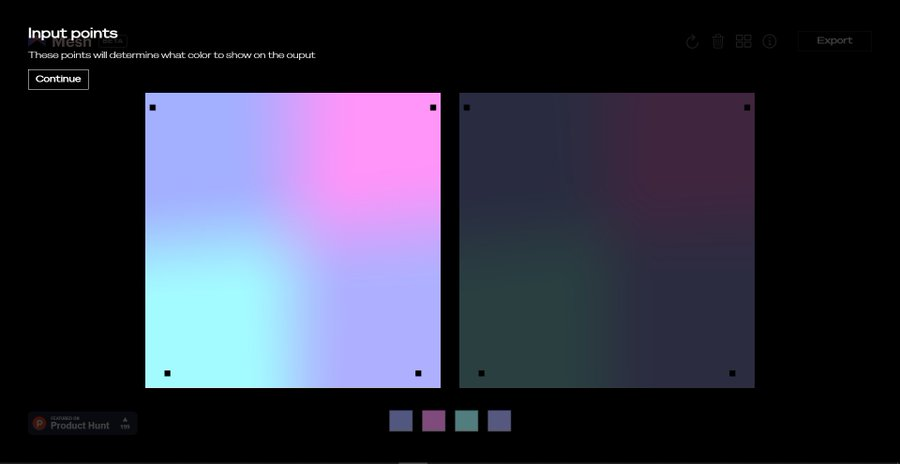
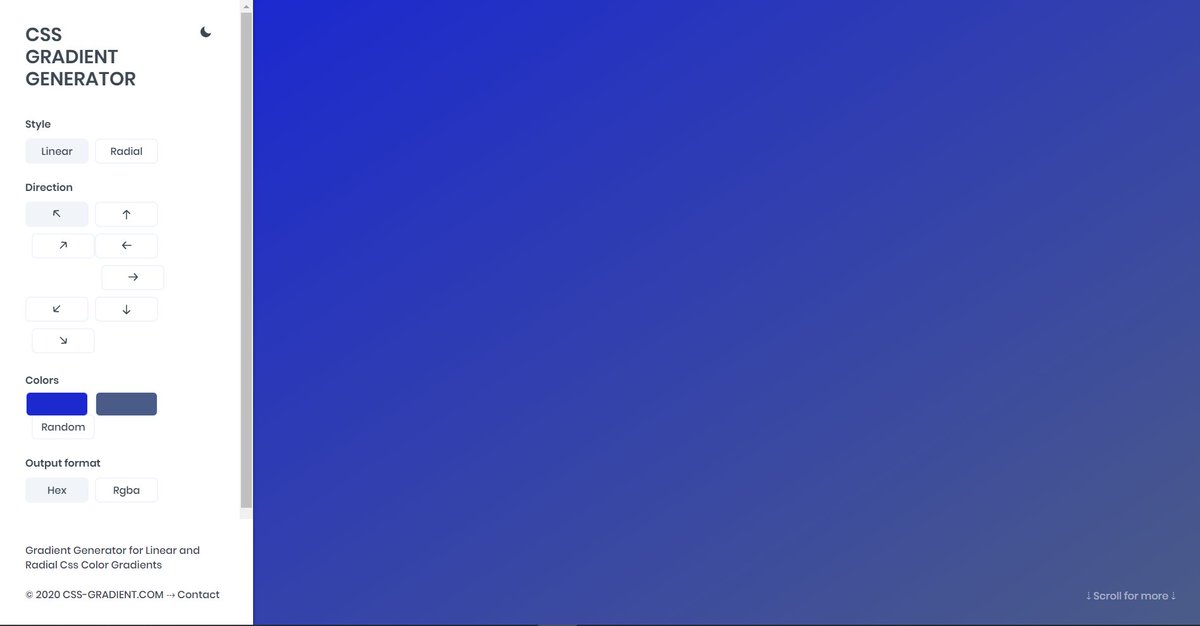
4️⃣ CSS Gradient
- Create beatiful gradeint either linear or radial on different angles
🔗 https://t.co/dlCExilHAT
🧵👇🏻
1️⃣ uiGradients
- A handpicked collection of beautiful color gradients for designers and developers.
🔗 https://t.co/EainhiePop
2️⃣ Eggradient
- Ready to use gradient background colors. ✓ Cool Gradients are prepared according to the latest design trends
🔗 https://t.co/F0uYVsZbA4
3️⃣ Mesh Gradients
- Create beautiful gradient like aurora UI in few clicks
🔗 https://t.co/MV8PT7q3Kz
4️⃣ CSS Gradient
- Create beatiful gradeint either linear or radial on different angles
🔗 https://t.co/dlCExilHAT
You can learn 90% of CSS using these 10 threads
🧵👇
1. All you need to know about CSS
2. Getting started with CSS animations
3. Z-index is tricky but this thread solve all your doubts
4. CSS positioning concepts
🧵👇
1. All you need to know about CSS
A Complete Guide to Getting Started with CSS
— Pratham (@Prathkum) April 2, 2021
Thread \U0001f9f5 \U0001f447\U0001f3fb pic.twitter.com/I2T2HjtL4e
2. Getting started with CSS animations
A quick start guide to CSS animations \U0001f447\U0001f3fb
— Pratham (@Prathkum) March 1, 2021
Thread \U0001f9f5 pic.twitter.com/LvGcZr7qsD
3. Z-index is tricky but this thread solve all your doubts
The Z-index is a powerful yet confusing concept of CSS
— Pratham (@Prathkum) February 19, 2021
Let's make it easy in this quick thread\U0001f447
\U0001f9f5 pic.twitter.com/aRoGcrUAFt
4. CSS positioning concepts
Everything you need to know about CSS position property
— Pratham (@Prathkum) April 4, 2021
Thread\U0001f9f5\U0001f447 pic.twitter.com/32GErHzU5i

9 websites that will help you learn web development faster (they are free) 🧵
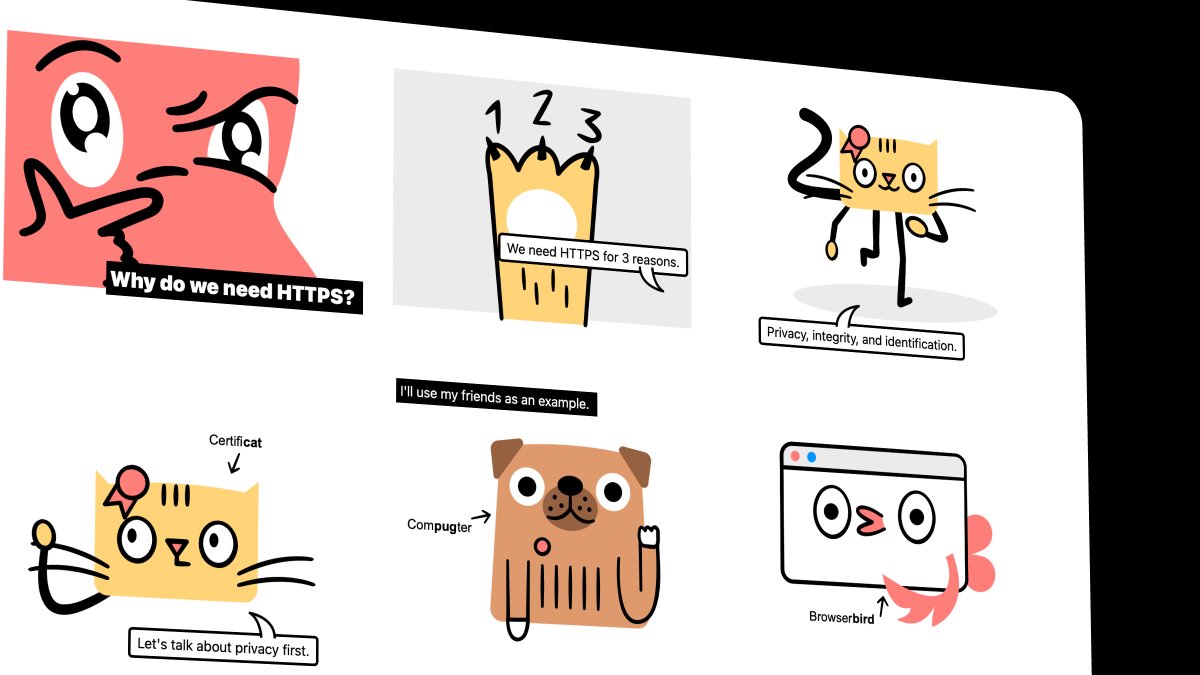
1. How HTTP Works
Everything you need to know about HTTP based system.
🔗 https://t.co/gVZS4RzS1a
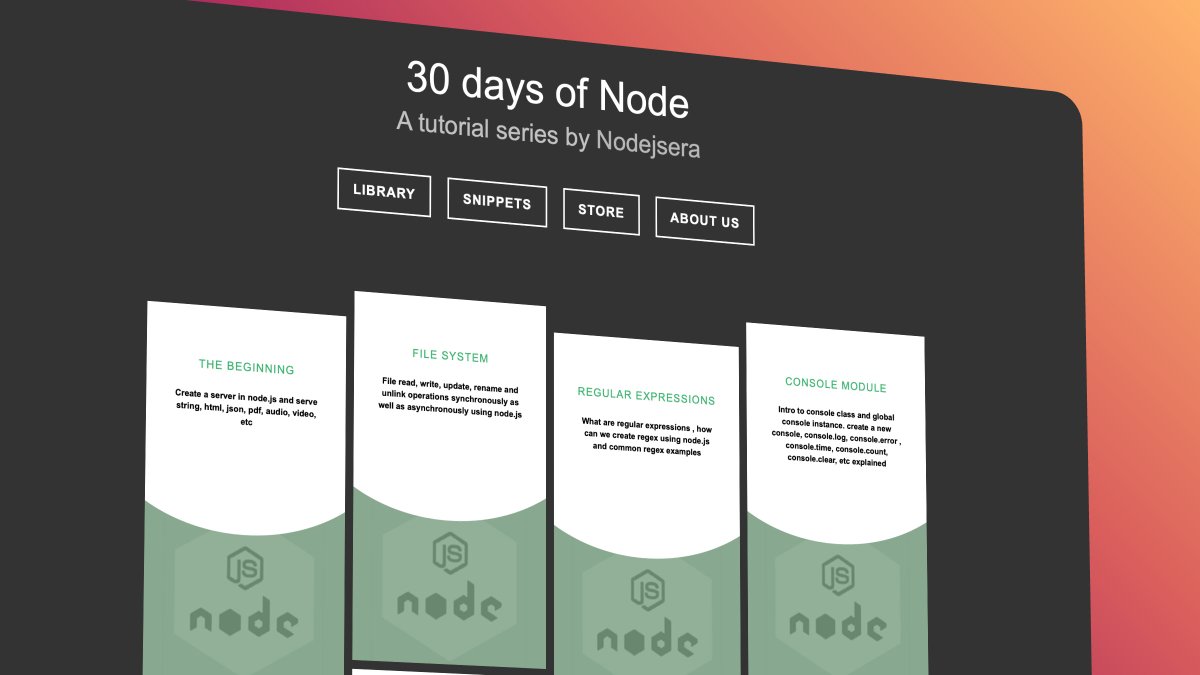
2. 30 Days of Node
Learn Node step by step with interactive examples and code snippet in 30 days.
🔗 https://t.co/9nbtMiNB1C
3. How DNS Works
Learn what happens when you type a website address in your browser
🔗 https://t.co/SqMRNnDbc3

4. Git
Check out this excellent free website to learn git visually.
🔗 https://t.co/rQJMISBDfS

1. How HTTP Works
Everything you need to know about HTTP based system.
🔗 https://t.co/gVZS4RzS1a
2. 30 Days of Node
Learn Node step by step with interactive examples and code snippet in 30 days.
🔗 https://t.co/9nbtMiNB1C
3. How DNS Works
Learn what happens when you type a website address in your browser
🔗 https://t.co/SqMRNnDbc3
4. Git
Check out this excellent free website to learn git visually.
🔗 https://t.co/rQJMISBDfS
You May Also Like


A brief analysis and comparison of the CSS for Twitter's PWA vs Twitter's legacy desktop website. The difference is dramatic and I'll touch on some reasons why.
Legacy site *downloads* ~630 KB CSS per theme and writing direction.
6,769 rules
9,252 selectors
16.7k declarations
3,370 unique declarations
44 media queries
36 unique colors
50 unique background colors
46 unique font sizes
39 unique z-indices
https://t.co/qyl4Bt1i5x

PWA *incrementally generates* ~30 KB CSS that handles all themes and writing directions.
735 rules
740 selectors
757 declarations
730 unique declarations
0 media queries
11 unique colors
32 unique background colors
15 unique font sizes
7 unique z-indices
https://t.co/w7oNG5KUkJ

The legacy site's CSS is what happens when hundreds of people directly write CSS over many years. Specificity wars, redundancy, a house of cards that can't be fixed. The result is extremely inefficient and error-prone styling that punishes users and developers.
The PWA's CSS is generated on-demand by a JS framework that manages styles and outputs "atomic CSS". The framework can enforce strict constraints and perform optimisations, which is why the CSS is so much smaller and safer. Style conflicts and unbounded CSS growth are avoided.
Legacy site *downloads* ~630 KB CSS per theme and writing direction.
6,769 rules
9,252 selectors
16.7k declarations
3,370 unique declarations
44 media queries
36 unique colors
50 unique background colors
46 unique font sizes
39 unique z-indices
https://t.co/qyl4Bt1i5x
PWA *incrementally generates* ~30 KB CSS that handles all themes and writing directions.
735 rules
740 selectors
757 declarations
730 unique declarations
0 media queries
11 unique colors
32 unique background colors
15 unique font sizes
7 unique z-indices
https://t.co/w7oNG5KUkJ
The legacy site's CSS is what happens when hundreds of people directly write CSS over many years. Specificity wars, redundancy, a house of cards that can't be fixed. The result is extremely inefficient and error-prone styling that punishes users and developers.
The PWA's CSS is generated on-demand by a JS framework that manages styles and outputs "atomic CSS". The framework can enforce strict constraints and perform optimisations, which is why the CSS is so much smaller and safer. Style conflicts and unbounded CSS growth are avoided.