- LTO Network (https://t.co/LJUDzLMCb5) is a hybrid blockchain solution that connects to existing systems enabling efficient collaboration on complex and multi stakeholder processes. It is led by a great team of serial entrepreneurs.
1) Our thoughts on LTO Network
Not financial advice
- LTO Network (https://t.co/LJUDzLMCb5) is a hybrid blockchain solution that connects to existing systems enabling efficient collaboration on complex and multi stakeholder processes. It is led by a great team of serial entrepreneurs.
- Businesses don’t want an IT overhaul, but want communication with existing systems that only share process data and updates users via their own systems.
- LTO has had many high profile partners join the network. Recently, The UN released an open-source urban land registry for the Afghan Government: https://t.co/aakyqOJLa7
- Other high profile use cases include:
- Immutable, digitally signed PDFs with a verifiable timestamp using SignRequest
Executed legal contracts, hashed on blockchain via a smartphone using Quislex
- Going forward, continued emphasis could be put into business identities on the blockchain, solving KYC issues, a big pain point for particularly banks.
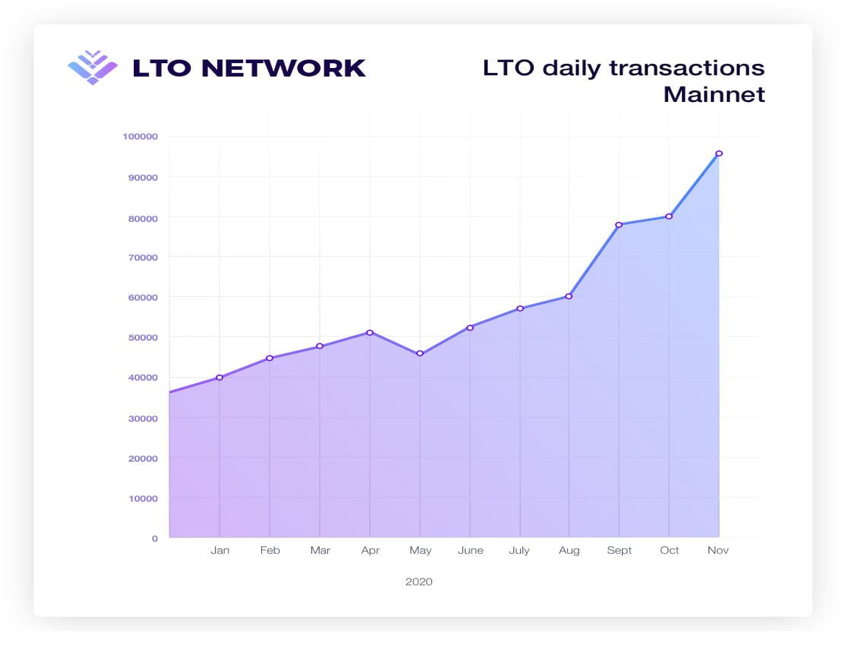
This increasing popularity has enabled LTO to collaborate with some well-established parties aside from the UN, including:
- IBM. Both IBM and LTO Network have formed a partnership with VI-D to deliver The Internet of Environments.
Leased-Proof-of-Stake:
- Rewards are transaction fees on the network corresponding to the ratio of your staked amount to the total staked amount.
- Foundation to create new products & services, e.g. one-click KYC for businesses and cross-chain associations, all while retaining GDPR compliance.
- Smart Contract are less readable by humans than a standard contract while still being open to exploits.
-Smart Contracts do not operate within a legal framework and are not enforceable by a judicial system.
- Live contracts allow easier integration with legal frameworks. LTO was built specifically to be EU GDPR compliant
- LTO has chosen to design more organic tokenomics. As the platform increases in health/users we see the intrinsic value of the token appreciating. However, it is possible the token price will not converge with its intrinsic value over shorter time horizons.
- As one of the first teams to bridge the gap between BC agreements and legal jurisdiction, as well as being fully GDPR compliant, we see LTO as being one of few blockchains fit to serve the BC needs of a wide-ranging group of firms. Growth potential is immense.
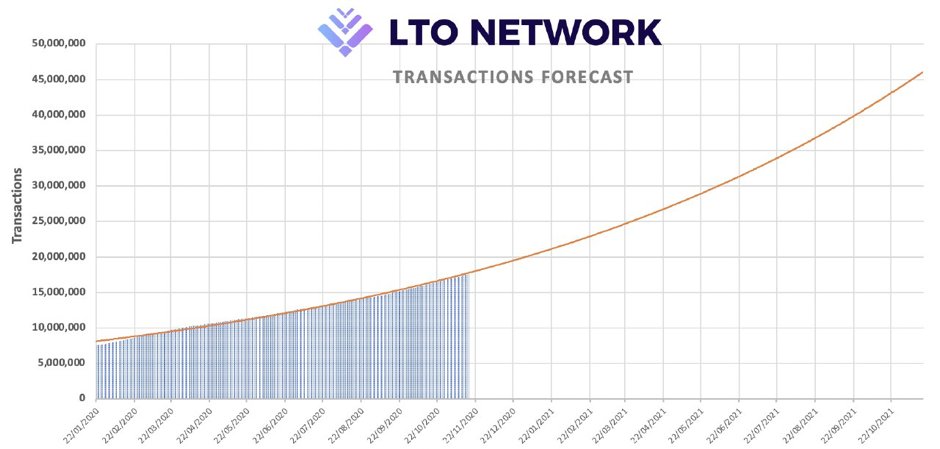
- Judging from expected transactions, we expect to see a healthy ecosystem driven by a strong roadmap and vision that focuses on real pain points such as SSIs
More from Crypto


1/ @MIT discussing the need for blockchain gateways to achieve interoperability across different blockchain networks, and to support the cross-blockchain mobility of virtual assets
https://t.co/PbjQkSlTT3
@quant_network are collaborating with MIT in the creation of ODAP
$QNT
2/ "In order for blockchain-based services to scale globally, blockchain networks must be able to interoperate with one another following a standardized protocol and interfaces (APIs)"
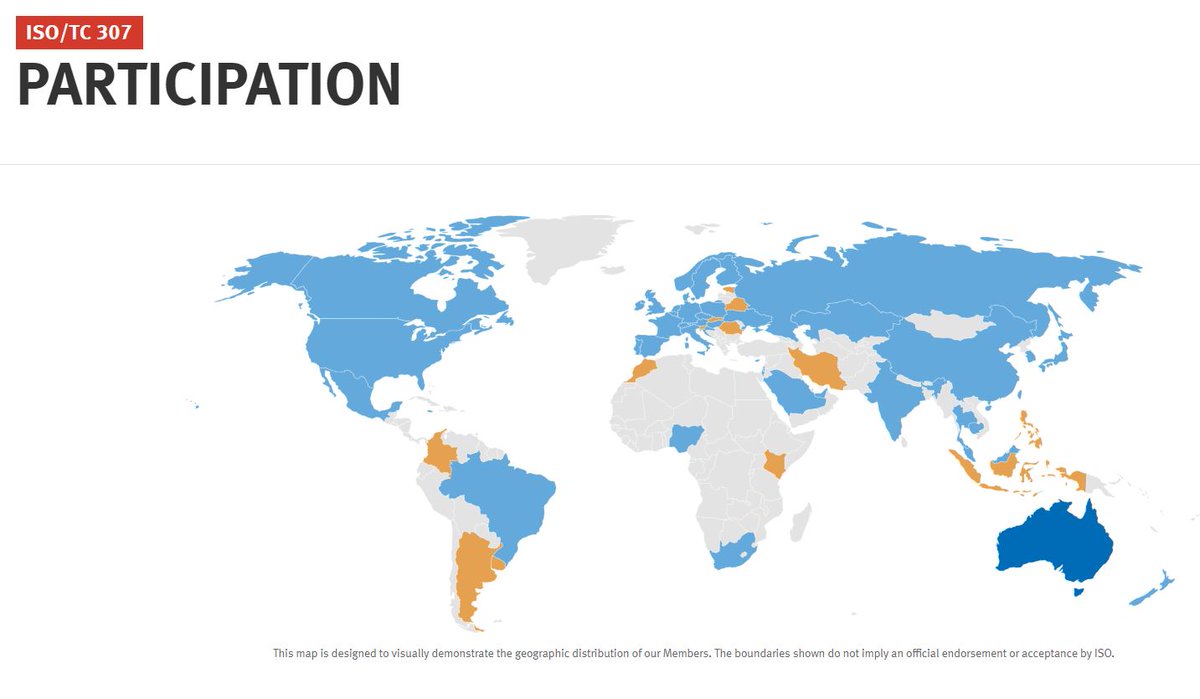
Gilbert founded ISO TC307 which 60 countries are working towards standardizing the interfaces
3/ "We believe that a blockchain gateway is needed for blockchain networks to interoperate in a manner similar
to border gateway routers in IP networks. Just as border gateway routers use the BGPv4 protocol to interact with one another in a peered fashion we believe that a...
4/ blockchain gateway protocol will be needed to permit the movement of virtual assets and related information across blockchain networks in a secure and privacy-preserving manner"
You can read more about the gateway protocol ODAP in this 21 tweet
5/
"We motivate the need for blockchain gateways and blockchain gateway protocols in the following summary:
✅Enables blockchain interoperability:
Blockchain gateways provide an interface for the interoperability between blockchain/DLT systems that operate distinct consensus...
https://t.co/PbjQkSlTT3
@quant_network are collaborating with MIT in the creation of ODAP
$QNT
2/ "In order for blockchain-based services to scale globally, blockchain networks must be able to interoperate with one another following a standardized protocol and interfaces (APIs)"
Gilbert founded ISO TC307 which 60 countries are working towards standardizing the interfaces
3/ "We believe that a blockchain gateway is needed for blockchain networks to interoperate in a manner similar
to border gateway routers in IP networks. Just as border gateway routers use the BGPv4 protocol to interact with one another in a peered fashion we believe that a...
4/ blockchain gateway protocol will be needed to permit the movement of virtual assets and related information across blockchain networks in a secure and privacy-preserving manner"
You can read more about the gateway protocol ODAP in this 21 tweet
See this 21-tweet thread about the creation of an Internet scale protocol to move digital assets involving Quant, MIT, US Government, Intel, Juniper, Payment and Telecom companies \U0001f447https://t.co/n7VGIIlAvq pic.twitter.com/mTUEmCMFZM
— Seq (@CryptoSeq) December 22, 2020
5/
"We motivate the need for blockchain gateways and blockchain gateway protocols in the following summary:
✅Enables blockchain interoperability:
Blockchain gateways provide an interface for the interoperability between blockchain/DLT systems that operate distinct consensus...

1/ Welcome to #DeFi Wednesday.
Let's talk about how interest-bearing cash on a blockchain is going to revolutionise boring corporate treasury management that concerns every company is is a larger business than all crypto trading in the world.
Enter the thread
👇👇👇

2/ Blockchain community is often seen as toxic maxis and redditors who shill other their weekly favourite shitcoin in the hope of getting Lambo.
Sometimes we also do things that progress humanity towards the better future and interest-bearing cash is one of those things.
3/ Less chad and more things that actually matter:
My incomplete theory of interest-bearing cash is also available also as a blog post:
https://t.co/uiG0fZiVyu
It is 15 pages. Pick your slow poison or die fast by continue reading here.
4/ First time in the history we have an ability to create interest-bearing cash-like instruments.
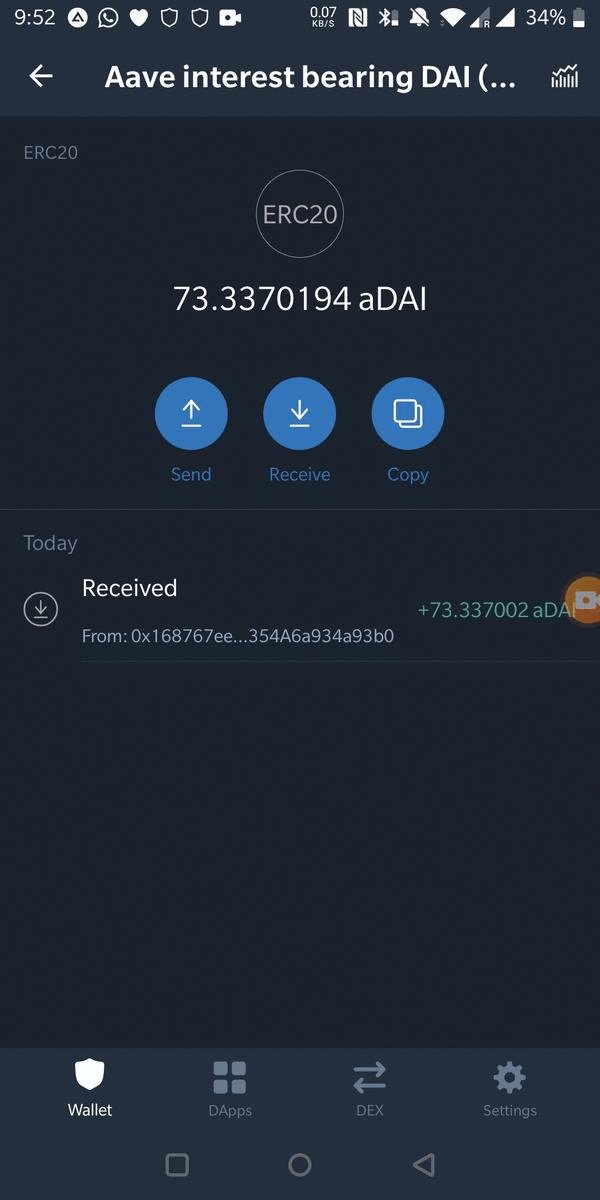
Interest-bearing cash ticks up dollar (euro) balance real-time in your wallet.
Here is a demonstration using @aaveaave aDAI, based on @makerdao DAI, and @TrustWalletApp
5/ Interest-bearing cash is not like your bank's saving account. Your money in a bank is not yours, but bank's. There are some flaws in the current banking system causing a headache for Chief Financial Officers (CFOs)
Let's talk about how interest-bearing cash on a blockchain is going to revolutionise boring corporate treasury management that concerns every company is is a larger business than all crypto trading in the world.
Enter the thread
👇👇👇
2/ Blockchain community is often seen as toxic maxis and redditors who shill other their weekly favourite shitcoin in the hope of getting Lambo.
Sometimes we also do things that progress humanity towards the better future and interest-bearing cash is one of those things.
3/ Less chad and more things that actually matter:
My incomplete theory of interest-bearing cash is also available also as a blog post:
https://t.co/uiG0fZiVyu
It is 15 pages. Pick your slow poison or die fast by continue reading here.
4/ First time in the history we have an ability to create interest-bearing cash-like instruments.
Interest-bearing cash ticks up dollar (euro) balance real-time in your wallet.
Here is a demonstration using @aaveaave aDAI, based on @makerdao DAI, and @TrustWalletApp
5/ Interest-bearing cash is not like your bank's saving account. Your money in a bank is not yours, but bank's. There are some flaws in the current banking system causing a headache for Chief Financial Officers (CFOs)