EFCC Docks Man for Alleged Investment Fraud in Calabar
More from EFCC Nigeria




More from Crime

THREAD PART 1.
On Sunday 21st June, 14 year old Noah Donohoe left his home to meet his friends at Cave Hill Belfast to study for school. #RememberMyNoah💙

He was on his black Apollo mountain bike, fully dressed, wearing a helmet and carrying a backpack containing his laptop and 2 books with his name on them. He also had his mobile phone with him.
On the 27th of June. Noah's naked body was sadly discovered 950m inside a storm drain, between access points. This storm drain was accessible through an area completely unfamiliar to him, behind houses at Northwood Road. https://t.co/bpz3Rmc0wq
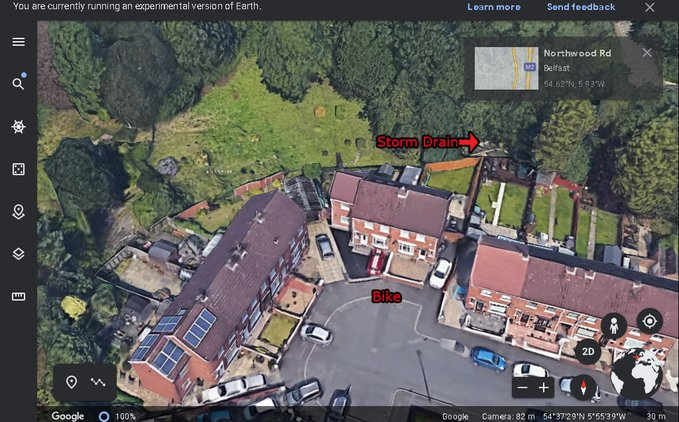
"Noah's body was found by specially trained police officers between two drain access points within a section of the tunnel running under the Translink access road," said Mr McCrisken."
Noah's bike was also found near a house, behind a car, in the same area. It had been there for more than 24 hours before a member of public who lived in the street said she read reports of a missing child and checked the bike and phoned the police.
On Sunday 21st June, 14 year old Noah Donohoe left his home to meet his friends at Cave Hill Belfast to study for school. #RememberMyNoah💙
He was on his black Apollo mountain bike, fully dressed, wearing a helmet and carrying a backpack containing his laptop and 2 books with his name on them. He also had his mobile phone with him.
On the 27th of June. Noah's naked body was sadly discovered 950m inside a storm drain, between access points. This storm drain was accessible through an area completely unfamiliar to him, behind houses at Northwood Road. https://t.co/bpz3Rmc0wq
"Noah's body was found by specially trained police officers between two drain access points within a section of the tunnel running under the Translink access road," said Mr McCrisken."
Noah's bike was also found near a house, behind a car, in the same area. It had been there for more than 24 hours before a member of public who lived in the street said she read reports of a missing child and checked the bike and phoned the police.

My students @maxzks and Tushar Jois spent most of the summer going through every piece of public documentation, forensics report, and legal document we could find to figure out how police were “breaking phone encryption”. 1/
This was prompted by a claim from someone knowledgeable, who claimed that forensics companies no longer had the ability to break the Apple Secure Enclave Processor, which would make it very hard to crack the password of a locked, recent iPhone. 2/
We wrote an enormous report about what we found, which we’ll release after the holidays. The TL;DR is kind of depressing:
Authorities don’t need to break phone encryption in most cases, because modern phone encryption sort of sucks. 3/
I’ll focus on Apple here but Android is very similar. The top-level is that, to break encryption on an Apple phone you need to get the encryption keys. Since these are derived from the user’s passcode, you either need to guess that — or you need the user to have entered it. 4/
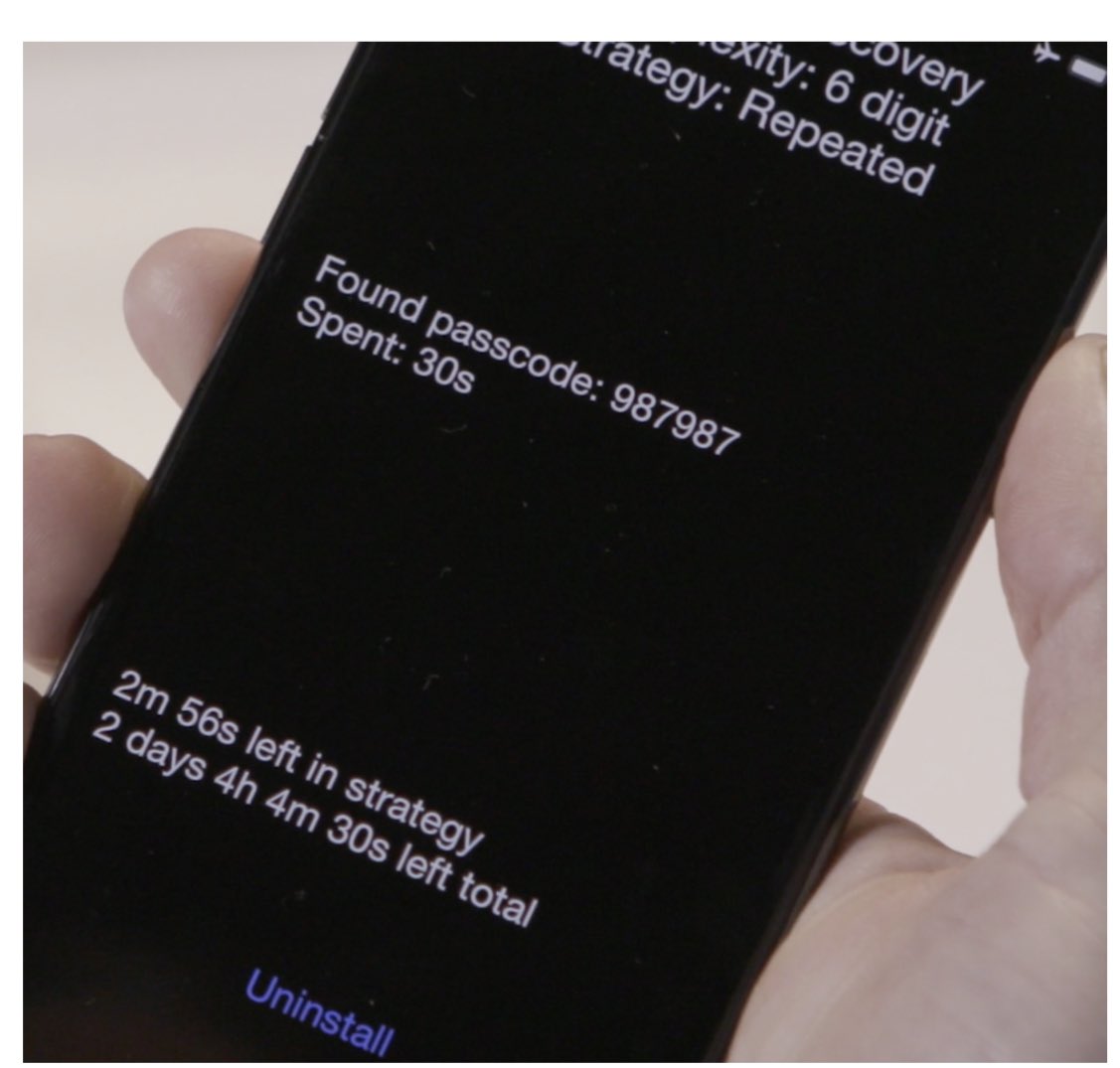
Guessing the password is hard on recent iPhones because there’s (at most) a 10-guess limit enforced by the Secure Enclave Processor (SEP). There’s good evidence that at one point in 2018 a company called GrayKey had a SEP exploit that did this for the X. See photo. 5/
ACLU is suing the FBI over its efforts to break into encrypted devices. https://t.co/TN8X0Slmnf
— Zack Whittaker (@zackwhittaker) December 22, 2020
This was prompted by a claim from someone knowledgeable, who claimed that forensics companies no longer had the ability to break the Apple Secure Enclave Processor, which would make it very hard to crack the password of a locked, recent iPhone. 2/
We wrote an enormous report about what we found, which we’ll release after the holidays. The TL;DR is kind of depressing:
Authorities don’t need to break phone encryption in most cases, because modern phone encryption sort of sucks. 3/
I’ll focus on Apple here but Android is very similar. The top-level is that, to break encryption on an Apple phone you need to get the encryption keys. Since these are derived from the user’s passcode, you either need to guess that — or you need the user to have entered it. 4/
Guessing the password is hard on recent iPhones because there’s (at most) a 10-guess limit enforced by the Secure Enclave Processor (SEP). There’s good evidence that at one point in 2018 a company called GrayKey had a SEP exploit that did this for the X. See photo. 5/


While we'll be celebrating New Year's Eve, thousands of terrified people will languish in cages, locked up by institutional actors who are deliberately indifferent to the grave risks to their health and safety. Here's a brief summary of my 2020 professional activities.
Early 2020: With the indispensable help of @lindar, I migrate #CaliforniaCorrectionalCrisis to https://t.co/mk2kUVD1XB, which would become the one-stop-shop for the COVID crisis in CA prisons.
February 2020: My book #YesterdaysMonsters, about the hurdles in the path of aging, infirm people seeking parole, comes out. It becomes a frightening omen of things to come in ways I couldn't imagine at the time.
In March it became evident that the only way to prevent an impending catastrophe was to release people. I started collecting resources.
In early April, I linked between the atrocity of Susan Atkins' last hearing and the impending doom of thousands sentenced to death by COVID. It was obvious that the optics of releasing so-called "violent inmates" was going to sabotage relief efforts.
Early 2020: With the indispensable help of @lindar, I migrate #CaliforniaCorrectionalCrisis to https://t.co/mk2kUVD1XB, which would become the one-stop-shop for the COVID crisis in CA prisons.
February 2020: My book #YesterdaysMonsters, about the hurdles in the path of aging, infirm people seeking parole, comes out. It becomes a frightening omen of things to come in ways I couldn't imagine at the time.
In March it became evident that the only way to prevent an impending catastrophe was to release people. I started collecting resources.
In early April, I linked between the atrocity of Susan Atkins' last hearing and the impending doom of thousands sentenced to death by COVID. It was obvious that the optics of releasing so-called "violent inmates" was going to sabotage relief efforts.