One Man many heritage-From Sugar business (Parry's Coffee Bite) to an AgroGiant in Making.
Coincidentally most of the business is now run by an equally amazing business Group. An 🧵on Mr. Parry of Parry's Cornerwale
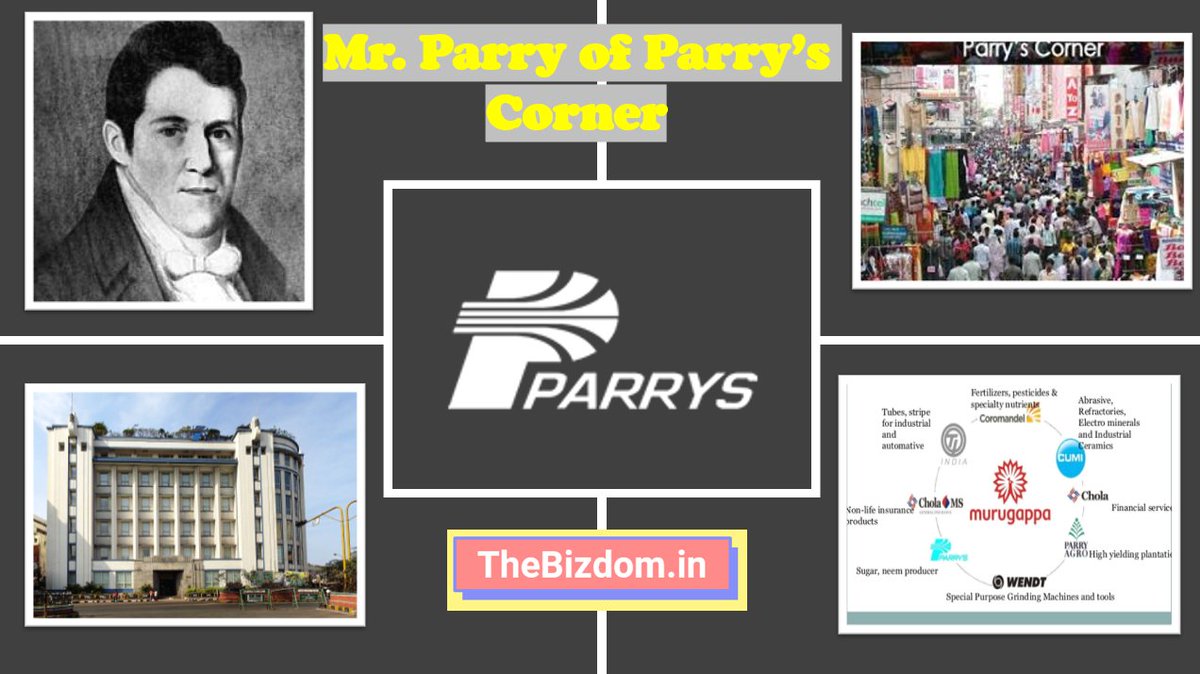
Parrys as a surname was due to the fact that he belonged to a family that used to once rule, Powys (in Wales). The flat fertile land there was ideal for farming, which ensured his family richness. Thomas Parry arrived in Madras in 1788 and was licensed as a free merchant.
While most other Englishmen involved in the Trading in those time were either Writer or Cadet of EIC. Been a Free agent, gave give freedom, but also some problems. Madras had grown from Fort St George, and had Portuguese, French, Dutch, Jews also doing the Trading.
Soon, he felt that he needed some local support, so in 1789 he took Chase (an ex Civil servant of EIC) as a partner, and they started as real estate agents. They then sold lottery tickets, discounted Navy bills, sold passages in Europe-bound ships and also distributed books.
In 1805, he established a tannery in San Thomé near his castle, and this gradually grew into an establishment employing 300 men and exporting its products – boots and army leather-goods-to the rest of the Engish World.
By 1819, Mr. John Dare became his partner and they started expanding into other business. First was coffee plantations in Wayanadm followed by sugar and spirits. Though Mr. Parry died in 1824, but business was growing quite well under Mr. Dare.
By 1897-The East India Distilleries and Sugar Factories Limited (EID) was formed in London. Today's Chennai has a landmark named after both of them- junction, where the business got started, is Parry’s Corner. Dare House, the HQ at Parry’s Corner, was built in the late 1930s.
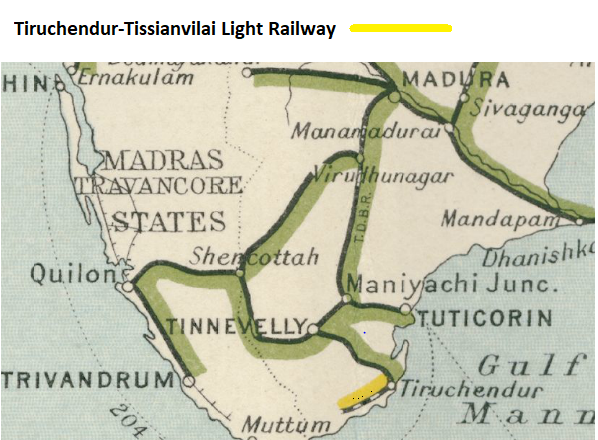
The ‘Manure’ residual of their Sugar business gave them the idea of getting into fertilizers business in 1906. And then in the next decade, they were asked by South Indian Railway(SIR) to run their own private Rail line-Kulasekharapatnam Tissianvillai Light Railway.
The railway business got them into ‘New Maladabar Timber Yards and Saw Mills Ltd’ at Kallai near Calicut. The timber being obtained from the surrounding hills and was used for making, railway sleepers, and planks.
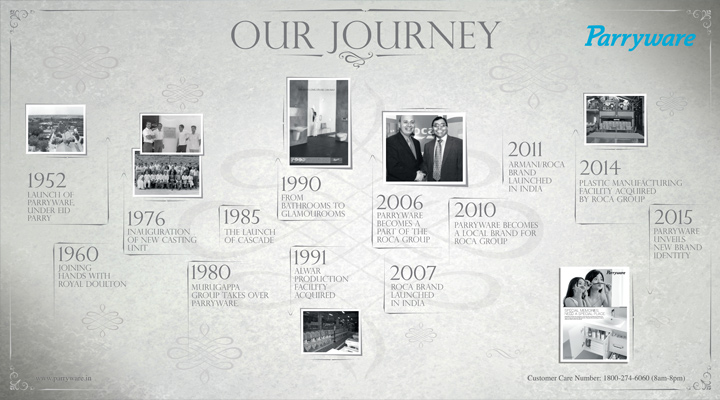
As they were expanding into other Farm inputs, they need more of Sulphuric acid which was used in the production of these fertilisers. And for that ceramic product (jars) were been made by them to store this acid. It is this division that went on to become Parryware in 1952.
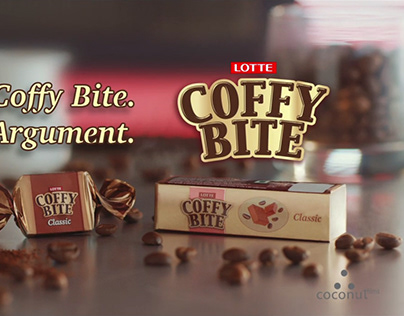
Then came Parry Agro Industries and Parry’s Confectionery-famous for their Parry's Coffee Bite and the tag line “the argument continues”. Though the business is now part of Lotte. However, by 1960s Parry’s started to show signs of decline. In 1976, it was Indianised.
British Firms were not interested in putting more capital for their growth and while there were many Suiter, somehow the asking price was not matching. And business was on a deathbed by 1980. R Venkataraman the then Finance minister, tried to be a matchmaker for this Iconic firm.
Commonwealth Development Finance Corporation and Pearl General Insurance, two London based organizations decided to sell their stake to Murugappa group .
A.M.M. Murugappa Chettiar, the founder of the group, was a financier who built a robust business in Burma first in 1900, and then spread all over South-East Asia. After the anti-Indian riots in Burma, they decided to be back to their roots.
Today, their Agrobusiness is the most important pillar in their business empire, contributing about 50% of the group revenue. They are indeed the able successor of the Man in whose name many companies are still run.

More from Business

The Mother of All Squeezes

How Volkswagen went from being on the brink of bankruptcy to the most valuable company in the world in two days

/THREAD/


1/ At the peak of the 2008 financial crisis, Volkswagen was considered a very likely candidate for bankruptcy.

Heavily indebted and already financially struggling before 2008, with car sales expected to plummet due to the ongoing global crisis.


2/ With GM and Chrysler filing for bankruptcy in 2009, shorting the VW stock would seem a safe bet.

If you are not familiar with stock shorts and short squeezes check my thread


3/ On October 26, 2008, Porsche announced it had increased its stake at VW from 30% to 74%.

This was a surprise to many who were led to believe that Porsche wasn't planning a takeover of VW, based on the company's announcements.


4/ Before the announcement, the short interest was approximately 13% of the outstanding shares, a number considered relatively low.

Porsche had a 30% stake, the Lower Saxony government fund held 20% of the shares, and another 5% was held by index funds.

You May Also Like

The first ever world map was sketched thousands of years ago by Indian saint
“Ramanujacharya” who simply translated the following verse from Mahabharat and gave the world its real face

In Mahabharat,it is described how 'Maharishi Ved Vyasa' gave away his divine vision to Sanjay


Dhritarashtra's charioteer so that he could describe him the events of the upcoming war.

But, even before questions of war could begin, Dhritarashtra asked him to describe how the world looks like from space.

This is how he described the face of the world:

सुदर्शनं प्रवक्ष्यामि द्वीपं तु कुरुनन्दन। परिमण्डलो महाराज द्वीपोऽसौ चक्रसंस्थितः॥
यथा हि पुरुषः पश्येदादर्शे मुखमात्मनः। एवं सुदर्शनद्वीपो दृश्यते चन्द्रमण्डले॥ द्विरंशे पिप्पलस्तत्र द्विरंशे च शशो महान्।

—वेद व्यास, भीष्म पर्व, महाभारत


Meaning:-

हे कुरुनन्दन ! सुदर्शन नामक यह द्वीप चक्र की भाँति गोलाकार स्थित है, जैसे पुरुष दर्पण में अपना मुख देखता है, उसी प्रकार यह द्वीप चन्द्रमण्डल में दिखायी देता है। इसके दो अंशो मे पीपल और दो अंशो मे विशाल शश (खरगोश) दिखायी देता है।


Meaning: "Just like a man sees his face in the mirror, so does the Earth appears in the Universe. In the first part you see leaves of the Peepal Tree, and in the next part you see a Rabbit."

Based on this shloka, Saint Ramanujacharya sketched out the map, but the world laughed