
2/13
A year ago we left the EU, but the real impact of leaving will only be felt from tomorrow.
1/13
2/13
3/13
4/13
5/13
6/13
7/13
8/13
9/13
10/13
More from Brexit


This very short article by Jeremy Cliffe is the best thing I have ever read on Brexit and the EU. It pivots on the contrast between Delors’ and Thatcher’s authentically provincial Christian visions and suggests the battle in Britain between the two is not over.
Thatcher: Protestant believer in the totally free market and absolutely sovereign centralised nation state. Delors: Catholic believer in third way personalism, corporatism and federalism. Individualism versus relational love. Heterodoxy versus Orthodoxy.
The article useful gives the lie to the idea that the Catholic vision of the EU has altogether vanished even though it is weakened. Delors wanted a social dimension to the free market and single currency and yet lexiteers laughably insist the EU is more neoliberal than the U.K.!
Subsidiary federalism is a doctrine of democracy and human fraternity. State sovereignty is a doctrine of naked power. It is a face of Antichrist. Leviathan.
Those combined that democracy can only be inside a single state fail to power just how much of private law and evermore so is necessarily international. Thus if political institutions don’t extend over borders there can be no democracy.
The rupture between Margaret Thatcher and Jacques Delors lives on in Brexit https://t.co/r3YiyPoSFB
— john milbank (@johnmilbank3) January 9, 2021
Thatcher: Protestant believer in the totally free market and absolutely sovereign centralised nation state. Delors: Catholic believer in third way personalism, corporatism and federalism. Individualism versus relational love. Heterodoxy versus Orthodoxy.
The article useful gives the lie to the idea that the Catholic vision of the EU has altogether vanished even though it is weakened. Delors wanted a social dimension to the free market and single currency and yet lexiteers laughably insist the EU is more neoliberal than the U.K.!
Subsidiary federalism is a doctrine of democracy and human fraternity. State sovereignty is a doctrine of naked power. It is a face of Antichrist. Leviathan.
Those combined that democracy can only be inside a single state fail to power just how much of private law and evermore so is necessarily international. Thus if political institutions don’t extend over borders there can be no democracy.
So. The hunt is on in Whitehall for #brexit dividends...to show some clear value in the freedoms given by Brexit.
As we report today one area being looked at is workers' rights...but it is politically difficult territory.
No cabinet decisions have been taken, but per sources, three potential areas been identified in Business Dept...
- the 48 Hour Week
- holiday pay/overtime calculations
- new EU rules on reporting hours worked...
All potentially possible post #brexit /2
The government says it has no intention of “lowering” workers’ rights....and notes that UK has actually gold-plated many EU regulations...BUT (think of government saying it won't "lower" animal welfare standards)...the devil will all be in the detail, if and when it comes /3
So the government likes to talk about ensuring workers’ rights are protected but ALSO making sure businesses has freedoms and flexibility to grow...so one man's reduction in rights is another freedom to get richer/work harder/be more prosperous. It depends how you sell it. /4
So take this 2017 story from The Sun on the cash bonanza that will be rained down on hardworking families by Brexiteers' (long standing) desire to scrap the 48-hour week. Overtime booooom..../5
https://t.co/QLqQ7rCzkv

As we report today one area being looked at is workers' rights...but it is politically difficult territory.
No cabinet decisions have been taken, but per sources, three potential areas been identified in Business Dept...
- the 48 Hour Week
- holiday pay/overtime calculations
- new EU rules on reporting hours worked...
All potentially possible post #brexit /2
The government says it has no intention of “lowering” workers’ rights....and notes that UK has actually gold-plated many EU regulations...BUT (think of government saying it won't "lower" animal welfare standards)...the devil will all be in the detail, if and when it comes /3
So the government likes to talk about ensuring workers’ rights are protected but ALSO making sure businesses has freedoms and flexibility to grow...so one man's reduction in rights is another freedom to get richer/work harder/be more prosperous. It depends how you sell it. /4
So take this 2017 story from The Sun on the cash bonanza that will be rained down on hardworking families by Brexiteers' (long standing) desire to scrap the 48-hour week. Overtime booooom..../5
https://t.co/QLqQ7rCzkv
You May Also Like


First thread of the year because I have time during MCO. As requested, a thread on the gods and spirits of Malay folk religion. Some are indigenous, some are of Indian origin, some have Islamic
Before I begin, it might be worth explaining the Malay conception of the spirit world. At its deepest level, Malay religious belief is animist. All living beings and even certain objects are said to have a soul. Natural phenomena are either controlled by or personified as spirits
Although these beings had to be respected, not all of them were powerful enough to be considered gods. Offerings would be made to the spirits that had greater influence on human life. Spells and incantations would invoke their
Two known examples of such elemental spirits that had god-like status are Raja Angin (king of the wind) and Mambang Tali Arus (spirit of river currents). There were undoubtedly many more which have been lost to time
Contact with ancient India brought the influence of Hinduism and Buddhism to SEA. What we now call Hinduism similarly developed in India out of native animism and the more formal Vedic tradition. This can be seen in the multitude of sacred animals and location-specific Hindu gods
i wonder if you can make a thread bout witchcraft in malaysia.. or list of our own local gods/deites..
— r a y a \U0001f319 (@lcvelylilith) February 20, 2020
Before I begin, it might be worth explaining the Malay conception of the spirit world. At its deepest level, Malay religious belief is animist. All living beings and even certain objects are said to have a soul. Natural phenomena are either controlled by or personified as spirits
Although these beings had to be respected, not all of them were powerful enough to be considered gods. Offerings would be made to the spirits that had greater influence on human life. Spells and incantations would invoke their
Animist ceremonies of a religious or magical nature were normally held for the purpose of divination or making a request. This would either be done at a keramat or at a shrine similar to the Thai spirit houses or Chinese roadside shrines pic.twitter.com/I1hliyi0x3
— \u2745\u1710\u170b\u1713\u170e (@uglyluhan) June 16, 2019
Two known examples of such elemental spirits that had god-like status are Raja Angin (king of the wind) and Mambang Tali Arus (spirit of river currents). There were undoubtedly many more which have been lost to time
Contact with ancient India brought the influence of Hinduism and Buddhism to SEA. What we now call Hinduism similarly developed in India out of native animism and the more formal Vedic tradition. This can be seen in the multitude of sacred animals and location-specific Hindu gods



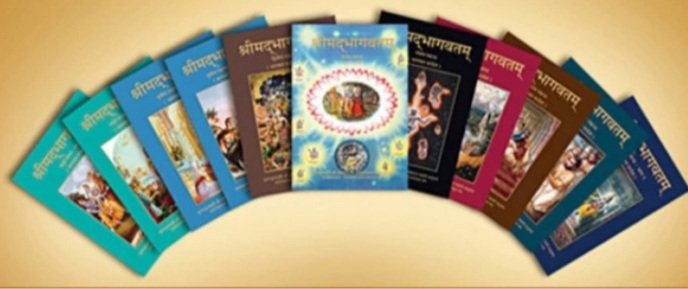
IMPORTANCE, ADVANTAGES AND CHARACTERISTICS OF BHAGWAT PURAN
It was Ved Vyas who edited the eighteen thousand shlokas of Bhagwat. This book destroys all your sins. It has twelve parts which are like kalpvraksh.
In the first skandh, the importance of Vedvyas
and characters of Pandavas are described by the dialogues between Suutji and Shaunakji. Then there is the story of Parikshit.
Next there is a Brahm Narad dialogue describing the avtaar of Bhagwan. Then the characteristics of Puraan are mentioned.
It also discusses the evolution of universe.( https://t.co/2aK1AZSC79 )
Next is the portrayal of Vidur and his dialogue with Maitreyji. Then there is a mention of Creation of universe by Brahma and the preachings of Sankhya by Kapil Muni.
In the next section we find the portrayal of Sati, Dhruv, Pruthu, and the story of ancient King, Bahirshi.
In the next section we find the character of King Priyavrat and his sons, different types of loks in this universe, and description of Narak. ( https://t.co/gmDTkLktKS )
In the sixth part we find the portrayal of Ajaamil ( https://t.co/LdVSSNspa2 ), Daksh and the birth of Marudgans( https://t.co/tecNidVckj )
In the seventh section we find the story of Prahlad and the description of Varnashram dharma. This section is based on karma vaasna.
It was Ved Vyas who edited the eighteen thousand shlokas of Bhagwat. This book destroys all your sins. It has twelve parts which are like kalpvraksh.
In the first skandh, the importance of Vedvyas
and characters of Pandavas are described by the dialogues between Suutji and Shaunakji. Then there is the story of Parikshit.
Next there is a Brahm Narad dialogue describing the avtaar of Bhagwan. Then the characteristics of Puraan are mentioned.
It also discusses the evolution of universe.( https://t.co/2aK1AZSC79 )
Next is the portrayal of Vidur and his dialogue with Maitreyji. Then there is a mention of Creation of universe by Brahma and the preachings of Sankhya by Kapil Muni.
HOW LIFE EVOLVED IN THIS UNIVERSE AS PER OUR SCRIPTURES.
— Anshul Pandey (@Anshulspiritual) August 29, 2020
Well maximum of Living being are the Vansaj of Rishi Kashyap. I have tried to give stories from different-different Puran. So lets start.... pic.twitter.com/MrrTS4xORk
In the next section we find the portrayal of Sati, Dhruv, Pruthu, and the story of ancient King, Bahirshi.
In the next section we find the character of King Priyavrat and his sons, different types of loks in this universe, and description of Narak. ( https://t.co/gmDTkLktKS )
Thread on NARK(HELL) / \u0928\u0930\u094d\u0915
— Anshul Pandey (@Anshulspiritual) August 11, 2020
Well today i will take you to a journey where nobody wants to go i.e Nark. Hence beware of doing Adharma/Evil things. There are various mentions in Puranas about Nark, But my Thread is only as per Bhagwat puran(SS attached in below Thread)
1/8 pic.twitter.com/raHYWtB53Q
In the sixth part we find the portrayal of Ajaamil ( https://t.co/LdVSSNspa2 ), Daksh and the birth of Marudgans( https://t.co/tecNidVckj )
In the seventh section we find the story of Prahlad and the description of Varnashram dharma. This section is based on karma vaasna.
#THREAD
— Anshul Pandey (@Anshulspiritual) August 12, 2020
WHY PARENTS CHOOSE RELIGIOUS OR PARAMATMA'S NAMES FOR THEIR CHILDREN AND WHICH ARE THE EASIEST WAY TO WASH AWAY YOUR SINS.
Yesterday I had described the types of Naraka's and the Sin or Adharma for a person to be there.
1/8 pic.twitter.com/XjPB2hfnUC