
/2
"The tangible benefits of #Brexit." A thread.
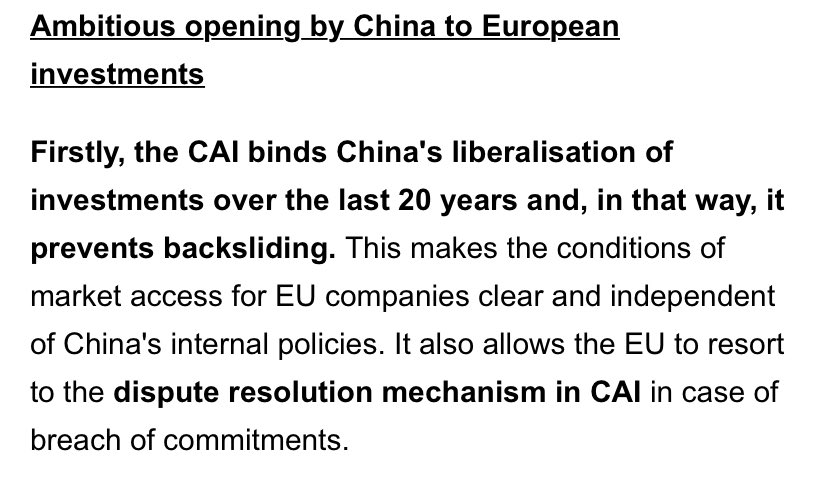
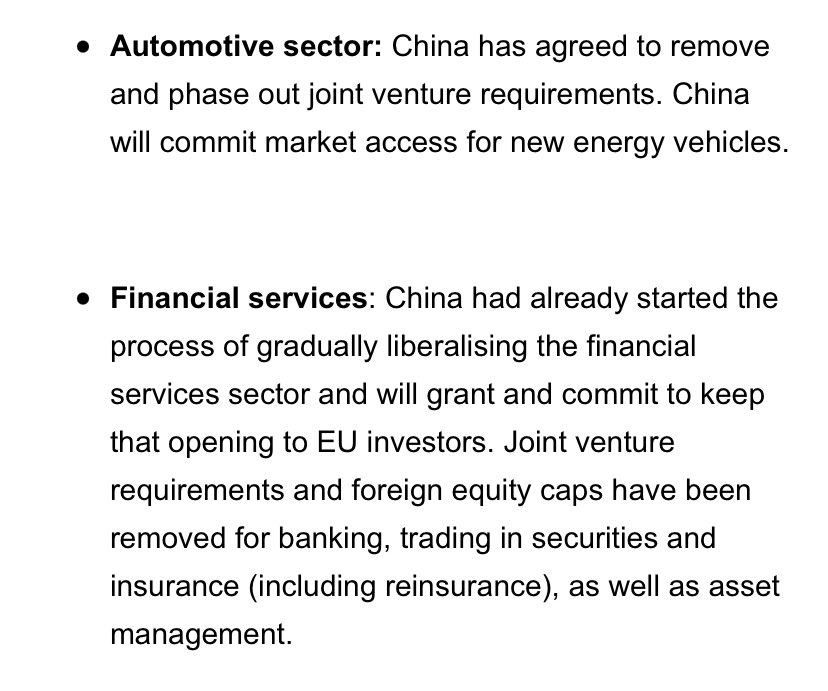
For the EU, the tangible benefits of Brexit have been immense. Not just in the way it has galvanised support for the EU across the bloc, but in the way that the UK has made itself...
/1
/2
/3
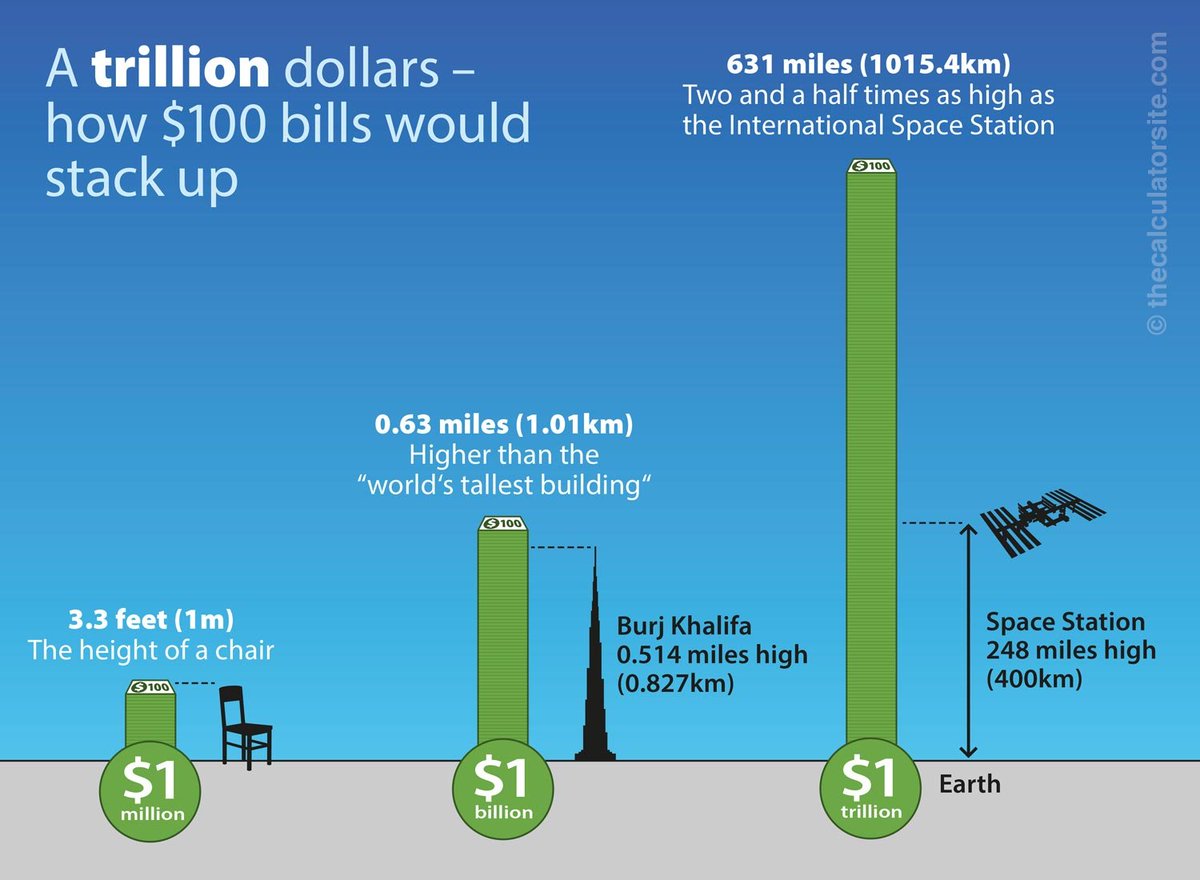
$1.6 trillion as of October this year.
That is an INSANE amount.
/4
/5
https://t.co/6bOSSVJM4C
/6
/7
(This matter doesn't get much coverage by Britain's Brexit press... I wonder why...)
For the UK, the tangible benefits of Brexit have shockingly few and far between.
/8
/9
/10
/11
/12
More from Brexit





1/ A challenge in parsing Brexit news is that businesses are facing overlapping types of challenges that can be difficult to separate.
The key questions are:
1⃣ Given the model of Brexit chosen, could this have been prevented, and by whom?
2⃣ Can it get better?
2/ To put those another way:
"If you knew everything you needed to know and did everything right, is your existing business and delivery model still viable and competitive?"
The answer to that question determines if for you the problem is Brexit, or how Brexit was delivered.
3/ Some of the challenges at borders could have been prevented while still having the exact same model of Brexit (No Single Market, No Customs Union, but an FTA).
That they're appearing is an implementation failure and you can fully support Brexit but still be pissed about them.
4/ Examples include:
1) Government guidance and IT systems being ready earlier and/or easier to navigate;
2) More support for businesses, and more affordable bespoke help;
3) More time to prepare and better government communication about what preparation actually requires.
5/ This thread you've all seen from Daniel Lambert the wine merchant (primarily) deals with problems in this category.
There's no policy reason he can't export his product, but the procedures are a nightmare to navigate and he's badly under-supported.
The key questions are:
1⃣ Given the model of Brexit chosen, could this have been prevented, and by whom?
2⃣ Can it get better?
#Brexit & #fishing: True to their word, it looks like British #seafood exporters are taking their concerns around #trade to the streets of London #Brexality pic.twitter.com/CIqmDQR69d
— Bryce Stewart (@BD_Stew) January 18, 2021
2/ To put those another way:
"If you knew everything you needed to know and did everything right, is your existing business and delivery model still viable and competitive?"
The answer to that question determines if for you the problem is Brexit, or how Brexit was delivered.
3/ Some of the challenges at borders could have been prevented while still having the exact same model of Brexit (No Single Market, No Customs Union, but an FTA).
That they're appearing is an implementation failure and you can fully support Brexit but still be pissed about them.
4/ Examples include:
1) Government guidance and IT systems being ready earlier and/or easier to navigate;
2) More support for businesses, and more affordable bespoke help;
3) More time to prepare and better government communication about what preparation actually requires.
5/ This thread you've all seen from Daniel Lambert the wine merchant (primarily) deals with problems in this category.
There's no policy reason he can't export his product, but the procedures are a nightmare to navigate and he's badly under-supported.
Over the past 15 days I have not only been running my company as normal but I have been faced with largest threat to its future since it began in 1992. This is #Brexit & here is my thread on just how bad things are getting. 1/26
— Daniel Lambert (Wines). \U0001f1ea\U0001f1fa\U0001f1eb\U0001f1f7\U0001f3f4\U000e0067\U000e0062\U000e0077\U000e006c\U000e0073\U000e007f\U0001f347\U0001f942 (@DanielLambert29) January 16, 2021

You May Also Like

Speech Delay is most common in children nowadays
In ancient times, our grandparents used to follow typical natural way of caring the needs of a child. All they used were more of natural products than chemical based for the growth of child.

One of major step followed was to feed Gurbach Jadd/ Vasa Kommu/ Acorus Calamus for initiating good speech ability in a child. This stem was needed to babies on Tuesdays and Sundays in mother's milk.
Vasa is feed to baby after the 1st bath on 12th day in week. Weekly only thrice it is fed and named as :
Budhwar - Budhi Vasa
Mangalwar - Vaak Vasa
Ravi Vaar - Aayush Vasa
This stem is burnt and rubbed against the grinding stone in mother's milk or warm water to get a paste
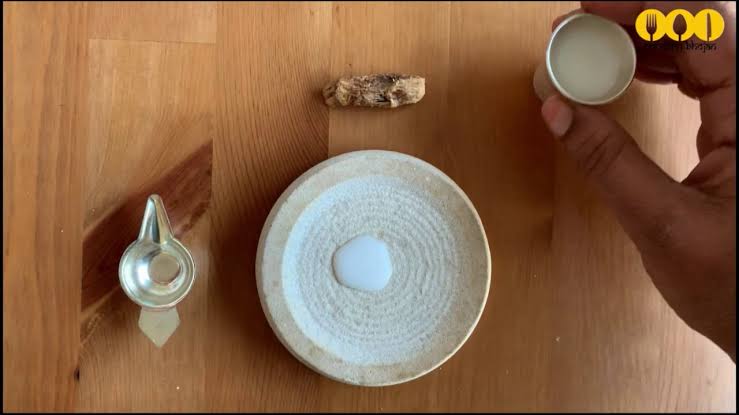
The procedure to make it is in the link
https://t.co/uo4sGp7mUm
It should not be given daily to the child. Other main benefits are
1. It clears the phlegm in child's throat caused due to continuous milk intake. It clears the tracts and breathing is effortless.
2. Digestion
For children who haven't got their speech and is delayed than usual should feed this vasa on these days in week atleast for 6months. Don't get carried away with this dialogue
"Some gain speech little late"
In ancient times, our grandparents used to follow typical natural way of caring the needs of a child. All they used were more of natural products than chemical based for the growth of child.
One of major step followed was to feed Gurbach Jadd/ Vasa Kommu/ Acorus Calamus for initiating good speech ability in a child. This stem was needed to babies on Tuesdays and Sundays in mother's milk.
Vasa is feed to baby after the 1st bath on 12th day in week. Weekly only thrice it is fed and named as :
Budhwar - Budhi Vasa
Mangalwar - Vaak Vasa
Ravi Vaar - Aayush Vasa
This stem is burnt and rubbed against the grinding stone in mother's milk or warm water to get a paste
The procedure to make it is in the link
https://t.co/uo4sGp7mUm
It should not be given daily to the child. Other main benefits are
1. It clears the phlegm in child's throat caused due to continuous milk intake. It clears the tracts and breathing is effortless.
2. Digestion
For children who haven't got their speech and is delayed than usual should feed this vasa on these days in week atleast for 6months. Don't get carried away with this dialogue
"Some gain speech little late"





@EricTopol @NBA @StephenKissler @yhgrad B.1.1.7 reveals clearly that SARS-CoV-2 is reverting to its original pre-outbreak condition, i.e. adapted to transgenic hACE2 mice (either Baric's BALB/c ones or others used at WIV labs during chimeric bat coronavirus experiments aimed at developing a pan betacoronavirus vaccine)
@NBA @StephenKissler @yhgrad 1. From Day 1, SARS-COV-2 was very well adapted to humans .....and transgenic hACE2 Mice
@NBA @StephenKissler @yhgrad 2. High Probability of serial passaging in Transgenic Mice expressing hACE2 in genesis of SARS-COV-2
@NBA @StephenKissler @yhgrad B.1.1.7 has an unusually large number of genetic changes, ... found to date in mouse-adapted SARS-CoV2 and is also seen in ferret infections.
https://t.co/9Z4oJmkcKj

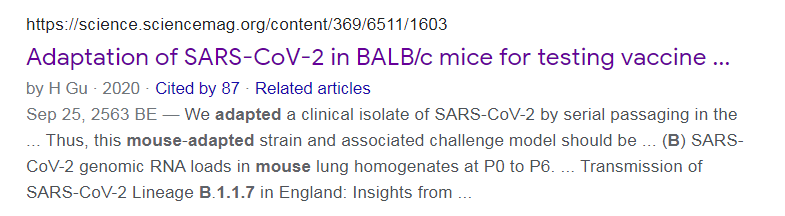
@NBA @StephenKissler @yhgrad We adapted a clinical isolate of SARS-CoV-2 by serial passaging in the ... Thus, this mouse-adapted strain and associated challenge model should be ... (B) SARS-CoV-2 genomic RNA loads in mouse lung homogenates at P0 to P6.
https://t.co/I90OOCJg7o
@NBA @StephenKissler @yhgrad 1. From Day 1, SARS-COV-2 was very well adapted to humans .....and transgenic hACE2 Mice
1. From Day 1, SARS-COV-2 was very well adapted to humans .....and transgenic hACE2 Mice
— Billy Bostickson \U0001f3f4\U0001f441&\U0001f441 \U0001f193 (@BillyBostickson) January 30, 2021
"we generated a mouse model expressing hACE2 by using CRISPR/Cas9 knockin technology. In comparison with wild-type C57BL/6 mice, both young & aged hACE2 mice sustained high viral loads... pic.twitter.com/j94XtSkscj
@NBA @StephenKissler @yhgrad 2. High Probability of serial passaging in Transgenic Mice expressing hACE2 in genesis of SARS-COV-2
1. High Probability of serial passaging in Transgenic Mice expressing hACE2 in genesis of SARS-COV-2!
— Billy Bostickson \U0001f3f4\U0001f441&\U0001f441 \U0001f193 (@BillyBostickson) January 2, 2021
2 papers:
Human\u2013viral molecular mimicryhttps://t.co/irfH0Zgrve
Molecular Mimicryhttps://t.co/yLQoUtfS6s https://t.co/lsCv2iMEQz
@NBA @StephenKissler @yhgrad B.1.1.7 has an unusually large number of genetic changes, ... found to date in mouse-adapted SARS-CoV2 and is also seen in ferret infections.
https://t.co/9Z4oJmkcKj
@NBA @StephenKissler @yhgrad We adapted a clinical isolate of SARS-CoV-2 by serial passaging in the ... Thus, this mouse-adapted strain and associated challenge model should be ... (B) SARS-CoV-2 genomic RNA loads in mouse lung homogenates at P0 to P6.
https://t.co/I90OOCJg7o