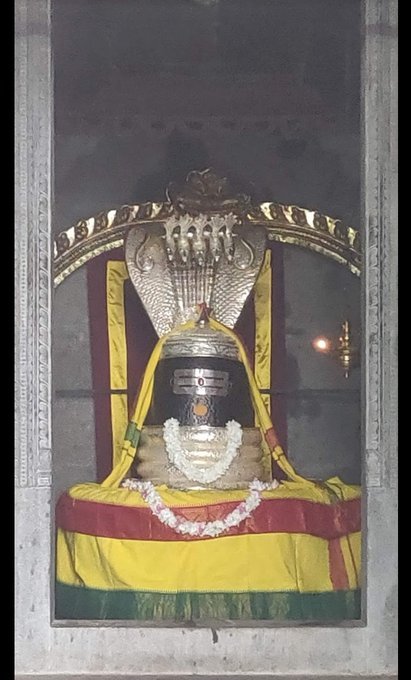
The hopes that QAnon will disappear with Biden’s inauguration will unfortunately be dashed.
Some followers will decamp. But a lot will be hardened.
How did we get here? What will happen? Why? And what can we do about it?
A🧵about cults & persuasion
A very personal thread about this story and why I increasingly believe addressing the rot caused by QAnon will be one of the Biden administration\u2019s most important and most difficult tasks. https://t.co/oe1jNGYG4R
— Lauren Camera (@laurenonthehill) January 17, 2021
More from Biden


Biden clearly should not do #1. The problem with #2 is that reconciliation delays the inevitable and creates a tiered system where issues that happen to be ineligible - like civil rights and democracy reform - are relegated to second-class status and left to die by filibuster.
This👇is the danger. By using reconciliation you’re conceding the point that major legislation deserves to pass by majority vote, but only certain kinds for arbitrary reasons. Plus the process itself is opaque and ugly. You risk laying a logistical & political trap for yourself.
All the “here’s what you can do through reconciliation” takes are correct but also look through the wrong end of the telescope. Any of the items mentioned, or a small number of them, would be relatively easy. But putting them all together in one leadership-driven mega package...
... with no committee involvement and no real oversight, enduring tough press for jamming a massive package through a close process and stories about lobbyist giveaways while dodging the adverse parliamentary rulings that are virtually inevitable and still maintaining 50 votes...
It’s possible! Maybe the mega-ness of the package ends up helping hold 50 votes. But the ugliness of the process is being underpriced. And to what end? You’re just delaying the inevitable since you can’t use it for civil rights nor can you allow civil rights to die by filibuster.
Biden will have two options:
— Sahil Kapur (@sahilkapur) January 23, 2021
1. Cut the price tag sharply to court GOP support.
2. Use reconciliation to do what he can with 50 votes\u2014some stuff has to go, like $15 wage.
(A 3rd option is nuke the filibuster but @PressSec says he doesn\u2019t favor that.)https://t.co/AV49BcmDaI
This👇is the danger. By using reconciliation you’re conceding the point that major legislation deserves to pass by majority vote, but only certain kinds for arbitrary reasons. Plus the process itself is opaque and ugly. You risk laying a logistical & political trap for yourself.
Obvious answer is 2b where you tie yourself in knots trying to go nuclear lite and totally lose the plot in the process
— Liam Donovan (@LPDonovan) January 23, 2021
All the “here’s what you can do through reconciliation” takes are correct but also look through the wrong end of the telescope. Any of the items mentioned, or a small number of them, would be relatively easy. But putting them all together in one leadership-driven mega package...
... with no committee involvement and no real oversight, enduring tough press for jamming a massive package through a close process and stories about lobbyist giveaways while dodging the adverse parliamentary rulings that are virtually inevitable and still maintaining 50 votes...
It’s possible! Maybe the mega-ness of the package ends up helping hold 50 votes. But the ugliness of the process is being underpriced. And to what end? You’re just delaying the inevitable since you can’t use it for civil rights nor can you allow civil rights to die by filibuster.
You May Also Like


Stan Lee’s fictional superheroes lived in the real New York. Here’s where they lived, and why. https://t.co/oV1IGGN8R6
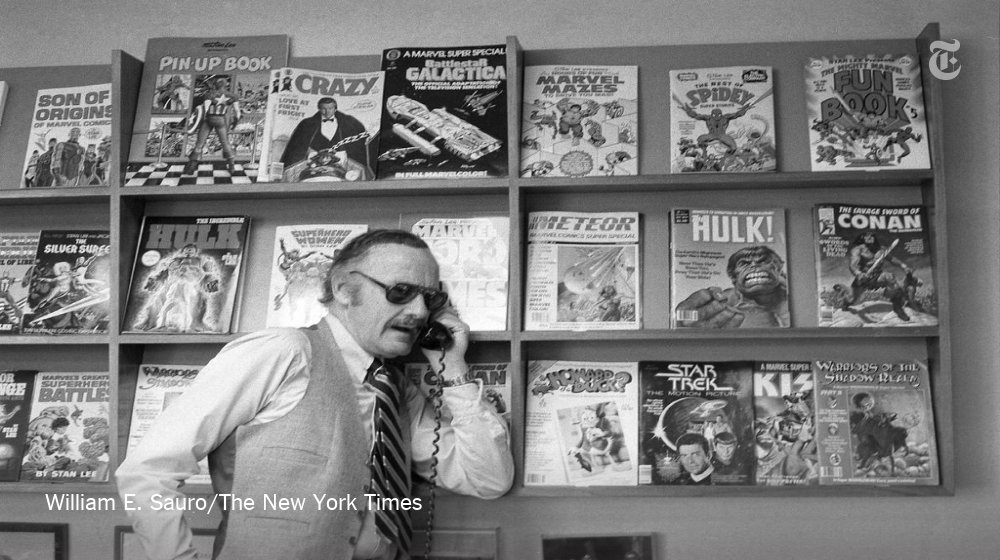
Stan Lee, who died Monday at 95, was born in Manhattan and graduated from DeWitt Clinton High School in the Bronx. His pulp-fiction heroes have come to define much of popular culture in the early 21st century.
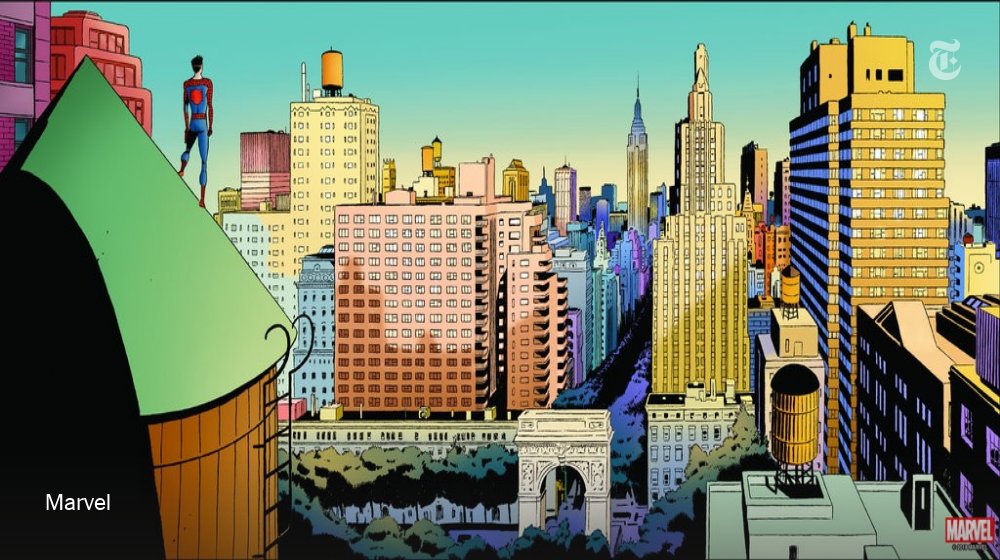
Tying Marvel’s stable of pulp-fiction heroes to a real place — New York — served a counterbalance to the sometimes gravity-challenged action and the improbability of the stories. That was just what Stan Lee wanted. https://t.co/rDosqzpP8i
The New York universe hooked readers. And the artists drew what they were familiar with, which made the Marvel universe authentic-looking, down to the water towers atop many of the buildings. https://t.co/rDosqzpP8i
The Avengers Mansion was a Beaux-Arts palace. Fans know it as 890 Fifth Avenue. The Frick Collection, which now occupies the place, uses the address of the front door: 1 East 70th Street.
Stan Lee, who died Monday at 95, was born in Manhattan and graduated from DeWitt Clinton High School in the Bronx. His pulp-fiction heroes have come to define much of popular culture in the early 21st century.
Tying Marvel’s stable of pulp-fiction heroes to a real place — New York — served a counterbalance to the sometimes gravity-challenged action and the improbability of the stories. That was just what Stan Lee wanted. https://t.co/rDosqzpP8i
The New York universe hooked readers. And the artists drew what they were familiar with, which made the Marvel universe authentic-looking, down to the water towers atop many of the buildings. https://t.co/rDosqzpP8i
The Avengers Mansion was a Beaux-Arts palace. Fans know it as 890 Fifth Avenue. The Frick Collection, which now occupies the place, uses the address of the front door: 1 East 70th Street.