
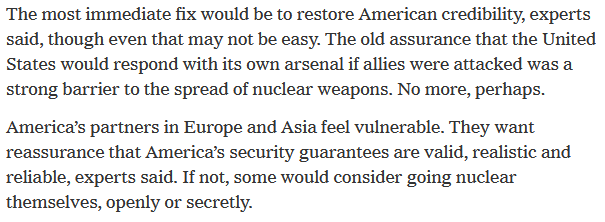
After 4 years of Donald Trump, the US must "reassure" its allies.
That's what I'm reading/hearing lately, such as in this @nytimes piece. What do international relations scholars know about reassuring allies? Can it be done? Is it even
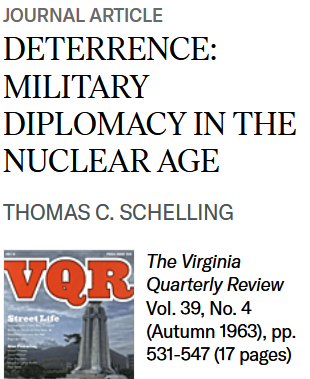
Indeed, such a tall order that it's been a major question explored by international relations scholars for a long time. A LONG TIME.
https://t.co/97fUw7sIj5
This included Robert Schelling's paper in the first issue of the Journal of Conflict Resolution...
https://t.co/rdd1N24HhZ
https://t.co/R9KgFmwOVB
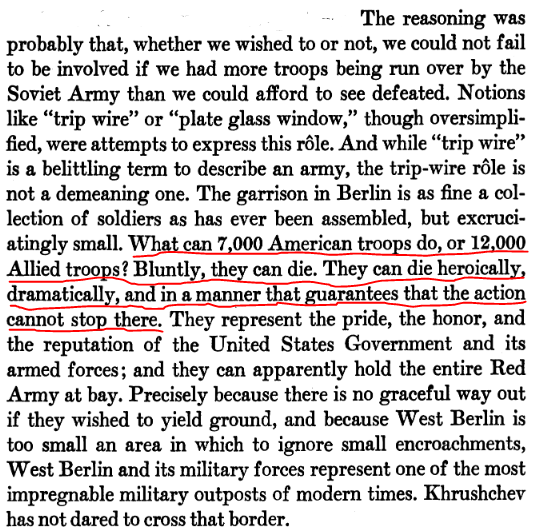
The core difficulty with evaluating deterrence is "selection bias" and an inability to see the "counterfactual" (i.e. we only observe deterrence failures).
https://t.co/2uyzeGHQ15
7/ He does not think the "selection bias" can be dismissed and that accounting for it will have key implications for who we think about deterrence pic.twitter.com/YZriK5KH6B
— Paul Poast (@ProfPaulPoast) March 3, 2019
What the research finds is not supportive.
https://t.co/7jblEd27n8
https://t.co/EdweUhWHd0
https://t.co/2hBOdsNT3F
https://t.co/aHiQlpDWYj
What else can be done?
https://t.co/SGvUwGm8K4
https://t.co/ECh84QJ0Rv
https://t.co/abYBpwkuBp
https://t.co/KRA2wgHN4P
https://t.co/od5Aczh4GT
More from Paul Poast
Is it true that democracies don't go to war with each other?
Sort of. But I wouldn't base public policy on the finding.
Why? Let's turn to the data.
[THREAD]
The idea of a "Democratic Peace" is a widely held view that's been around for a long time.
By 1988, there already existed enough studies on the topic for Jack Levy to famously label Democratic Peace "an empirical law"

The earliest empirical work on the topic was the 1964 report by Dean Babst published in the "Wisconsin Sociologist"

Using the war participation data from Quincy Wright's "A Study of War", Babst produced the following two tables
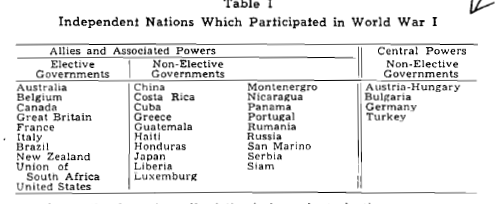
The tables show that democracies were NOT on both sides (of course, Finland is awkward given that it fought WITH Nazi Germany against the Soviet Union).
Babst expanded his study beyond the World Wars in a 1972 paper in Industrial Research. He confirmed his finding.
Sort of. But I wouldn't base public policy on the finding.
Why? Let's turn to the data.
[THREAD]
Democracies do not go to war with each other. There are a lot of empirical data to support that theory. I summarize that literature here. https://t.co/SQLk9J9rZ8 https://t.co/tLlSyisEIU
— Michael McFaul (@McFaul) December 12, 2020
The idea of a "Democratic Peace" is a widely held view that's been around for a long time.
By 1988, there already existed enough studies on the topic for Jack Levy to famously label Democratic Peace "an empirical law"
The earliest empirical work on the topic was the 1964 report by Dean Babst published in the "Wisconsin Sociologist"
Using the war participation data from Quincy Wright's "A Study of War", Babst produced the following two tables
The tables show that democracies were NOT on both sides (of course, Finland is awkward given that it fought WITH Nazi Germany against the Soviet Union).
Babst expanded his study beyond the World Wars in a 1972 paper in Industrial Research. He confirmed his finding.
Let's talk about that "Longer Telegram" making the rounds...and why it's a
First, to be clear, it IS NOT a telegram. It's a report. I mean, it has a flipping 11.5 page executive "summary"...
...a two page table of contents...
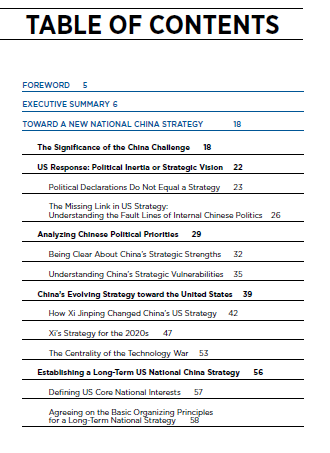
...and clocks in at 62 pages (minus the forward and executive summary) or 73 pages (if you include the executive summary).
Of course, the author of "The Longer Telegram" calls it a "telegram" because they want it to be directly and explicitly compared to George Kennan's 1946 "Long Telegram" about US policy towards the Soviet Union.
https://t.co/rHikkOYuoT

First, to be clear, it IS NOT a telegram. It's a report. I mean, it has a flipping 11.5 page executive "summary"...
...a two page table of contents...
...and clocks in at 62 pages (minus the forward and executive summary) or 73 pages (if you include the executive summary).
Of course, the author of "The Longer Telegram" calls it a "telegram" because they want it to be directly and explicitly compared to George Kennan's 1946 "Long Telegram" about US policy towards the Soviet Union.
https://t.co/rHikkOYuoT
Why are civil-mil scholars upset about Austin Lloyd's nomination as the 28th Secretary of Defense?
Consider the nomination of the 3rd Secretary of Defense: George Marshall
[THREAD]

In 1950, Truman wanted to fire the second SecDef, Louis Johnson, and install George Marshall as Secretary of Defense.
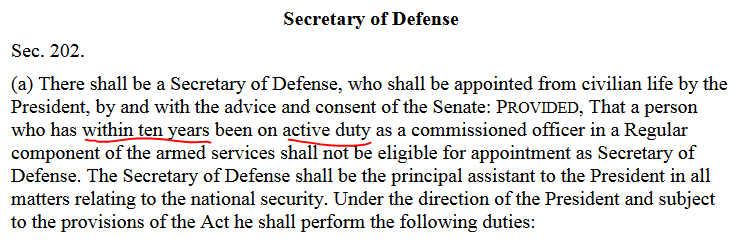
There was a problem: when the Department of Defense was created in 1947, section 202 of the 1947 National Security Act (which created the DoD, then called "The National Military Establishment") would not allow recently retired officers to serve as SecDef
https://t.co/bWx4h1OFah
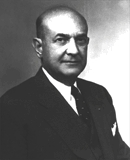
Marshall had only retired as a 5-star General in 1947
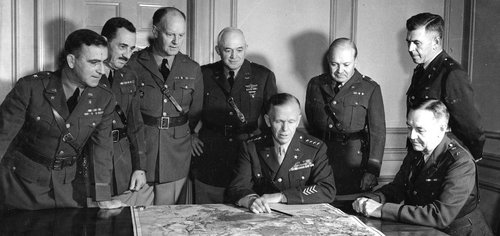
Of course, by 1950 Marshall had already served as Secretary of State and had proposed the "Marshall Plan" for the recovery of Europe
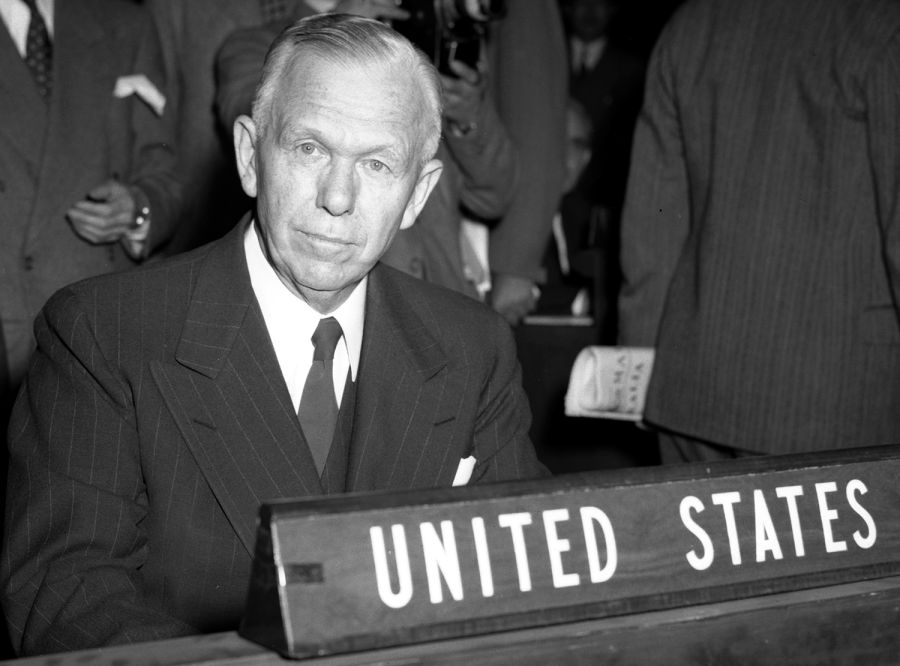
Consider the nomination of the 3rd Secretary of Defense: George Marshall
[THREAD]
In 1950, Truman wanted to fire the second SecDef, Louis Johnson, and install George Marshall as Secretary of Defense.
There was a problem: when the Department of Defense was created in 1947, section 202 of the 1947 National Security Act (which created the DoD, then called "The National Military Establishment") would not allow recently retired officers to serve as SecDef
https://t.co/bWx4h1OFah
Marshall had only retired as a 5-star General in 1947
Of course, by 1950 Marshall had already served as Secretary of State and had proposed the "Marshall Plan" for the recovery of Europe
Was the attack on the US Capitol an attempted coup?
Rather than debate that question here (or in another forum), I'm making it an assignment. Specifically, I'm asking my Quantitative Security students to determine if it belongs in our coup/attempted coup datasets.
[THREAD]
A core goal of this course is to introduce students to how Large-N data on violence and security are created.
We put WAY TOO much emphasis on estimators & software (Stata v R 🙄); not enough on the quality of the data going into the analysis.
First, what happened? @johncarey03755 offers a succinct
Second, I'll ask the students to read some of the recent pieces that say the event was NOT a coup attempt.
These include...
...detailed twitter threads by
Rather than debate that question here (or in another forum), I'm making it an assignment. Specifically, I'm asking my Quantitative Security students to determine if it belongs in our coup/attempted coup datasets.
[THREAD]
A core goal of this course is to introduce students to how Large-N data on violence and security are created.
We put WAY TOO much emphasis on estimators & software (Stata v R 🙄); not enough on the quality of the data going into the analysis.
First, what happened? @johncarey03755 offers a succinct
Second, I'll ask the students to read some of the recent pieces that say the event was NOT a coup attempt.
These include...
...detailed twitter threads by
Let me try this again\u2026 What would it look like if this were a coup (failed, in progress, or otherwise)? 1/n
— Kristen Harkness (@HarknessKristen) January 7, 2021
More from Biden


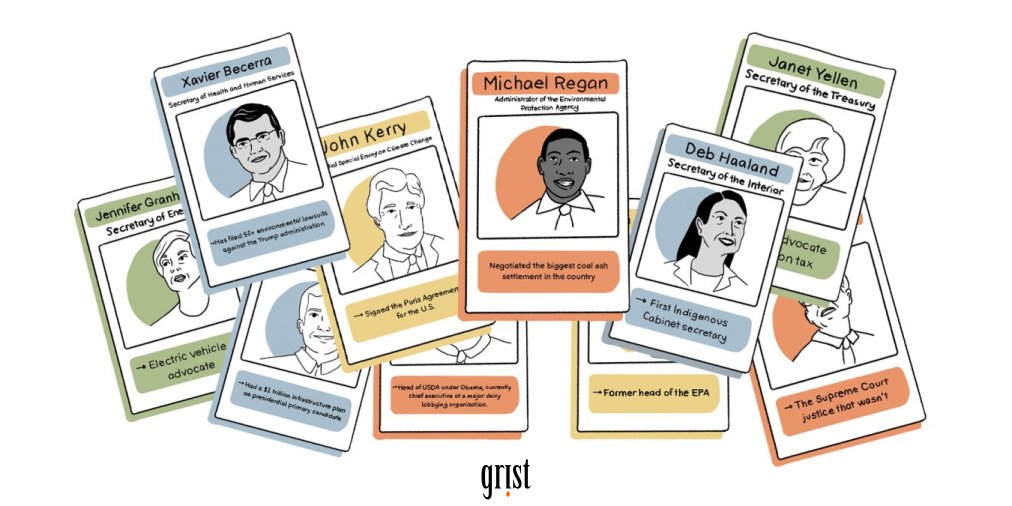
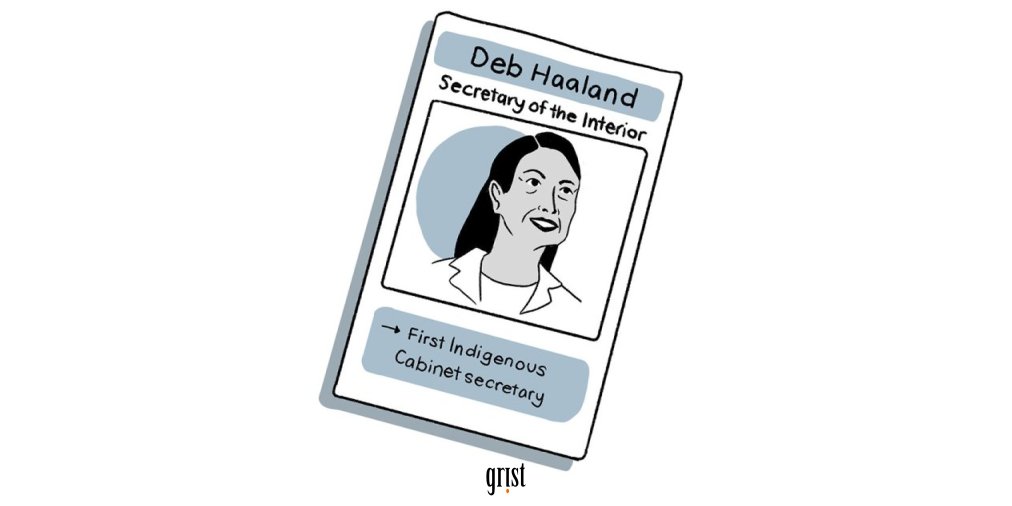


Did you miss the Inauguration of the 46th President of the United States,Joe Biden?This Thread is the perfect synopsis for everything you need to know!
Donald Trump left the White House Wednesday morning. For the first time in 150 years the sitting president didn’t attend the swearing-in of his successor.
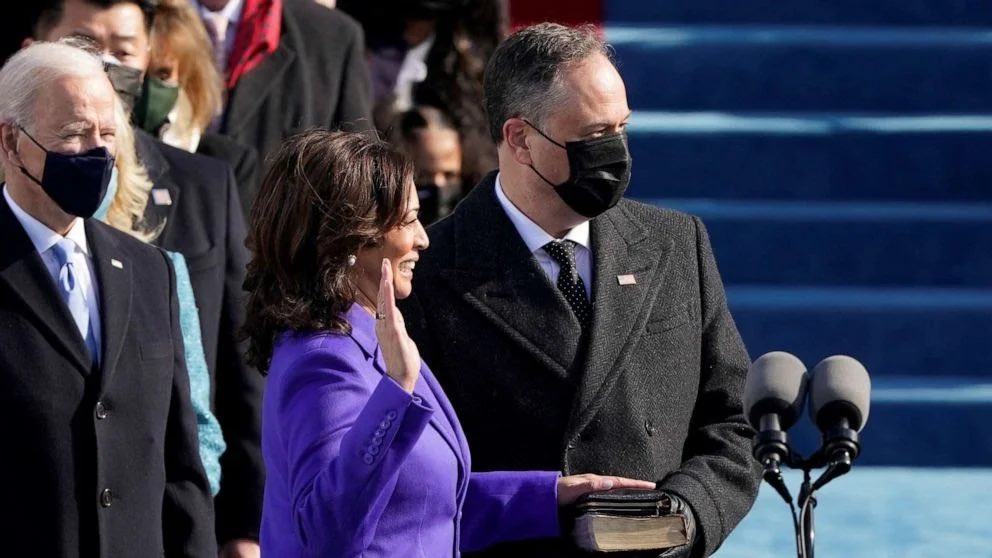
Kamala Harris, the first woman and person of color to hold the office of vice president was sworn in by Justice Sonia Sotomayor, the first Latina member of the Supreme Court.
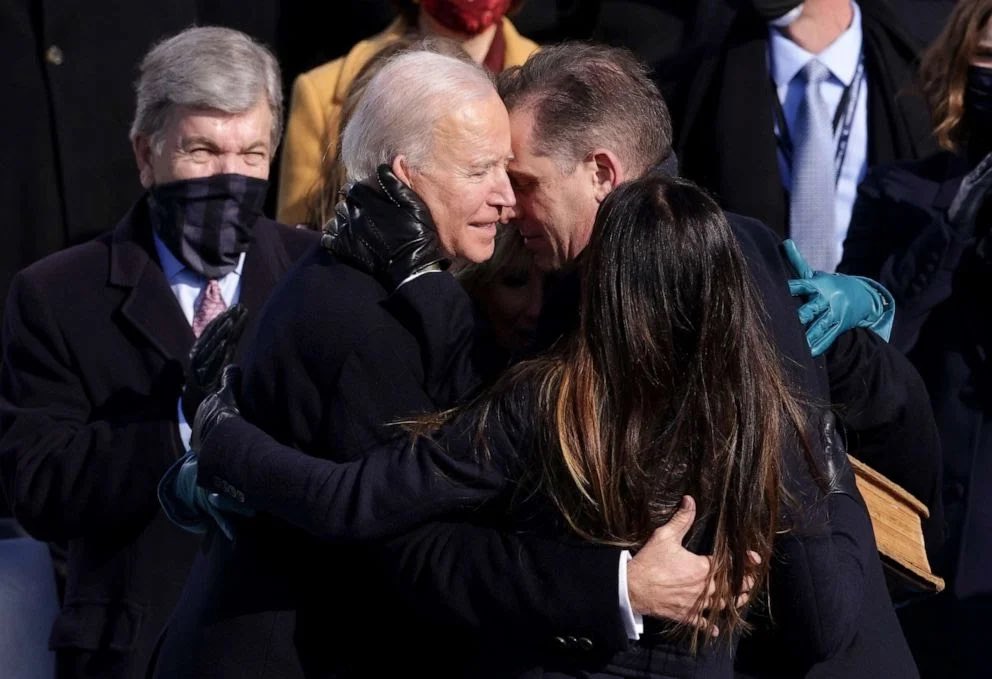
Chief Justice John Roberts later administered the presidential oath to Biden as Jill Biden held the bible and as his children, Hunter Biden and Ashley Biden, stood by.
President Joe Biden gave his Inaugural address. Check out the full transcript below.
Donald Trump left the White House Wednesday morning. For the first time in 150 years the sitting president didn’t attend the swearing-in of his successor.
Trump leaves the White House pic.twitter.com/fed7XB4I99
— Jake Tapper (@jaketapper) January 20, 2021
Kamala Harris, the first woman and person of color to hold the office of vice president was sworn in by Justice Sonia Sotomayor, the first Latina member of the Supreme Court.
Chief Justice John Roberts later administered the presidential oath to Biden as Jill Biden held the bible and as his children, Hunter Biden and Ashley Biden, stood by.
President Joe Biden gave his Inaugural address. Check out the full transcript below.
Transcript: Joe Biden\u2019s inauguration speech https://t.co/YmDAUFX99M
— The Washington Post (@washingtonpost) January 20, 2021
You May Also Like


@EricTopol @NBA @StephenKissler @yhgrad B.1.1.7 reveals clearly that SARS-CoV-2 is reverting to its original pre-outbreak condition, i.e. adapted to transgenic hACE2 mice (either Baric's BALB/c ones or others used at WIV labs during chimeric bat coronavirus experiments aimed at developing a pan betacoronavirus vaccine)
@NBA @StephenKissler @yhgrad 1. From Day 1, SARS-COV-2 was very well adapted to humans .....and transgenic hACE2 Mice
@NBA @StephenKissler @yhgrad 2. High Probability of serial passaging in Transgenic Mice expressing hACE2 in genesis of SARS-COV-2
@NBA @StephenKissler @yhgrad B.1.1.7 has an unusually large number of genetic changes, ... found to date in mouse-adapted SARS-CoV2 and is also seen in ferret infections.
https://t.co/9Z4oJmkcKj

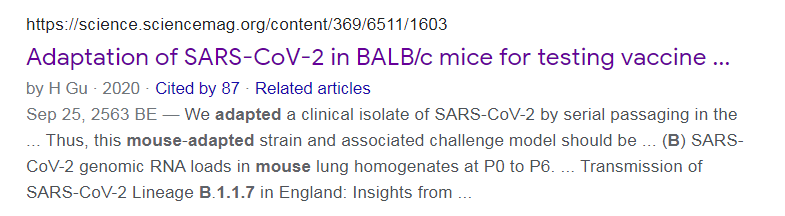
@NBA @StephenKissler @yhgrad We adapted a clinical isolate of SARS-CoV-2 by serial passaging in the ... Thus, this mouse-adapted strain and associated challenge model should be ... (B) SARS-CoV-2 genomic RNA loads in mouse lung homogenates at P0 to P6.
https://t.co/I90OOCJg7o
@NBA @StephenKissler @yhgrad 1. From Day 1, SARS-COV-2 was very well adapted to humans .....and transgenic hACE2 Mice
1. From Day 1, SARS-COV-2 was very well adapted to humans .....and transgenic hACE2 Mice
— Billy Bostickson \U0001f3f4\U0001f441&\U0001f441 \U0001f193 (@BillyBostickson) January 30, 2021
"we generated a mouse model expressing hACE2 by using CRISPR/Cas9 knockin technology. In comparison with wild-type C57BL/6 mice, both young & aged hACE2 mice sustained high viral loads... pic.twitter.com/j94XtSkscj
@NBA @StephenKissler @yhgrad 2. High Probability of serial passaging in Transgenic Mice expressing hACE2 in genesis of SARS-COV-2
1. High Probability of serial passaging in Transgenic Mice expressing hACE2 in genesis of SARS-COV-2!
— Billy Bostickson \U0001f3f4\U0001f441&\U0001f441 \U0001f193 (@BillyBostickson) January 2, 2021
2 papers:
Human\u2013viral molecular mimicryhttps://t.co/irfH0Zgrve
Molecular Mimicryhttps://t.co/yLQoUtfS6s https://t.co/lsCv2iMEQz
@NBA @StephenKissler @yhgrad B.1.1.7 has an unusually large number of genetic changes, ... found to date in mouse-adapted SARS-CoV2 and is also seen in ferret infections.
https://t.co/9Z4oJmkcKj
@NBA @StephenKissler @yhgrad We adapted a clinical isolate of SARS-CoV-2 by serial passaging in the ... Thus, this mouse-adapted strain and associated challenge model should be ... (B) SARS-CoV-2 genomic RNA loads in mouse lung homogenates at P0 to P6.
https://t.co/I90OOCJg7o






So it's now October 10, 2018 and....Rod Rosenstein is STILL not fired.
He's STILL in charge of the Mueller investigation.
He's STILL refusing to hand over the McCabe memos.
He's STILL holding up the declassification of the #SpyGate documents & their release to the public.
I love a good cover story.......
The guy had a face-to-face with El Grande Trumpo himself on Air Force One just 2 days ago. Inside just about the most secure SCIF in the world.
And Trump came out of AF1 and gave ol' Rod a big thumbs up!
And so we're right back to 'that dirty rat Rosenstein!' 2 days later.
At this point it's clear some members of Congress are either in on this and helping the cover story or they haven't got a clue and are out in the cold.
Note the conflicting stories about 'Rosenstein cancelled meeting with Congress on Oct 11!"
First, rumors surfaced of a scheduled meeting on Oct. 11 between Rosenstein & members of Congress, and Rosenstein just cancelled it.
He's STILL in charge of the Mueller investigation.
He's STILL refusing to hand over the McCabe memos.
He's STILL holding up the declassification of the #SpyGate documents & their release to the public.
I love a good cover story.......
The guy had a face-to-face with El Grande Trumpo himself on Air Force One just 2 days ago. Inside just about the most secure SCIF in the world.
And Trump came out of AF1 and gave ol' Rod a big thumbs up!
And so we're right back to 'that dirty rat Rosenstein!' 2 days later.
At this point it's clear some members of Congress are either in on this and helping the cover story or they haven't got a clue and are out in the cold.
Note the conflicting stories about 'Rosenstein cancelled meeting with Congress on Oct 11!"
First, rumors surfaced of a scheduled meeting on Oct. 11 between Rosenstein & members of Congress, and Rosenstein just cancelled it.
Rep. Andy Biggs and Rep. Matt Gaetz say DAG Rod Rosenstein cancelled an Oct. 11 appearance before the judiciary and oversight committees. They are now calling for a subpoena. pic.twitter.com/TknVHKjXtd
— Ivan Pentchoukov \U0001f1fa\U0001f1f8 (@IvanPentchoukov) October 10, 2018