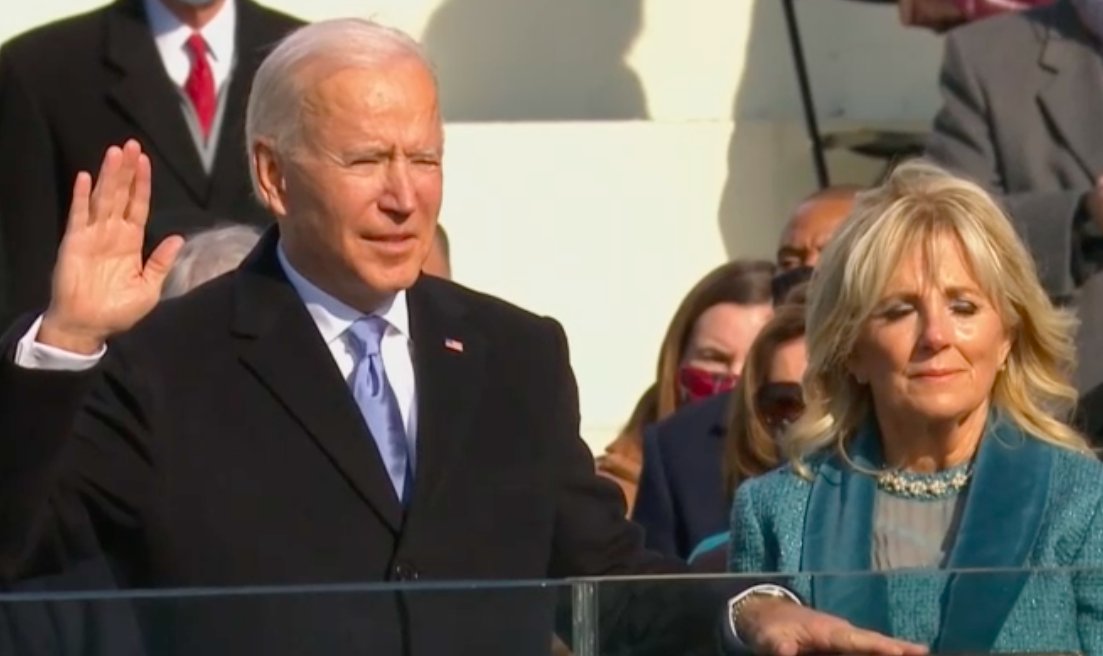
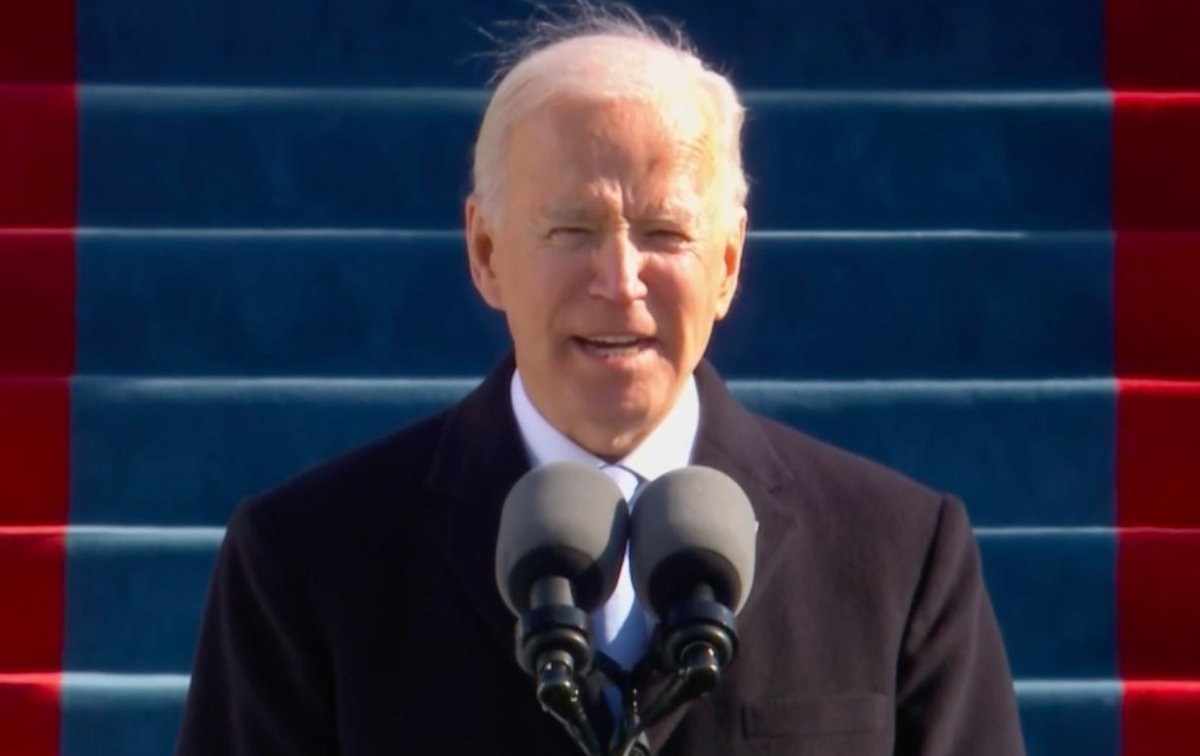
On “Climate Day”, President Biden is making good on his commitment to tackle climate change by signing a suite of executive orders directing all agencies of the federal government to prioritize #climateaction at home and abroad.
Here are the major actions [Thread]
Here are three steps to aid workers in this transition https://t.co/VY75Pgckq2
Now it’s time for Congress to step up and respond to the call for #climateaction.
More from Biden
This weekend stakeholders have seen a longer list of Biden’s planned executive actions than what was publicly reported in a memo from incoming chief of staff Ron Klain.
That purported list includes a reference to cancelling Keystone XL on Day 1 — Wednesday.
Here is what the Biden transition team has publicly reported so far. From a memo by his Chief of Staff Ron Klain — that dozens of executive orders are planned in the first few days. https://t.co/gEi3qHJnD1
The Biden team has publicly /
/ publicly announced its intention to sign climate orders on Day 1 including rejoining the Paris accord
What hasn’t been publicly reported, and it’s apparently something the transition team has indicated in stakeholder briefings, is that an order to kill KXL is coming on Day 1
Alberta Premier Jason Kenney raises the prospect of legal action if Biden cancels KXL.
I am deeply concerned by reports that the incoming administration of President-elect Joe Biden may repeal the Presidential permit for the Keystone XL border crossing next week.
— Jason Kenney (@jkenney) January 18, 2021
My full statement: pic.twitter.com/vZjun1IdMH
The Prospect and The Intercept have learned that Renata Hesse, a former Obama Justice Department official who then went on to work for Google and Amazon, is a leading contender to head up the DoJ Antitrust Division.
— David Dayen (@ddayen) January 15, 2021
Former Google attorney Renata Hesse when working at DOJ antitrust tried to change the details of the BMI and ASCAP consent decrees that would have made a $1 Billion lawsuit against Google go away. This is horrendously corrupt. This is a terrible terrible start for Biden.
https://t.co/yM5ej1rIBN
https://t.co/hkc1B31cR7
https://t.co/J5f3C90qsh
Biden will have two options:
— Sahil Kapur (@sahilkapur) January 23, 2021
1. Cut the price tag sharply to court GOP support.
2. Use reconciliation to do what he can with 50 votes\u2014some stuff has to go, like $15 wage.
(A 3rd option is nuke the filibuster but @PressSec says he doesn\u2019t favor that.)https://t.co/AV49BcmDaI
This👇is the danger. By using reconciliation you’re conceding the point that major legislation deserves to pass by majority vote, but only certain kinds for arbitrary reasons. Plus the process itself is opaque and ugly. You risk laying a logistical & political trap for yourself.
Obvious answer is 2b where you tie yourself in knots trying to go nuclear lite and totally lose the plot in the process
— Liam Donovan (@LPDonovan) January 23, 2021
All the “here’s what you can do through reconciliation” takes are correct but also look through the wrong end of the telescope. Any of the items mentioned, or a small number of them, would be relatively easy. But putting them all together in one leadership-driven mega package...
... with no committee involvement and no real oversight, enduring tough press for jamming a massive package through a close process and stories about lobbyist giveaways while dodging the adverse parliamentary rulings that are virtually inevitable and still maintaining 50 votes...
It’s possible! Maybe the mega-ness of the package ends up helping hold 50 votes. But the ugliness of the process is being underpriced. And to what end? You’re just delaying the inevitable since you can’t use it for civil rights nor can you allow civil rights to die by filibuster.
You May Also Like
Why is this the most powerful question you can ask when attempting to reach an agreement with another human being or organization?
A thread, co-written by @deanmbrody:
Next level tactic when closing a sale, candidate, or investment:
— Erik Torenberg (@eriktorenberg) February 27, 2018
Ask: \u201cWhat needs to be true for you to be all in?\u201d
You'll usually get an explicit answer that you might not get otherwise. It also holds them accountable once the thing they need becomes true.
2/ First, “X” could be lots of things. Examples: What would need to be true for you to
- “Feel it's in our best interest for me to be CMO"
- “Feel that we’re in a good place as a company”
- “Feel that we’re on the same page”
- “Feel that we both got what we wanted from this deal
3/ Normally, we aren’t that direct. Example from startup/VC land:
Founders leave VC meetings thinking that every VC will invest, but they rarely do.
Worse over, the founders don’t know what they need to do in order to be fundable.
4/ So why should you ask the magic Q?
To get clarity.
You want to know where you stand, and what it takes to get what you want in a way that also gets them what they want.
It also holds them (mentally) accountable once the thing they need becomes true.
5/ Staying in the context of soliciting investors, the question is “what would need to be true for you to want to invest (or partner with us on this journey, etc)?”
Multiple responses to this question are likely to deliver a positive result.
The story doesn\u2019t say you were told not to... it says you did so without approval and they tried to obfuscate what you found. Is that true?
— Sarah Frier (@sarahfrier) November 15, 2018
In the spring and summer of 2016, as reported by the Times, activity we traced to GRU was reported to the FBI. This was the standard model of interaction companies used for nation-state attacks against likely US targeted.
In the Spring of 2017, after a deep dive into the Fake News phenomena, the security team wanted to publish an update that covered what we had learned. At this point, we didn’t have any advertising content or the big IRA cluster, but we did know about the GRU model.
This report when through dozens of edits as different equities were represented. I did not have any meetings with Sheryl on the paper, but I can’t speak to whether she was in the loop with my higher-ups.
In the end, the difficult question of attribution was settled by us pointing to the DNI report instead of saying Russia or GRU directly. In my pre-briefs with members of Congress, I made it clear that we believed this action was GRU.