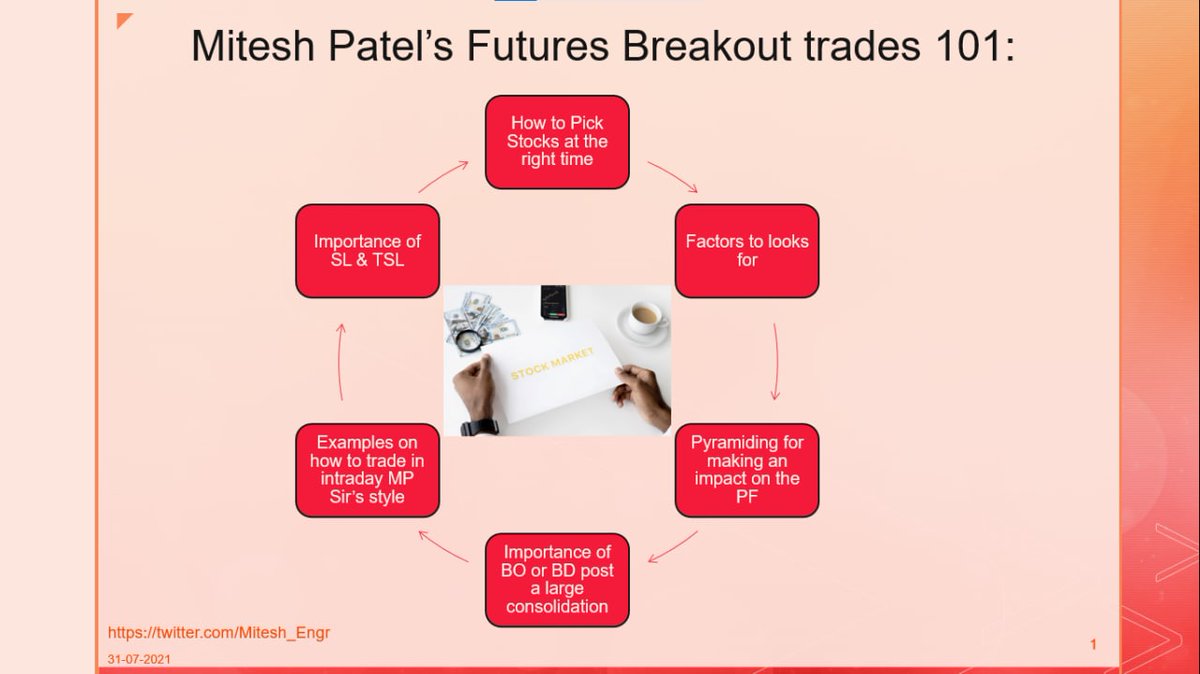
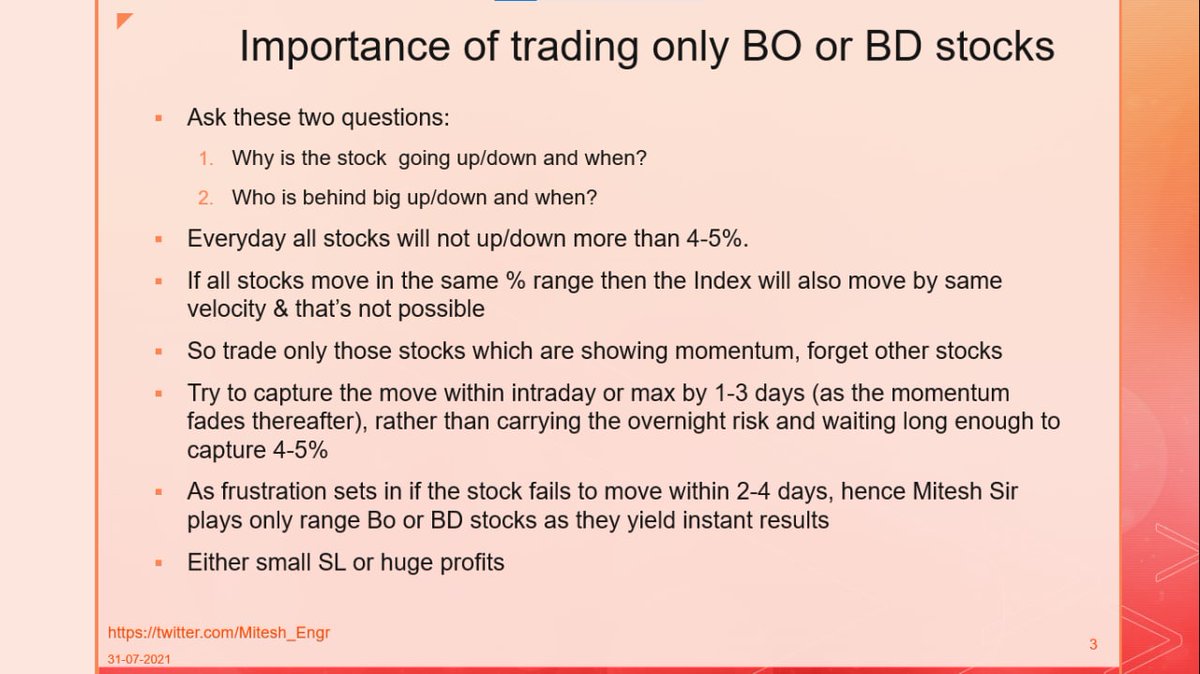
"Trade with a stop loss of 2% on your capital for the week."
If you're losing more than 2%, chances are your reading of the market is wrong. The best would be to call it quits for that week.
(1/N)
— Harsh (@HarshAsserts) September 11, 2020
When trading,moods will want to influence ur decisions
— Banknifty Addict (Gaurav) (@BankniftyA) December 29, 2019
How to minimize:
-Have a backtested plan/system
-Know yourself(emotion and panic levels)
So trade size is important to keep ur emotions in check
-dont focus too much on pnl
-have a back up plan ready
& last stay positive!!
Backtest the complete expiry and practice again and again till u develop conviction
— Banknifty Addict (Gaurav) (@BankniftyA) November 5, 2020
Support and resistance levels based on technical charts on various time frames.
— Banknifty Addict (Gaurav) (@BankniftyA) December 19, 2019
Breaking any of the above, leads to a direction
and then only directional play.
5: When to play directional:
— Nikita Poojary (@niki_poojary) December 18, 2022
Whenever the index is moving in a single direction, its important to go with the trend.
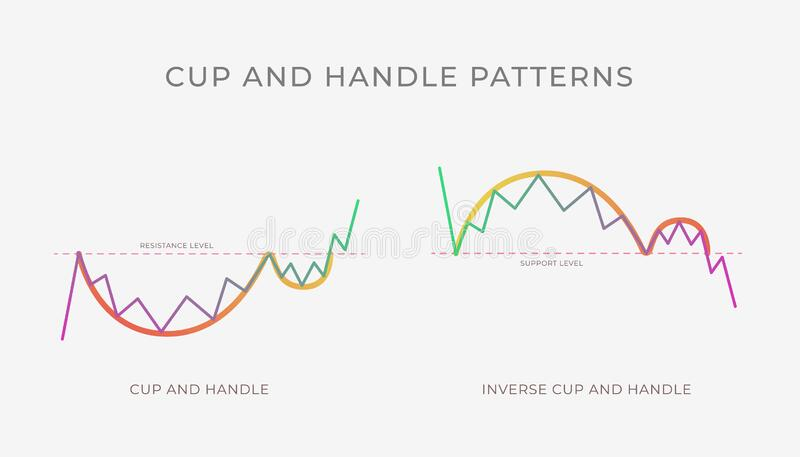
A few weeks ago when BNF broke out of the cup and handle pattern, all we had to do was sell PEs.
Pls note: weekly TF chart is attached to just show the C&H BO pic.twitter.com/z0wgUzJW8t
#VOLTAS Another cup & handle pattern for cash positional pic.twitter.com/Jsc99xJfwY
— Nikita Poojary (@niki_poojary) October 23, 2019
THREAD: 14 of the best resources/topics for anyone who wants to start option selling as a career. \U0001f9f5
— Aditya Todmal (@AdityaTodmal) March 13, 2022
Collaborated with @niki_poojary
These 8 websites will answer 80% of your FNO research questions! \U0001f9f5
— Aditya Todmal (@AdityaTodmal) October 1, 2022
Collaborated with @niki_poojary
8 Options Trading books that every trader should read: \U0001f4da
— Aditya Todmal (@AdityaTodmal) October 2, 2022
Collaborated with @niki_poojary
"we don't negotiate salaries" really means "we'd prefer to negotiate massive signing bonuses and equity grants, but we'll negotiate salary if you REALLY insist" https://t.co/80k7nWAMoK
— Aditya Mukerjee, the Otterrific \U0001f3f3\ufe0f\u200d\U0001f308 (@chimeracoder) December 4, 2018