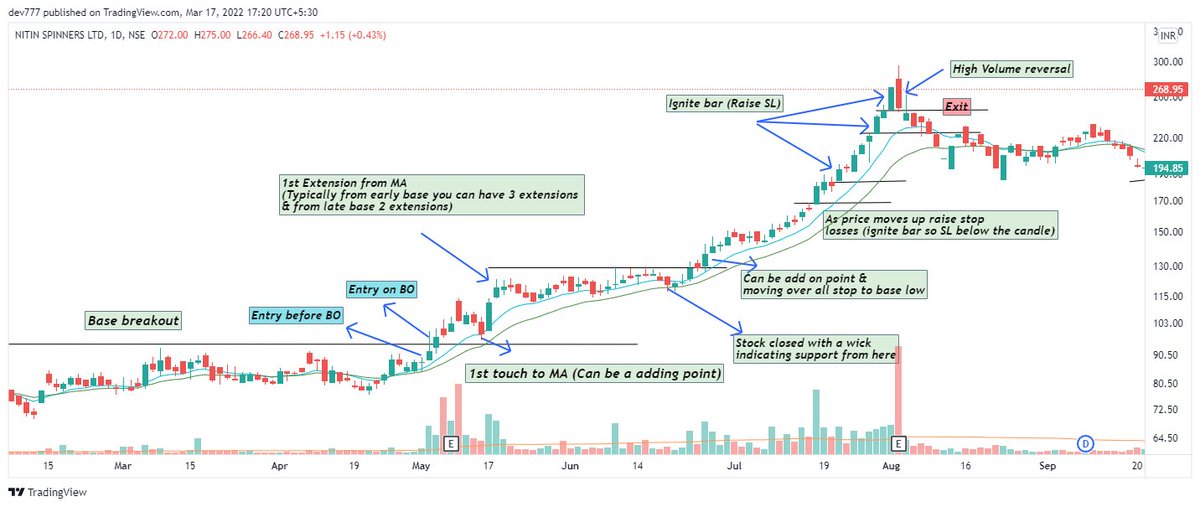
3 Common chart patterns guide 🧵

With examples

Do like & retweet👍

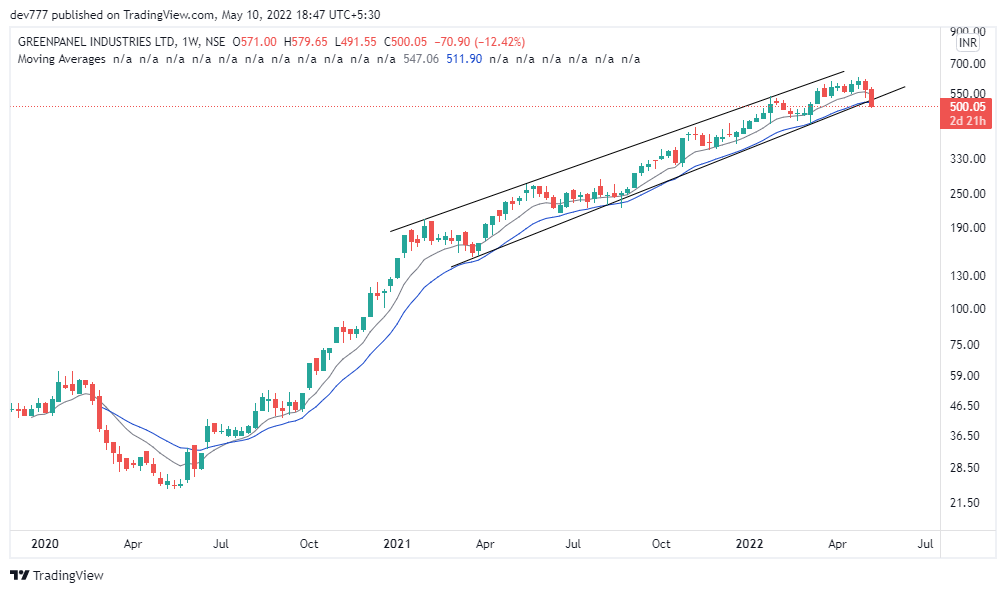
1) Cup & handle pattern : As name suggest it looks like a cup & handle. The cup is formed as stock corrects & then starts picking up again.

Handle formation is good process as it then digests the run leading to more sustained move. The specifics of cup above (1/n)
Note - The usual depth of a good cup is max 35% but if the market is coming out of deeper correction. Then the depth of cup can be 50-55% too. But in a bull market a correction more than 35% can result in faulty pattern with lots of overhead supply ..Examples below (2/n)
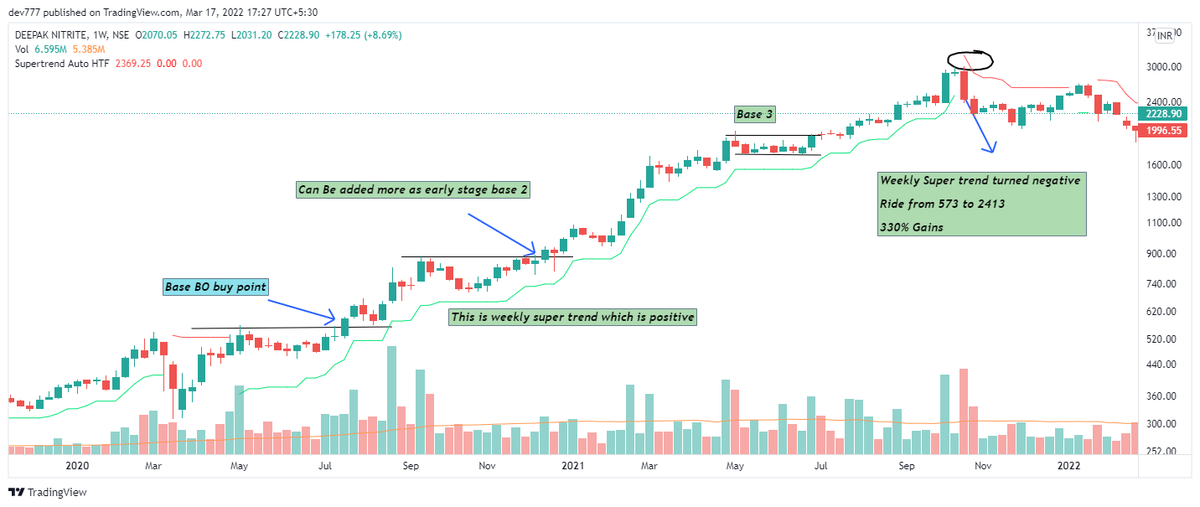
Examples - Deepak Nitrite, Dixon tech

TD Power System - Recent one ( Note the handle depth here is 19% . As compared to textbook handle this is more. I see upto 20% handles working) (3/n)
2) VCP - Typically volatility contraction is not a pattern but a characteristics of any pattern. You see deep handles >15/20% - you can say that its not a cup & handle ideally but a VCP which is also fine & will work. Reduced volatility is what traders want to move ahead (4/n)
Example of VCP & details explained in this video - https://t.co/g5nK817LuR
3rd Pattern - Triangle Pattern
> Stock forming lower highs but the lows are not breaking previous lows resulting in contraction of both sides and trendlines converge

> Sometimes the high becomes first high becomes the resistance. Examples below
Thanks for reading
Do join telegram for stock updates - https://t.co/lJ00OKnSb2

More from EquiAlpha- Price Cycle Trading

More from All

You May Also Like

Recently, the @CNIL issued a decision regarding the GDPR compliance of an unknown French adtech company named "Vectaury". It may seem like small fry, but the decision has potential wide-ranging impacts for Google, the IAB framework, and today's adtech. It's thread time! 👇

It's all in French, but if you're up for it you can read:
• Their blog post (lacks the most interesting details):
https://t.co/PHkDcOT1hy
• Their high-level legal decision: https://t.co/hwpiEvjodt
• The full notification: https://t.co/QQB7rfynha

I've read it so you needn't!

Vectaury was collecting geolocation data in order to create profiles (eg. people who often go to this or that type of shop) so as to power ad targeting. They operate through embedded SDKs and ad bidding, making them invisible to users.

The @CNIL notes that profiling based off of geolocation presents particular risks since it reveals people's movements and habits. As risky, the processing requires consent — this will be the heart of their assessment.

Interesting point: they justify the decision in part because of how many people COULD be targeted in this way (rather than how many have — though they note that too). Because it's on a phone, and many have phones, it is considered large-scale processing no matter what.