
*Disclaimer: this is not supposed to be authentic ramen. It’s craveable and crushable.
95 billion packs of ramen instant noodles are eaten every year.
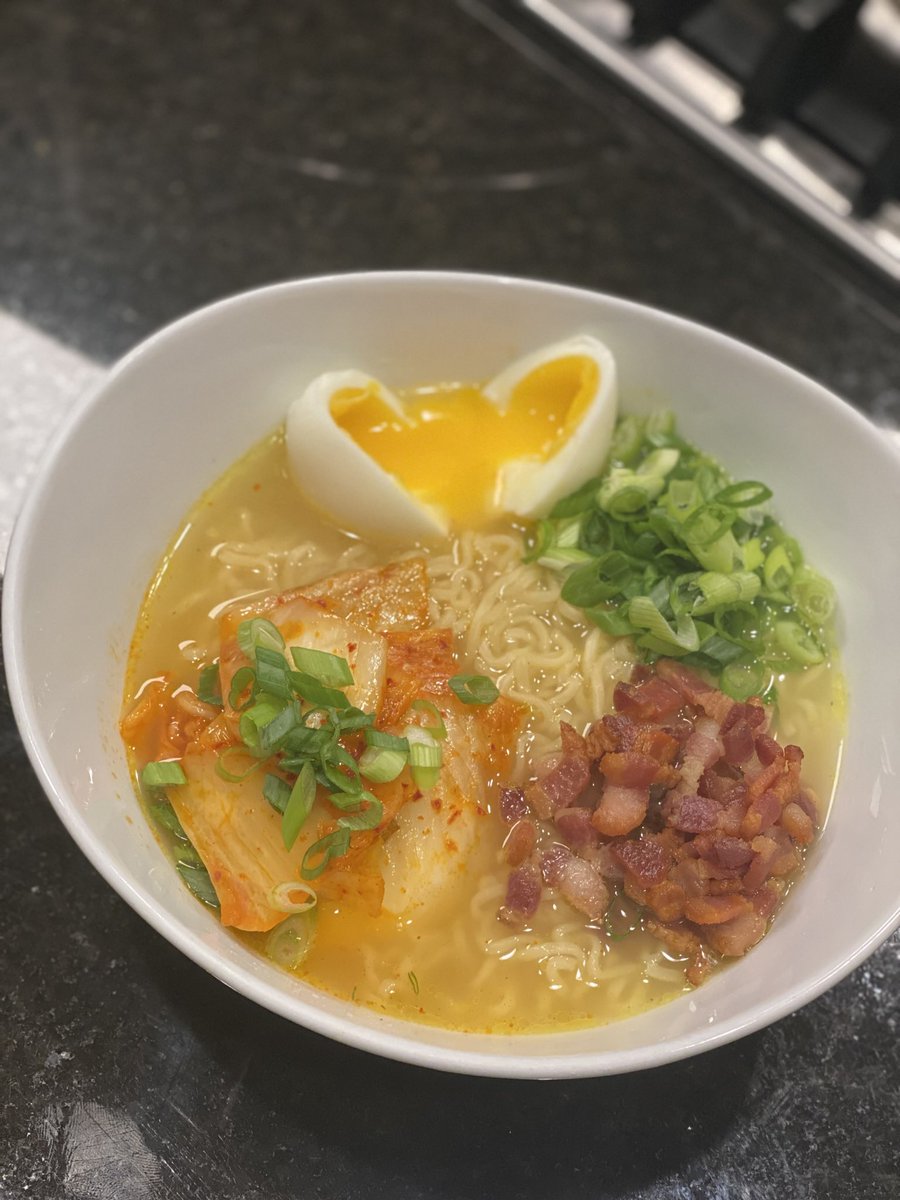
I’m going to show you to take an off-the-shelf classic and make it 𝗿𝗲𝘀𝘁𝗮𝘂𝗿𝗮𝗻𝘁 𝗾𝘂𝗮𝗹𝗶𝘁𝘆 𝗳𝗼𝗿 $2.40 𝗶𝗻 𝗹𝗲𝘀𝘀 𝘁𝗵𝗮𝗻 10𝗺𝗶𝗻𝘀.
(I know you’ve eaten ramen and you know you need this thread)

*Disclaimer: this is not supposed to be authentic ramen. It’s craveable and crushable.
This works by taking the sweet/salty flavors of chicken & adding:
Protein/Body; Egg
Fresh/Sharp; scallions
Smoky/Richness; bacon
Sour/Spicy/Umami; kimchi
Lets cook! 🍽️
(1) Egg
1/2c kimchi
(2) Scallions
(2) Packages Chicken Ramen
(2) Slices thick cut hickory smoked bacon

2. Meanwhile, slice your bacon into lardon. Then thinly slice the white end of the onion, and cut the green parts on a 4-5degree diagonal.

4. Pro-tip: tilt your pan, occasionally, so all the bacon collects in the rendered fat and crisps up evenly.

6. While your egg and bacon are cooking, unpackaged your noodles and open the seasoning packs.

8. Drop your noodles in the boiling water (that your egg was in). Stir occasionally to break up the noodles.

10. Add the kimchi and white scallion ends and stir into the bacon grease. Turn off the burner.

12. Remove the eggs from the ice water and peel under running water or dunking in the ice water bowl to remove the shell.

14. Now stack your kimchi on a remaining empty corner. Finally, add the scallion greens to the last open space.


More from All










You May Also Like

Keep dwelling on this:
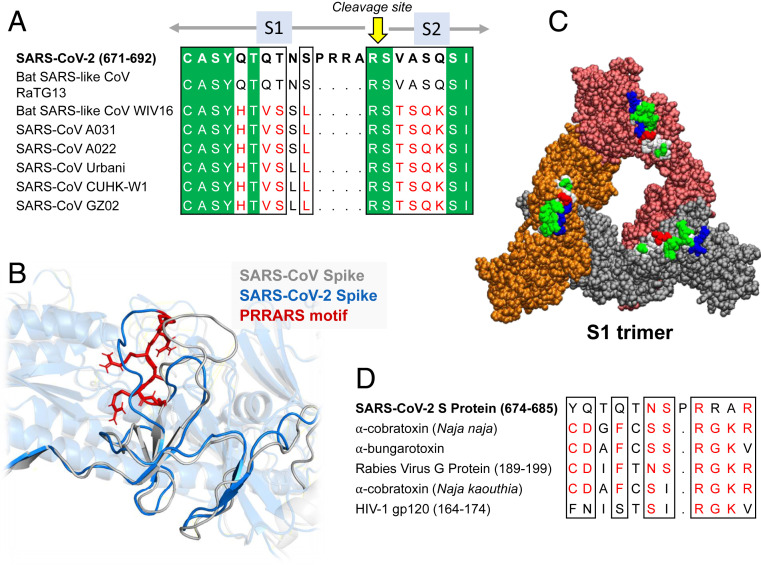
Further Examination of the Motif near PRRA Reveals Close Structural Similarity to the SEB Superantigen as well as Sequence Similarities to Neurotoxins and a Viral SAg.
The insertion PRRA together with 7 sequentially preceding residues & succeeding R685 (conserved in β-CoVs) form a motif, Y674QTQTNSPRRAR685, homologous to those of neurotoxins from Ophiophagus (cobra) and Bungarus genera, as well as neurotoxin-like regions from three RABV strains
(20) (Fig. 2D). We further noticed that the same segment bears close similarity to the HIV-1 glycoprotein gp120 SAg motif F164 to V174.
https://t.co/EwwJOSa8RK
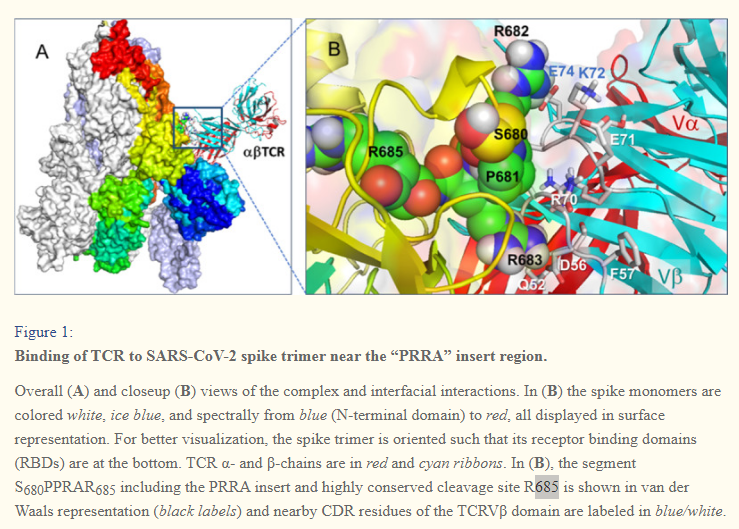
In (B), the segment S680PPRAR685 including the PRRA insert and highly conserved cleavage site *R685* is shown in van der Waals representation (black labels) and nearby CDR residues of the TCRVβ domain are labeled in blue/white
https://t.co/BsY8BAIzDa
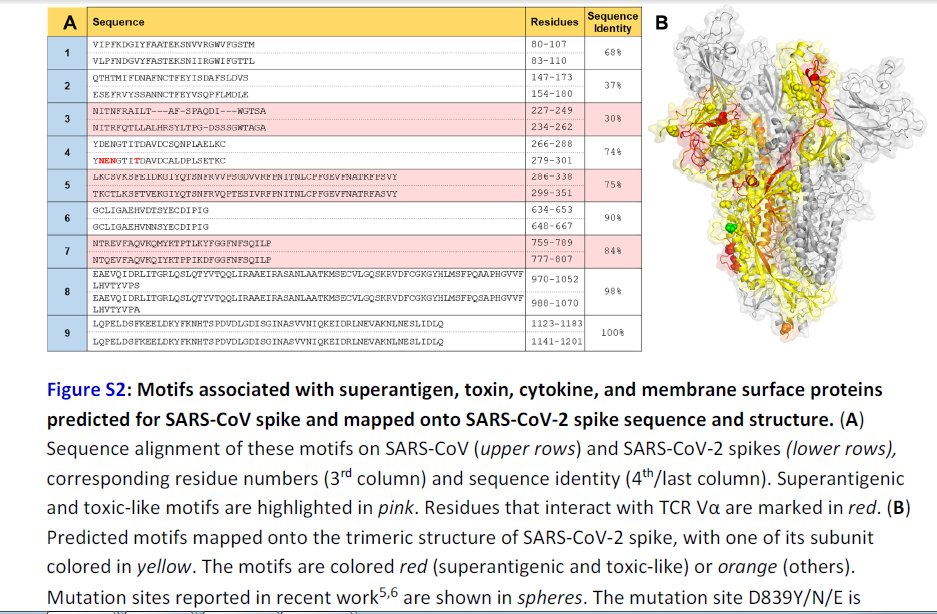
Sequence Identity %
https://t.co/BsY8BAIzDa
Y674 - QTQTNSPRRA - R685
Similar to neurotoxins from Ophiophagus (cobra) & Bungarus genera & neurotoxin-like regions from three RABV strains
T678 - NSPRRA- R685
Superantigenic core, consistently aligned against bacterial or viral SAgs
Further Examination of the Motif near PRRA Reveals Close Structural Similarity to the SEB Superantigen as well as Sequence Similarities to Neurotoxins and a Viral SAg.
The insertion PRRA together with 7 sequentially preceding residues & succeeding R685 (conserved in β-CoVs) form a motif, Y674QTQTNSPRRAR685, homologous to those of neurotoxins from Ophiophagus (cobra) and Bungarus genera, as well as neurotoxin-like regions from three RABV strains
(20) (Fig. 2D). We further noticed that the same segment bears close similarity to the HIV-1 glycoprotein gp120 SAg motif F164 to V174.
https://t.co/EwwJOSa8RK
In (B), the segment S680PPRAR685 including the PRRA insert and highly conserved cleavage site *R685* is shown in van der Waals representation (black labels) and nearby CDR residues of the TCRVβ domain are labeled in blue/white
https://t.co/BsY8BAIzDa
Sequence Identity %
https://t.co/BsY8BAIzDa
Y674 - QTQTNSPRRA - R685
Similar to neurotoxins from Ophiophagus (cobra) & Bungarus genera & neurotoxin-like regions from three RABV strains
T678 - NSPRRA- R685
Superantigenic core, consistently aligned against bacterial or viral SAgs




Oh my Goodness!!!
I might have a panic attack due to excitement!!
Read this thread to the end...I just had an epiphany and my mind is blown. Actually, more than blown. More like OBLITERATED! This is the thing! This is the thing that will blow the entire thing out of the water!
Has this man been concealing his true identity?
Is this man a supposed 'dead' Seal Team Six soldier?
Witness protection to be kept safe until the right moment when all will be revealed?!
Who ELSE is alive that may have faked their death/gone into witness protection?

Were "golden tickets" inside the envelopes??

Are these "golden tickets" going to lead to their ultimate undoing?
Review crumbs on the board re: 'gold'.

#SEALTeam6 Trump re-tweeted this.

I might have a panic attack due to excitement!!
Read this thread to the end...I just had an epiphany and my mind is blown. Actually, more than blown. More like OBLITERATED! This is the thing! This is the thing that will blow the entire thing out of the water!
Tik Tok pic.twitter.com/8X3oMxvncP
— Scotty Mar10 (@Allenma15086871) December 29, 2020
Has this man been concealing his true identity?
Is this man a supposed 'dead' Seal Team Six soldier?
Witness protection to be kept safe until the right moment when all will be revealed?!
Who ELSE is alive that may have faked their death/gone into witness protection?
Were "golden tickets" inside the envelopes??
Are these "golden tickets" going to lead to their ultimate undoing?
Review crumbs on the board re: 'gold'.
#SEALTeam6 Trump re-tweeted this.