There’s a lot of bad advice out there on how to pitch your startup.

Last year, I invested $1M+ and heard 200 companies pitch.

Every great pitch I've heard nails 5 ingredients.

In this thread, we'll go through each to help maximize your chances when fundraising

Let's dig in👇

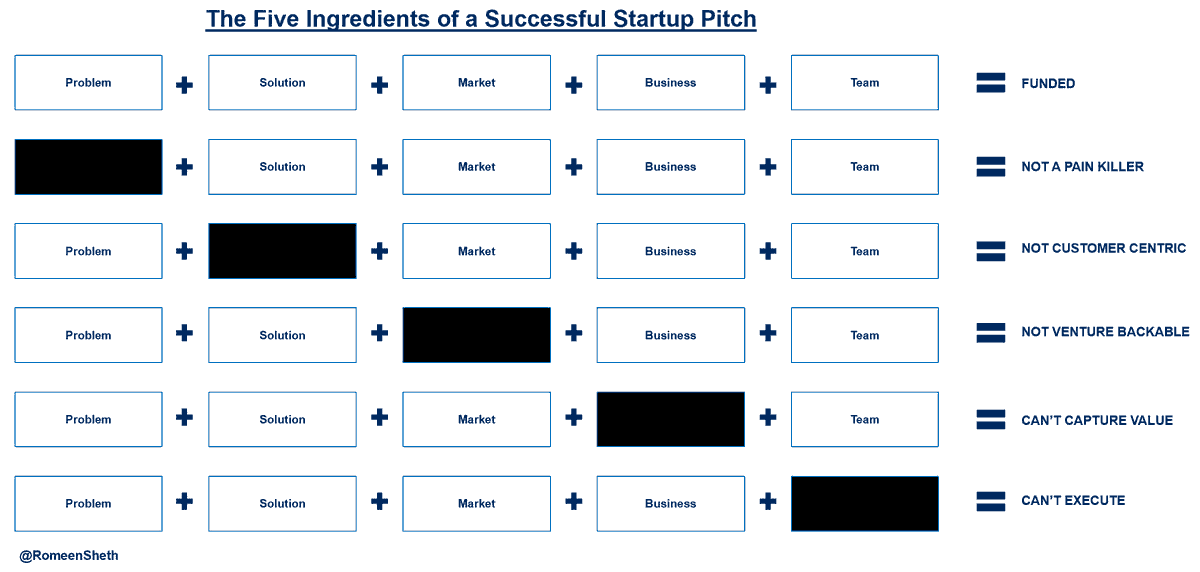
1/ Every pitch should have 5 ingredients:

- Problem: Is this an issue
- Solution: Do you have the fix
- Market: Is this a big enough issue
- Business: Can you make money
- Team: Are you the people to do it

The best pitches nail all 5. Good ones hit 4. Subpar hit 3 or less.
2/ PROBLEM

The problem statement is an explanation of why a set of circumstances is painful for a set of users.

There’s one word in that sentence that is most important: painful.

If your problem is not painful enough, it's a vitamin.

The best startups are pain killers.
3/ SOLUTION

The solution statement is an explanation of how you address the pain felt by your users. If you don’t have the right solution, you won’t get customer traction.

Customers don’t buy your thesis on the pain point. They buy the actual thing that solves their pain point.
4/ MARKET

In tech, only businesses that have outsized potential get funded.

To have outsized potential, you have to either be in a:

(a) small, but rapidly growing market or
(b) large existing market that can be resegmented

If not, the business is not venture backable.
5/ BUSINESS

The business model defines how you print $$$.

What is the key insight you’ve figured out that other people haven’t?

You don’t need to reinvent the wheel on everything to be a compelling business. Just explain your secret sauce that helps you capture the value.
6/ TEAM

Everything else is academic if you can’t execute.

Ultimately the Investor is betting on your team’s ability to bring out reality in the insights around the problem, solution, market and business.

Communicate why you are the best in the world to build the business.
7/ Once you feel good about these 5, think through the connection points.

Every topic that comes up in convesation will be a function of a connection point. For example,

- Problem-Market = Industry Dynamics
- Solution-Market = Competition
- Market-Business = Unit Economics
8/ Time and time again, I see Founders struggling to keep it simple. When you pitch:

- Understand the 5 core ingredients
- Think through how they relate to one another
- Communicate with clarity
- Don't assume Investors understand your business.

Happy fundraising :)

More from Romeen Sheth

Early career years are painful.

You feel like an idiot 98% of the time - lost, confused and insecure.

I wish I had a playbook on principles for my first job.

So I put one together.

Here are 9 threads packed with lessons about building a career I wish I knew sooner:

1. First and most important - have a clear mind.

Without clarity of thought, nothing else matters.

Here are the most common types of distortions I’ve observed over the years.

Self awareness has helped me catch myself before falling into a trap.


2. Enter the side door

Most people enter the “front door” in their careers.

The problem is - when you do what most people do, you get the results most people get.

If you want a n-of-1 career, don’t take the 1-of-n path.


3. Adversity is inevitable

Any journey that’s worthwhile is filled with adversity.

If it was so easy...everybody would do it.

Here’s the way I’ve worked through dealing with the road blocks that are part of every entrepreneur’s journey.


4. Learn from the world's best

I love talking to world class people - CEOs, Founders, Execs, Athletes.

There's a lot of commonality in world class success.

Unpacking how these people got to where they are is always inspiring.

More from All

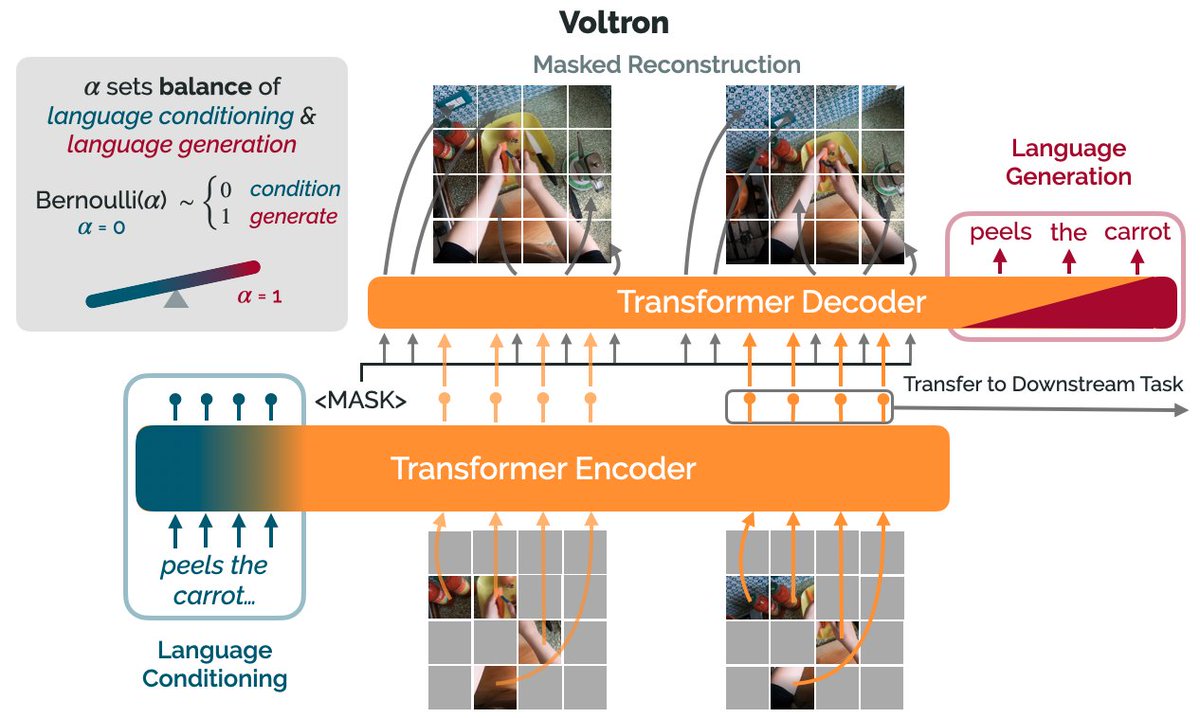
How can we use language supervision to learn better visual representations for robotics?

Introducing Voltron: Language-Driven Representation Learning for Robotics!

Paper: https://t.co/gIsRPtSjKz
Models: https://t.co/NOB3cpATYG
Evaluation: https://t.co/aOzQu95J8z

🧵👇(1 / 12)


Videos of humans performing everyday tasks (Something-Something-v2, Ego4D) offer a rich and diverse resource for learning representations for robotic manipulation.

Yet, an underused part of these datasets are the rich, natural language annotations accompanying each video. (2/12)

The Voltron framework offers a simple way to use language supervision to shape representation learning, building off of prior work in representations for robotics like MVP (
https://t.co/Pb0mk9hb4i) and R3M (https://t.co/o2Fkc3fP0e).

The secret is *balance* (3/12)

Starting with a masked autoencoder over frames from these video clips, make a choice:

1) Condition on language and improve our ability to reconstruct the scene.

2) Generate language given the visual representation and improve our ability to describe what's happening. (4/12)

By trading off *conditioning* and *generation* we show that we can learn 1) better representations than prior methods, and 2) explicitly shape the balance of low and high-level features captured.

Why is the ability to shape this balance important? (5/12)

You May Also Like

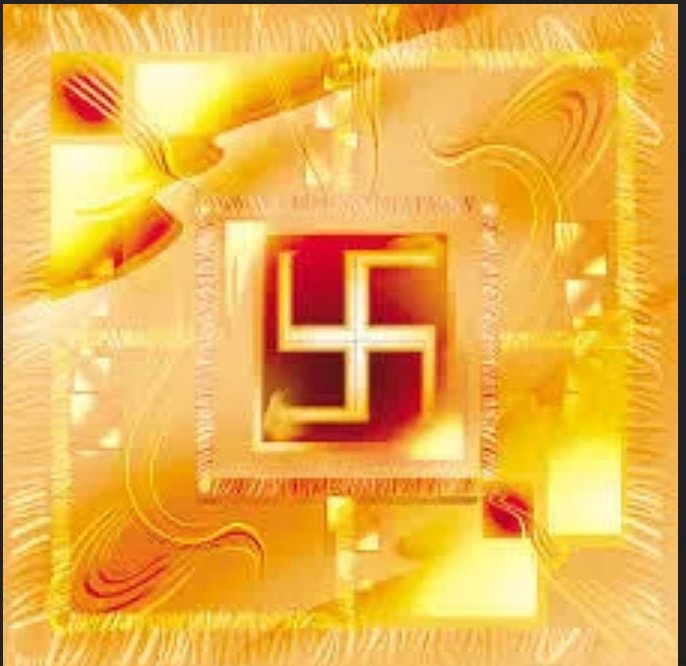
THE MEANING, SIGNIFICANCE AND HISTORY OF SWASTIK

The Swastik is a geometrical figure and an ancient religious icon. Swastik has been Sanatan Dharma’s symbol of auspiciousness – mangalya since time immemorial.


The name swastika comes from Sanskrit (Devanagari: स्वस्तिक, pronounced: swastik) &denotes “conducive to wellbeing or auspicious”.
The word Swastik has a definite etymological origin in Sanskrit. It is derived from the roots su – meaning “well or auspicious” & as meaning “being”.


"सु अस्ति येन तत स्वस्तिकं"
Swastik is de symbol through which everything auspicios occurs

Scholars believe word’s origin in Vedas,known as Swasti mantra;

"🕉स्वस्ति ना इन्द्रो वृधश्रवाहा
स्वस्ति ना पूषा विश्ववेदाहा
स्वस्तिनास्तरक्ष्यो अरिश्तनेमिही
स्वस्तिनो बृहस्पतिर्दधातु"


It translates to," O famed Indra, redeem us. O Pusha, the beholder of all knowledge, redeem us. Redeem us O Garudji, of limitless speed and O Bruhaspati, redeem us".

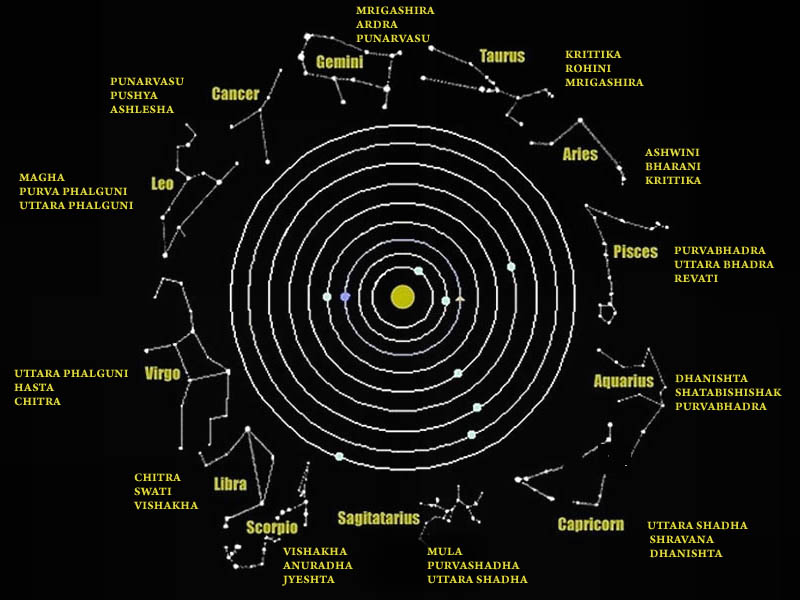
SWASTIK’s COSMIC ORIGIN

The Swastika represents the living creation in the whole Cosmos.


Hindu astronomers divide the ecliptic circle of cosmos in 27 divisions called
https://t.co/sLeuV1R2eQ this manner a cross forms in 4 directions in the celestial sky. At centre of this cross is Dhruva(Polestar). In a line from Dhruva, the stars known as Saptarishi can be observed.