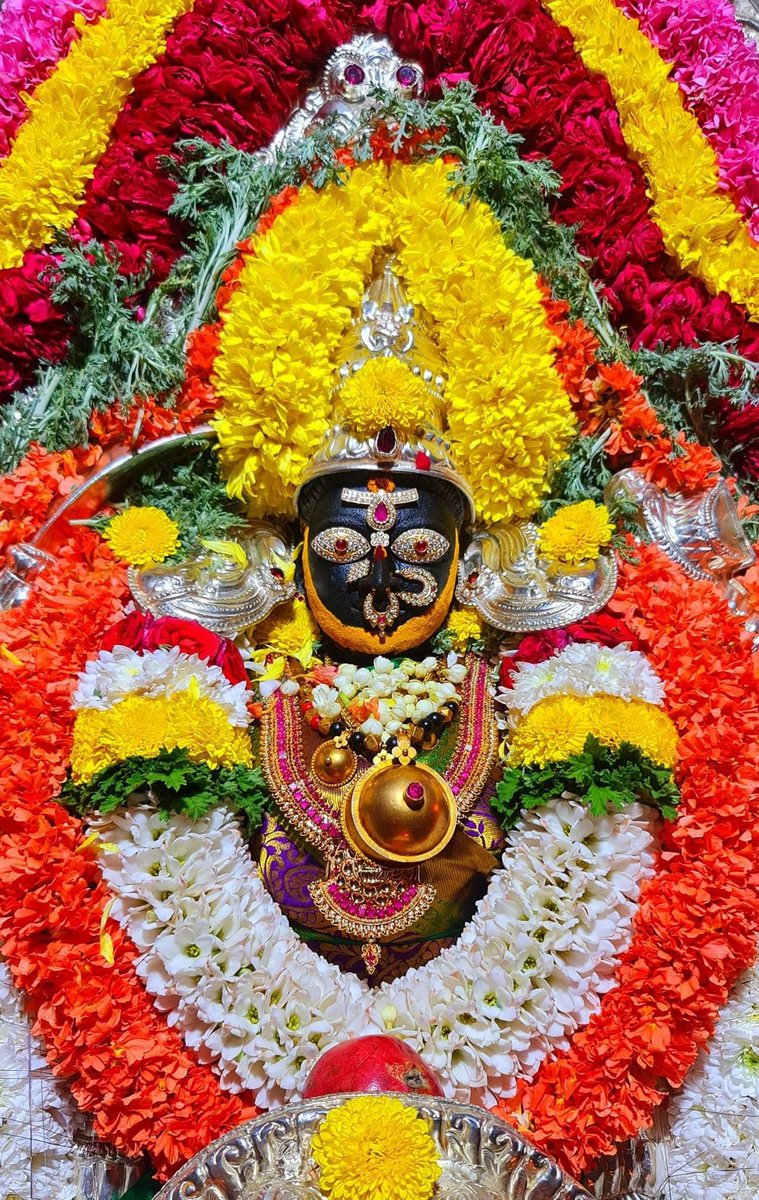
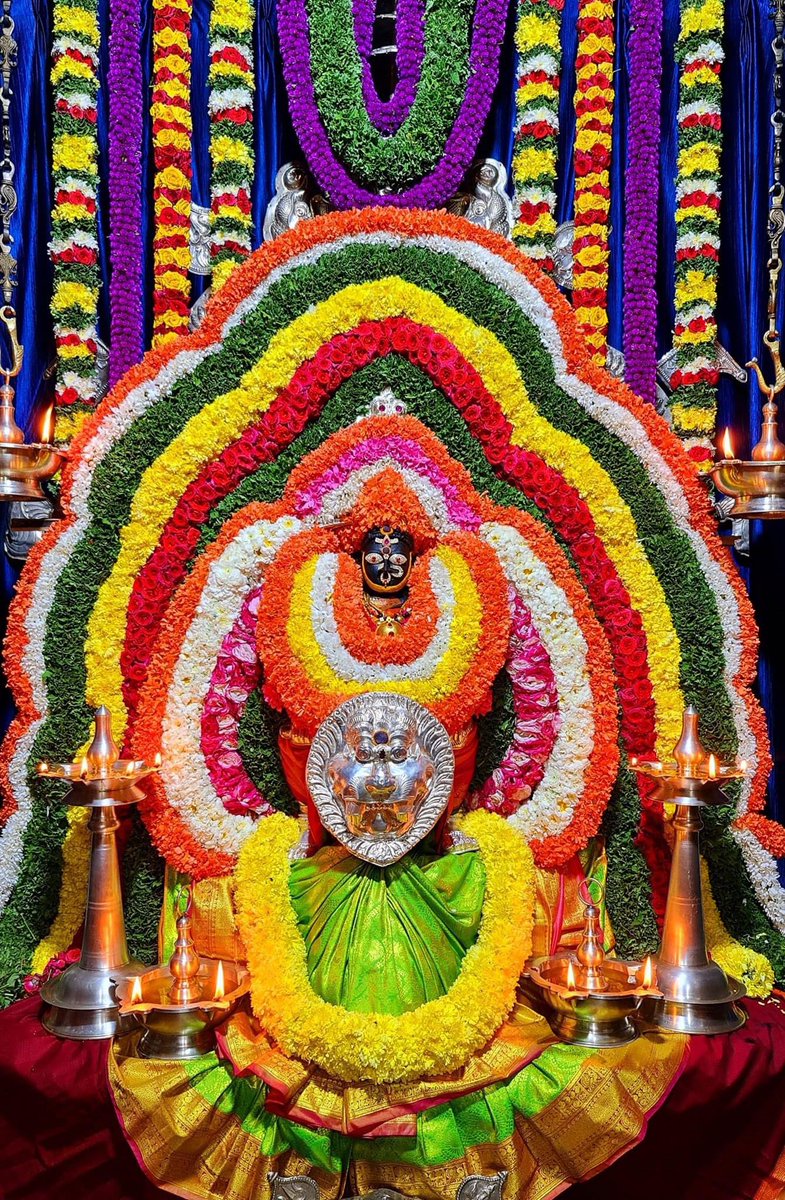
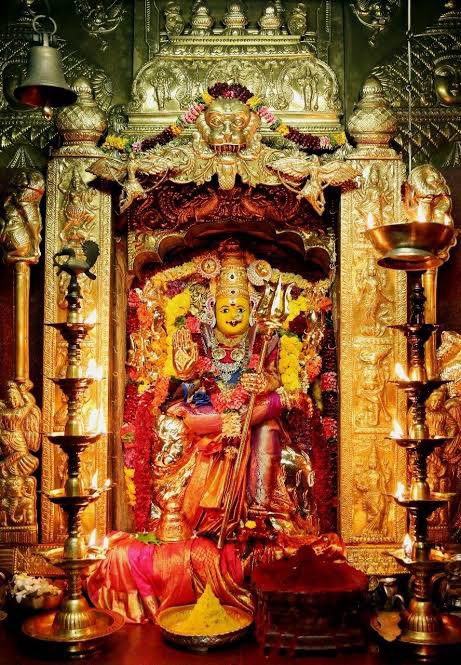
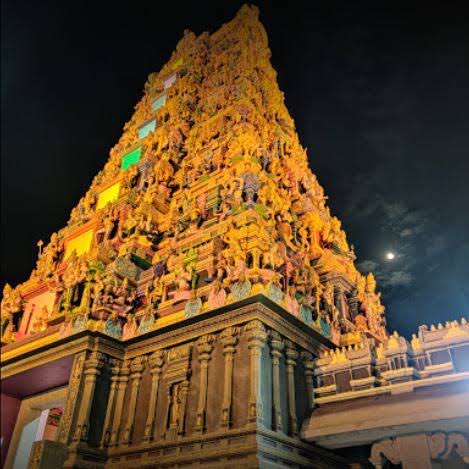
SRI APATSAHAYESWARAR, ALANGUDI (TN)
#bharatmandir

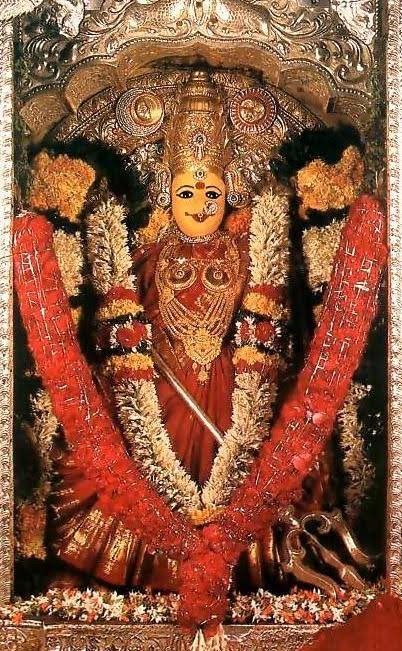
Navgraha kshetram dedicated to Shiva and where Sri Dakshinamurthy is worshipped as Guru Bhagwan (Jupiter/Brihaspati).
The shrine is renowned for its tri-glories, i.e. Moorthy, sthalam and theertham (Holy Water).

This place is believed to be the one where Shiva consumed the deadly poison (Ala Visham) that came out after samudra manthan. Hence, Shiva came to be called Apatsahayesvarar (One who defends from danger).
Kshetram is believed to have been constructed by Amuthokar (a Shiva bhakt).
He was the minister of King Masukuntha Chakravarti and was beheaded as he refused to give half of his Punya (merit) to the King.
On his death, the sthalam reverberated with the sound ‘Amuthokar’. Frightened King prayed to Apatsahayeswarar and was relieved from all Doshas.
Alangudi is surrounded by 3 holy rivers-Cauvery, Kolidam and Vennaru. Fifteen theerthams are around this kshetram. Amrita Pushkarani encircling the Kshetram is very famous. Chakra theertham in front of the shrine is believed to have been created by Sri Vishnu’s Chakra.

More from Jaya_Upadhyaya

More from All

https://t.co/6cRR2B3jBE
Viruses and other pathogens are often studied as stand-alone entities, despite that, in nature, they mostly live in multispecies associations called biofilms—both externally and within the host.

https://t.co/FBfXhUrH5d


Microorganisms in biofilms are enclosed by an extracellular matrix that confers protection and improves survival. Previous studies have shown that viruses can secondarily colonize preexisting biofilms, and viral biofilms have also been described.


...we raise the perspective that CoVs can persistently infect bats due to their association with biofilm structures. This phenomenon potentially provides an optimal environment for nonpathogenic & well-adapted viruses to interact with the host, as well as for viral recombination.


Biofilms can also enhance virion viability in extracellular environments, such as on fomites and in aquatic sediments, allowing viral persistence and dissemination.
॥ॐ॥
अस्य श्री गायत्री ध्यान श्लोक:
(gAyatri dhyAna shlOka)
• This shloka to meditate personified form of वेदमाता गायत्री was given by Bhagwaan Brahma to Sage yAgnavalkya (याज्ञवल्क्य).

• 14th shloka of गायत्री कवचम् which is taken from वशिष्ठ संहिता, goes as follows..


• मुक्ता-विद्रुम-हेम-नील धवलच्छायैर्मुखस्त्रीक्षणै:।
muktA vidruma hEma nIla dhavalachhAyaiH mukhaistrlkShaNaiH.

• युक्तामिन्दुकला-निबद्धमुकुटां तत्वार्थवर्णात्मिकाम्॥
yuktAmindukalA nibaddha makutAm tatvArtha varNAtmikam.

• गायत्रीं वरदाभयाङ्कुश कशां शुभ्रं कपालं गदाम्।
gAyatrIm vardAbhayANkusha kashAm shubhram kapAlam gadAm.

• शंखं चक्रमथारविन्दयुगलं हस्तैर्वहन्ती भजै॥
shankham chakramathArvinda yugalam hastairvahantIm bhajE.

This shloka describes the form of वेदमाता गायत्री.

• It says, "She has five faces which shine with the colours of a Pearl 'मुक्ता', Coral 'विद्रुम', Gold 'हेम्', Sapphire 'नील्', & a Diamond 'धवलम्'.

• These five faces are symbolic of the five primordial elements called पञ्चमहाभूत:' which makes up the entire existence.

• These are the elements of SPACE, FIRE, WIND, EARTH & WATER.

• All these five faces shine with three eyes 'त्रिक्षणै:'.

You May Also Like