Today I'm just quotating someone's words. Let's see how many of us recognise this man.
Real Hero of Bharat!

Since I was in the Directorate of Military Operations, and was responsible for current operations all over India, West Frontier, the Punjab, etc, I knew what the situation in Kashmir was.
Fortunately for us, and for Kashmir, they were busy raiding, raping all along. In Baramulla they killed Colonel Dykes.
The Maharaja's forces were 50% Muslim & 50% Dogra. The Muslim elements had revolted and joined the Pakistani forces. This was the broad military situation.
But we couldn't fly them in until the state of Kashmir had acceded to India.
Anyway, we were flown in.
The Maharaja was coming out of one room, & going into another saying, "Alright, if India doesn't help, I will go & join my troops and fight (it) out".

Eventually, I also got the military situation from everybody around us, asking what the hell was happening, & discovered that the tribesmen were about 7-9 km from what was then that horrible little airfield.
On arriving at Delhi, the first thing I did was to go and report to Sir Roy Bucher.

I gave him the military situation, and told him THAT UNLESS WE FLEW IN TROOPS IMMEDIATELY, WE WOULD HAVE LOST SRINAGAR.

AS USUAL NEHRU TALKED ABOUT THE United Nations, Russia, Africa, God almighty, everybody, until Sardar Patel lost his temper.
AND BEFORE NEHRU COULD SAY ANYTHING SARDAR PATEL TURNED TO ME AND SAID, "YOU HAVE GOT YOUR ORDERS".

More from Āyudhika










More from All







https://t.co/6cRR2B3jBE
Viruses and other pathogens are often studied as stand-alone entities, despite that, in nature, they mostly live in multispecies associations called biofilms—both externally and within the host.
https://t.co/FBfXhUrH5d

Microorganisms in biofilms are enclosed by an extracellular matrix that confers protection and improves survival. Previous studies have shown that viruses can secondarily colonize preexisting biofilms, and viral biofilms have also been described.

...we raise the perspective that CoVs can persistently infect bats due to their association with biofilm structures. This phenomenon potentially provides an optimal environment for nonpathogenic & well-adapted viruses to interact with the host, as well as for viral recombination.

Biofilms can also enhance virion viability in extracellular environments, such as on fomites and in aquatic sediments, allowing viral persistence and dissemination.

Viruses and other pathogens are often studied as stand-alone entities, despite that, in nature, they mostly live in multispecies associations called biofilms—both externally and within the host.
https://t.co/FBfXhUrH5d
Microorganisms in biofilms are enclosed by an extracellular matrix that confers protection and improves survival. Previous studies have shown that viruses can secondarily colonize preexisting biofilms, and viral biofilms have also been described.
...we raise the perspective that CoVs can persistently infect bats due to their association with biofilm structures. This phenomenon potentially provides an optimal environment for nonpathogenic & well-adapted viruses to interact with the host, as well as for viral recombination.
Biofilms can also enhance virion viability in extracellular environments, such as on fomites and in aquatic sediments, allowing viral persistence and dissemination.





You May Also Like



1/OK, data mystery time.
This New York Times feature shows China with a Gini Index of less than 30, which would make it more equal than Canada, France, or the Netherlands. https://t.co/g3Sv6DZTDE
That's weird. Income inequality in China is legendary.
Let's check this number.
2/The New York Times cites the World Bank's recent report, "Fair Progress? Economic Mobility across Generations Around the World".
The report is available here:
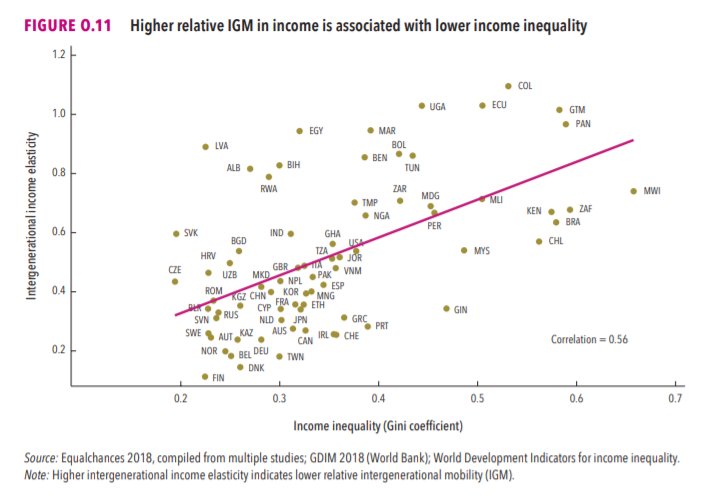
3/The World Bank report has a graph in which it appears to show the same value for China's Gini - under 0.3.
The graph cites the World Development Indicators as its source for the income inequality data.
4/The World Development Indicators are available at the World Bank's website.
Here's the Gini index: https://t.co/MvylQzpX6A
It looks as if the latest estimate for China's Gini is 42.2.
That estimate is from 2012.
5/A Gini of 42.2 would put China in the same neighborhood as the U.S., whose Gini was estimated at 41 in 2013.
I can't find the <30 number anywhere. The only other estimate in the tables for China is from 2008, when it was estimated at 42.8.
This New York Times feature shows China with a Gini Index of less than 30, which would make it more equal than Canada, France, or the Netherlands. https://t.co/g3Sv6DZTDE
That's weird. Income inequality in China is legendary.
Let's check this number.
2/The New York Times cites the World Bank's recent report, "Fair Progress? Economic Mobility across Generations Around the World".
The report is available here:
3/The World Bank report has a graph in which it appears to show the same value for China's Gini - under 0.3.
The graph cites the World Development Indicators as its source for the income inequality data.
4/The World Development Indicators are available at the World Bank's website.
Here's the Gini index: https://t.co/MvylQzpX6A
It looks as if the latest estimate for China's Gini is 42.2.
That estimate is from 2012.
5/A Gini of 42.2 would put China in the same neighborhood as the U.S., whose Gini was estimated at 41 in 2013.
I can't find the <30 number anywhere. The only other estimate in the tables for China is from 2008, when it was estimated at 42.8.