
Born on March 25, 1920, in Saras, near Surat, Usha was just eight years old when she took part in her first protest. It was against Simon Commission and "The first slogan I shouted against the British was 'Simon Go Back'," she said in an interview in
Time to know about another Unsung Freedom Fighter – USHA MEHTA.
Usha grew up highly influenced by Gandhi and became one of his followers. She made an early decision to remain celibate for life and took up a Spartan lifestyle, wearing only Khadi clothes and keeping away from

Born on March 25, 1920, in Saras, near Surat, Usha was just eight years old when she took part in her first protest. It was against Simon Commission and "The first slogan I shouted against the British was 'Simon Go Back'," she said in an interview in
She took part in all sorts of civil disobedience campaigns - from picketing and protests to spinning cotton as a way of rejecting British imports.
"There was no need for any inspiration. The whole atmosphere was so charged that
In 1933, after her father retired as a judge, the family moved to Bombay, now Mumbai.
Usha also resumed her education while in Bombay. In 1939, she graduated in philosophy with a first-class degree and began to study law

Usha Mehta told her father that her education would have to wait and left her home to contribute to the freedom movement. She disappeared for nearly a fortnight, and when she resurfaced, she had helped set up an
It seemed that the British had succeeded in silencing the Quit India movement, with more than 100,000 protestors being arrested with the prominent leaders jailed or in hiding.
Amidst this gloom, the words “This is the Congress radio calling on

Usha had resurfaced with this secret radio station. Along with her associates, Vithalbhai Jhaveri, Chandrakant Jhaveri, Babubhai Thakkar and Nanka Motwani, (the owner
There were stirring speeches from Dr Ram Manohar Lohia, Achyutrao Patwardhan and Purushottam Trikamdas etc..
When the movement was
On 12 November, Mehta recalled in an interview,
She said she took the broadcast material she had, and rushed to the recording studio, which was elsewhere. Two of her colleagues were busy preparing a program for that evening.
With the help of
"We played Hindustan Hamara, then we relayed some news bulletins and a speech. Just when we were at the end of the program, playing 'Vande Mataram', we heard hard knocks on the door.''
"They ordered us to stop playing 'Vande Mataram'. We did not oblige them."
The British sentenced her for four years in jail and Usha was released in April 1946.
She completed her PhD from the University of Bombay, where her
With time, Usha grew increasingly unhappy with the developments taking place in the social,
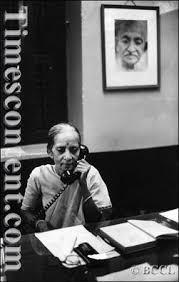
She added that the freedom fighters of her generation felt that "once people were ensconced in positions of power, the rot would set in." However, in her words, "we didn’t know the rot would sink in so soon." Nevertheless, she did
She was conferred the Padma Vibhushan, in 1998.
In August 2000, although she was

More from Sheshapatangi1 ಪ್ರಭಾ ಮಗ ಈ ಅಲೆಮಾರಿ ಅಯ್ಯಂಗಾರಿ








More from All









You May Also Like








THREAD: 12 Things Everyone Should Know About IQ
1. IQ is one of the most heritable psychological traits – that is, individual differences in IQ are strongly associated with individual differences in genes (at least in fairly typical modern environments). https://t.co/3XxzW9bxLE
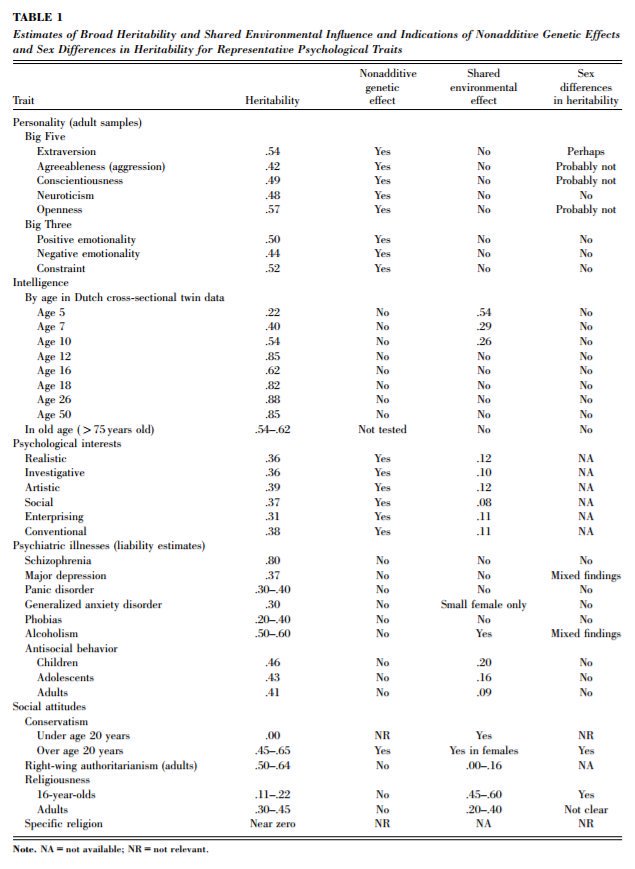
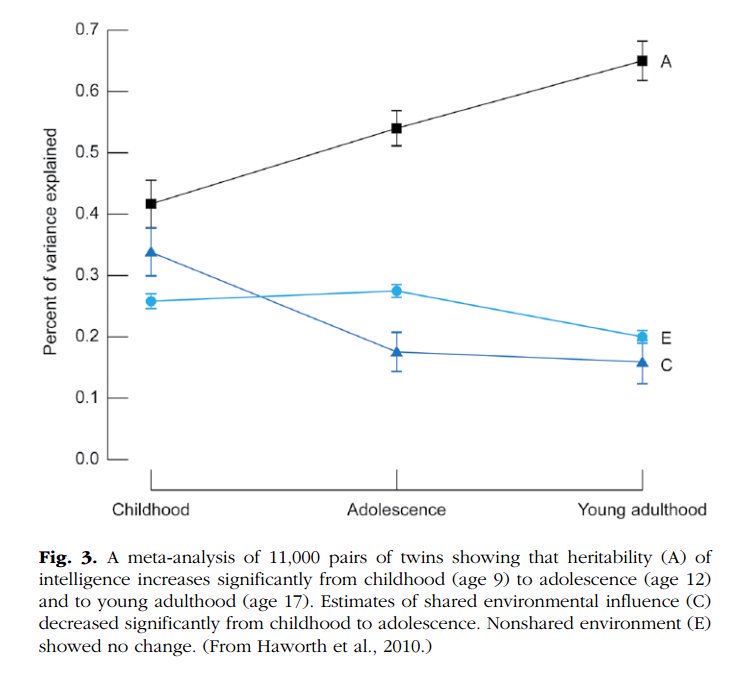
2. The heritability of IQ *increases* from childhood to adulthood. Meanwhile, the effect of the shared environment largely fades away. In other words, when it comes to IQ, nature becomes more important as we get older, nurture less. https://t.co/UqtS1lpw3n
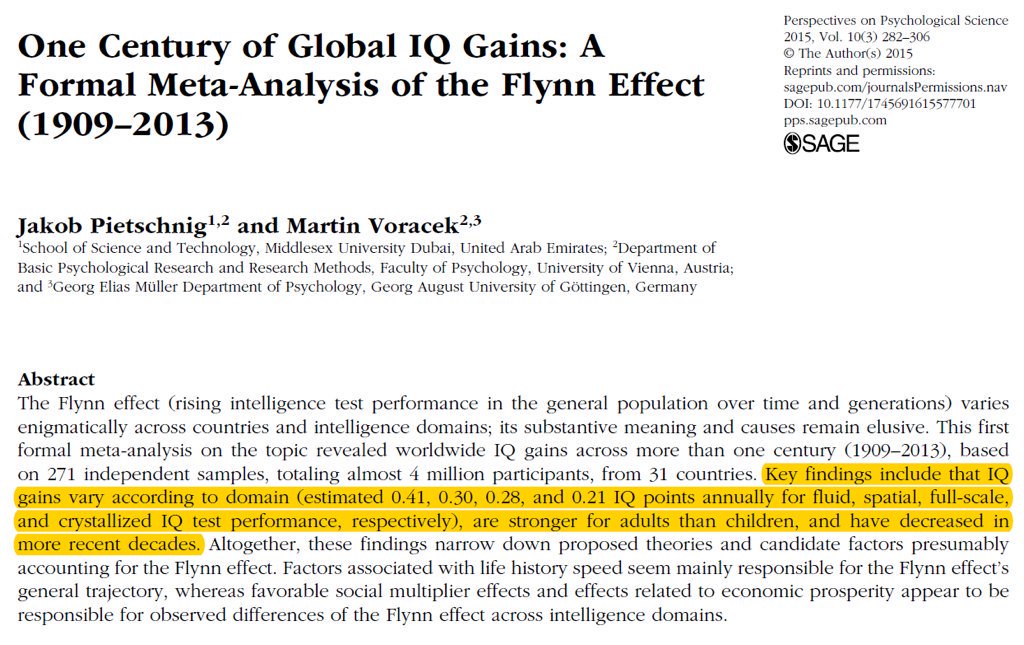
3. IQ scores have been increasing for the last century or so, a phenomenon known as the Flynn effect. https://t.co/sCZvCst3hw (N ≈ 4 million)
(Note that the Flynn effect shows that IQ isn't 100% genetic; it doesn't show that it's 100% environmental.)
4. IQ predicts many important real world outcomes.
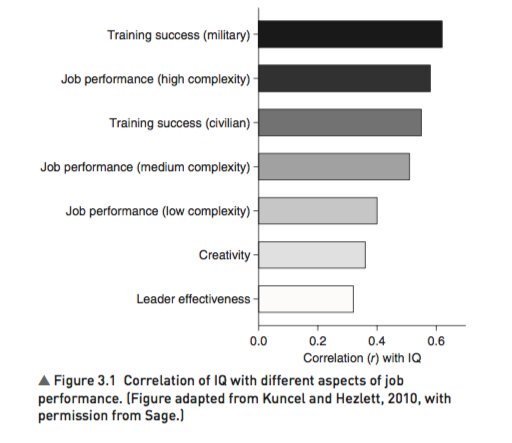
For example, though far from perfect, IQ is the single-best predictor of job performance we have – much better than Emotional Intelligence, the Big Five, Grit, etc. https://t.co/rKUgKDAAVx https://t.co/DWbVI8QSU3
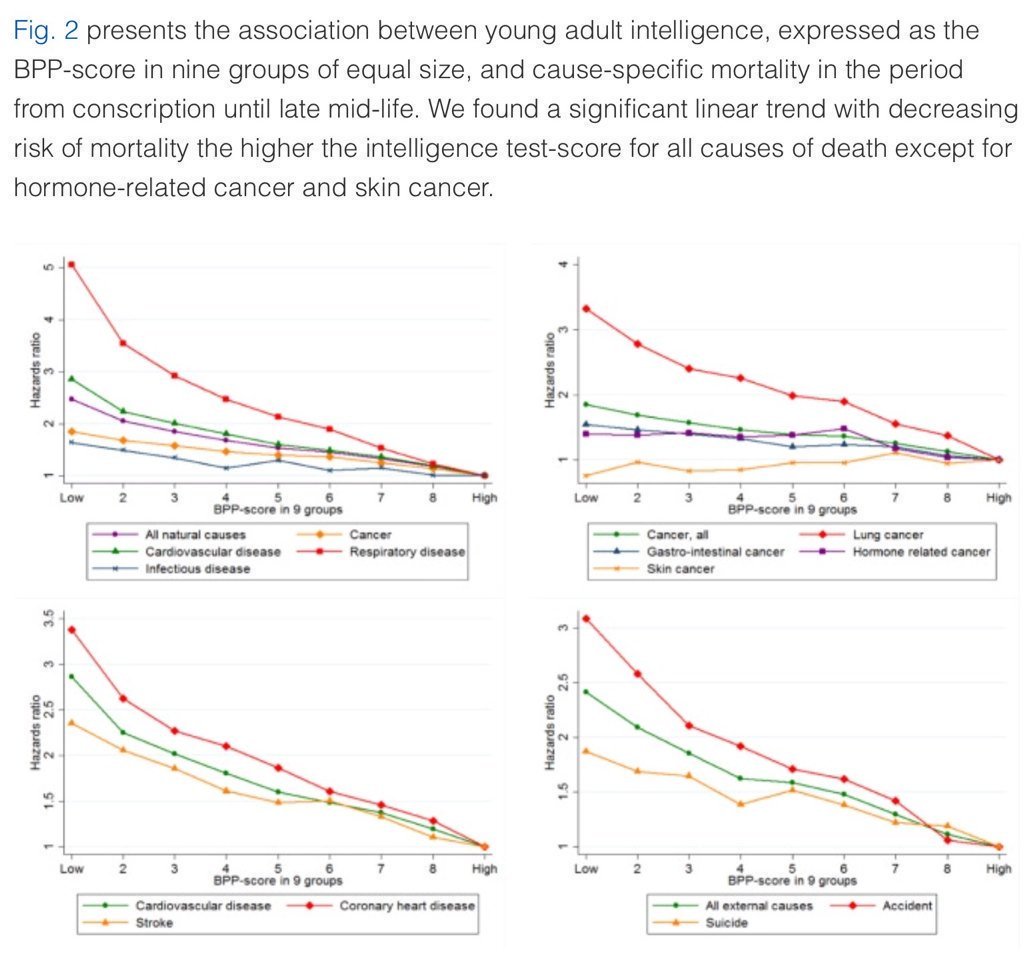
5. Higher IQ is associated with a lower risk of death from most causes, including cardiovascular disease, respiratory disease, most forms of cancer, homicide, suicide, and accident. https://t.co/PJjGNyeQRA (N = 728,160)
1. IQ is one of the most heritable psychological traits – that is, individual differences in IQ are strongly associated with individual differences in genes (at least in fairly typical modern environments). https://t.co/3XxzW9bxLE
2. The heritability of IQ *increases* from childhood to adulthood. Meanwhile, the effect of the shared environment largely fades away. In other words, when it comes to IQ, nature becomes more important as we get older, nurture less. https://t.co/UqtS1lpw3n
3. IQ scores have been increasing for the last century or so, a phenomenon known as the Flynn effect. https://t.co/sCZvCst3hw (N ≈ 4 million)
(Note that the Flynn effect shows that IQ isn't 100% genetic; it doesn't show that it's 100% environmental.)
4. IQ predicts many important real world outcomes.
For example, though far from perfect, IQ is the single-best predictor of job performance we have – much better than Emotional Intelligence, the Big Five, Grit, etc. https://t.co/rKUgKDAAVx https://t.co/DWbVI8QSU3
5. Higher IQ is associated with a lower risk of death from most causes, including cardiovascular disease, respiratory disease, most forms of cancer, homicide, suicide, and accident. https://t.co/PJjGNyeQRA (N = 728,160)
