
Here's a small but an impactful example of this.
Today's thread is to uncover the story of not allowing Narendra Modiji to become the PM and the politics behind it. For all those who have forgotten this.
@SriramKannan77 @Askcelestial
@amit2nirvana @pahadanladki
@SwatiGandhi14 @Siya91012 @Kaliyugamaya @IndicKartavya @Samrasta20
Here's a small but an impactful example of this.
https://t.co/q4rSUzZQTB
https://t.co/j9WprMXRVY
If Justice Soni was not there, then the Congress government had done its entire planning to implicate Narendra Modi.
No !!!
Please think.
More from Āyudhika

Pravritti and Nivritti #Thread
Pravritti is worldly interaction i.e from inside to outside whereas Nivritti is inner contemplation i.e from outside to inside.
Let's understand both with examples
Pravritti:
It naturally flows out of us and is there from the time we are born till we die. And we are naturally inclined towards action.
A baby crawls, turns, twists , pulls, pushes, walks, runs without any formal training. Because it's the pravritti of the baby.

Outward interaction is essential for the continuity of life, for organising the Society, and concluding with Karma Yoga.
Right Karmas (action) can bring prosperity, happiness and contentment.
Nivritti
This needs training unlike Pravritti so that we can understand ourselves better, understand our nature, find how we react, how we feel and why do we feel so.
Meditation is that training.

Nivritti leads to the answers of the questions:
Who am I? What am I here for?
It stabilizes our physical body and purifies our thoughts. It also helps us to answer the question: Why should we do this?
Both Pravritti and Nivritti are interconnected.
Pravritti is worldly interaction i.e from inside to outside whereas Nivritti is inner contemplation i.e from outside to inside.
Let's understand both with examples
This Shloka appears in Gita Bhasya by Adi Shankaracharya.
— IndicIdeas (@IndicIdeas) May 29, 2021
'Pra' means different and 'Vritti' stands for chitta and 'Ni' means inwards.
Companion words : "Pravritti and Nivritti" #Sanskrit #AdiShankaracharya pic.twitter.com/mF7gpy7kxV
Pravritti:
It naturally flows out of us and is there from the time we are born till we die. And we are naturally inclined towards action.
A baby crawls, turns, twists , pulls, pushes, walks, runs without any formal training. Because it's the pravritti of the baby.
Outward interaction is essential for the continuity of life, for organising the Society, and concluding with Karma Yoga.
Right Karmas (action) can bring prosperity, happiness and contentment.
Nivritti
This needs training unlike Pravritti so that we can understand ourselves better, understand our nature, find how we react, how we feel and why do we feel so.
Meditation is that training.
Nivritti leads to the answers of the questions:
Who am I? What am I here for?
It stabilizes our physical body and purifies our thoughts. It also helps us to answer the question: Why should we do this?
Both Pravritti and Nivritti are interconnected.
Today on the Birth Anniversary of Field Marshal Sam Manekshaw, I wish to narrate how our hero was treated by the Government then.
One of the several reasons, Sam Manekshaw was treated badly, is mentioned in the tweet below 👇🏽
#sammanekshaw
When Dr.Abdul Kalam was the President, he visited Coonoor. On reaching, he came to know that Field Marshall Sam Manekshaw was in the Military Hospital there. Dr.Kalam wanted to visit Sam, which was unscheduled. Arrangements were made.
#sammanekshaw
At the bedside, Kalam spent abt 15 minutes talking to Sam & enquiring abt his health.
Just before leaving Kalam asked Sam "Are you comfortable? Is there anything I could do? Do you have any Grievance ? or any requirement that would make you more comfortable?"
#sammanekshaw
Sam said "Yes Your Excellency, I have one grievance". Shocked with concern & anguish , APJ asked him what it was .
Sam replied "Sir, my grievance is that I am not able to get up & salute the most respected President of my beloved country".
#sammanekshaw
Dr. Kalam held Sam's hand as both were in tears.
But the remaining part of the tale with regards to this meeting is the most essential part.
#sammanekshaw
One of the several reasons, Sam Manekshaw was treated badly, is mentioned in the tweet below 👇🏽
#sammanekshaw
Today I'm just quotating someone's words. Let's see how many of us recognise this man.
— \u0100yudhika (@Satyamev1310) April 1, 2021
Real Hero of Bharat!
When Dr.Abdul Kalam was the President, he visited Coonoor. On reaching, he came to know that Field Marshall Sam Manekshaw was in the Military Hospital there. Dr.Kalam wanted to visit Sam, which was unscheduled. Arrangements were made.
#sammanekshaw
At the bedside, Kalam spent abt 15 minutes talking to Sam & enquiring abt his health.
Just before leaving Kalam asked Sam "Are you comfortable? Is there anything I could do? Do you have any Grievance ? or any requirement that would make you more comfortable?"
#sammanekshaw
Sam said "Yes Your Excellency, I have one grievance". Shocked with concern & anguish , APJ asked him what it was .
Sam replied "Sir, my grievance is that I am not able to get up & salute the most respected President of my beloved country".
#sammanekshaw
Dr. Kalam held Sam's hand as both were in tears.
But the remaining part of the tale with regards to this meeting is the most essential part.
#sammanekshaw


Barley became the Aryans' initial staple food, and is also mentioned in the Rigveda.
Later texts mention wheat, lentils, millets, and sugarcane.
The most popular lentils used were red lentils, green lentils, and black lentils. Apupa is a form of cake prepared by frying barley
Khapli wheat was grown commercially in the Indian subcontinent since historic times.
Moreover, khapli is hulled wheat, which means that husks enclose the grain. During threshing, the outer chaff does not release the grain.
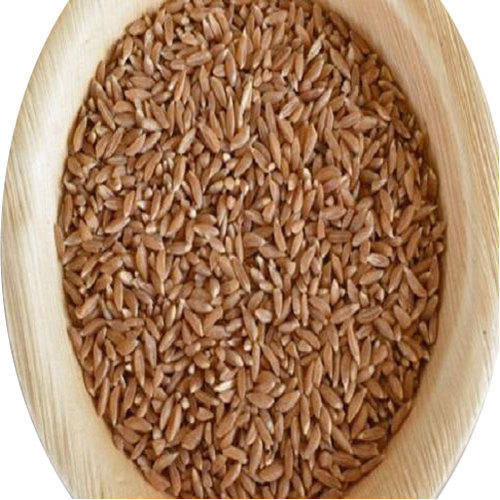
Another wheat species called Mihi, cultivated in Punjab during the Indus Valley Civilization (2600 - 1900 BCE) has vanished completely today.
The Aryans brought wheat grains to India & possibly this crop spread from its place of origin to European countries
The importance of hulled wheat in past societies is hardly reflected in their current status as a minor and ever declining crop grown in isolated and marginal areas in the world.
The earliest evidence of cultivation of Khapli wheat comes from the Neolithic archaeological site of Mehrgarh (6000 - 5000 BCE), currently in Pak.
However archaeological findings from Kunal in Haryana, Kanishkapura in Kashmir, Harappan settlement of Rohira in Punjab
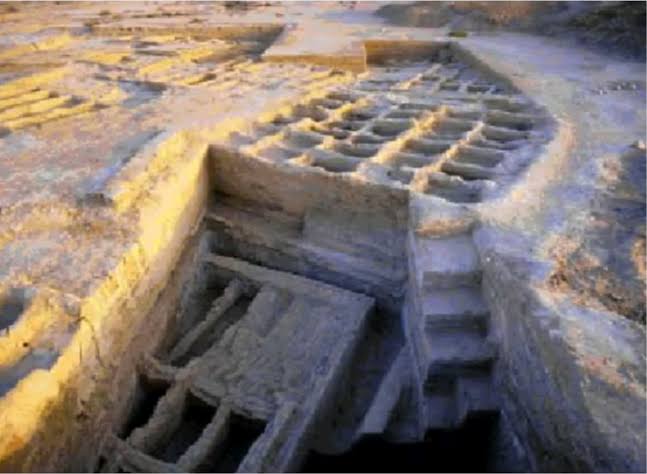
Later texts mention wheat, lentils, millets, and sugarcane.
The most popular lentils used were red lentils, green lentils, and black lentils. Apupa is a form of cake prepared by frying barley
What are your thoughts about wheat?
— \u0100yudhika \U0001f1ee\U0001f1f3 (@Satyamev1310) July 19, 2021
Did our ancestors eat wheat as a staple food?
Once I see people interested, I've something interesting to share.
Khapli wheat was grown commercially in the Indian subcontinent since historic times.
Moreover, khapli is hulled wheat, which means that husks enclose the grain. During threshing, the outer chaff does not release the grain.
Another wheat species called Mihi, cultivated in Punjab during the Indus Valley Civilization (2600 - 1900 BCE) has vanished completely today.
The Aryans brought wheat grains to India & possibly this crop spread from its place of origin to European countries
The importance of hulled wheat in past societies is hardly reflected in their current status as a minor and ever declining crop grown in isolated and marginal areas in the world.
The earliest evidence of cultivation of Khapli wheat comes from the Neolithic archaeological site of Mehrgarh (6000 - 5000 BCE), currently in Pak.
However archaeological findings from Kunal in Haryana, Kanishkapura in Kashmir, Harappan settlement of Rohira in Punjab
More from All





You May Also Like

Krugman is, of course, right about this. BUT, note that universities can do a lot to revitalize declining and rural regions.
See this thing that @lymanstoneky wrote:
And see this thing that I wrote:
And see this book that @JamesFallows wrote:
And see this other thing that I wrote:
One thing I've been noticing about responses to today's column is that many people still don't get how strong the forces behind regional divergence are, and how hard to reverse 1/ https://t.co/Ft2aH1NcQt
— Paul Krugman (@paulkrugman) November 20, 2018
See this thing that @lymanstoneky wrote:
And see this thing that I wrote:
And see this book that @JamesFallows wrote:
And see this other thing that I wrote:

🌿𝑻𝒉𝒆 𝒔𝒕𝒐𝒓𝒚 𝒐𝒇 𝒂 𝑺𝒕𝒂𝒓 : 𝑫𝒉𝒓𝒖𝒗𝒂 & 𝑽𝒊𝒔𝒉𝒏𝒖
Once upon a time there was a Raja named Uttānapāda born of Svayambhuva Manu,1st man on earth.He had 2 beautiful wives - Suniti & Suruchi & two sons were born of them Dhruva & Uttama respectively.
#talesofkrishna https://t.co/E85MTPkF9W
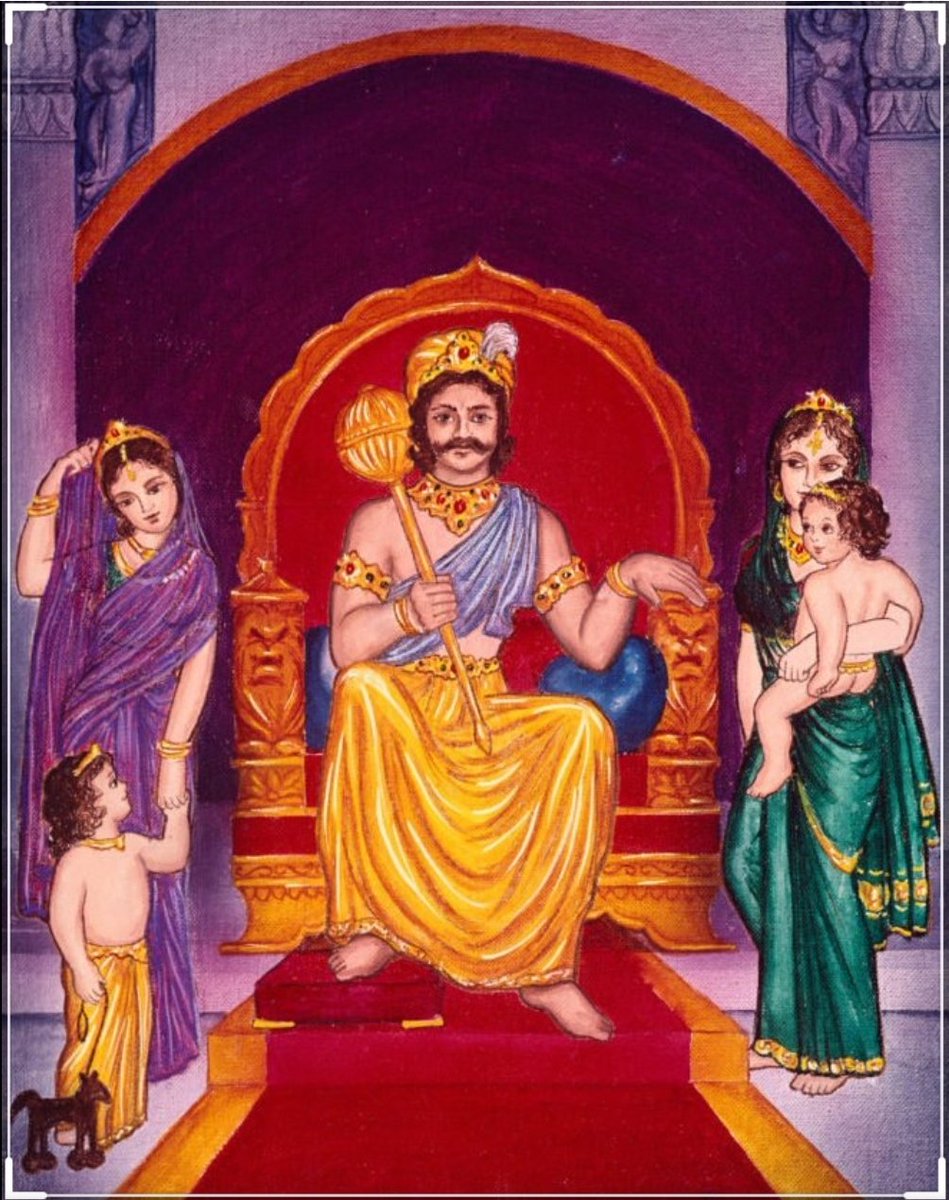
Now Suniti was the daughter of a tribal chief while Suruchi was the daughter of a rich king. Hence Suruchi was always favored the most by Raja while Suniti was ignored. But while Suniti was gentle & kind hearted by nature Suruchi was venomous inside.
#KrishnaLeela
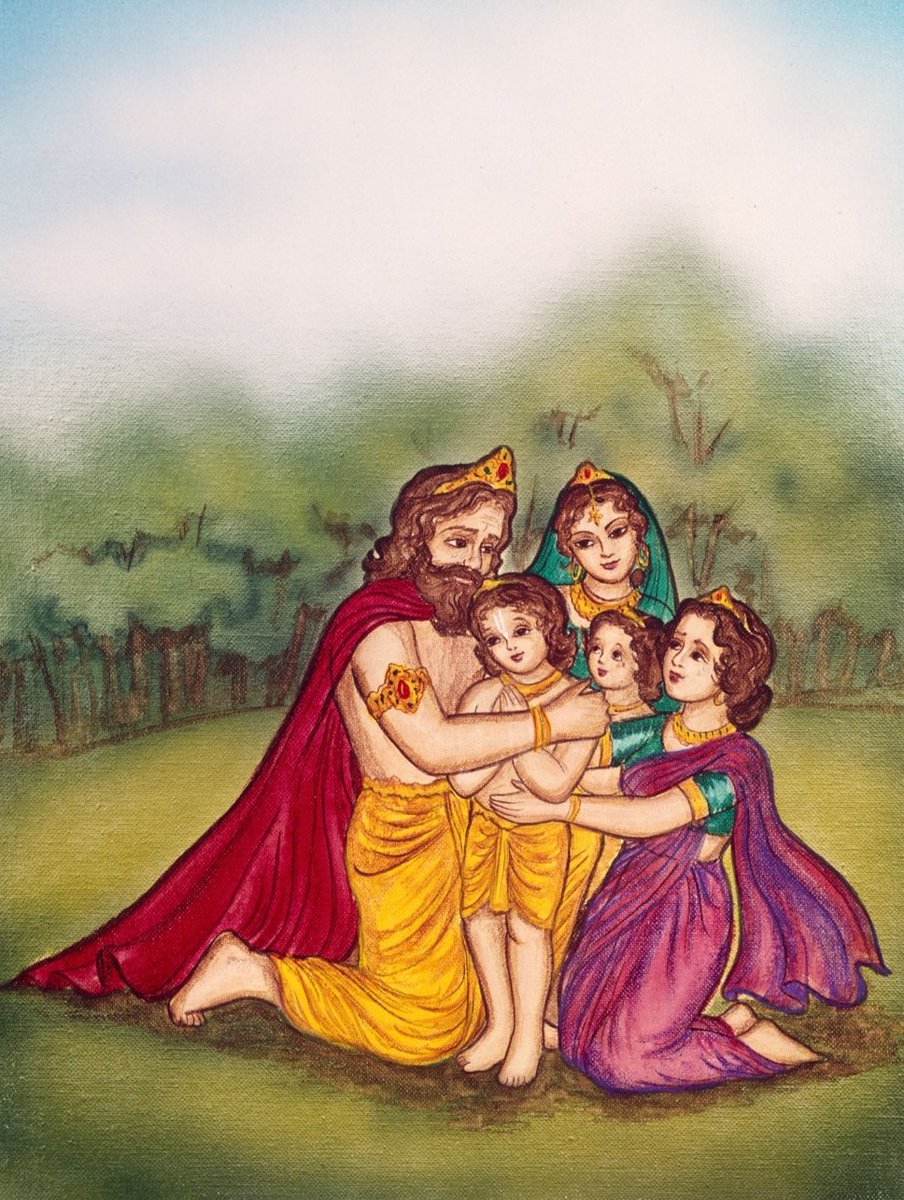
The story is of a time when ideally the eldest son of the king becomes the heir to the throne. Hence the sinhasan of the Raja belonged to Dhruva.This is why Suruchi who was the 2nd wife nourished poison in her heart for Dhruva as she knew her son will never get the throne.
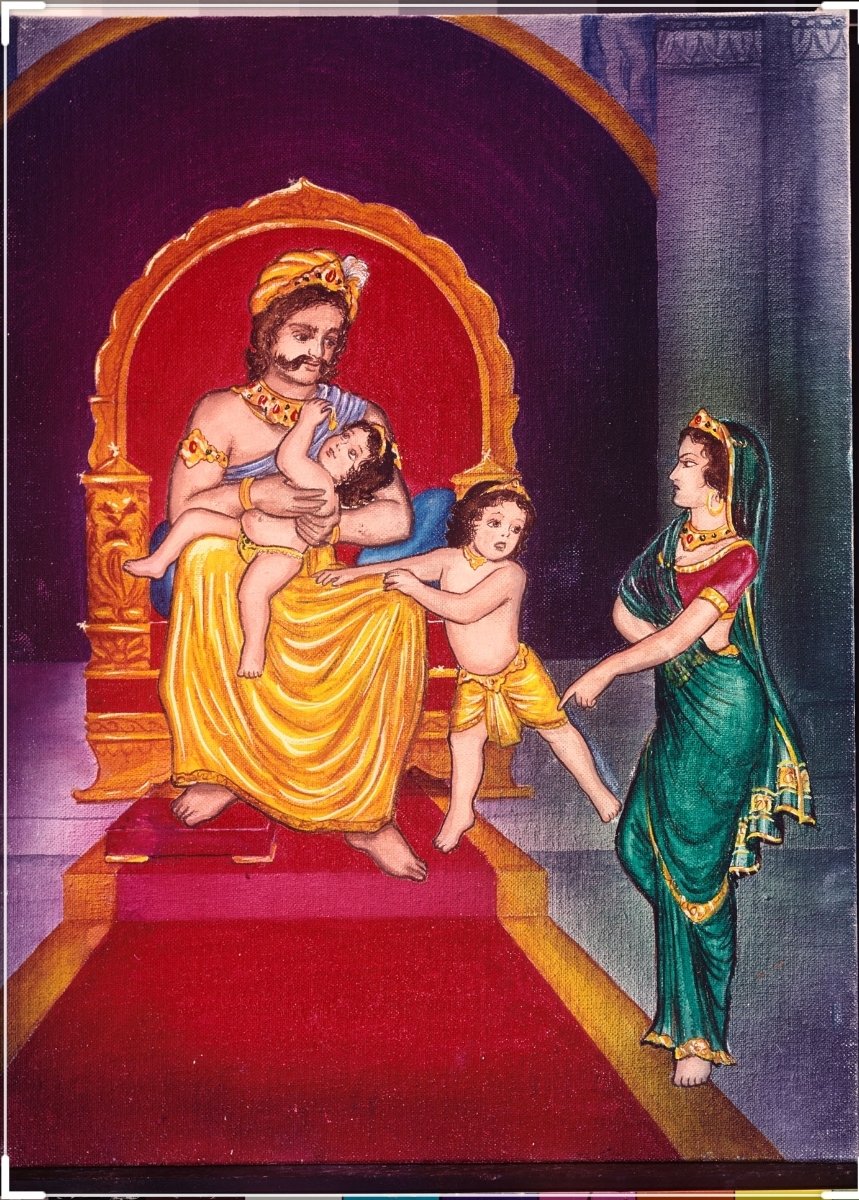
One day when Dhruva was just 5 years old he went on to sit on his father's lap. Suruchi, the jealous queen, got enraged and shoved him away from Raja as she never wanted Raja to shower Dhruva with his fatherly affection.
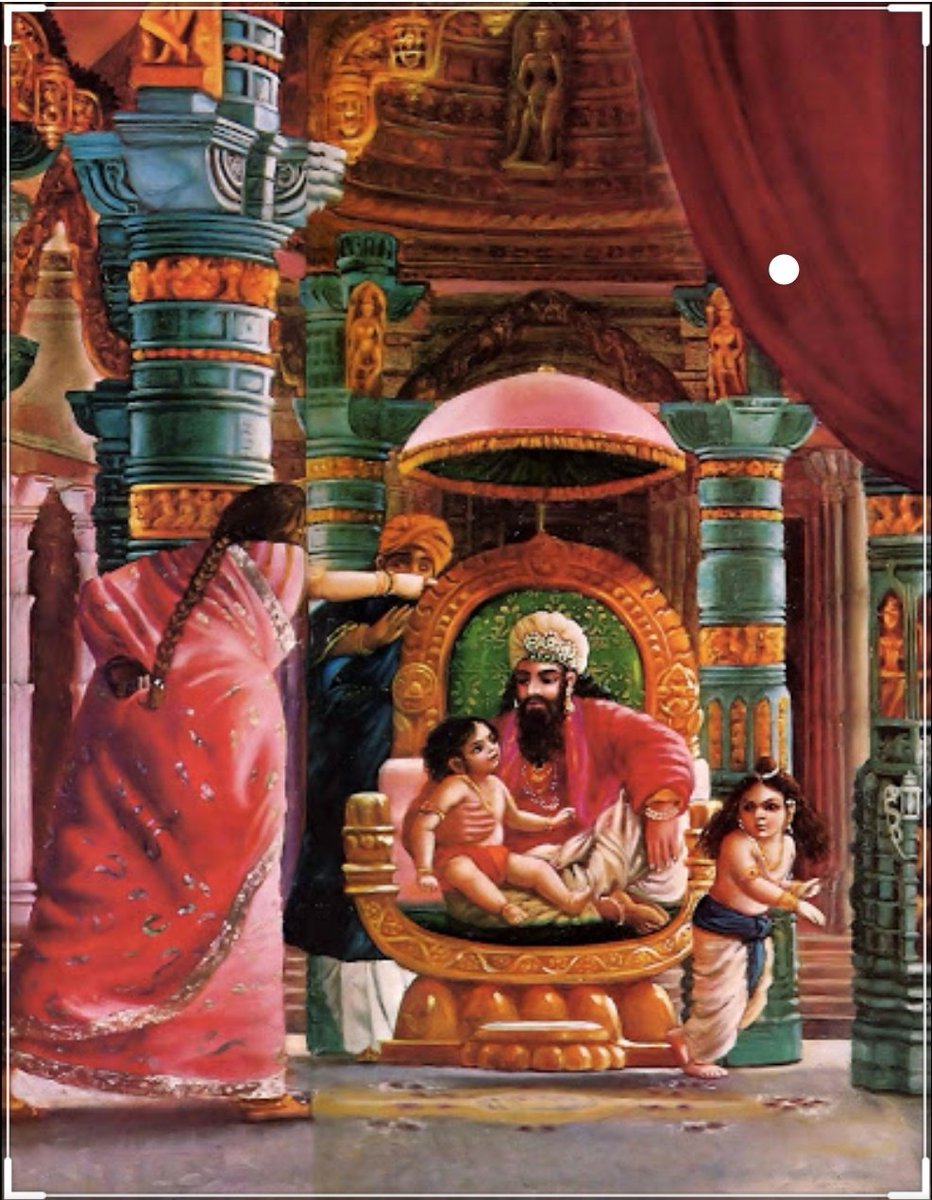
Dhruva protested questioning his step mother "why can't i sit on my own father's lap?" A furious Suruchi berated him saying "only God can allow him that privilege. Go ask him"
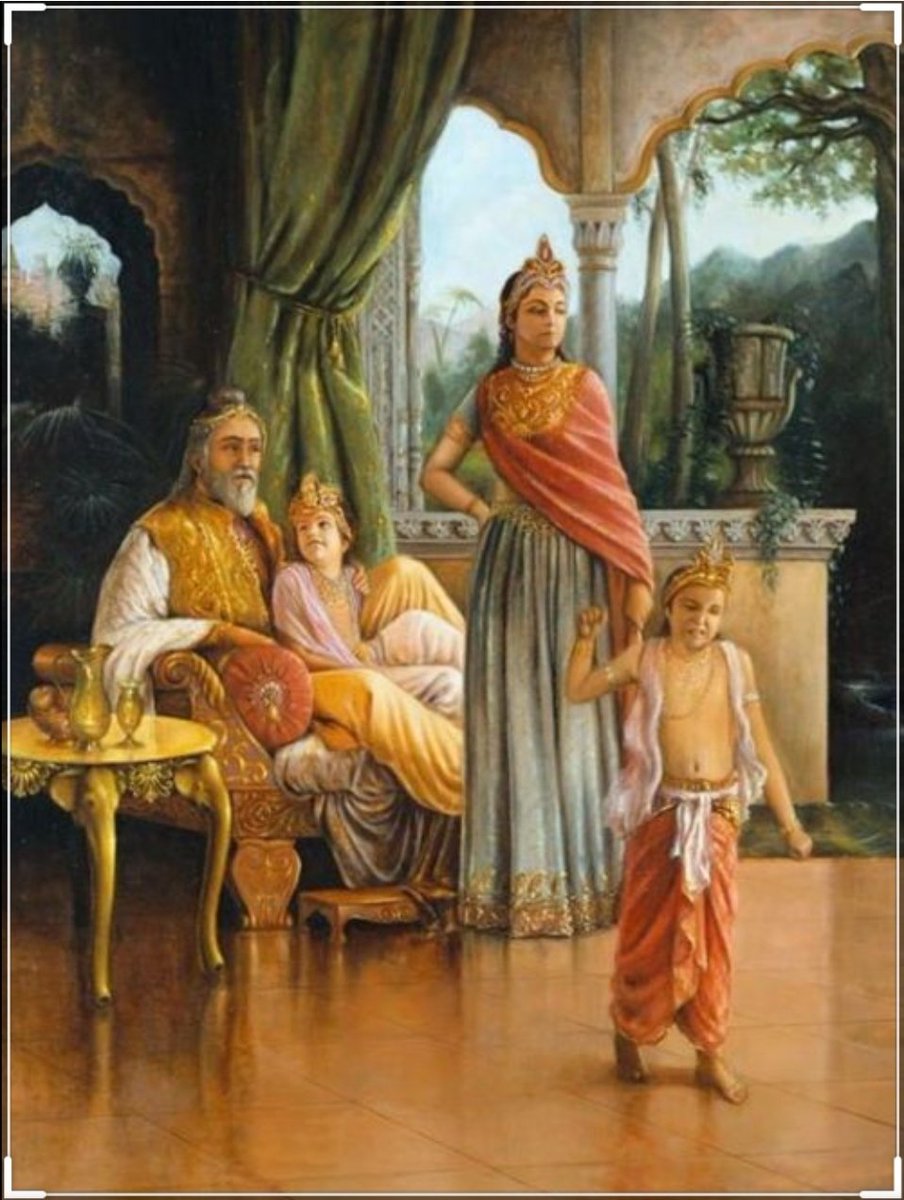
Once upon a time there was a Raja named Uttānapāda born of Svayambhuva Manu,1st man on earth.He had 2 beautiful wives - Suniti & Suruchi & two sons were born of them Dhruva & Uttama respectively.
#talesofkrishna https://t.co/E85MTPkF9W
Prabhu says i reside in the heart of my bhakt.
— Right Singh (@rightwingchora) December 21, 2020
Guess the event. pic.twitter.com/yFUmbfe5KL
Now Suniti was the daughter of a tribal chief while Suruchi was the daughter of a rich king. Hence Suruchi was always favored the most by Raja while Suniti was ignored. But while Suniti was gentle & kind hearted by nature Suruchi was venomous inside.
#KrishnaLeela
The story is of a time when ideally the eldest son of the king becomes the heir to the throne. Hence the sinhasan of the Raja belonged to Dhruva.This is why Suruchi who was the 2nd wife nourished poison in her heart for Dhruva as she knew her son will never get the throne.
One day when Dhruva was just 5 years old he went on to sit on his father's lap. Suruchi, the jealous queen, got enraged and shoved him away from Raja as she never wanted Raja to shower Dhruva with his fatherly affection.
Dhruva protested questioning his step mother "why can't i sit on my own father's lap?" A furious Suruchi berated him saying "only God can allow him that privilege. Go ask him"




I just finished Eric Adler's The Battle of the Classics, and wanted to say something about Joel Christiansen's review linked below. I am not sure what motivates the review (I speculate a bit below), but it gives a very misleading impression of the book. 1/x
The meat of the criticism is that the history Adler gives is insufficiently critical. Adler describes a few figures who had a great influence on how the modern US university was formed. It's certainly critical: it focuses on the social Darwinism of these figures. 2/x
Other insinuations and suggestions in the review seem wildly off the mark, distorted, or inappropriate-- for example, that the book is clickbaity (it is scholarly) or conservative (hardly) or connected to the events at the Capitol (give me a break). 3/x
The core question: in what sense is classics inherently racist? Classics is old. On Adler's account, it begins in ancient Rome and is revived in the Renaissance. Slavery (Christiansen's primary concern) is also very old. Let's say classics is an education for slaveowners. 4/x
It's worth remembering that literacy itself is elite throughout most of this history. Literacy is, then, also the education of slaveowners. We can honor oral and musical traditions without denying that literacy is, generally, good. 5/x
As someone\u2019s who\u2019s read the book, this review strikes me as tremendously unfair. It mostly faults Adler for not writing the book the reviewer wishes he had! https://t.co/pqpt5Ziivj
— Teresa M. Bejan (@tmbejan) January 12, 2021
The meat of the criticism is that the history Adler gives is insufficiently critical. Adler describes a few figures who had a great influence on how the modern US university was formed. It's certainly critical: it focuses on the social Darwinism of these figures. 2/x
Other insinuations and suggestions in the review seem wildly off the mark, distorted, or inappropriate-- for example, that the book is clickbaity (it is scholarly) or conservative (hardly) or connected to the events at the Capitol (give me a break). 3/x
The core question: in what sense is classics inherently racist? Classics is old. On Adler's account, it begins in ancient Rome and is revived in the Renaissance. Slavery (Christiansen's primary concern) is also very old. Let's say classics is an education for slaveowners. 4/x
It's worth remembering that literacy itself is elite throughout most of this history. Literacy is, then, also the education of slaveowners. We can honor oral and musical traditions without denying that literacy is, generally, good. 5/x