

The Internet rewards unique people.
Find your unique combination of skills, interests, and personality traits.
I call this a Personal Monopoly.
Become the only person in the world who does what you do.
Then, tell the world by sharing your knowledge.

Focus on what the world wants too.
Think like an investor.
Find a small and growing market that only a few people write about. Then, learn everything you can about it, and share the best of what you learn.
Personal monopolies aren't found — they're made.
Global markets increase the upside of having a Personal Monopoly, but also make it harder to create one.
The sweet spot is finding an idea that looks specific to others, but still diverse enough to express the many shades of who you are, where you excel, and what you want to achieve.
Like fish in water, we don't know how to explain what we do so we depend on others to define our work for us. Listen to others describe your work. Then, double down on the best summaries.

In Personal Monopoly markets, just like cities, the biggest returns come in areas with increasing demand and restricted supply.
Here's my mini-essay.

"Your personal monopoly is out there, waiting for you, and magic will happen once you discover it. The way to do that is not to worry too much about it and focus on being prolific.” — @m_ashcroft
1) Complementary: Greater than the sum of its parts.
2) Unusual: A combination of skills rarely seen.
3) Experiential: Inspired by unique events in your life.
4) Specific: Niche topic where you have lots of knowledge.
Personal Monopolies are the antidote. Until you differentiate yourself, you’ll be subservient to the iron laws of supply and demand.
https://t.co/uEGXsB5BWl
The career path of a creator has three stages:
— David Perell (@david_perell) January 24, 2021
1) Discovery: Hone your craft and find the idea you want to be known for.
2) Income: Ditch the corporate world and become financially independent.
3) Equity: Get ownership in a business that\u2019ll grow without your daily involvement.
We spoke about:
∙ Communicating your Personal Monopoly
∙ Validating demand
∙ Lessons from @anafabrega11
∙ The DICE framework
∙ Becoming a citizen of the Internet
https://t.co/qmc31YEzSs
More from All








You May Also Like








IMPORTANCE, ADVANTAGES AND CHARACTERISTICS OF BHAGWAT PURAN
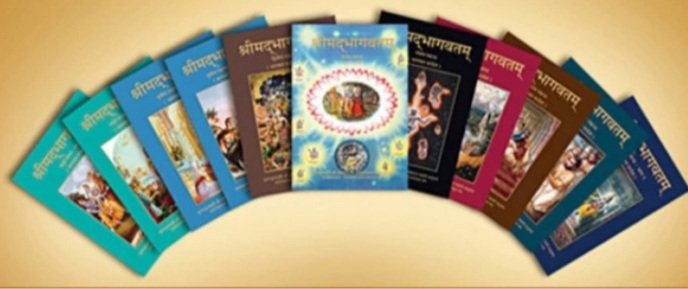
It was Ved Vyas who edited the eighteen thousand shlokas of Bhagwat. This book destroys all your sins. It has twelve parts which are like kalpvraksh.
In the first skandh, the importance of Vedvyas
and characters of Pandavas are described by the dialogues between Suutji and Shaunakji. Then there is the story of Parikshit.
Next there is a Brahm Narad dialogue describing the avtaar of Bhagwan. Then the characteristics of Puraan are mentioned.
It also discusses the evolution of universe.( https://t.co/2aK1AZSC79 )
Next is the portrayal of Vidur and his dialogue with Maitreyji. Then there is a mention of Creation of universe by Brahma and the preachings of Sankhya by Kapil Muni.
In the next section we find the portrayal of Sati, Dhruv, Pruthu, and the story of ancient King, Bahirshi.
In the next section we find the character of King Priyavrat and his sons, different types of loks in this universe, and description of Narak. ( https://t.co/gmDTkLktKS )
In the sixth part we find the portrayal of Ajaamil ( https://t.co/LdVSSNspa2 ), Daksh and the birth of Marudgans( https://t.co/tecNidVckj )
In the seventh section we find the story of Prahlad and the description of Varnashram dharma. This section is based on karma vaasna.
It was Ved Vyas who edited the eighteen thousand shlokas of Bhagwat. This book destroys all your sins. It has twelve parts which are like kalpvraksh.
In the first skandh, the importance of Vedvyas
and characters of Pandavas are described by the dialogues between Suutji and Shaunakji. Then there is the story of Parikshit.
Next there is a Brahm Narad dialogue describing the avtaar of Bhagwan. Then the characteristics of Puraan are mentioned.
It also discusses the evolution of universe.( https://t.co/2aK1AZSC79 )
Next is the portrayal of Vidur and his dialogue with Maitreyji. Then there is a mention of Creation of universe by Brahma and the preachings of Sankhya by Kapil Muni.
HOW LIFE EVOLVED IN THIS UNIVERSE AS PER OUR SCRIPTURES.
— Anshul Pandey (@Anshulspiritual) August 29, 2020
Well maximum of Living being are the Vansaj of Rishi Kashyap. I have tried to give stories from different-different Puran. So lets start.... pic.twitter.com/MrrTS4xORk
In the next section we find the portrayal of Sati, Dhruv, Pruthu, and the story of ancient King, Bahirshi.
In the next section we find the character of King Priyavrat and his sons, different types of loks in this universe, and description of Narak. ( https://t.co/gmDTkLktKS )
Thread on NARK(HELL) / \u0928\u0930\u094d\u0915
— Anshul Pandey (@Anshulspiritual) August 11, 2020
Well today i will take you to a journey where nobody wants to go i.e Nark. Hence beware of doing Adharma/Evil things. There are various mentions in Puranas about Nark, But my Thread is only as per Bhagwat puran(SS attached in below Thread)
1/8 pic.twitter.com/raHYWtB53Q
In the sixth part we find the portrayal of Ajaamil ( https://t.co/LdVSSNspa2 ), Daksh and the birth of Marudgans( https://t.co/tecNidVckj )
In the seventh section we find the story of Prahlad and the description of Varnashram dharma. This section is based on karma vaasna.
#THREAD
— Anshul Pandey (@Anshulspiritual) August 12, 2020
WHY PARENTS CHOOSE RELIGIOUS OR PARAMATMA'S NAMES FOR THEIR CHILDREN AND WHICH ARE THE EASIEST WAY TO WASH AWAY YOUR SINS.
Yesterday I had described the types of Naraka's and the Sin or Adharma for a person to be there.
1/8 pic.twitter.com/XjPB2hfnUC