A thread on useful material explaining what our subsidy control regime currently is.
More from World


-Thread-
The Bolshevik Revolution was Jewish, 6/8 Soviet leaders from Lenin to Gorbachev were Jewish AND all three Presidents since the (fake) fall of the Soviet Union are Jewish
Lenin✡️
Stalin✡️
Khrushchev✡️
Brezhnev✡️
Andropov✡️
Gorbachev✡️
~
Yeltsin✡️
Medvedev✡️
Putin✡️

First Soviet government mostly Jewish:
Funded by International Jewish bankers;
https://t.co/qdmhsmSRFz
Ariadna Tyrkova-Williams on Bolshevik revolution:
“In the Soviet Republic, all the committees and commissaries were filled with Jews”
https://t.co/iysRhViRe3

Lenin:
"Russian-Jewish newspaper Yevreyskaya Tribuna , 22nd August, 1922 - Lenin asked the rabbis if they were satisfied with the particularly cruel executions."
https://t.co/vWoUqvmXc4

Stalin:
B’nai Brith report - Stalin is Jewish (pg 35)
https://t.co/Km9UClfrRt
Stalin's Jewish mother (Jewish Cup Kiddush covered with a shroud - on the grave of Stalin's mother) https://t.co/XXAkeC6wID
Soviet Analyst, Volume 31, Issues 1-7
https://t.co/ycZG4XshNC

Khrushchev:
Nikita Salomon PEARLMUTTER. (img 1) https://t.co/aVLCetMf3w
Another source for Pearlmutter (img2)
https://t.co/m6JzRrD1BJ
"Khrushchev, also, promptly added that the Soviet Government is based today on Jewish leadership"
https://t.co/4lg7XZJON8

The Bolshevik Revolution was Jewish, 6/8 Soviet leaders from Lenin to Gorbachev were Jewish AND all three Presidents since the (fake) fall of the Soviet Union are Jewish
Lenin✡️
Stalin✡️
Khrushchev✡️
Brezhnev✡️
Andropov✡️
Gorbachev✡️
~
Yeltsin✡️
Medvedev✡️
Putin✡️
First Soviet government mostly Jewish:
Funded by International Jewish bankers;
https://t.co/qdmhsmSRFz
Ariadna Tyrkova-Williams on Bolshevik revolution:
“In the Soviet Republic, all the committees and commissaries were filled with Jews”
https://t.co/iysRhViRe3
Lenin:
"Russian-Jewish newspaper Yevreyskaya Tribuna , 22nd August, 1922 - Lenin asked the rabbis if they were satisfied with the particularly cruel executions."
https://t.co/vWoUqvmXc4
Stalin:
B’nai Brith report - Stalin is Jewish (pg 35)
https://t.co/Km9UClfrRt
Stalin's Jewish mother (Jewish Cup Kiddush covered with a shroud - on the grave of Stalin's mother) https://t.co/XXAkeC6wID
Soviet Analyst, Volume 31, Issues 1-7
https://t.co/ycZG4XshNC
Khrushchev:
Nikita Salomon PEARLMUTTER. (img 1) https://t.co/aVLCetMf3w
Another source for Pearlmutter (img2)
https://t.co/m6JzRrD1BJ
"Khrushchev, also, promptly added that the Soviet Government is based today on Jewish leadership"
https://t.co/4lg7XZJON8


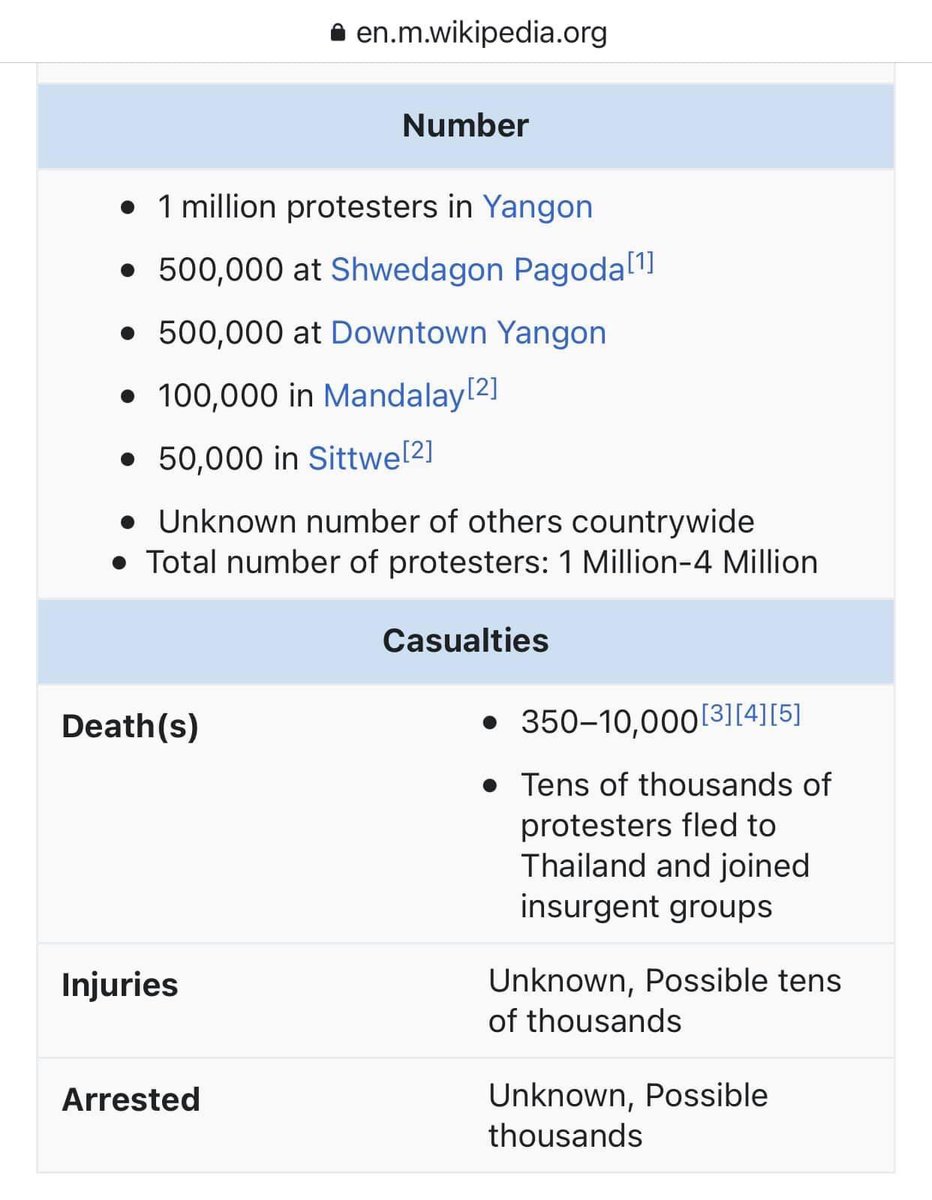
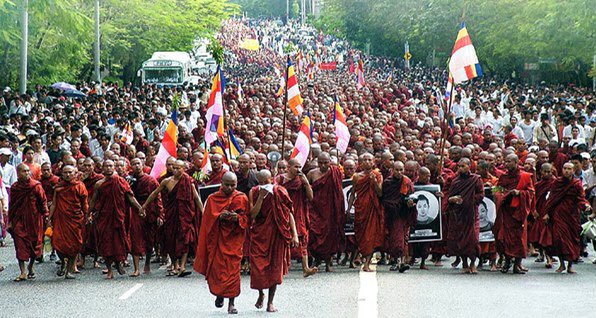

A quick thread on #Myitsone dam & #MyanmarChinaRelations in light of the SAC announcement that they would be restarting some stalled Chinese projects in Burma. This announcement has led to speculation about Myitsone, which has been suspended since 2011. Let’s go! ➡️ China has
consistently misunderstood & underestimated popular opposition to Myitsone. First and foremost, to the Burmese people, this is about the “mother river” of Burma - the Irrawaddy- and it’s nearly sacred importance to them as a lifeline of their country. This is what drove the
organic anti-dam movement that started locally in Kachin but +/- 2007 was effectively picked up & nationalized by Burmese environmental CSOs. Instead of understanding this, the Chinese lashed out and blamed the United States when Thein Sein suspended the project. I assure you
the USG was as surprised as China when the project was suspended. But China never believed it was truly the desire of the Burmese people that stopped the project. Today, the dam doesn’t make sense economically for Beijing & will definitely alienate Burmese, yet they stubbornly
continue to push it. Why? Let’s unpack a bit further. In addition to Myitsone, there were other campaigns & protests targeting Chinese projects such as Letpadaung copper mine & Kyaukphyu pipeline, port & SEZ. While these campaigns had varying levels off effect, none was as
Can\u2019t overstate how politically dangerous this is. As readers told me: a deeply unpopular regime pushing for deeply unpopular infrastructure projects. Not sure this is what Beijing wants either. https://t.co/TnlrgjPyxZ
— Thompson Chau (@tchau01) February 15, 2021
consistently misunderstood & underestimated popular opposition to Myitsone. First and foremost, to the Burmese people, this is about the “mother river” of Burma - the Irrawaddy- and it’s nearly sacred importance to them as a lifeline of their country. This is what drove the
organic anti-dam movement that started locally in Kachin but +/- 2007 was effectively picked up & nationalized by Burmese environmental CSOs. Instead of understanding this, the Chinese lashed out and blamed the United States when Thein Sein suspended the project. I assure you
the USG was as surprised as China when the project was suspended. But China never believed it was truly the desire of the Burmese people that stopped the project. Today, the dam doesn’t make sense economically for Beijing & will definitely alienate Burmese, yet they stubbornly
continue to push it. Why? Let’s unpack a bit further. In addition to Myitsone, there were other campaigns & protests targeting Chinese projects such as Letpadaung copper mine & Kyaukphyu pipeline, port & SEZ. While these campaigns had varying levels off effect, none was as
You May Also Like



Facebook originally a CIA program called "LifeLog".
LifeLog, via DARPA, terminated on Feb 4th, 2004.
Facebook was launched on Feb 4th, 2004.
Many of the LifeLog team became execs at FB.
Zuckerberg is a figurehead.
CIA allowed Cambridge to help Trump win
https://t.co/enzOXDCogV

Pentagon Kills LifeLog
LifeLog, via DARPA, terminated on Feb 4th, 2004.
Facebook was launched on Feb 4th, 2004.
Many of the LifeLog team became execs at FB.
Zuckerberg is a figurehead.
CIA allowed Cambridge to help Trump win
https://t.co/enzOXDCogV
Project: Lifelog
— Robert Horan (@Robby12692) December 13, 2018
Started by DARPA in 1999, the goal of Lifelog was to create a database on civilians without their knowledge, and track everything they do.
The project "ended" on Feb 4th, 2004.
Facebook began the exact same day.
The CIA funneled tens of millions into Facebook. pic.twitter.com/r7hwF0v9kh
Pentagon Kills LifeLog