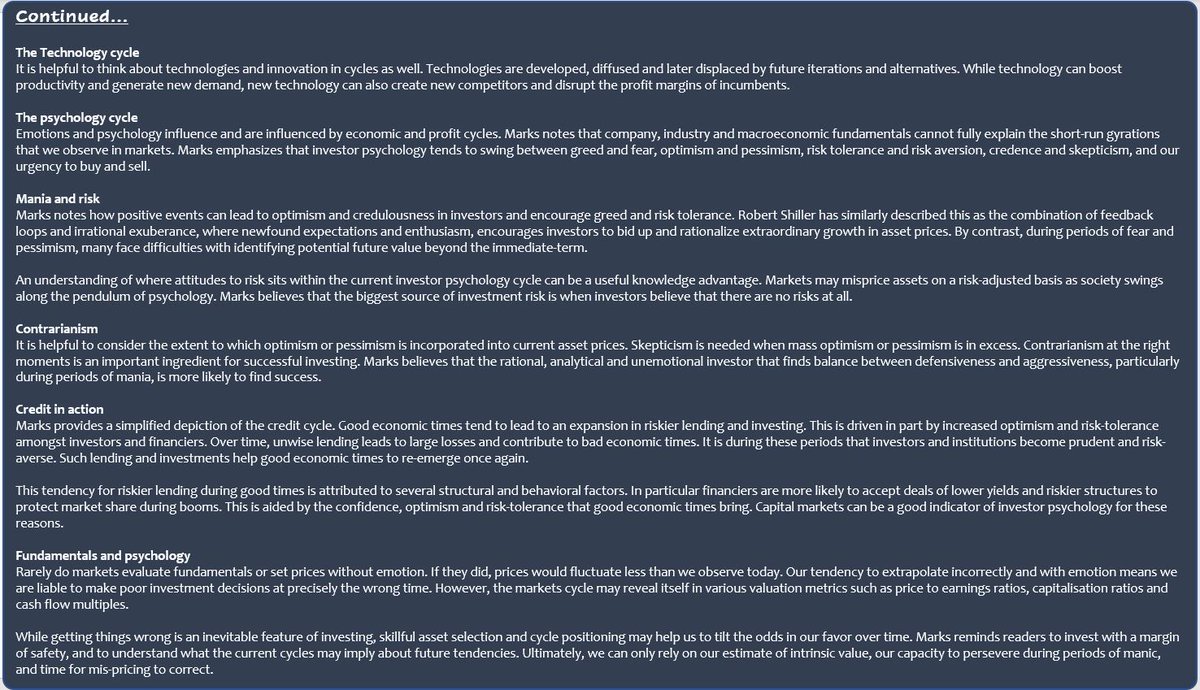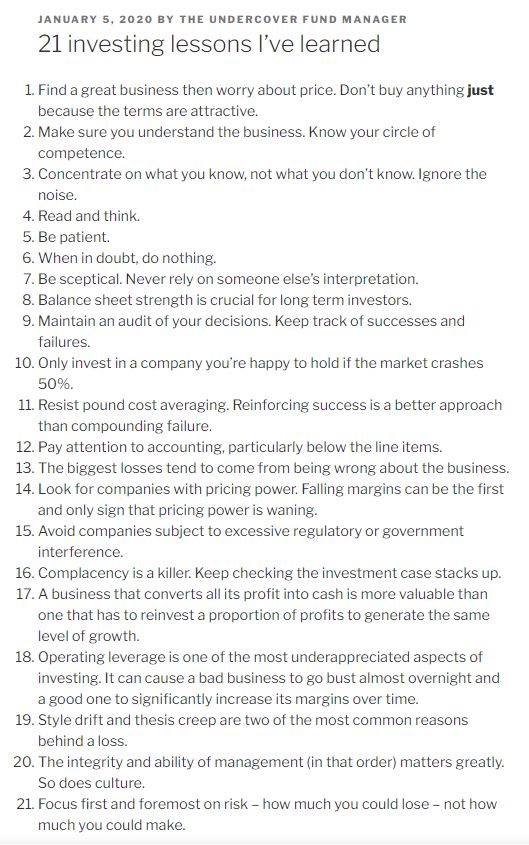
Excellent list of "Investing Lessons". Very relevant and useful stuff for individual investors. h/t @FMUndercover
More from Ram Bhupatiraju
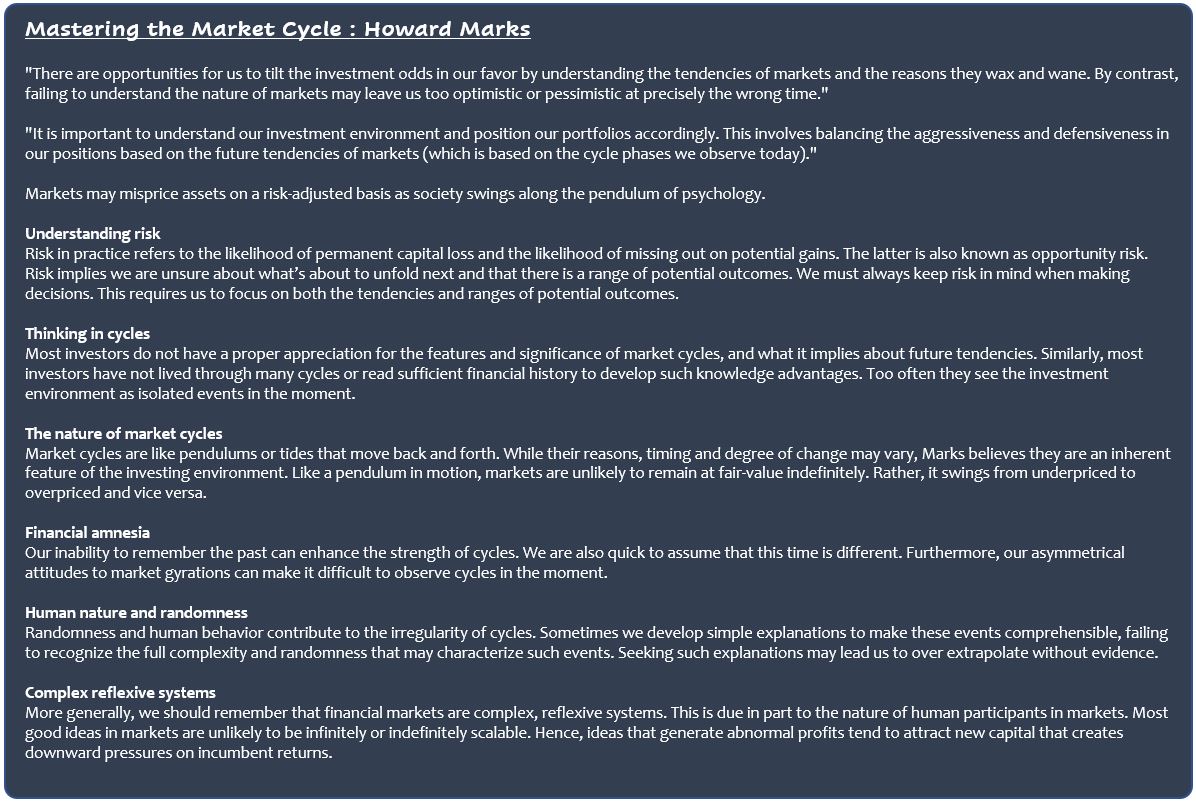
🔟Investing Philosophies I greatly admire. Learning from the best Investing Teams out there (that match your Philosophy/Strategy) and improving your own process is one of the best investing hacks. What are some others that you admire?
🔟of my principles at the end.
⬇️⬇️
1⃣ Buffett : Gotta start with the🐐
https://t.co/RKO4BAMbpT
2⃣ Ensemble Capital : @IntrinsicInv @ToddWenning
https://t.co/6Cozku3Vmn
3⃣ Fundsmith : Terry Smith
https://t.co/WqBHvN4RiU
4⃣ Silver Ring Value Partners : Gary Mishuris
https://t.co/hjDC2VBIum
🔟of my principles at the end.
⬇️⬇️
1⃣ Buffett : Gotta start with the🐐
https://t.co/RKO4BAMbpT
2⃣ Ensemble Capital : @IntrinsicInv @ToddWenning
https://t.co/6Cozku3Vmn
3⃣ Fundsmith : Terry Smith
https://t.co/WqBHvN4RiU
4⃣ Silver Ring Value Partners : Gary Mishuris
https://t.co/hjDC2VBIum
Excellent collection of articles related to Financial Statement Analysis and related topics, on Harvard Business School Online blog. h/t @online_HBS 👏
✔️The Beginner's Guide to Reading & Understanding Financial
How to Read & Understand
✔️Income Statement
https://t.co/sx2QP2kDvx
✔️Balance Sheet
https://t.co/xK5r04EmPT
✔️Cash Flow
✔️GAAP vs. IFRS : What are the Key Differences?
https://t.co/9vqtZVmOys
✔️20 Financial Terms to
✔️How to quickly & effectively read an Annual Report
https://t.co/6vNPoHY3yi
✔️Cash Flow vs Profit : What's the
✔️How to Value a Company : 6 Methods &
✔️The Beginner's Guide to Reading & Understanding Financial
How to Read & Understand
✔️Income Statement
https://t.co/sx2QP2kDvx
✔️Balance Sheet
https://t.co/xK5r04EmPT
✔️Cash Flow
✔️GAAP vs. IFRS : What are the Key Differences?
https://t.co/9vqtZVmOys
✔️20 Financial Terms to
✔️How to quickly & effectively read an Annual Report
https://t.co/6vNPoHY3yi
✔️Cash Flow vs Profit : What's the
✔️How to Value a Company : 6 Methods &
Excellent short summaries of many good investing books. 👏
cc: @dmuthuk @Gautam__Baid
(Some of the pages might open in German. Use the Translate to English option on the
List 👇
Some of my fav summaries from the list.
✔️Quality Investing - Lawrence Cunningham
https://t.co/pmVQFPlWby
✔️The Innovator's Dilemma – Clayton Christensen
https://t.co/VazvMPEE7D
✔️The Little Book That Builds Wealth - Pat Dorsey
https://t.co/sMJspTTQcA
cc: @dmuthuk @Gautam__Baid
(Some of the pages might open in German. Use the Translate to English option on the
List 👇
Some of my fav summaries from the list.
✔️Quality Investing - Lawrence Cunningham
https://t.co/pmVQFPlWby
✔️The Innovator's Dilemma – Clayton Christensen
https://t.co/VazvMPEE7D
✔️The Little Book That Builds Wealth - Pat Dorsey
https://t.co/sMJspTTQcA
More from Wise investing
You May Also Like
I just finished Eric Adler's The Battle of the Classics, and wanted to say something about Joel Christiansen's review linked below. I am not sure what motivates the review (I speculate a bit below), but it gives a very misleading impression of the book. 1/x
The meat of the criticism is that the history Adler gives is insufficiently critical. Adler describes a few figures who had a great influence on how the modern US university was formed. It's certainly critical: it focuses on the social Darwinism of these figures. 2/x
Other insinuations and suggestions in the review seem wildly off the mark, distorted, or inappropriate-- for example, that the book is clickbaity (it is scholarly) or conservative (hardly) or connected to the events at the Capitol (give me a break). 3/x
The core question: in what sense is classics inherently racist? Classics is old. On Adler's account, it begins in ancient Rome and is revived in the Renaissance. Slavery (Christiansen's primary concern) is also very old. Let's say classics is an education for slaveowners. 4/x
It's worth remembering that literacy itself is elite throughout most of this history. Literacy is, then, also the education of slaveowners. We can honor oral and musical traditions without denying that literacy is, generally, good. 5/x
As someone\u2019s who\u2019s read the book, this review strikes me as tremendously unfair. It mostly faults Adler for not writing the book the reviewer wishes he had! https://t.co/pqpt5Ziivj
— Teresa M. Bejan (@tmbejan) January 12, 2021
The meat of the criticism is that the history Adler gives is insufficiently critical. Adler describes a few figures who had a great influence on how the modern US university was formed. It's certainly critical: it focuses on the social Darwinism of these figures. 2/x
Other insinuations and suggestions in the review seem wildly off the mark, distorted, or inappropriate-- for example, that the book is clickbaity (it is scholarly) or conservative (hardly) or connected to the events at the Capitol (give me a break). 3/x
The core question: in what sense is classics inherently racist? Classics is old. On Adler's account, it begins in ancient Rome and is revived in the Renaissance. Slavery (Christiansen's primary concern) is also very old. Let's say classics is an education for slaveowners. 4/x
It's worth remembering that literacy itself is elite throughout most of this history. Literacy is, then, also the education of slaveowners. We can honor oral and musical traditions without denying that literacy is, generally, good. 5/x