A webinar worth watching again and again 👌👌
3rd time for me personally
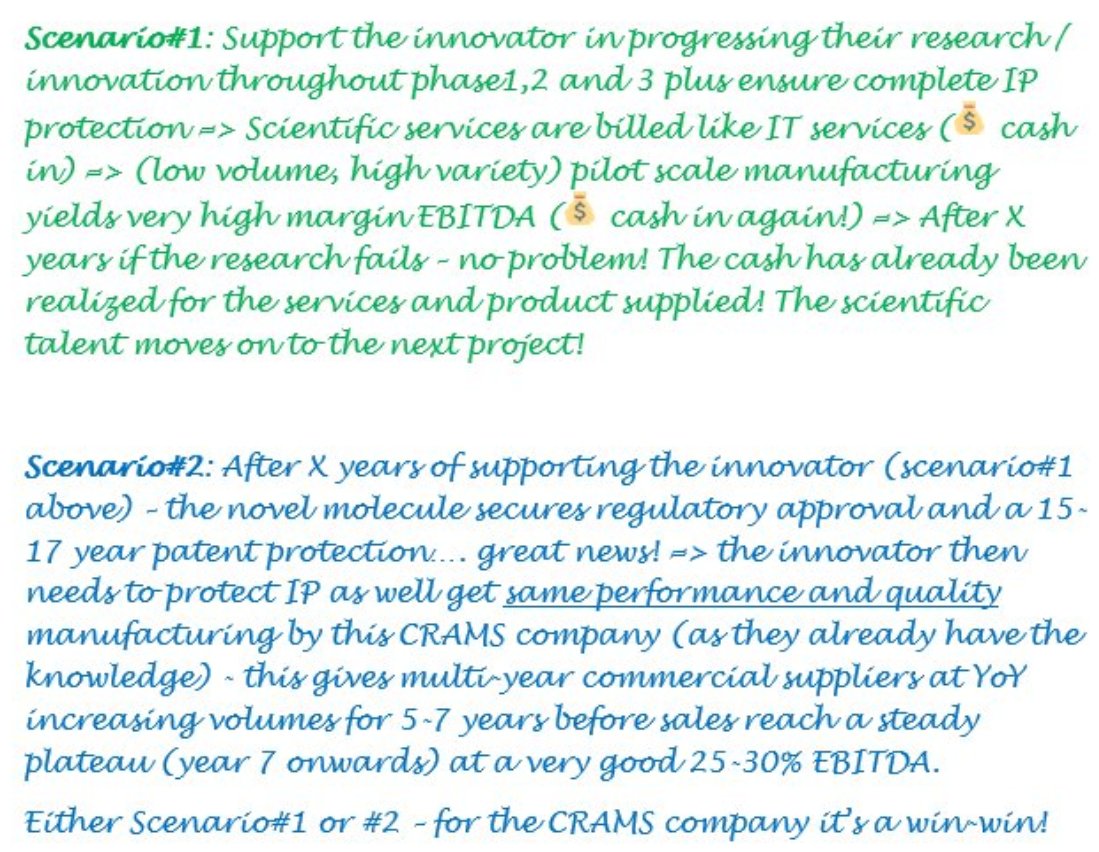
Every sector (Manufacturing, Textiles, Foods, Consumer Products, Materials & Renewable Chemicals, Life Sciences and so on will be impacted by Bioeconomy. Must study ... !)
— Conviction | Patience (@unseenvalue) July 28, 2021
Industry 5.0 Vision 2 \U0001f9ec @soicfinance
[Explained from timestamp 2:41:38 onwards]https://t.co/qgXiH9PdBH
More from Intrinsic Compounding



More from Uvlearnings



https://t.co/hItmOud8Pm
#Hikal has stepped up R&D in recent years. Next few years (capex & launches) should yield superior earnings. Wish them all the luck \U0001f44d
— Sajal Kapoor (@unseenvalue) September 26, 2020
D: invested and biased view for sure, but it was below 1x price to sales vs 12x price to sales for many chemicals and generic players. No reco!! pic.twitter.com/aqPUKbziHK
2. Put your neck on the line (invest your hard earned capital - experience comes by paying tuition fee)
3. Read non-investing books as well (Psychology, history, biographies or whatever non-fiction you like)
4. Read this :
https://t.co/6z3HvtKakL
How to augment your Sector knowledge? Follow these 5 points \U0001f447
— Conviction | Patience (@unseenvalue) May 18, 2019
1. The Five Rules For Successful Stock Investing by Pat Dorsey
2. Con Calls - as many as you can in that sector
3. Annual Reports - as many as you can in that sector
4. Interact with trade/channel partners
5. AGMs pic.twitter.com/2ZOx3nkC4i
You May Also Like





Like company moats, your personal moat should be a competitive advantage that is not only durable—it should also compound over time.
Characteristics of a personal moat below:
I'm increasingly interested in the idea of "personal moats" in the context of careers.
— Erik Torenberg (@eriktorenberg) November 22, 2018
Moats should be:
- Hard to learn and hard to do (but perhaps easier for you)
- Skills that are rare and valuable
- Legible
- Compounding over time
- Unique to your own talents & interests https://t.co/bB3k1YcH5b
2/ Like a company moat, you want to build career capital while you sleep.
As Andrew Chen noted:
People talk about \u201cpassive income\u201d a lot but not about \u201cpassive social capital\u201d or \u201cpassive networking\u201d or \u201cpassive knowledge gaining\u201d but that\u2019s what you can architect if you have a thing and it grows over time without intensive constant effort to sustain it
— Andrew Chen (@andrewchen) November 22, 2018
3/ You don’t want to build a competitive advantage that is fleeting or that will get commoditized
Things that might get commoditized over time (some longer than
Things that look like moats but likely aren\u2019t or may fade:
— Erik Torenberg (@eriktorenberg) November 22, 2018
- Proprietary networks
- Being something other than one of the best at any tournament style-game
- Many "awards"
- Twitter followers or general reach without "respect"
- Anything that depends on information asymmetry https://t.co/abjxesVIh9
4/ Before the arrival of recorded music, what used to be scarce was the actual music itself — required an in-person artist.
After recorded music, the music itself became abundant and what became scarce was curation, distribution, and self space.
5/ Similarly, in careers, what used to be (more) scarce were things like ideas, money, and exclusive relationships.
In the internet economy, what has become scarce are things like specific knowledge, rare & valuable skills, and great reputations.