
1. These aren't just papers that were published in 2020. They are papers that were added to my library in 2020. Some are a little older — some are a lot older. All are interesting or exciting to me in some way.
Hey #optics and #photonics twitter
It's time again for the 2nd annual #top10photonics thread, where I compile my own #top10 best photonics papers list of the year!
See here for last year's thread:
https://t.co/6h82mPAn3w
A thread 👇
Hey #optics and #photonics twitter
— Orad Reshef (@Orad) December 29, 2019
It's the time of year where we are inundated in end-of-year top10 lists... but how many of those lists are made for _US_ and our community?
So I decided to compile my own #top10 best photonics papers list for 2019
A #top10photonics thread \U0001f447
1. These aren't just papers that were published in 2020. They are papers that were added to my library in 2020. Some are a little older — some are a lot older. All are interesting or exciting to me in some way.
https://t.co/zMB3vAV02S
Now, on to the main event!

Phys. Today 68, 44 (2015)
I found this one on twitter. It's a transcription of a round-table discussion about the future of the laser between the all-time greats (Townes, etc) that happened in 1972!
https://t.co/oJ26qE6gzv
Today is #IDL2020. Back in 2015, Physics Today published a 1972 roundtable discusion on the future of Lasers. To see how much Bloembergen, Prokhorov, Porto, Townes, Javan, Stoicheff, Jacquinot, Kidder, Schawlow, and Hall got right, click on the link.https://t.co/NsBonmmCIR
— Physics Today (@PhysicsToday) May 16, 2020
It's not *sexy*, but it's important: a rigorous treatment from @FMResearchGroup on the bandwidth limitations of metasurfaces.
This is a wonderful (scalable!) new type of optical computation! Love to see it
T. Frank et al. Discriminating between Coherent and Incoherent Light with Planar Metamaterials. Nano Lett. 2019, 19, 10, 6869
https://t.co/JPP9SvDNmY
Savo, R. et al. Broadband Mie driven random quasi-phase-matching. Nat. Photonics 14, 740–747 (2020) by @romolo_savo and @rachel_grange of the @ONG_ETH group:
https://t.co/yfVre3Xxm5
https://t.co/PSDZ83x5pL
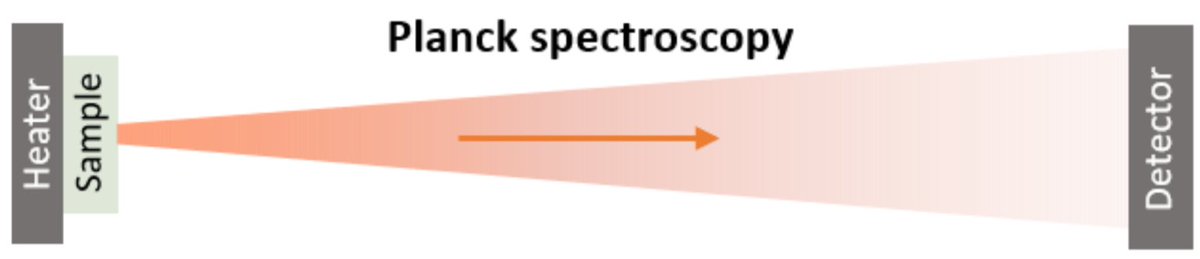
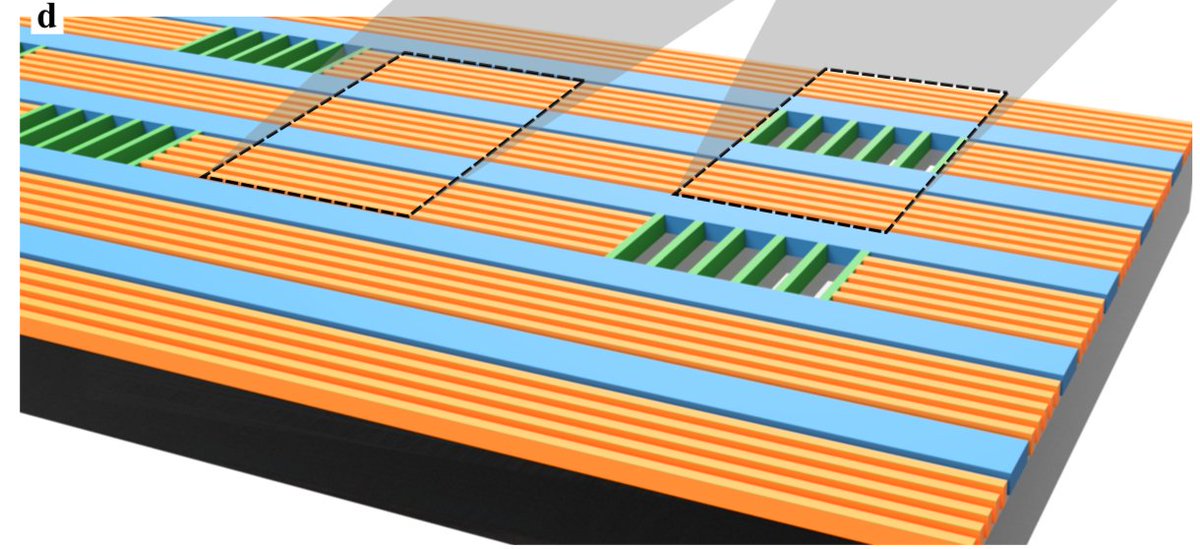
Simple idea with a powerful application. And a clever name! This is the type of measurement method that may become a standard in the field. As expected from the @KatsGroup!
Reminds me of z-scan in its simplicity.
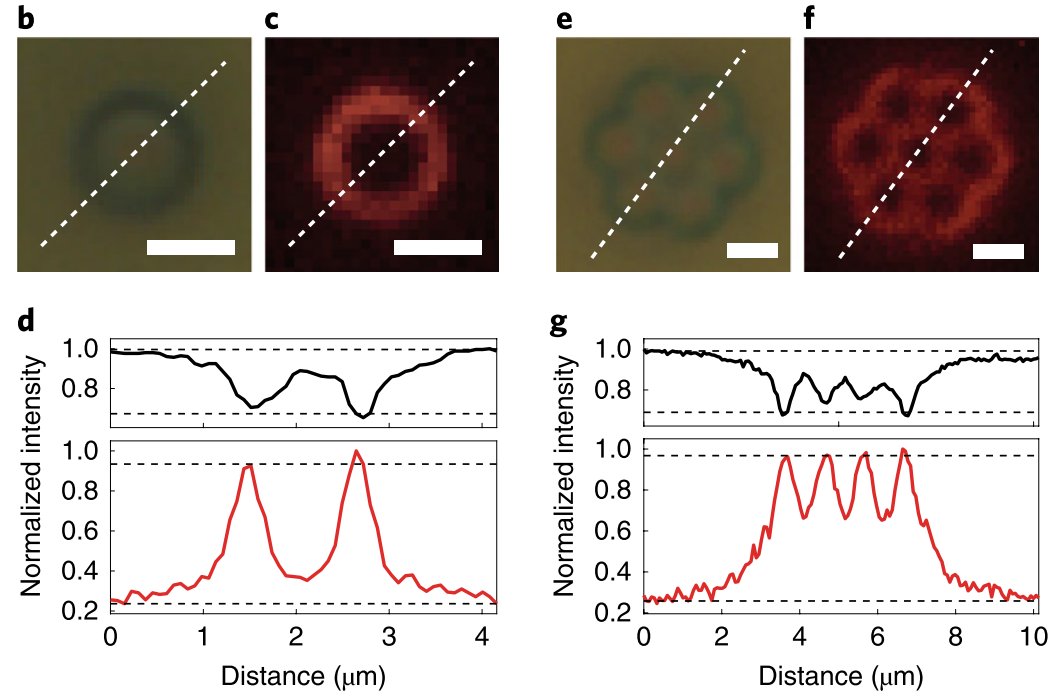
https://t.co/aOxujIx1aH, which was a clever idea that imho didn't get enough attention. Perhaps this publication will push the idea over the edge.
The proposal is to use a substrate with its own built-in angularly-selective fluorescence to convert any microscope into a dark field microscope. Incredibly simple, and the images are super convincing:
https://t.co/yxaCwEosE8
From my metamaterials-perspective, BICs dominated the year, with notably excellent work from Yuri Kivshar's team and collaborators.
Here I'm choosing to highlight the paper with the highest Q-factor yet, Q~20,000:

Liu, Z. et al. High-Q Quasibound States in the Continuum for Nonlinear Metasurfaces. Phys. Rev. Lett. 123, 253901 (2019):https://t.co/sAbIh7zf0v
https://t.co/goMIT58BIK
*SEVEN* octaves? I mean, come on, that range is absolutely bananas, from 340 nm to 40,000 nm~!!
And it's CEP stable? I can't even fathom.
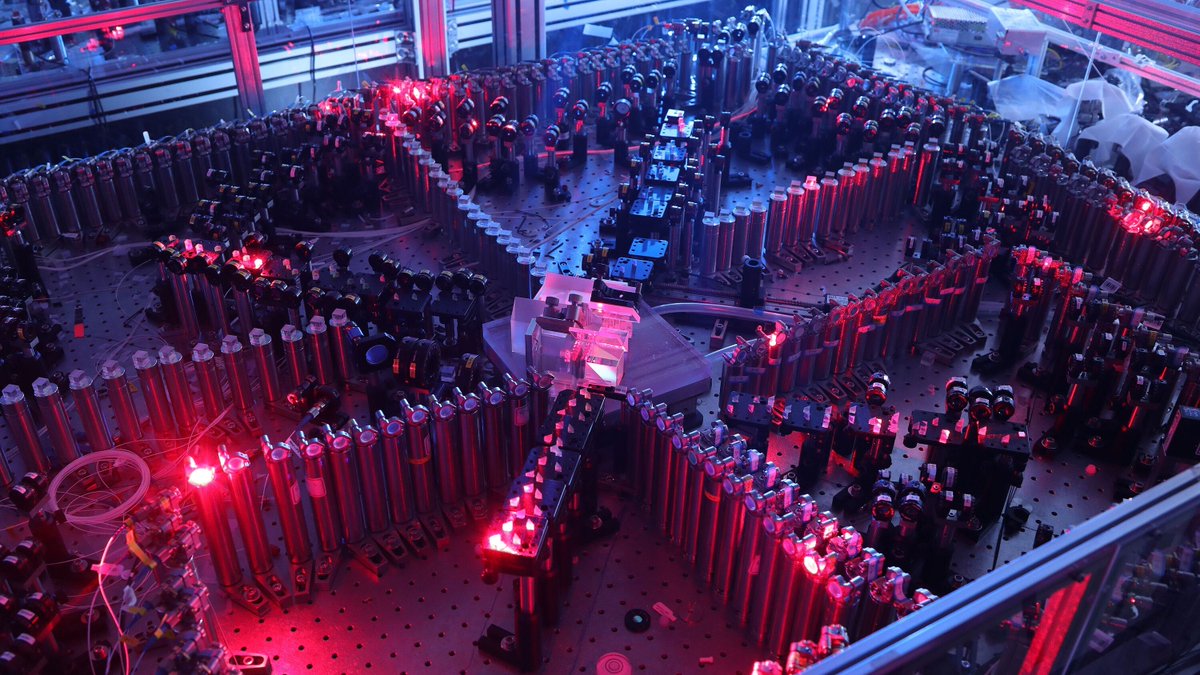
H.-S. Zhong et al, Quantum computational advantage using photons. Science 370, 1460 (2020)
What a landmark paper.
https://t.co/t77d5hsFb8
More from Twitter

1/ Meta thread about "Going Pro" on Twitter.
I've been a Twitter power user since 2008 or so. Long time.
I've watched it change from an impromptu conversation or watch party platform to a place for people to build their professional reputations and network.
2/ In many ways it's matured into a more effective professional platform than LinkedIn.
LinkedIn is (mostly) about collecting the professional contacts you've met.
Twitter is a place to meet new people.
That much hasn't
3/ What also hasn't changed is its power for networking.
This is particularly useful if you break out of your echo chamber and talk, build relationships with people doing tangentially related things.
You're bricklaying and with patience it pays off.
4/ What has changed is a growing population of people being *intentional* about the use of Twitter for their professional lives.
Observations on what's working for them:
5/ They "Build in public" - sharing behind the scenes perspectives on whatever it is you're doing professionally.
What do people not know about what you do?
Stick within your expertise, with focus, where people see you are an authority - that’s where you grow a following.
I've been a Twitter power user since 2008 or so. Long time.
I've watched it change from an impromptu conversation or watch party platform to a place for people to build their professional reputations and network.
2/ In many ways it's matured into a more effective professional platform than LinkedIn.
LinkedIn is (mostly) about collecting the professional contacts you've met.
Twitter is a place to meet new people.
That much hasn't
Facebook is where you learn you don't like a lot of the people you know. Twitter is where you learn to like people you don't know already.
— Amanda Orson (@amandaorson) August 2, 2012
3/ What also hasn't changed is its power for networking.
This is particularly useful if you break out of your echo chamber and talk, build relationships with people doing tangentially related things.
You're bricklaying and with patience it pays off.
Back of the napkin math - over the last year I've referred (or retained) $500k+ worth of business to contacts in my network.
— Amanda Orson (@amandaorson) November 16, 2016
4/ What has changed is a growing population of people being *intentional* about the use of Twitter for their professional lives.
Observations on what's working for them:
5/ They "Build in public" - sharing behind the scenes perspectives on whatever it is you're doing professionally.
What do people not know about what you do?
Stick within your expertise, with focus, where people see you are an authority - that’s where you grow a following.



You May Also Like






Stan Lee’s fictional superheroes lived in the real New York. Here’s where they lived, and why. https://t.co/oV1IGGN8R6
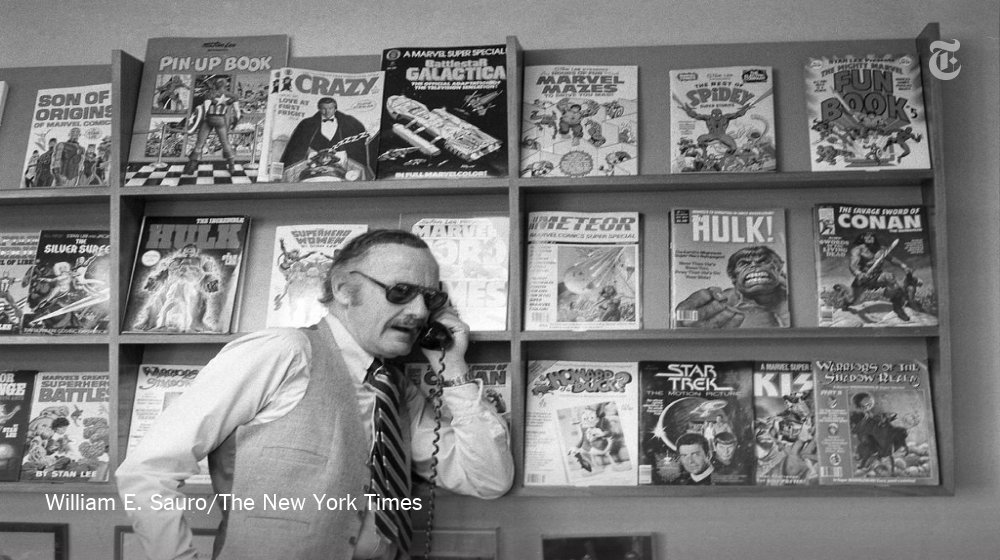
Stan Lee, who died Monday at 95, was born in Manhattan and graduated from DeWitt Clinton High School in the Bronx. His pulp-fiction heroes have come to define much of popular culture in the early 21st century.
Tying Marvel’s stable of pulp-fiction heroes to a real place — New York — served a counterbalance to the sometimes gravity-challenged action and the improbability of the stories. That was just what Stan Lee wanted. https://t.co/rDosqzpP8i
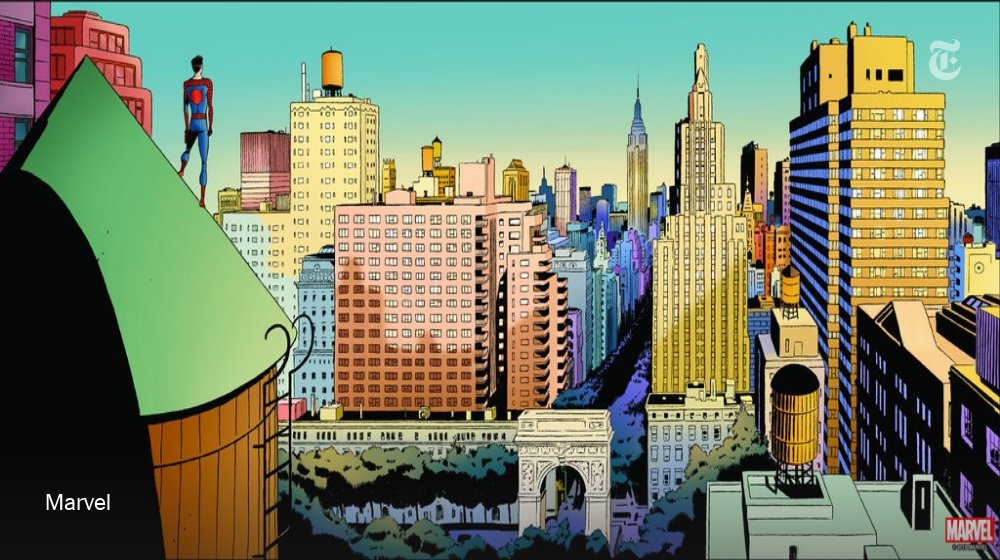
The New York universe hooked readers. And the artists drew what they were familiar with, which made the Marvel universe authentic-looking, down to the water towers atop many of the buildings. https://t.co/rDosqzpP8i
The Avengers Mansion was a Beaux-Arts palace. Fans know it as 890 Fifth Avenue. The Frick Collection, which now occupies the place, uses the address of the front door: 1 East 70th Street.
Stan Lee, who died Monday at 95, was born in Manhattan and graduated from DeWitt Clinton High School in the Bronx. His pulp-fiction heroes have come to define much of popular culture in the early 21st century.
Tying Marvel’s stable of pulp-fiction heroes to a real place — New York — served a counterbalance to the sometimes gravity-challenged action and the improbability of the stories. That was just what Stan Lee wanted. https://t.co/rDosqzpP8i
The New York universe hooked readers. And the artists drew what they were familiar with, which made the Marvel universe authentic-looking, down to the water towers atop many of the buildings. https://t.co/rDosqzpP8i
The Avengers Mansion was a Beaux-Arts palace. Fans know it as 890 Fifth Avenue. The Frick Collection, which now occupies the place, uses the address of the front door: 1 East 70th Street.
