2/
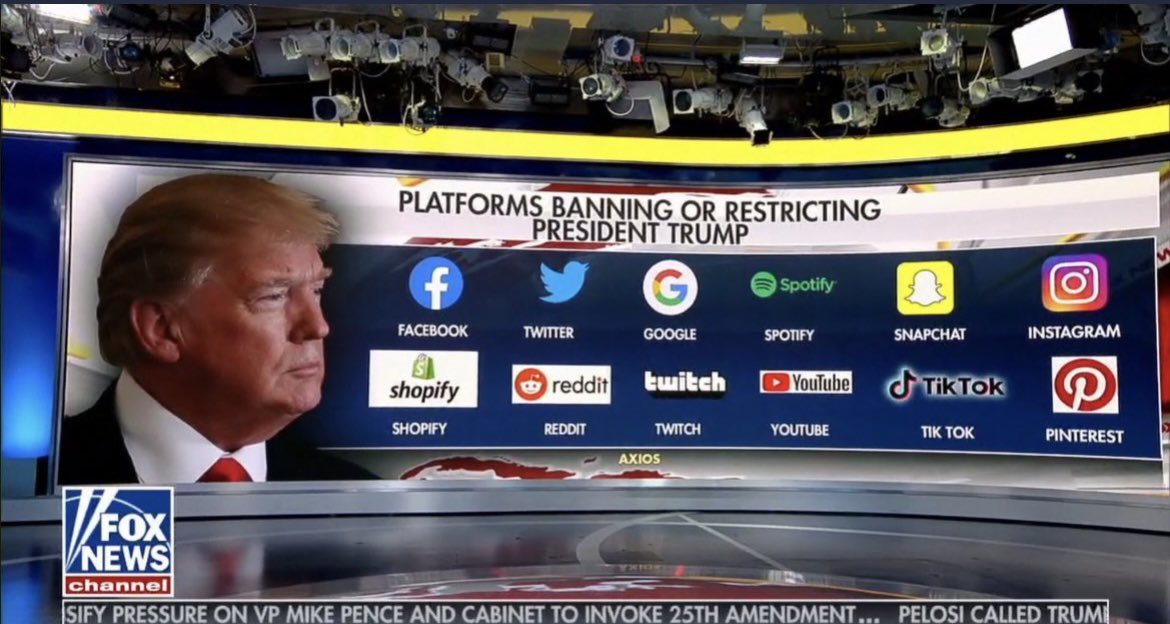
As Parler disappears from the Android and Ios app stores and faces being kicked off of Amazon's (and other) clouds, people who worry about monopolized corporate control over speech are divided over What It Means.
1/
2/
3/
4/
Dress is up as "content removal" or "moderation" if you'd like, but it's obviously censorship.
5/
6/
7/
And when I do, you can go to your house and tell Holocaust jokes.
8/
9/
Which brings me back to Parler. It's true that no one violates the First Amendment (let alone CDA 230) (get serious) when Parler is removed from app stores or kicked off a cloud.
10/
11/
12/
The remedy for this isn't forcing the platforms to carry objectionable speech.
13/
https://t.co/8LtuOxHUoA
14/
https://t.co/rDA7cg8sMY
15/
16/
https://t.co/W9yD1ngVpB
17/
18/
19/
21/
More from Cory Doctorow #BLM
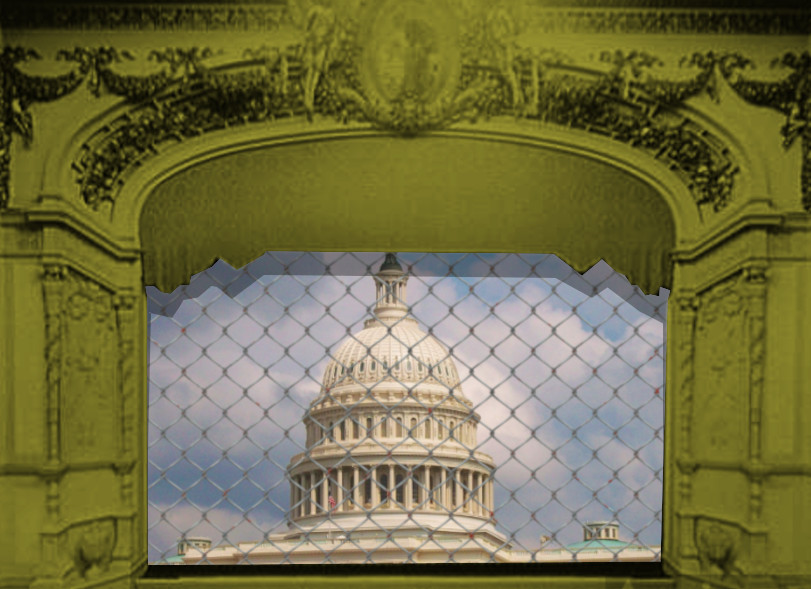
There are lots of problems with ad-tech:
* being spied on all the time means that the people of the 21st century are less able to be their authentic selves;
* any data that is collected and retained will eventually breach, creating untold harms;
1/

* data-collection enables for discriminatory business practices ("digital redlining");
* the huge, tangled hairball of adtech companies siphons lots (maybe even most) of the money that should go creators and media orgs; and
2/
* anti-adblock demands browsers and devices that thwart their owners' wishes, a capability that can be exploited for even more nefarious purposes;
That's all terrible, but it's also IRONIC, since it appears that, in addition to everything else, ad-tech is a fraud, a bezzle.
3/
Bezzle was John Kenneth Galbraith's term for "the magic interval when a confidence trickster knows he has the money he has appropriated but the victim does not yet understand that he has lost it." That is, a rotten log that has yet to be turned over.
4/
Bezzles unwind slowly, then all at once. We've had some important peeks under ad-tech's rotten log, and they're increasing in both intensity and velocity. If you follow @Chronotope, you've had a front-row seat to the
* being spied on all the time means that the people of the 21st century are less able to be their authentic selves;
* any data that is collected and retained will eventually breach, creating untold harms;
1/
* data-collection enables for discriminatory business practices ("digital redlining");
* the huge, tangled hairball of adtech companies siphons lots (maybe even most) of the money that should go creators and media orgs; and
2/
* anti-adblock demands browsers and devices that thwart their owners' wishes, a capability that can be exploited for even more nefarious purposes;
That's all terrible, but it's also IRONIC, since it appears that, in addition to everything else, ad-tech is a fraud, a bezzle.
3/
Bezzle was John Kenneth Galbraith's term for "the magic interval when a confidence trickster knows he has the money he has appropriated but the victim does not yet understand that he has lost it." That is, a rotten log that has yet to be turned over.
4/
Bezzles unwind slowly, then all at once. We've had some important peeks under ad-tech's rotten log, and they're increasing in both intensity and velocity. If you follow @Chronotope, you've had a front-row seat to the
The numbers are all fking fake, the metrics are bullshit, the agencies responsible for enforcing good practices are knowing bullshiters enforcing and profiting off all the fake numbers and none of the models make sense at scale of actual human users. https://t.co/sfmdrxGBNJ pic.twitter.com/thvicDEL29
— Aram Zucker-Scharff (@Chronotope) December 26, 2018
Today's Twitter threads (a Twitter thread).
Inside: Mashing the Bernie meme; Know Nothings, conspiratorialism and Pastel Q; and more!
Archived at: https://t.co/cKWPSzuYHE
#Pluralistic
1/
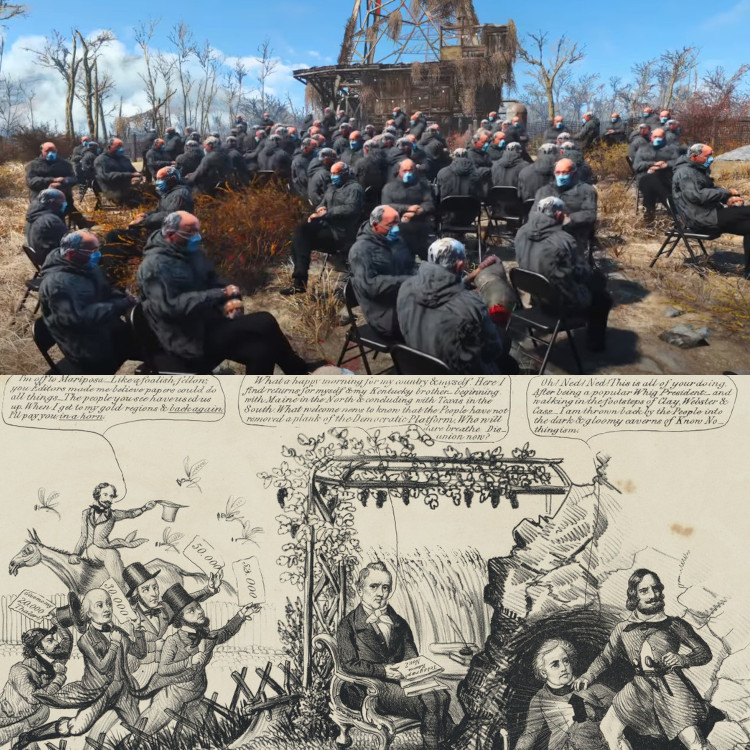
Mashing the Bernie meme: What if every video game, except Bernie with mittens?
https://t.co/Zcs71oUras
2/
Inside: Mashing the Bernie meme; Know Nothings, conspiratorialism and Pastel Q; and more!
Archived at: https://t.co/cKWPSzuYHE
#Pluralistic
1/
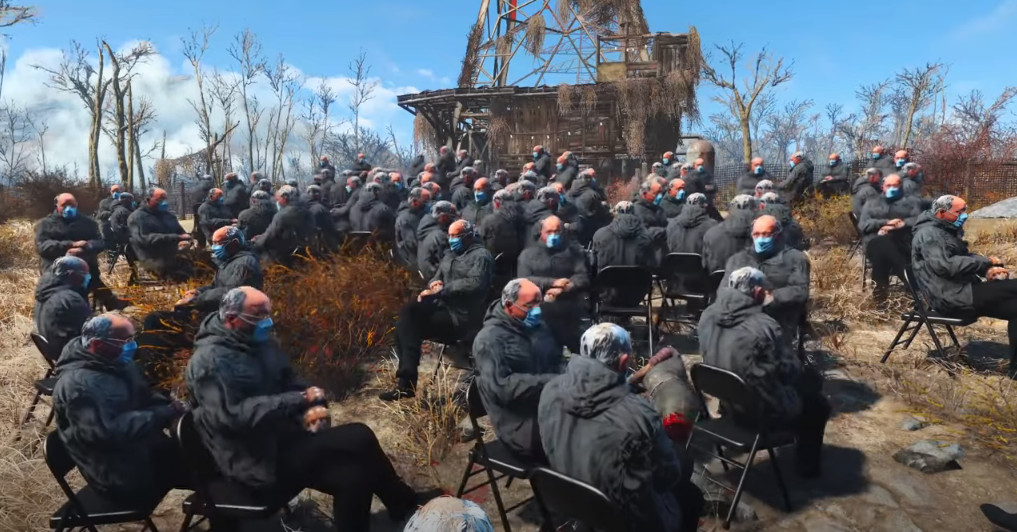
Mashing the Bernie meme: What if every video game, except Bernie with mittens?
https://t.co/Zcs71oUras
2/
The remix culture of the early 2000s left an indelible impression on me, an enduring delight in the power of whimsy, juxtaposition, virtuosity and ingenuity - and the ability of strangers all over the world to collaborate without any explicit coordination.
— Cory Doctorow #BLM (@doctorow) January 31, 2021
1/ pic.twitter.com/hMKzmoxjLu
More from Trump


You May Also Like

“We don’t negotiate salaries” is a negotiation tactic.
Always. No, your company is not an exception.
A tactic I don’t appreciate at all because of how unfairly it penalizes low-leverage, junior employees, and those loyal enough not to question it, but that’s negotiation for you after all. Weaponized information asymmetry.
Listen to Aditya
And by the way, you should never be worried that an offer would be withdrawn if you politely negotiate.
I have seen this happen *extremely* rarely, mostly to women, and anyway is a giant red flag. It suggests you probably didn’t want to work there.
You wish there was no negotiating so it would all be more fair? I feel you, but it’s not happening.
Instead, negotiate hard, use your privilege, and then go and share numbers with your underrepresented and underpaid colleagues. […]
Always. No, your company is not an exception.
A tactic I don’t appreciate at all because of how unfairly it penalizes low-leverage, junior employees, and those loyal enough not to question it, but that’s negotiation for you after all. Weaponized information asymmetry.
Listen to Aditya
"we don't negotiate salaries" really means "we'd prefer to negotiate massive signing bonuses and equity grants, but we'll negotiate salary if you REALLY insist" https://t.co/80k7nWAMoK
— Aditya Mukerjee, the Otterrific \U0001f3f3\ufe0f\u200d\U0001f308 (@chimeracoder) December 4, 2018
And by the way, you should never be worried that an offer would be withdrawn if you politely negotiate.
I have seen this happen *extremely* rarely, mostly to women, and anyway is a giant red flag. It suggests you probably didn’t want to work there.
You wish there was no negotiating so it would all be more fair? I feel you, but it’s not happening.
Instead, negotiate hard, use your privilege, and then go and share numbers with your underrepresented and underpaid colleagues. […]

On the occasion of youtube 20k and Twitter 70k members
A small tribute/gift to members
Screeners
technical screeners - intraday and positional both
before proceeding - i have helped you , can i ask you so that it can help someone else too
thank you
positional one
run - find #stock - draw chart - find levels
1- Stocks closing daily 2% up from 5 days
https://t.co/gTZrYY3Nht
2- Weekly breakout
https://t.co/1f4ahEolYB
3- Breakouts in short term
https://t.co/BI4h0CdgO2
4- Bullish from last 5
intraday screeners
5- 15 minute Stock Breakouts
https://t.co/9eAo82iuNv
6- Intraday Buying seen in the past 15 minutes
https://t.co/XqAJKhLB5G
7- Stocks trading near day's high on 5 min chart with volume BO intraday
https://t.co/flHmm6QXmo
Thank you