Figure a lot of people have a lot of questions right now so thought a quick thread signposting to where what info we have is might be helpful...

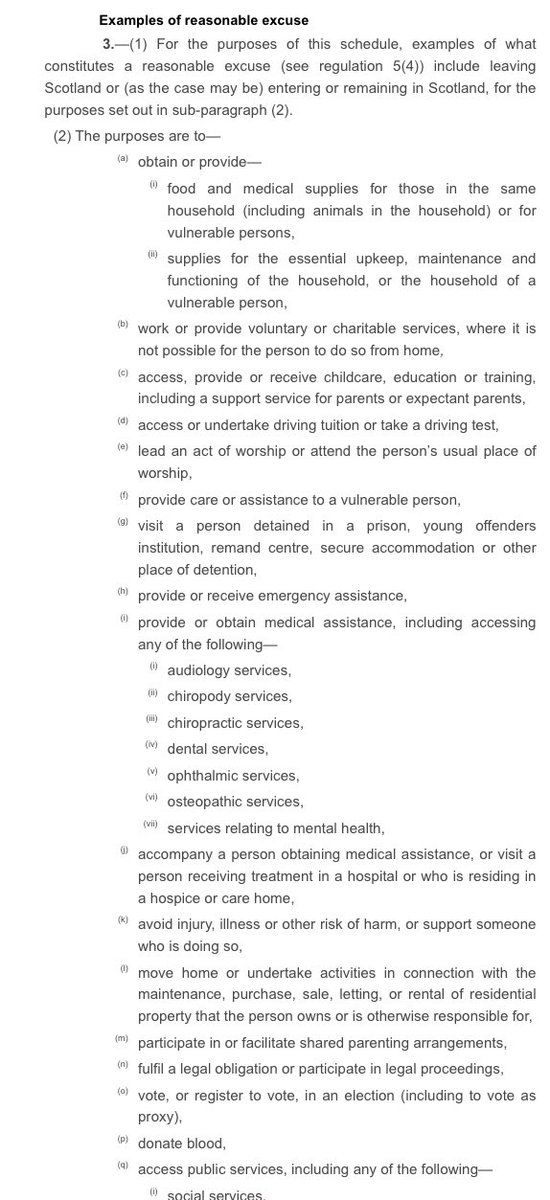
This is the current law on travel restrictions, in force now. It includes a legal ban on travel between Scotland and the rest of the UK, and in and out of council areas in levels three and four, without a “reasonable excuse” https://t.co/w9AaqiTOKS
Again the cross-border travel laws are in force *now* - the plan was they would be relaxed for Christmas, the change is that they now will not. Travel *within* Scotland permitted on Christmas Day - but next day whole mainland goes into L4, which means no movement between councils
There are a LOT of potential exemptions included in the travel-ban regulations and the list is non-exhaustive. *As it stands* I haven’t heard any talk of removing specific exemptions, just of potentially toughening enforcement.
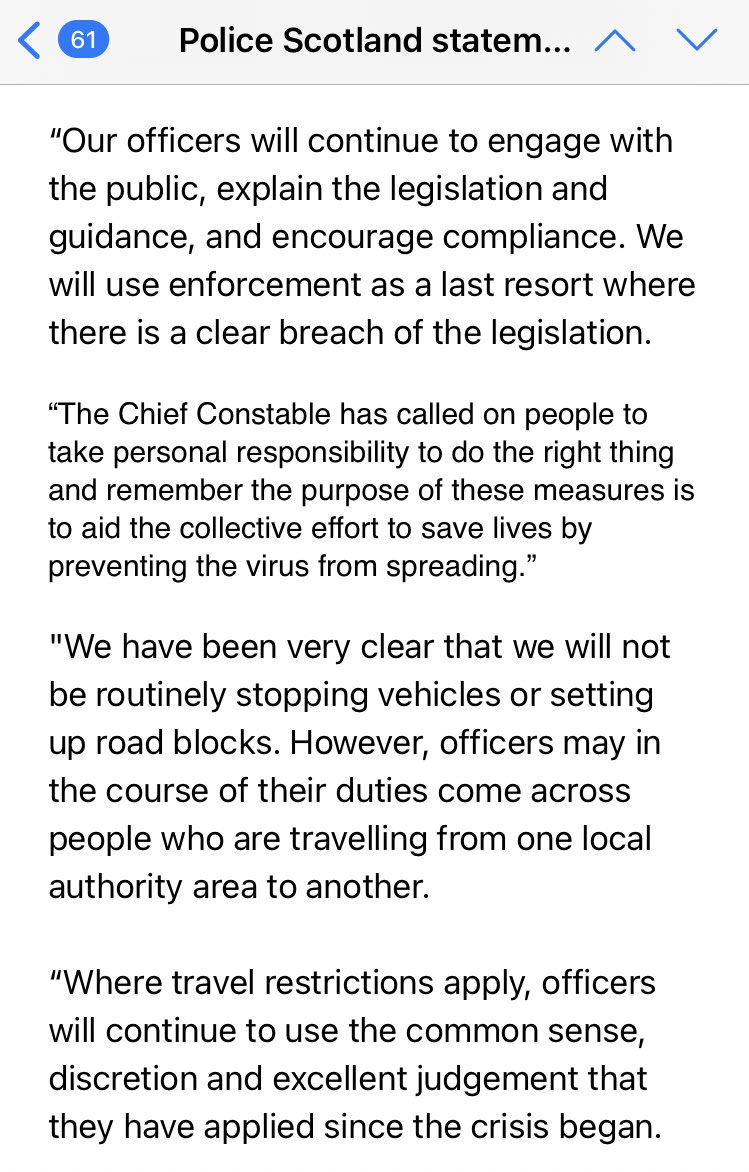
“Toughening enforcement” might just mean “starting some enforcement” because police insist their approach didn’t change when the law came in. They are not setting up roadblocks or spot checks, they mainly just occasionally fine people they stumble across who are clearly in breach
The Scottish government guidance page on travel is here, incidentally, although at time of writing hasn’t been updated since 14 December. Hopefully any changes will be reflected there in short order. https://t.co/SIk09rkKND
The guidance page for Christmas generally is here, but again is in the process of being updated in light of the latest changes: https://t.co/B3BsToHRWz
Not to give away any trade secrets but anything particularly significant in terms of *new* or changed guidance is likely to pop up on the Publications page of the ScotGov website. Journalists spend roughly 30% of their average day refreshing it. https://t.co/SiFuH8Ujgs
There IS going to have to be a change in the regs to strip the festive easing period back from 5 days to 1 - yes there’s literally Christmas law - those amendments should (hopefully) show up shortly, and we’ll know for definite at that point whether any exemptions etc changing.
There isn’t going to be specific guidance for every person’s exact circumstances but hopefully between whats specified in the law and updates to govt guidance, folk can find or work out some answers - obvs also keep an eye on the usual folk in govt for clarifications etc https://t.co/7q5PzHsKr5

More from Travel

You May Also Like

1/“What would need to be true for you to….X”

Why is this the most powerful question you can ask when attempting to reach an agreement with another human being or organization?

A thread, co-written by @deanmbrody:


2/ First, “X” could be lots of things. Examples: What would need to be true for you to

- “Feel it's in our best interest for me to be CMO"
- “Feel that we’re in a good place as a company”
- “Feel that we’re on the same page”
- “Feel that we both got what we wanted from this deal

3/ Normally, we aren’t that direct. Example from startup/VC land:

Founders leave VC meetings thinking that every VC will invest, but they rarely do.

Worse over, the founders don’t know what they need to do in order to be fundable.

4/ So why should you ask the magic Q?

To get clarity.

You want to know where you stand, and what it takes to get what you want in a way that also gets them what they want.

It also holds them (mentally) accountable once the thing they need becomes true.

5/ Staying in the context of soliciting investors, the question is “what would need to be true for you to want to invest (or partner with us on this journey, etc)?”

Multiple responses to this question are likely to deliver a positive result.
"I lied about my basic beliefs in order to keep a prestigious job. Now that it will be zero-cost to me, I have a few things to say."


We know that elite institutions like the one Flier was in (partial) charge of rely on irrelevant status markers like private school education, whiteness, legacy, and ability to charm an old white guy at an interview.

Harvard's discriminatory policies are becoming increasingly well known, across the political spectrum (see, e.g., the recent lawsuit on discrimination against East Asian applications.)

It's refreshing to hear a senior administrator admits to personally opposing policies that attempt to remedy these basic flaws. These are flaws that harm his institution's ability to do cutting-edge research and to serve the public.

Harvard is being eclipsed by institutions that have different ideas about how to run a 21st Century institution. Stanford, for one; the UC system; the "public Ivys".