https://t.co/iK6vmw9ixz
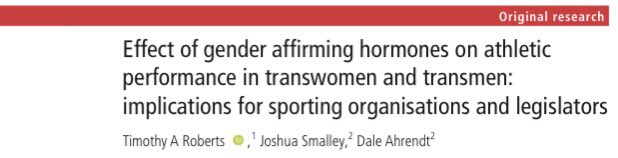
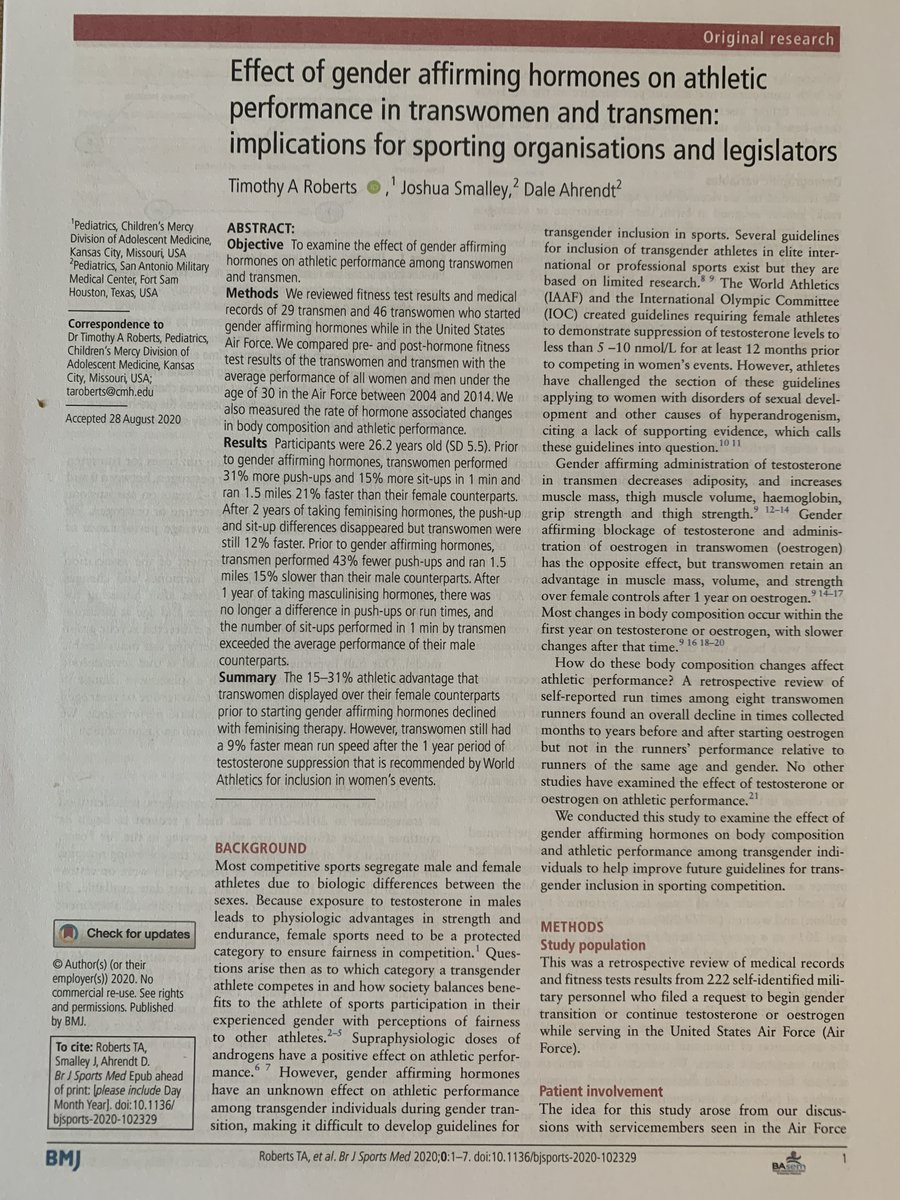
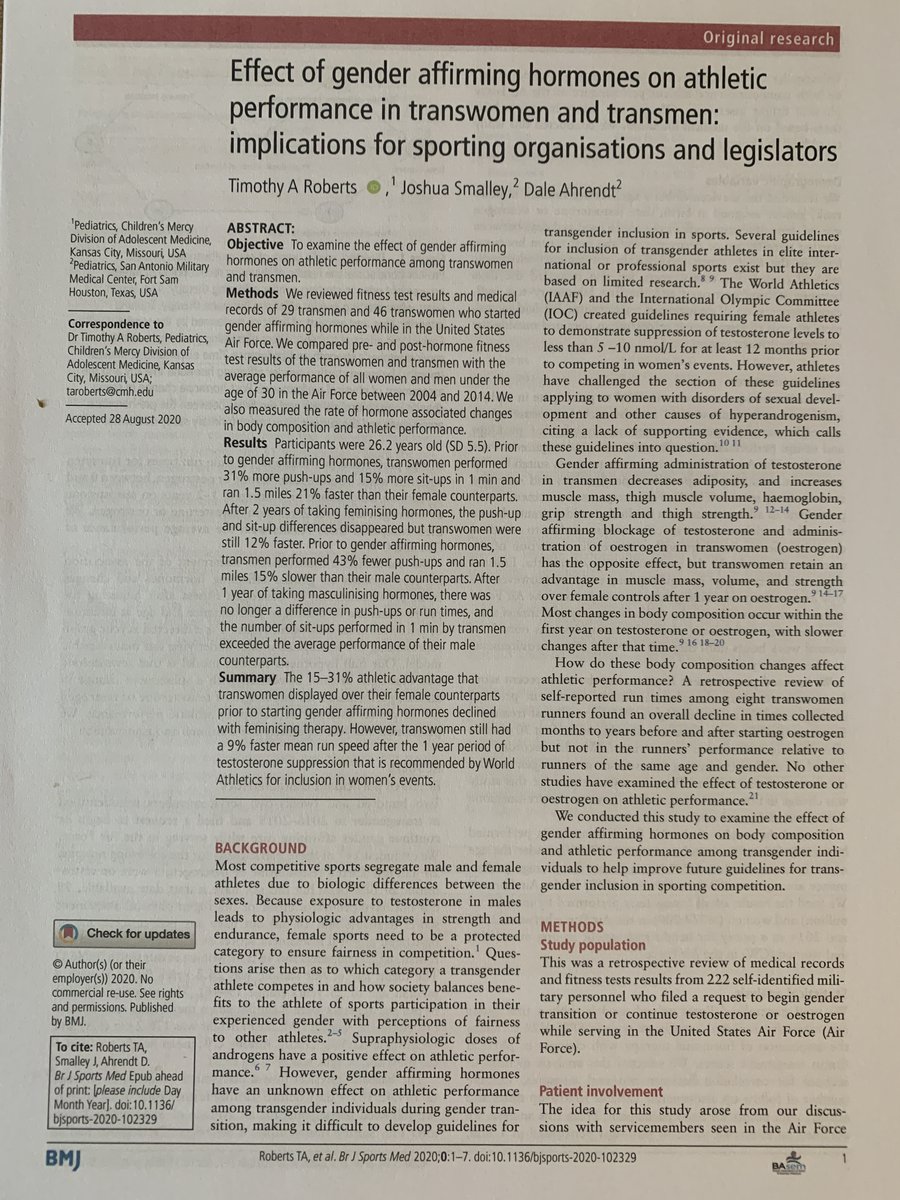
Here follows my quick first thoughts of Roberts et al., 2020.
I predict this paper will generate much discussion over the coming weeks and months.
Highly-active people, albeit not specifically-trained athletes. Mean age 26.6 yrs +/- 5.5 yrs.
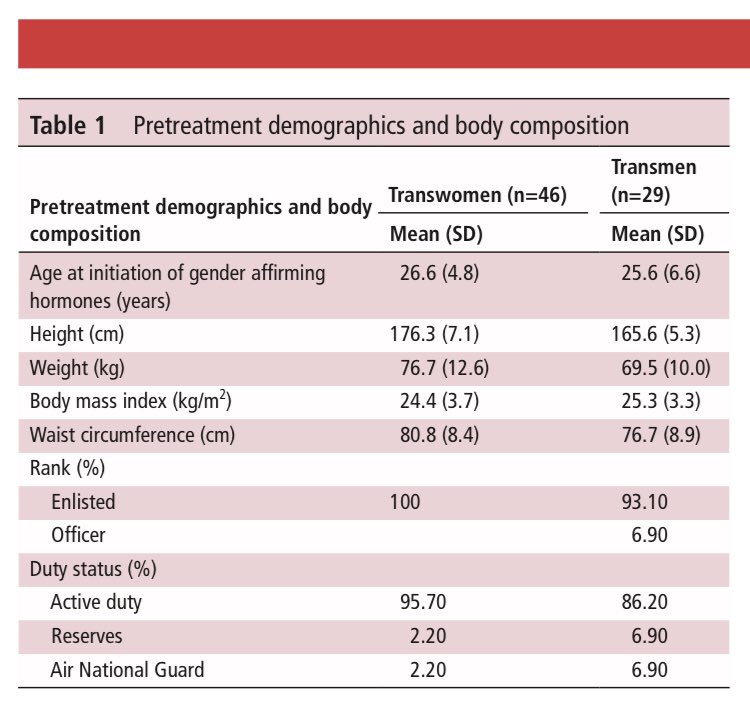
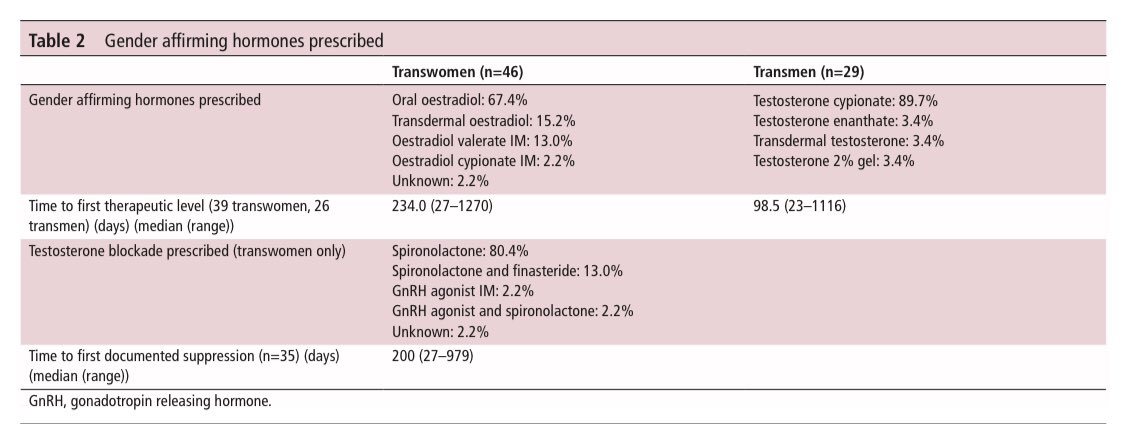
The performance of TW/TM over 30 months of treatment was retrieved from official records and compared with pre-treatment “baseline” performance.
(I think I’m reading that correctly...)
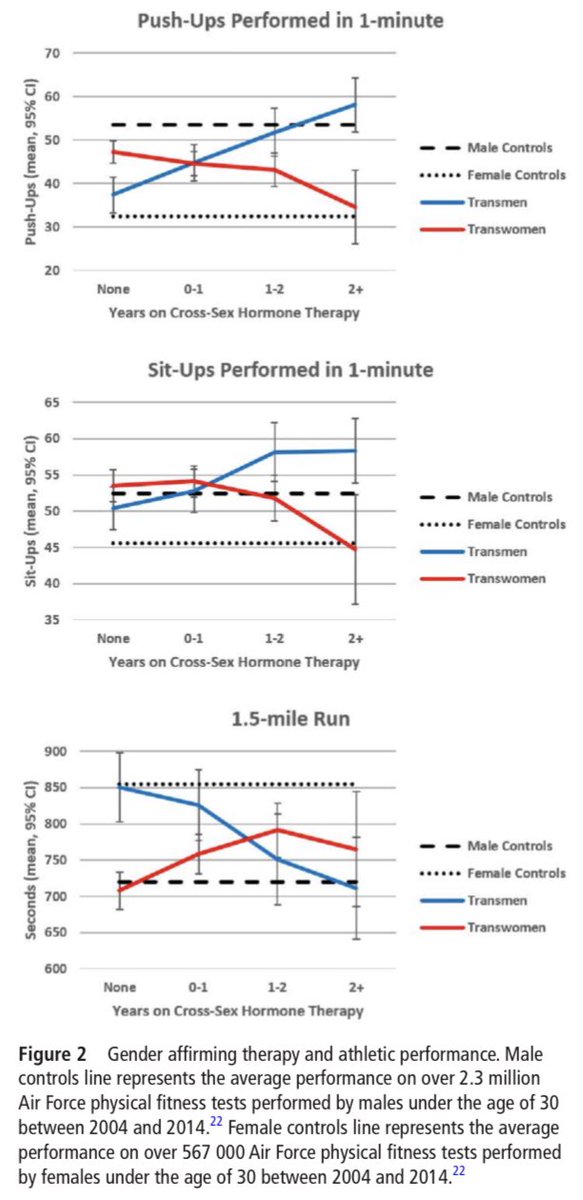
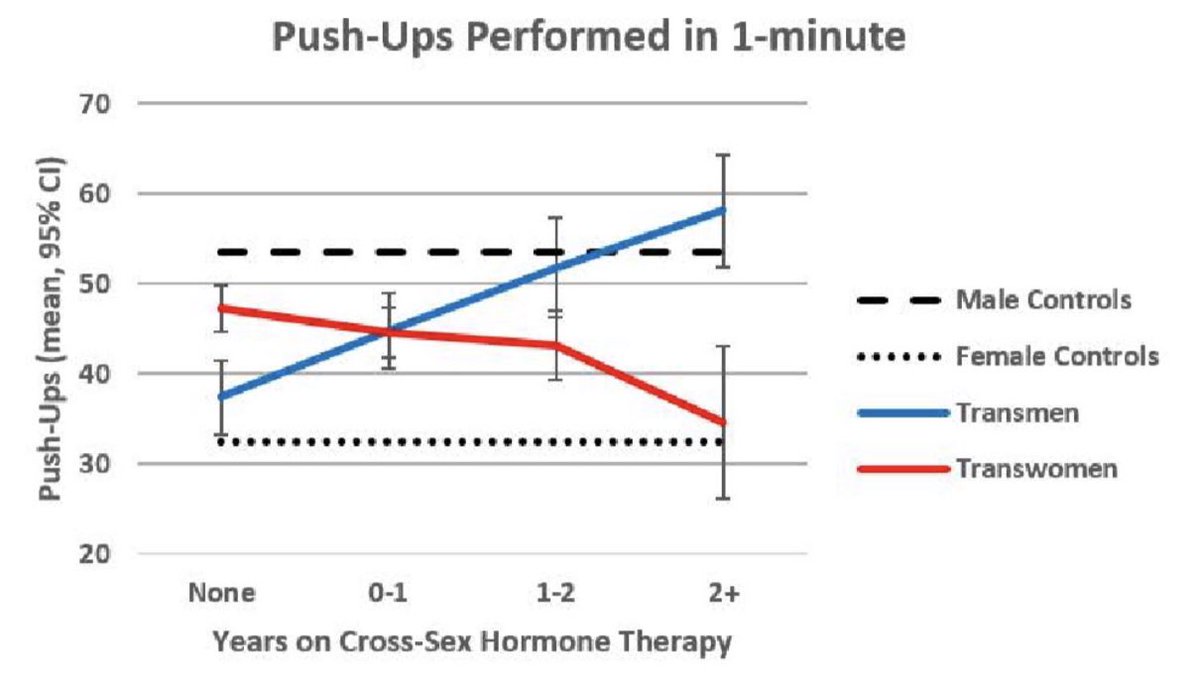
TW were weaker than control men (CM) pre-treatment and throughout transition. The authors speculate this may be explained by aversion to upper body training and its aesthetic outcomes.
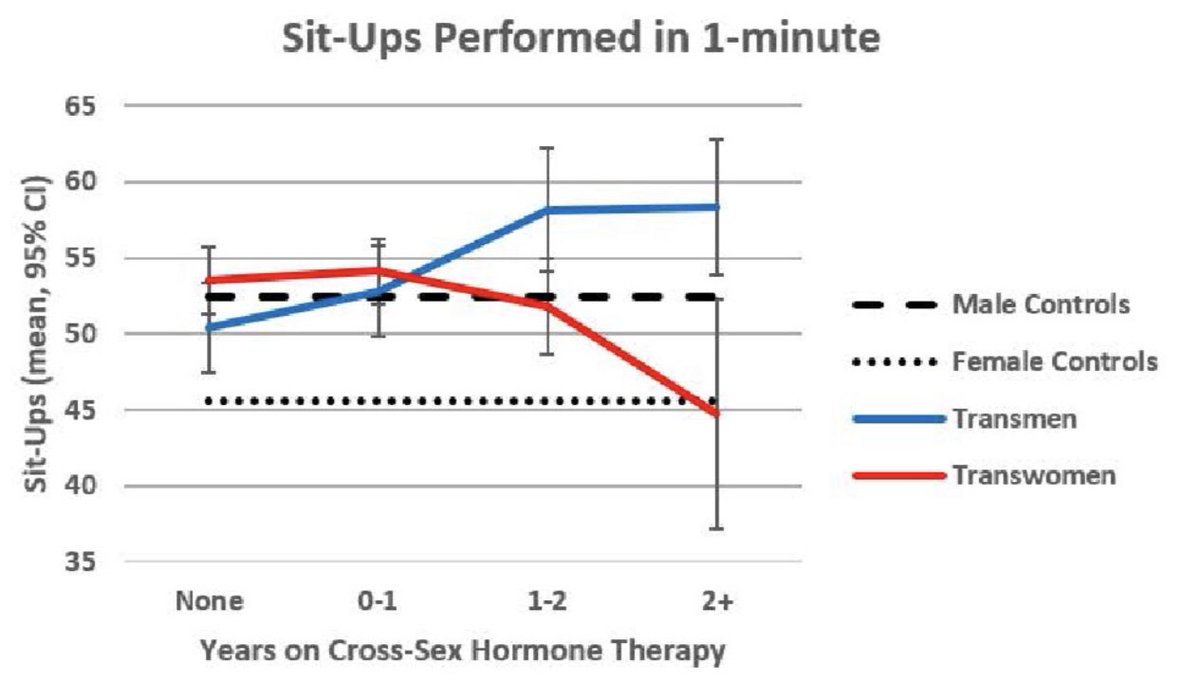
TW were equivalent to CM pre-treatment and to 2 yrs of transition. The authors argue that there is no clear aversion to abdominal training and its effect on body shape.
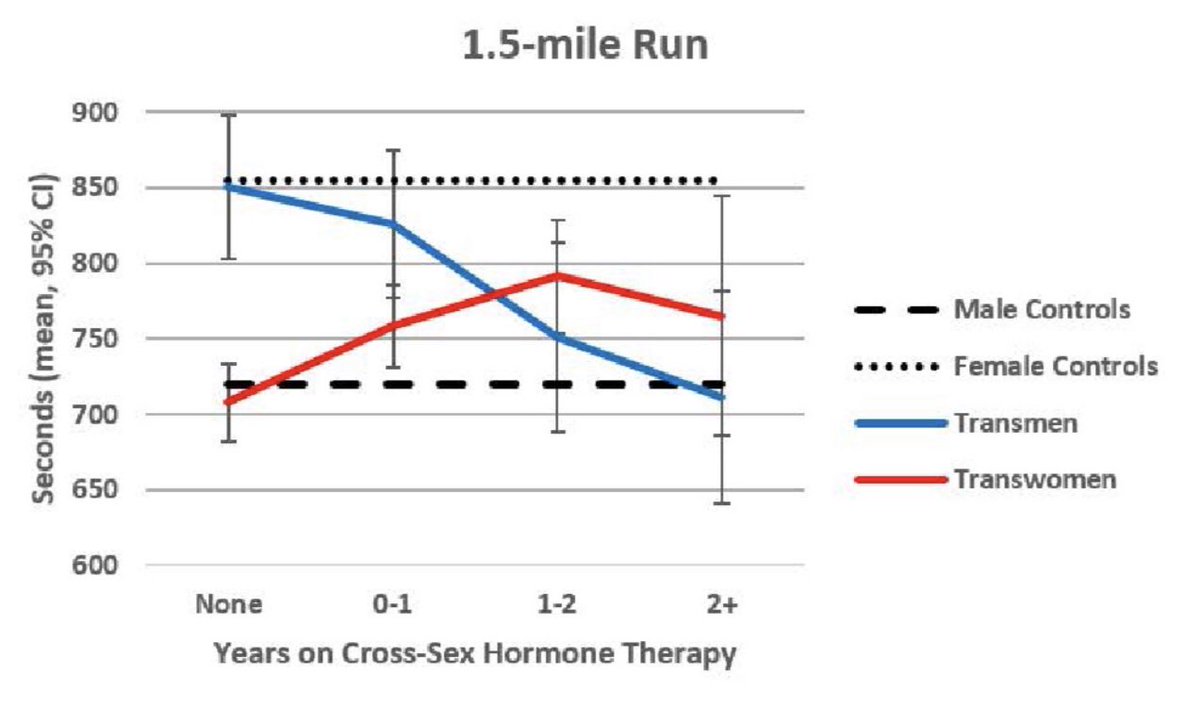
This is where it gets really interesting. While TW clearly lose speed from baseline, they appear to recover some speed after 2yrs.
Note: ‘weak’ is relative. These females are pretty hardcore :)
The push-up/sit-up data are interesting. These fitness tests come with targets that must be reached and the targets are different for males and females. My first question is therefore: after 2 yrs of transition, are TW are being set female targets?
Is it possible the apparent sharp drop off in performance is actually an artifact of the test conditions?
Are CM not bothering more than necessary, while TM go the extra mile? The authors also speculate that, again for aesthetic reasons, TM may train - hard - and thus, genuinely outperform CM. I’m not convinced.
Could be mirrored in TM?
1. TW are genuinely losing all their muscular endurance advantage after 2 yrs, in which case the running data shows it is impossible to undo the benefits of a male skeleton.
I’d argue that, when viewed as part of the ever-increasing body of knowledge, there is a retained strength advantage *and* unaltered skeletal advantage.
Thus, this study presents far more robust running data than that of Harper 2015.
More from Emma Hilton
With Cathy's permission, I have converted the stats from this paper into graphic form.
Read on.
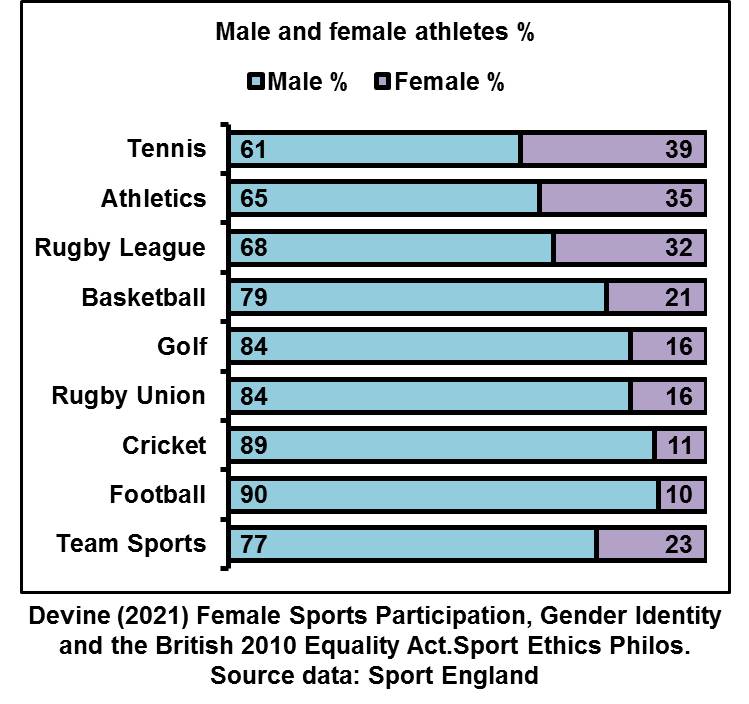
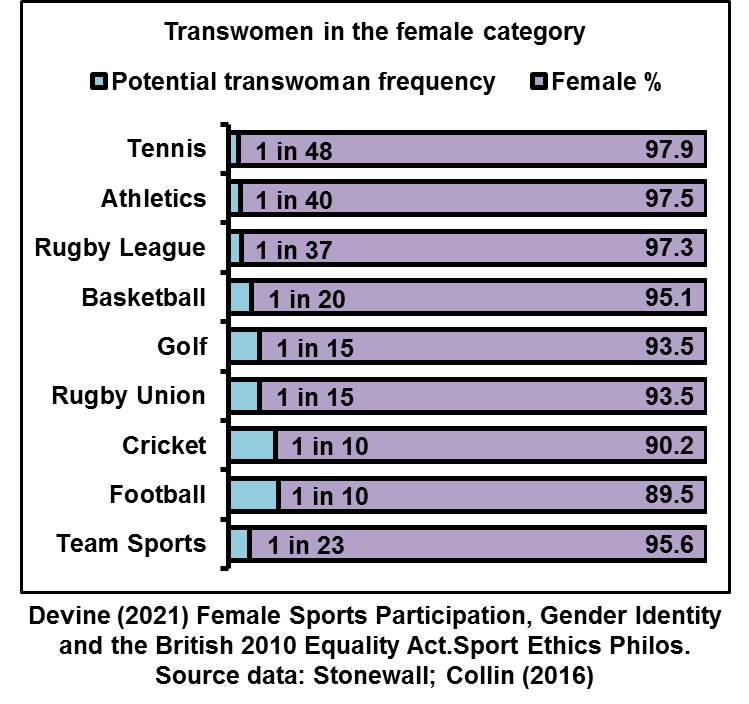
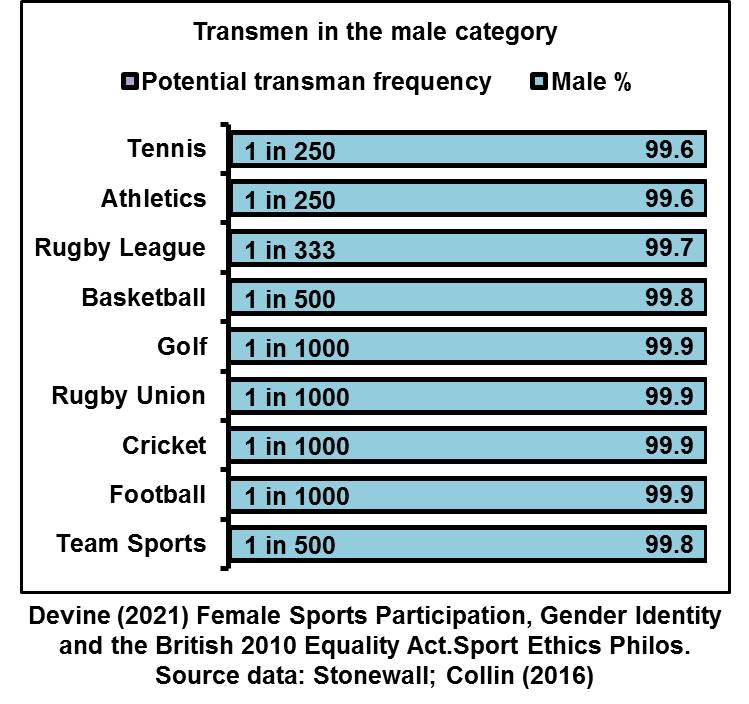
First, Cathy reported the numbers and % split of UK males and females playing selected sports. Male participation is higher than female participation.
Then, Cathy used population estimates to predict the numbers of male and female athletes who would be eligible, under a selfID model, for the opposite sex category. Cathy calculated these trans athletes as % of opposite sex category.
I have calculated the trans athletes as a frequency in the opposite sex category.
Here is the data for transwomen in female sports.
Here is the data for transmen in male sports.
Read on.
Delighted my research article Female Sports Participation, Gender Identity and the British 2010 Equality Act is now published in Sport Ethics and Philosophy. 1/https://t.co/wNPz2sd2WD
— Cathy Devine (@cathydevine56) November 9, 2021
First, Cathy reported the numbers and % split of UK males and females playing selected sports. Male participation is higher than female participation.
Then, Cathy used population estimates to predict the numbers of male and female athletes who would be eligible, under a selfID model, for the opposite sex category. Cathy calculated these trans athletes as % of opposite sex category.
I have calculated the trans athletes as a frequency in the opposite sex category.
Here is the data for transwomen in female sports.
Here is the data for transmen in male sports.
More from Transgender




You May Also Like




BREAKING: @CommonsCMS @DamianCollins just released previously sealed #Six4Three @Facebook documents:
Some random interesting tidbits:
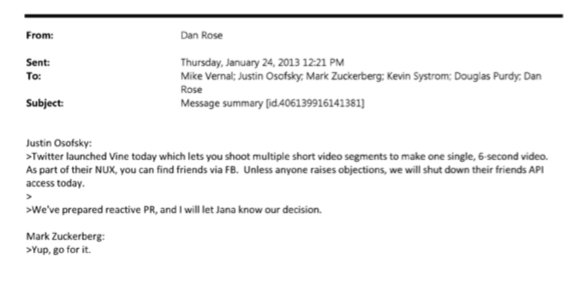
1) Zuck approves shutting down platform API access for Twitter's when Vine is released #competition
2) Facebook engineered ways to access user's call history w/o alerting users:
Team considered access to call history considered 'high PR risk' but 'growth team will charge ahead'. @Facebook created upgrade path to access data w/o subjecting users to Android permissions dialogue.
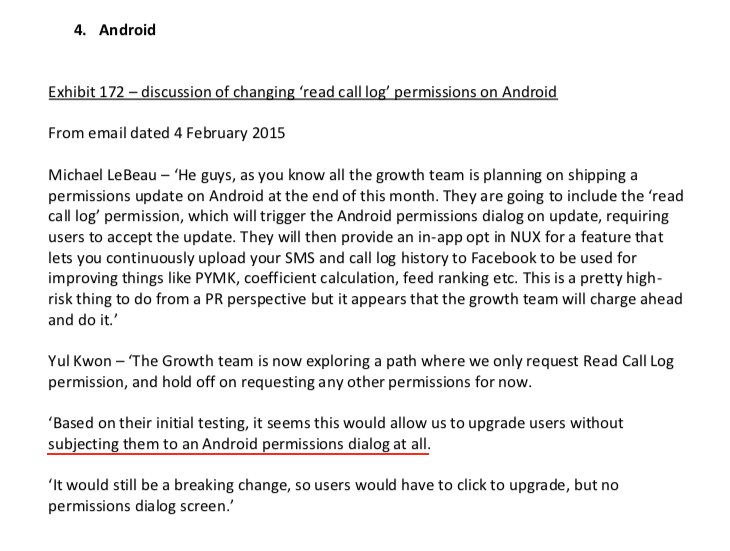
3) The above also confirms @kashhill and other's suspicion that call history was used to improve PYMK (People You May Know) suggestions and newsfeed rankings.
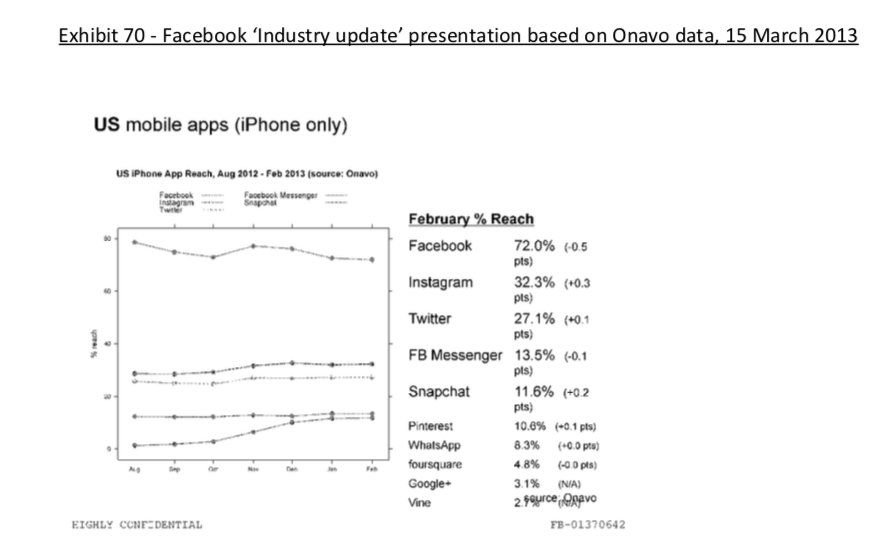
4) Docs also shed more light into @dseetharaman's story on @Facebook monitoring users' @Onavo VPN activity to determine what competitors to mimic or acquire in 2013.
https://t.co/PwiRIL3v9x
Some random interesting tidbits:
1) Zuck approves shutting down platform API access for Twitter's when Vine is released #competition
2) Facebook engineered ways to access user's call history w/o alerting users:
Team considered access to call history considered 'high PR risk' but 'growth team will charge ahead'. @Facebook created upgrade path to access data w/o subjecting users to Android permissions dialogue.
3) The above also confirms @kashhill and other's suspicion that call history was used to improve PYMK (People You May Know) suggestions and newsfeed rankings.
4) Docs also shed more light into @dseetharaman's story on @Facebook monitoring users' @Onavo VPN activity to determine what competitors to mimic or acquire in 2013.
https://t.co/PwiRIL3v9x

So the cryptocurrency industry has basically two products, one which is relatively benign and doesn't have product market fit, and one which is malignant and does. The industry has a weird superposition of understanding this fact and (strategically?) not understanding it.
The benign product is sovereign programmable money, which is historically a niche interest of folks with a relatively clustered set of beliefs about the state, the literary merit of Snow Crash, and the utility of gold to the modern economy.
This product has narrow appeal and, accordingly, is worth about as much as everything else on a 486 sitting in someone's basement is worth.
The other product is investment scams, which have approximately the best product market fit of anything produced by humans. In no age, in no country, in no city, at no level of sophistication do people consistently say "Actually I would prefer not to get money for nothing."
This product needs the exchanges like they need oxygen, because the value of it is directly tied to having payment rails to move real currency into the ecosystem and some jurisdictional and regulatory legerdemain to stay one step ahead of the banhammer.
If everyone was holding bitcoin on the old x86 in their parents basement, we would be finding a price bottom. The problem is the risk is all pooled at a few brokerages and a network of rotten exchanges with counter party risk that makes AIG circa 2008 look like a good credit.
— Greg Wester (@gwestr) November 25, 2018
The benign product is sovereign programmable money, which is historically a niche interest of folks with a relatively clustered set of beliefs about the state, the literary merit of Snow Crash, and the utility of gold to the modern economy.
This product has narrow appeal and, accordingly, is worth about as much as everything else on a 486 sitting in someone's basement is worth.
The other product is investment scams, which have approximately the best product market fit of anything produced by humans. In no age, in no country, in no city, at no level of sophistication do people consistently say "Actually I would prefer not to get money for nothing."
This product needs the exchanges like they need oxygen, because the value of it is directly tied to having payment rails to move real currency into the ecosystem and some jurisdictional and regulatory legerdemain to stay one step ahead of the banhammer.