He was a mathematician, physicist, astronomer, theologian, and author.
Isaac Newton: A brilliant scientist, a terrible investor
How Issac Newton lost $4 million due to the first stock market bubble in history and insider trading
/THREAD/

He was a mathematician, physicist, astronomer, theologian, and author.
However, his most prominent failure was losing an entire fortune in the first stock market bubble in history, the South Sea Company in 1720.

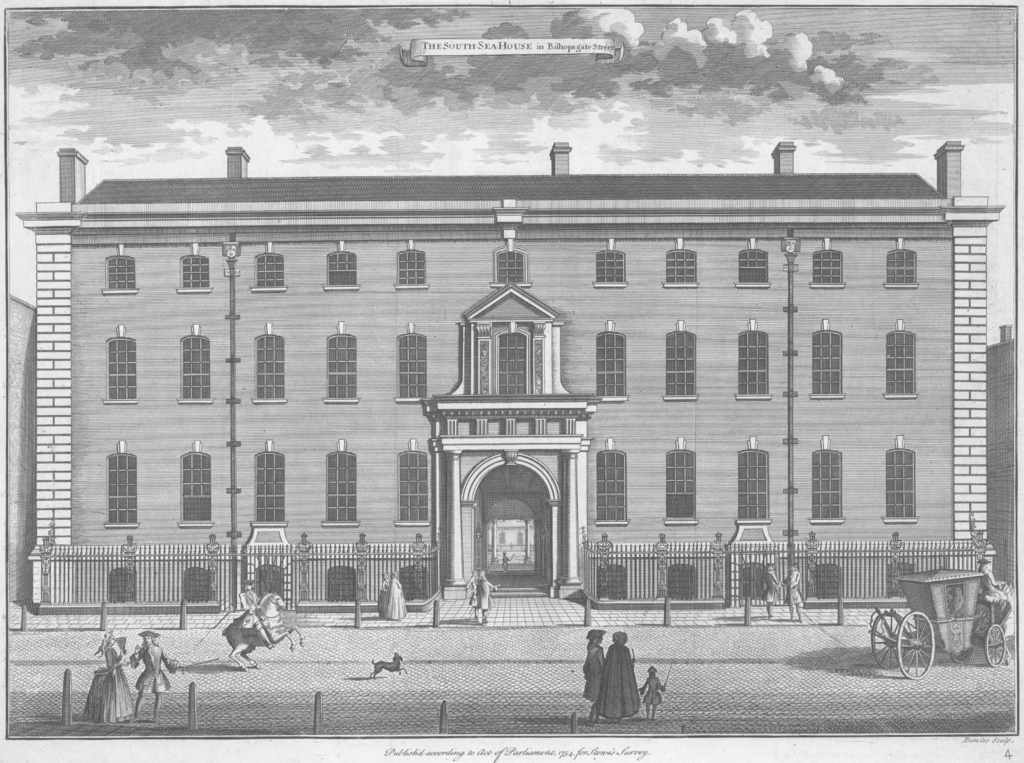
Before 1720 most of his investments were in safe and reliable securities, various government bonds that delivered a regular stream of income, and shares in a few of the larger companies on the exchange, including South Sea Co.
Government bondholders were given the option to exchange their securities into South Sea Co. shares.

However, the potential for dividend increases and sizable capital gains was created when Parliament gave the company a monopoly on trade with Spain’s colonies in South America.

It required all companies that sold stock to the public to hold a royal charter aiming to control rampant speculation.
A well-bribed Parliament and ruling ministry accepted the idea in February, and the deal became official in April.

Over the next eight years, he picked up more shares, using his savings and the proceeds from selling his shares in other companies.
In 1720, he converted his government bonds and annuities into the stock.
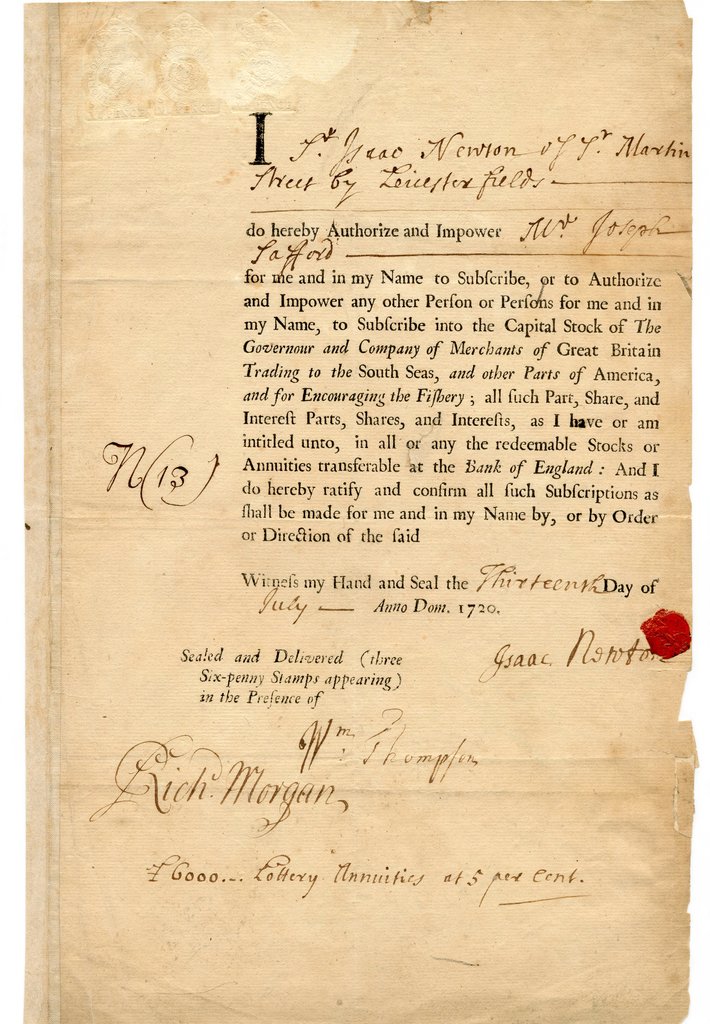
At this point, Newton unloaded most of his shares for a profit of more than £20,000 equal to 200 years of his former annual salary as a professor at the University of Cambridge.

This was amplified by the hundreds of newspapers in London posting glowing articles from esteemed authors, along with rumors about South American commodities that would be imported back to Europe.
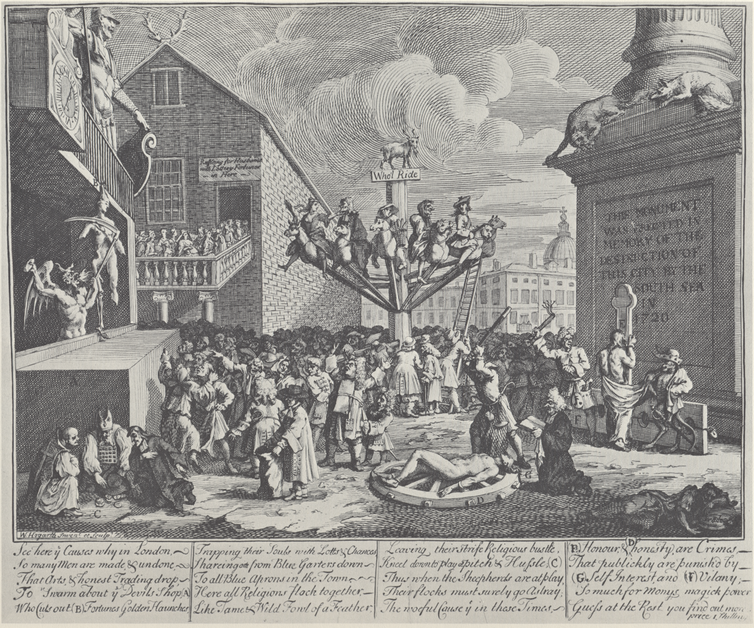
The stock was also made easier to buy through installment plans with 10% downpayments.
With England in a euphoric mood, watching from the sidelines was hard to do.
By mid-June, Newton could no longer stand the thought of the money he’d “lost” by selling too soon and began to buy back in.
By mid-August, he was paying £700 to £1,000 a share, more than double the price he’d sold in April.
In the summer, news broke that insiders were selling.
The stock began to tumble and within a few weeks, plunged back to the £200 level.
So ended the infamous South Sea Bubble.
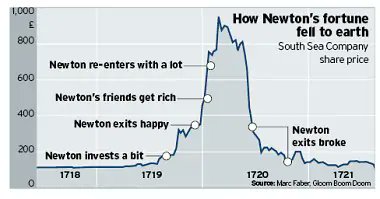
Newton’s losses were catastrophic, likely £20,000, the equivalent of $4 million today.
1720 was sometimes referred to as the “Bubble Year”

He allegedly forbade everyone from uttering the words "South Sea" in his presence.
/END/
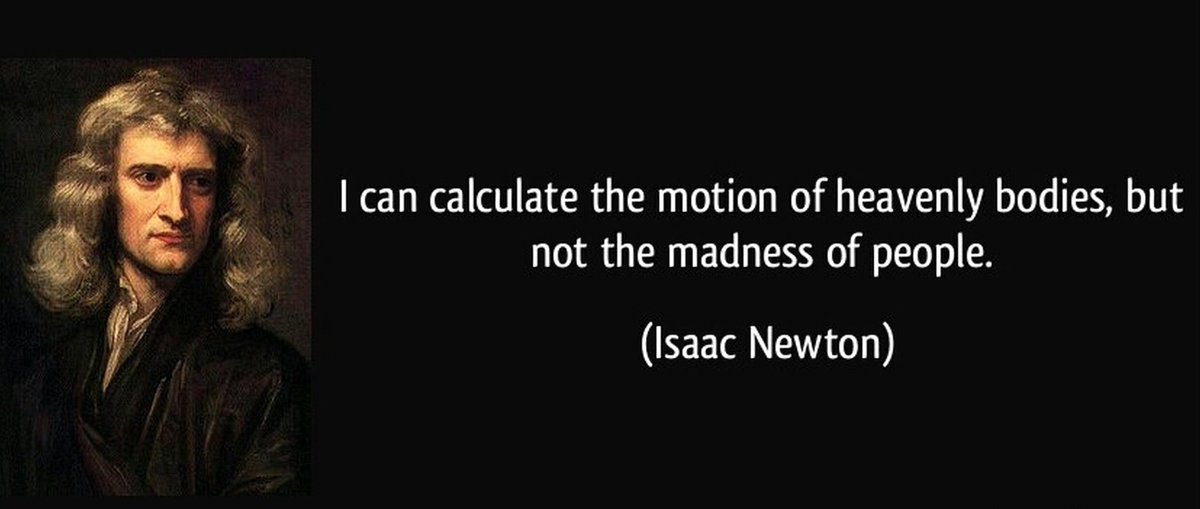
👇👇👇
https://t.co/ggB2vFv9Ha
Isaac Newton: A brilliant scientist, a terrible investor
— Kostas Kosmidis \U0001f468\u200d\U0001f4bc \U0001f4c8 \U0001f4b8 (@itsKostasWithK) January 10, 2021
How Issac Newton lost $4 million due to the first stock market bubble in history and insider trading
/THREAD/ pic.twitter.com/uCU0zDVyw9
More from Kostas Kosmidis 👨💼 📈 💸



If you want to become financially independent and don't know where to start, here is a thread that will help you get started
/THREAD/
1. Review your expenses and make a budget
It will help you see where you overspend, make a plan to save, pay down debt and start
2. Set your investing and retirement goals
How much do you need to support yourself in retirement and when do you want to
3. The earlier you start investing, the better.
Here's why and how time and compounding can become your
4. Invest in an index fund
It's easy, safe, cheap, and the best choice for a beginner in investing, with not much time for
/THREAD/
1. Review your expenses and make a budget
It will help you see where you overspend, make a plan to save, pay down debt and start
Budgeting, the 50-30-20 rule, and the envelope method
— Kostas \U0001f468\u200d\U0001f4bc \U0001f4c8 \U0001f4b8 (@itsKostasWithK) January 6, 2021
Your first step towards financial independence
/THREAD/ pic.twitter.com/Tmuc3Itca5
2. Set your investing and retirement goals
How much do you need to support yourself in retirement and when do you want to
The most important number for your retirement: The 4% rule
— Kostas \U0001f468\u200d\U0001f4bc \U0001f4c8 \U0001f4b8 (@itsKostasWithK) January 7, 2021
What Is the Four Percent Rule?
/THREAD/ pic.twitter.com/8n1R1UZI5c
3. The earlier you start investing, the better.
Here's why and how time and compounding can become your
The Miracle of Compound Interest and the Rule of 72
— Kostas \U0001f468\u200d\U0001f4bc \U0001f4c8 \U0001f4b8 (@itsKostasWithK) January 2, 2021
//THREAD// pic.twitter.com/AOqd3kL6cn
4. Invest in an index fund
It's easy, safe, cheap, and the best choice for a beginner in investing, with not much time for
Jack Bogle, the Father of Indexing
— Kostas \U0001f468\u200d\U0001f4bc \U0001f4c8 \U0001f4b8 (@itsKostasWithK) January 8, 2021
How John "Jack" Bogle's creation impacted investors more than Bill Gates, Steve Jobs, and Warren Buffett combined
/THREAD/ pic.twitter.com/4wPi8x3cXn




More from Trading





You May Also Like

To people who are under the impression that you can get rich quickly by working on an app, here are the stats for https://t.co/az8F12pf02
📈 ~12000 vistis
☑️ 109 transactions
💰 353€ profit (285 after tax)
I have spent 1.5 months on this app. You can make more $ in 2 days.
🤷♂️

I'm still happy that I launched a paid app bcs it involved extra work:
- backend for processing payments (+ permissions, webhooks, etc)
- integration with payment processor
- UI for license activation in Electron
- machine activation limit
- autoupdates
- mailgun emails
etc.
These things seemed super scary at first. I always thought it was way too much work and something would break. But I'm glad I persisted. So far the only problem I have is that mailgun is not delivering the license keys to certain domains like https://t.co/6Bqn0FUYXo etc. 👌
omg I just realized that me . com is an Apple domain, of course something wouldn't work with these dicks
📈 ~12000 vistis
☑️ 109 transactions
💰 353€ profit (285 after tax)
I have spent 1.5 months on this app. You can make more $ in 2 days.
🤷♂️
I'm still happy that I launched a paid app bcs it involved extra work:
- backend for processing payments (+ permissions, webhooks, etc)
- integration with payment processor
- UI for license activation in Electron
- machine activation limit
- autoupdates
- mailgun emails
etc.
These things seemed super scary at first. I always thought it was way too much work and something would break. But I'm glad I persisted. So far the only problem I have is that mailgun is not delivering the license keys to certain domains like https://t.co/6Bqn0FUYXo etc. 👌
omg I just realized that me . com is an Apple domain, of course something wouldn't work with these dicks