Your results as a trader/investor boil down to three statistics
Average Gain - Average % gain on winning Trades
Average Loss -Average % gain on losing Trades
Batting Average - % of trades that are gains
Like in baseball, you can find incredible success in the stock market winning only a handful of times out of ten. In fact a system that is profitable or break even with only a 30-50% BA is more robust and consistent
To establish such as system you need to manage the risk reward relationship (Average gain/Average Loss) so that you can survive winning only 30% of the time.
(I promise this is getting to optimal buy points shortly)
You should shoot for at least a 2:1 gain/loss ratio. 3:1 is even better.
With a 2:1 ratio you can loss 2/3 of the time and break even. With a 3:1 ratio you can lose 75% of the time
So how do you get a 2:1 or 3:1 ratio. Well follow these two rules as well as you can.
If you have a gain and your stock is above the 21ema and 50 sma, ride the trend as long as it stays that way.
After you start of position, never take more than a 7% loss ( I shoot for < 5%)
There are also more complex methods such as starting with half positions and ONLY adding as the stock proves it's worthy of your money and continues to gain for you.
Position sizing is a powerful tool. Add to your best stocks that are making gains. Take money from your losers.
But the most important thing is to keep your loses as small as possible relative to your gains.
Read that again.
But the most important thing is to keep your loses as small as possible relative to your gains.
So the best possible entry point is one that presents the best r/r ratio- where you know quickly whether you were wrong.
Cut your loses when the setup fails to meet your expectations
Optimal Entry 1: Breakout from consolidation (Base)
Can be used to start Swing/Position/Investments
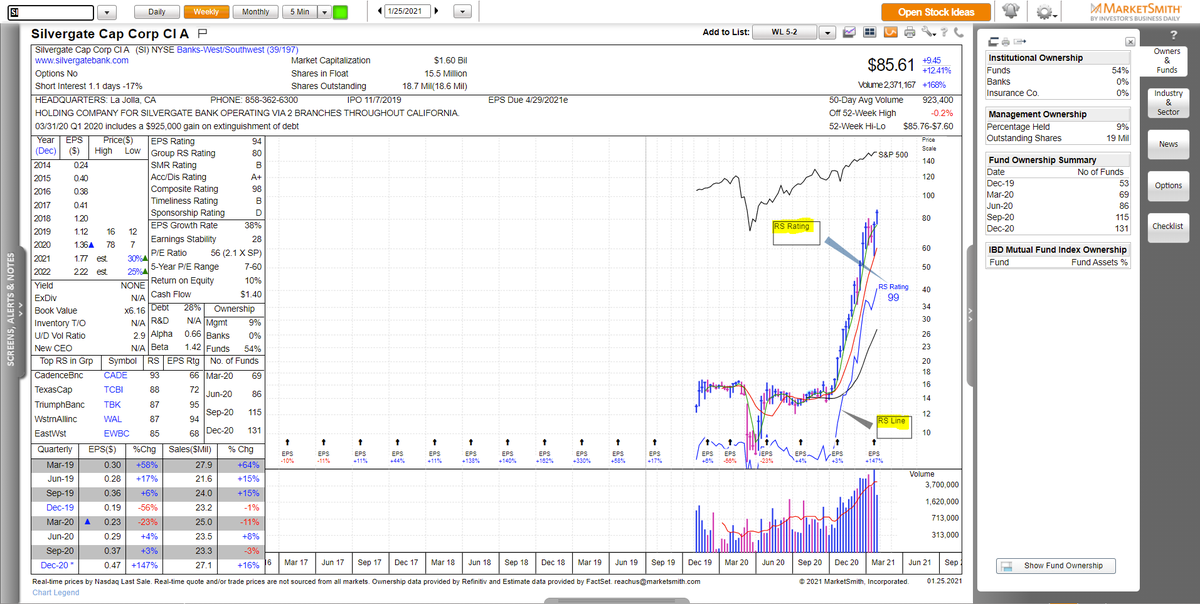
A Breakout should be on huge volume showing institutional support. The best ones never revisit the pivot /the line of resistance
Stop: Low of breakout day/ < 7% below pivot
Don't chase more than 3% above the proper pivot point. Many breakouts pullback intraday or the next day as short term holders take profits and their selling is absorbed.
Again the strongest breakouts move up on volume many days after the first breakout
Not all breakouts are the same, The tighter the base, the longer term it is, the more volume comes in on the breakout the better.
It also depends what stage base it is. Stage 1 and Stage 2 bases are less likely to fail (Stages early in the long term trend or after a correction
Optimal Entry 2 ( Pullbacks to Moving Averages ) I like the 21 ema and 50sma/10week
Good to start swing trades/ add to position/investments
Stop: right below Moving average
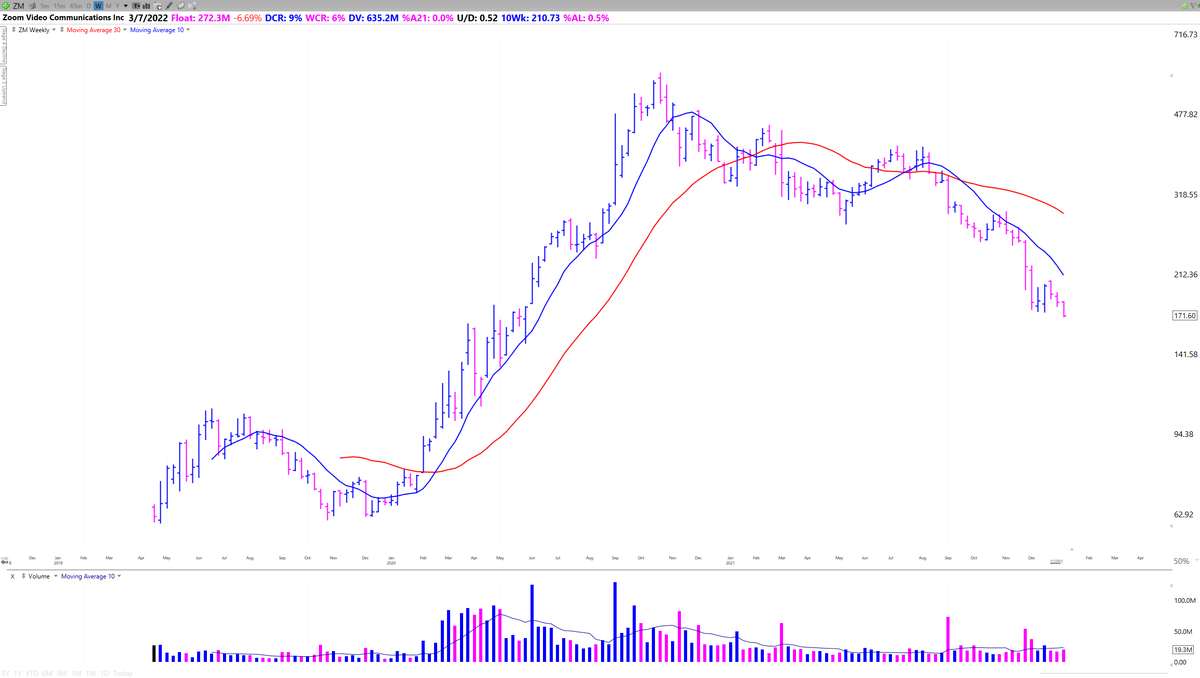
During a stocks run from a base it will get "extended" as enough short term holders decide to take profits and so the stock price will pullback somewhat.
For growth stocks, the 21 ema and 50 sma often are support areas where institutions step in and buy after a pullback.
These are "imaginary" lines but they can show the character of a stock. find a MA that the stock has found support at before and use that.
Look for:
Orderly pullbacks (lower volume over many days)
Upside reversals near the key moving averages
On a pullback buy I've found it works best for me to buy after the stock has already bounced. Don't catch falling knives because a pullback can turn into a correction very quickly especially with growth stocks
Additionally, like with base breakouts, the first few pullbacks during the uptrend have a higher chance of succeeding because the stock is less "extended" from its prior base. The first 2 are the best.
The more up volume on the bounce the better
I view extended in a few ways.
The 10.4 stochastic> 70 (the stocks price is near the top of the recent price action - bad for pullback buys okay for breakouts
% from prior base (Most stocks build bases as they increase. Stocks that are up > than 20-25% from a prior base ....
without a pause are extended and buying there is very risky due increased chances of a pullback. Just wait for the pullback or "shelf"
% above Key moving averages ( rule of thumbs 100% from 200sma, 25% from 50 sma, 10% from 21ema.... again increased risk of correction/base
Optimal Entry 3 ( Short flat shelf )
Good to start swing trades/ add to position/investments
The breakout above the pivot of this shelf or a break of the declining trend line from highs in the shelf presents a good r/r. Set your stop below the low of the breakout day/ week low
Like with pullbacks the first shelf after a base breakout is the highest probability setup.
You can build up your position by buying as the stock overcomes pivots within the shelf.
Optimal Entry 4 ( pullback to breakout pivot/ longterm support line )
Good to start swing trades/ add to position/investments
stop below below strong support/pivot or < 5% stop loss
Most breakouts pullback and since breakouts often happen very quickly they are often missed. A pullback to the pivot can provide a better r/r entry than the first breakout.
The pullback should be orderly and on less volume than the breakout.
The stock price should be moving up from the pivot when you buy.
For prior longterm support pullbacks ( the tops of prior bases or green lines)
you also want to see an orderly pullback and then a bounce on higher volume from the logical support level.
Personally I try to avoid starting a new position on a breakout. Many pullback at least initially and I want to be at a profit as soon as possible
So I try to find early entries such as Declining trendline breaks, upside reversals, 21 ema retakes within the base/shelf to start building my position
Psychologically adding on the true breakout after already having 2/3 of or even a full position in profit is much easier for me
But back to the main point of this thread.
The key is to have a setup that shows up again in again that provides a good risk reward opportunity meaning that you know within a 5% loss if the setup has worked or not. If you can do it with a 3% loss or even 1% that is even better
And for all of these setups. They work best when a stock is a disruptor with accelerating margins, earnings, sales and is changing how we work, live, play. And they work best...
When the stock is in an overall uptrend (above an increasing 200 sma) and the market itself is in a strong uptrend ( above an increasing 200 sma and 21 ema)
Align all the timeframes in your favor, focus on the highest quality growth stocks, keep your loses small and you will succeed and improve over time.
You. can. do. it
And to finish off the thread a quick plug for my youtube channel. Each week I try to help teach my personal process and discuss the best setups. I also interview top traders to learn from them and their methods.
Like and subscribe 😃
https://t.co/TajDTgTCGU