
Facebook may well be exceptionally nasty and it’s leadership particularly deceitful, but the whole enterprise is the natural conclusion to an ad-powered social network. Ever greater surveillance, hyper targeting, and engagement baiting is what the basic incentives demand.
More from Tech


Ok, I’ve told this story a few times, but maybe never here. Here we go. 🧵👇
I was about 6. I was in the car with my mother. We were driving a few hours from home to go to Orlando. My parents were letting me audition for a tv show. It would end up being my first job. I was very excited. But, in the meantime we drove and listened to Rush’s show.
There was some sort of trivia question they posed to the audience. I don’t remember what the riddle was, but I remember I knew the answer right away. It was phrased in this way that was somehow just simpler to see from a kid’s perspective. The answer was CAROUSEL. I was elated.
My mother was THRILLED. She insisted that we call Into the show using her “for emergencies only” giant cell phone. It was this phone:
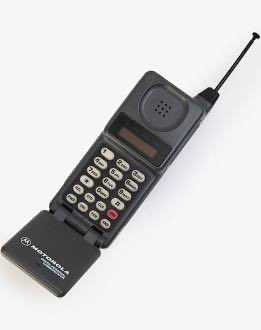
I called in. The phone rang for a while, but someone answered. It was an impatient-sounding dude. The screener. I said I had the trivia answer. He wasn’t charmed, I could hear him rolling his eyes. He asked me what it was. I told him. “Please hold.”
Wish I had the audio of Rush Limbaugh telling me off on the phone on his show when I was six. In the meantime, RIP.
— Shannon Woodward (@shannonwoodward) February 17, 2021
I was about 6. I was in the car with my mother. We were driving a few hours from home to go to Orlando. My parents were letting me audition for a tv show. It would end up being my first job. I was very excited. But, in the meantime we drove and listened to Rush’s show.
There was some sort of trivia question they posed to the audience. I don’t remember what the riddle was, but I remember I knew the answer right away. It was phrased in this way that was somehow just simpler to see from a kid’s perspective. The answer was CAROUSEL. I was elated.
My mother was THRILLED. She insisted that we call Into the show using her “for emergencies only” giant cell phone. It was this phone:
I called in. The phone rang for a while, but someone answered. It was an impatient-sounding dude. The screener. I said I had the trivia answer. He wasn’t charmed, I could hear him rolling his eyes. He asked me what it was. I told him. “Please hold.”

Machine translation can be a wonderful translation tool, but its uses are widely misunderstood.
Let's talk about Google Translate, its current state in the professional translation industry, and why robots are terrible at interpreting culture and context.
Straight to the point: machine translation (MT) is an incredibly helpful tool for translation! But just like any tool, there are specific times and places for it.
You wouldn't use a jackhammer to nail a painting to the wall.
Two factors are at play when determining how useful MT is: language pair and context.
Certain language pairs are better suited for MT. Typically, the more similar the grammar structure, the better the MT will be. Think Spanish <> Portuguese vs. Spanish <> Japanese.
No two MT engines are the same, though! Check out how human professionals ranked their choice of MT engine in a Phrase survey:
https://t.co/yiVPmHnjKv

When it comes to context, the first thing to look at is the type of text you want to translate. Typically, the more technical and straightforward the text, the better a machine will be at working on it.
Let's talk about Google Translate, its current state in the professional translation industry, and why robots are terrible at interpreting culture and context.
Straight to the point: machine translation (MT) is an incredibly helpful tool for translation! But just like any tool, there are specific times and places for it.
You wouldn't use a jackhammer to nail a painting to the wall.
Two factors are at play when determining how useful MT is: language pair and context.
Certain language pairs are better suited for MT. Typically, the more similar the grammar structure, the better the MT will be. Think Spanish <> Portuguese vs. Spanish <> Japanese.
No two MT engines are the same, though! Check out how human professionals ranked their choice of MT engine in a Phrase survey:
https://t.co/yiVPmHnjKv
When it comes to context, the first thing to look at is the type of text you want to translate. Typically, the more technical and straightforward the text, the better a machine will be at working on it.
You May Also Like


1/ Here’s a list of conversational frameworks I’ve picked up that have been helpful.
Please add your own.
2/ The Magic Question: "What would need to be true for you
3/ On evaluating where someone’s head is at regarding a topic they are being wishy-washy about or delaying.
“Gun to the head—what would you decide now?”
“Fast forward 6 months after your sabbatical--how would you decide: what criteria is most important to you?”
4/ Other Q’s re: decisions:
“Putting aside a list of pros/cons, what’s the *one* reason you’re doing this?” “Why is that the most important reason?”
“What’s end-game here?”
“What does success look like in a world where you pick that path?”
5/ When listening, after empathizing, and wanting to help them make their own decisions without imposing your world view:
“What would the best version of yourself do”?
Please add your own.
2/ The Magic Question: "What would need to be true for you
1/\u201cWhat would need to be true for you to\u2026.X\u201d
— Erik Torenberg (@eriktorenberg) December 4, 2018
Why is this the most powerful question you can ask when attempting to reach an agreement with another human being or organization?
A thread, co-written by @deanmbrody: https://t.co/Yo6jHbSit9
3/ On evaluating where someone’s head is at regarding a topic they are being wishy-washy about or delaying.
“Gun to the head—what would you decide now?”
“Fast forward 6 months after your sabbatical--how would you decide: what criteria is most important to you?”
4/ Other Q’s re: decisions:
“Putting aside a list of pros/cons, what’s the *one* reason you’re doing this?” “Why is that the most important reason?”
“What’s end-game here?”
“What does success look like in a world where you pick that path?”
5/ When listening, after empathizing, and wanting to help them make their own decisions without imposing your world view:
“What would the best version of yourself do”?
