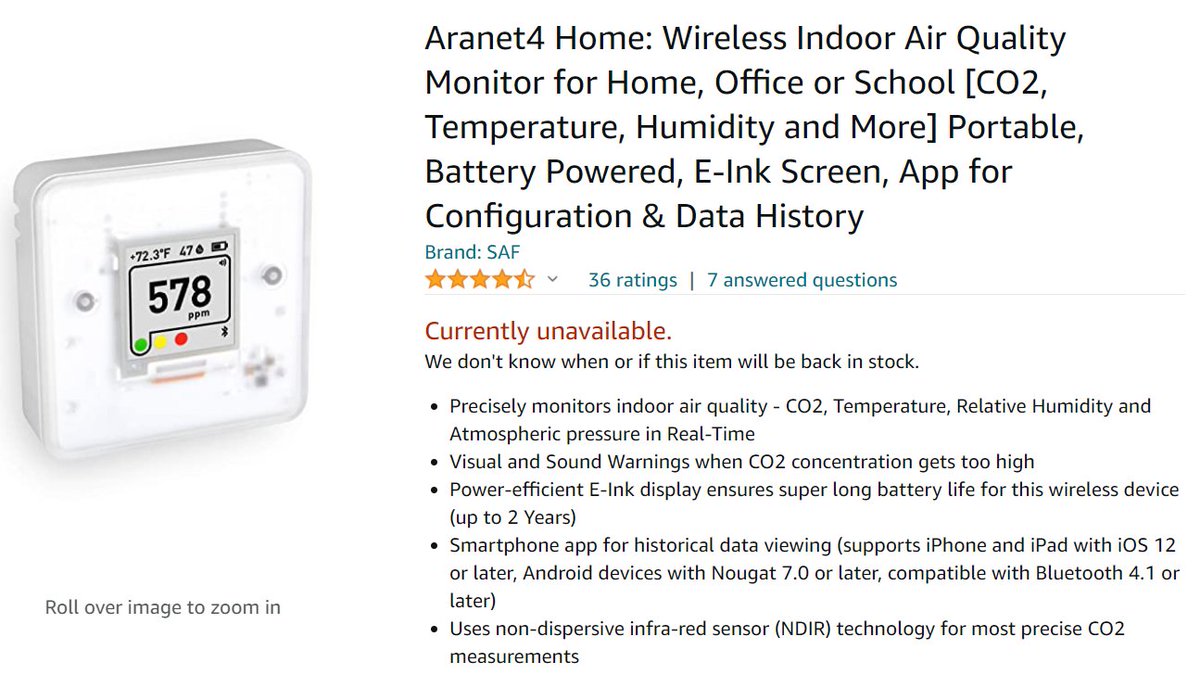
I recently bought one of these air quality monitors and got to take it out for some measurements!

I'll share some findings in this thread.

CCing @CO2Guerrillas here, in case they would like to share.

A very quick intro:

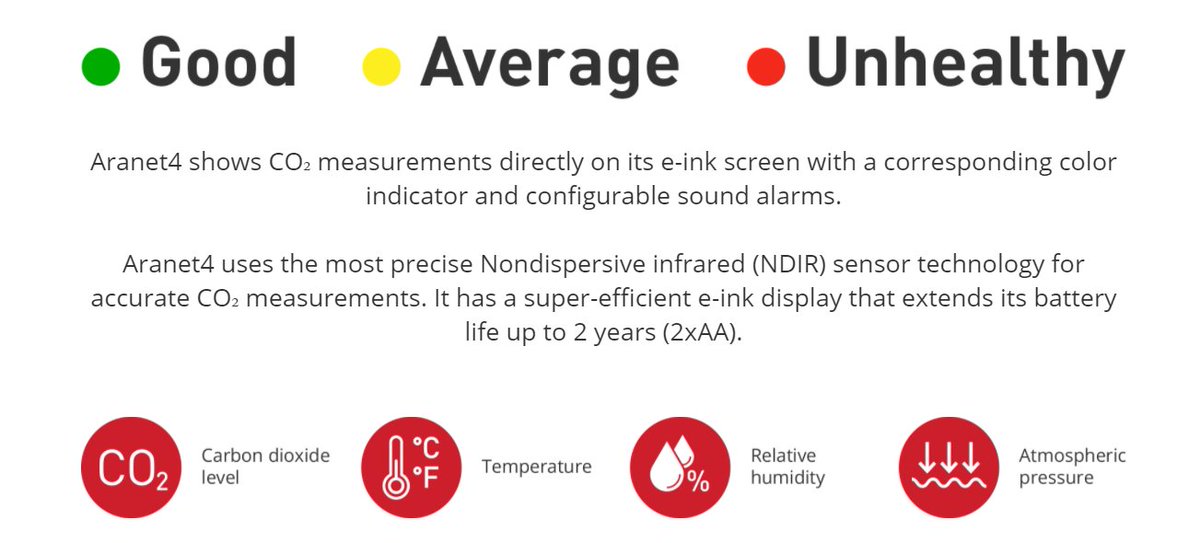
This device measures:

-CO2 concentration
-relative humidity
-atmospheric pressure
-temperature

I spent ~$200 on Amazon. It pairs with your phone and you can watch data come in every minute or so.

https://t.co/aoXjyq8kdu
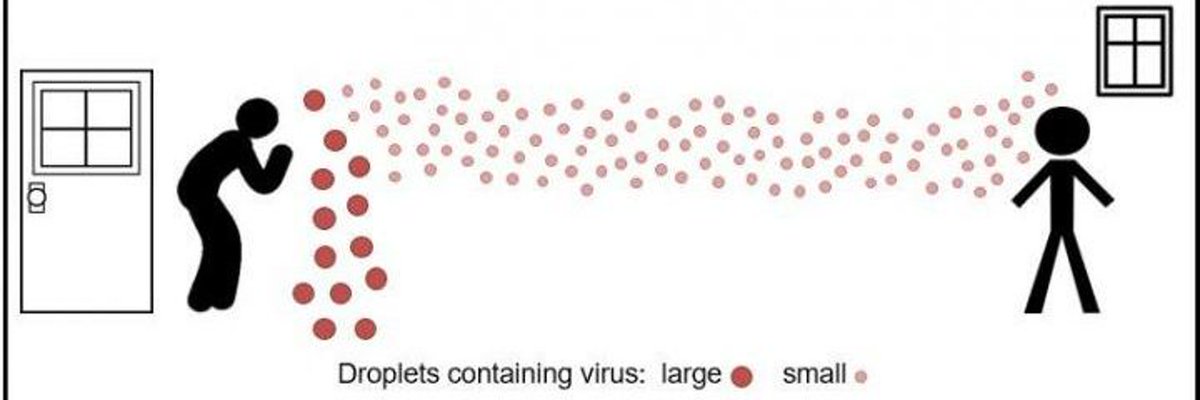
A lot of covid transmission is airborne. So, having clean air is a must for reducing transmission.

A great way to see how much clean air you are getting is to measure CO2 concentration.

Too high -> you could use more ventilation -> open some windows!
So, I walked around town and took some measurements.

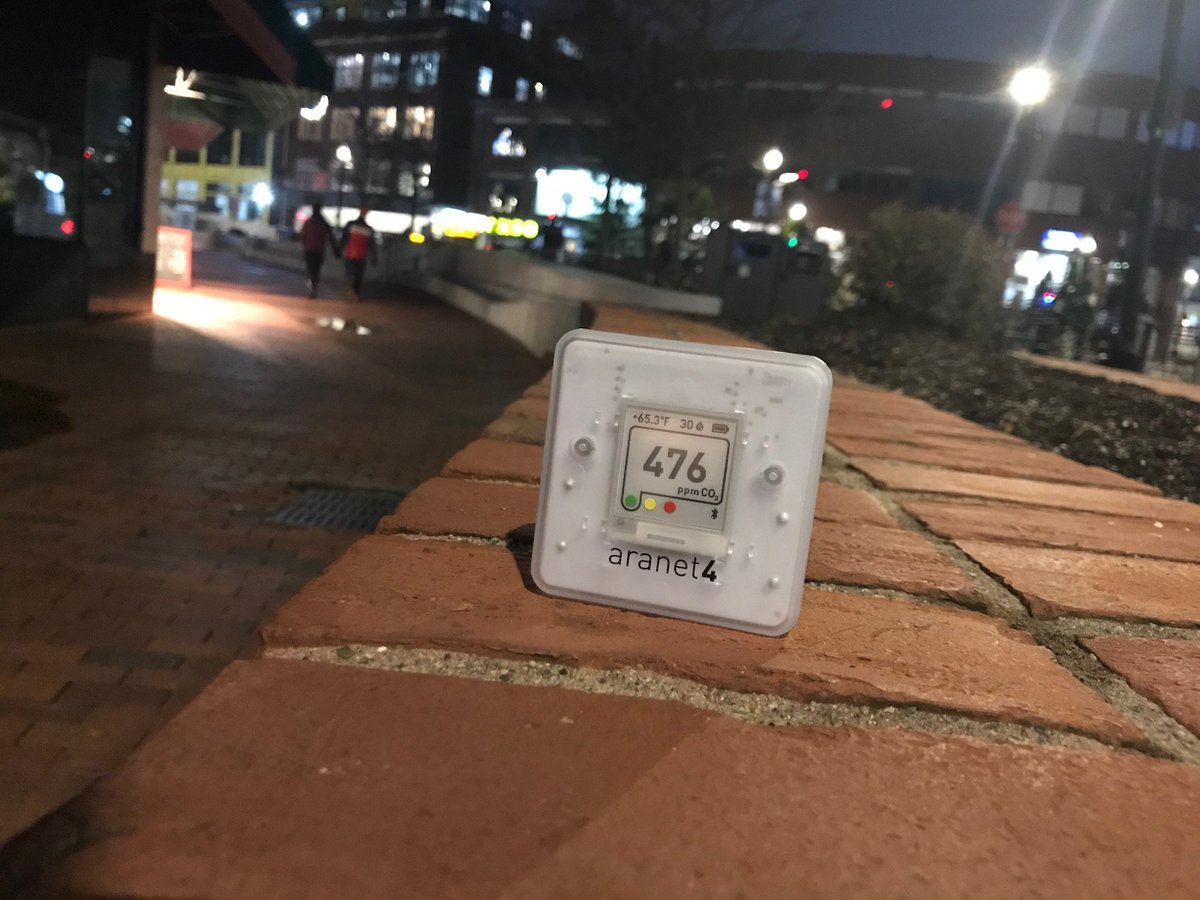
Outdoor CO2 concentration should be about 400 ppm. I haven't calibrated my device yet, so I measured ~470. Close enough.

<800 is good for indoors. Something like 2000 is very bad.

https://t.co/oZAkVnr9ts
For a reference: inside my apartment I quickly get ~1000 ppm if I don't have windows open. Maybe ~1500 if things get bad.

If I crack some windows, even just barely, it gets down to ~600 ppm very quickly, and my heater can keep the apartment ~70 F no problem.
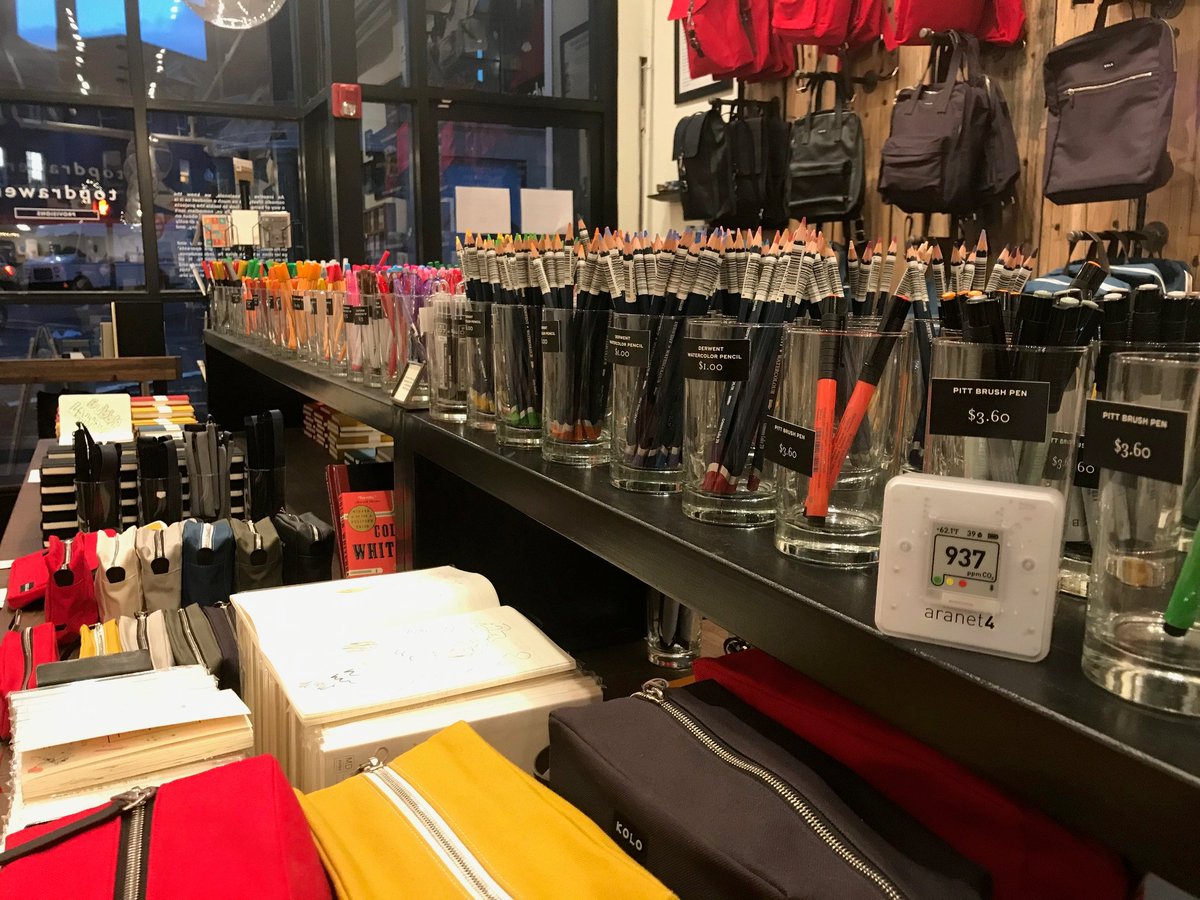
First stop: a small shop in Harvard Square. It is about 60 ft long, 20 ft wide, and usually has ~3 people in there.

CO2: 937 ppm.

Not great, not horrible. Surprisingly (to me), this place had the highest CO2 on my trip. It did have a purifier, which was nice.
Next stop: a very similar store, but it has less business and only ~1 person in there most of the time.

~700 ppm. Still good.
Plant shop around the corner, which was a bit larger in size, maybe 2-3x, but also maybe ~4 people in there on average.

650 ppm. Not bad!

Fun fact: this shop is 103 years old now.
Next stop was interesting: a paper store that was split into two completely separate rooms. Both the same size, and both had ~2 people in there. One had the AC blasting, the other had it off.

Basically the same results in both: 650-700 ppm
Next stop, a 2-floor CVS which is usually pretty busy. Picked a spot near the center of the store:

620 ppm. Still not bad!

The doors open often, and the AC was on.
Next stop was the Harvard bookstore.

560 ppm.

Very nice! Especially since my device reads ~470 outside.

Took this sample in the essential ideology section.
I was skeptical about the low values, so I went to another section (science books now).

520. Still good!

The whole store had their AC up very high. I could see many of the signs shaking due to airflow inside. I assume they were piping in outdoor air.
Overall, I was impressed with most places! I expected worse, but I also didn't go into any of the more dangerous areas, like restaurants (we still have indoor dining in Boston).
A side note: CO2 concentration is just a proxy for air quality. Not perfect, and many other things matter too.

Follow these people instead of me to get some real science:

@kprather88 @jljcolorado @ShellyMBoulder @CO2Guerrillas @jksmith34

More from Tech

A brief analysis and comparison of the CSS for Twitter's PWA vs Twitter's legacy desktop website. The difference is dramatic and I'll touch on some reasons why.

Legacy site *downloads* ~630 KB CSS per theme and writing direction.

6,769 rules
9,252 selectors
16.7k declarations
3,370 unique declarations
44 media queries
36 unique colors
50 unique background colors
46 unique font sizes
39 unique z-indices

https://t.co/qyl4Bt1i5x


PWA *incrementally generates* ~30 KB CSS that handles all themes and writing directions.

735 rules
740 selectors
757 declarations
730 unique declarations
0 media queries
11 unique colors
32 unique background colors
15 unique font sizes
7 unique z-indices

https://t.co/w7oNG5KUkJ


The legacy site's CSS is what happens when hundreds of people directly write CSS over many years. Specificity wars, redundancy, a house of cards that can't be fixed. The result is extremely inefficient and error-prone styling that punishes users and developers.

The PWA's CSS is generated on-demand by a JS framework that manages styles and outputs "atomic CSS". The framework can enforce strict constraints and perform optimisations, which is why the CSS is so much smaller and safer. Style conflicts and unbounded CSS growth are avoided.
The entire discussion around Facebook’s disclosures of what happened in 2016 is very frustrating. No exec stopped any investigations, but there were a lot of heated discussions about what to publish and when.


In the spring and summer of 2016, as reported by the Times, activity we traced to GRU was reported to the FBI. This was the standard model of interaction companies used for nation-state attacks against likely US targeted.

In the Spring of 2017, after a deep dive into the Fake News phenomena, the security team wanted to publish an update that covered what we had learned. At this point, we didn’t have any advertising content or the big IRA cluster, but we did know about the GRU model.

This report when through dozens of edits as different equities were represented. I did not have any meetings with Sheryl on the paper, but I can’t speak to whether she was in the loop with my higher-ups.

In the end, the difficult question of attribution was settled by us pointing to the DNI report instead of saying Russia or GRU directly. In my pre-briefs with members of Congress, I made it clear that we believed this action was GRU.
There has been a lot of discussion about negative emissions technologies (NETs) lately. While we need to be skeptical of assumed planetary-scale engineering and wary of moral hazard, we also need much greater RD&D funding to keep our options open. A quick thread: 1/10

Energy system models love NETs, particularly for very rapid mitigation scenarios like 1.5C (where the alternative is zero global emissions by 2040)! More problematically, they also like tons of NETs in 2C scenarios where NETs are less essential.
https://t.co/M3ACyD4cv7 2/10


In model world the math is simple: very rapid mitigation is expensive today, particularly once you get outside the power sector, and technological advancement may make later NETs cheaper than near-term mitigation after a point. 3/10

This is, of course, problematic if the aim is to ensure that particular targets (such as well-below 2C) are met; betting that a "backstop" technology that does not exist today at any meaningful scale will save the day is a hell of a moral hazard. 4/10

Many models go completely overboard with CCS, seeing a future resurgence of coal and a large part of global primary energy occurring with carbon capture. For example, here is what the MESSAGE SSP2-1.9 scenario shows: 5/10

You May Also Like

These 10 threads will teach you more than reading 100 books

Five billionaires share their top lessons on startups, life and entrepreneurship (1/10)


10 competitive advantages that will trump talent (2/10)


Some harsh truths you probably don’t want to hear (3/10)


10 significant lies you’re told about the world (4/10)
I just finished Eric Adler's The Battle of the Classics, and wanted to say something about Joel Christiansen's review linked below. I am not sure what motivates the review (I speculate a bit below), but it gives a very misleading impression of the book. 1/x


The meat of the criticism is that the history Adler gives is insufficiently critical. Adler describes a few figures who had a great influence on how the modern US university was formed. It's certainly critical: it focuses on the social Darwinism of these figures. 2/x

Other insinuations and suggestions in the review seem wildly off the mark, distorted, or inappropriate-- for example, that the book is clickbaity (it is scholarly) or conservative (hardly) or connected to the events at the Capitol (give me a break). 3/x

The core question: in what sense is classics inherently racist? Classics is old. On Adler's account, it begins in ancient Rome and is revived in the Renaissance. Slavery (Christiansen's primary concern) is also very old. Let's say classics is an education for slaveowners. 4/x

It's worth remembering that literacy itself is elite throughout most of this history. Literacy is, then, also the education of slaveowners. We can honor oral and musical traditions without denying that literacy is, generally, good. 5/x