Then came three enormous waves of academic and scientific talent to the US.
I don't think people have quite internalized *how* the US became the global leader in science and technology. It's partially a story of massive global talent migration.
And it's important to get this story right if we want to maintain
Then came three enormous waves of academic and scientific talent to the US.
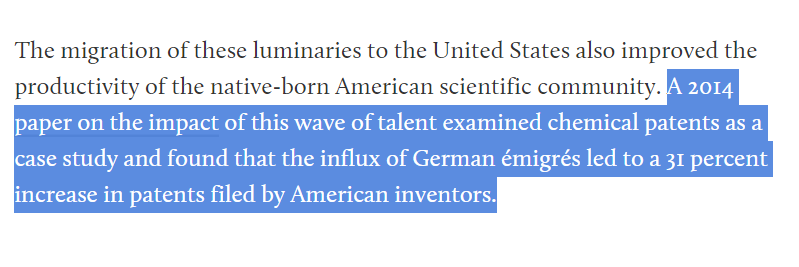
In a massive own-goal, 1930s Nazi Germany dismissed ~15% of the physicists who made up a stunning 64% (!) of their physics citations.
With the Cold War looming, the US brought over ~1,600 scientists through Operation Paperclip and the Soviets ~2,500 through Operation Osoaviakhim.
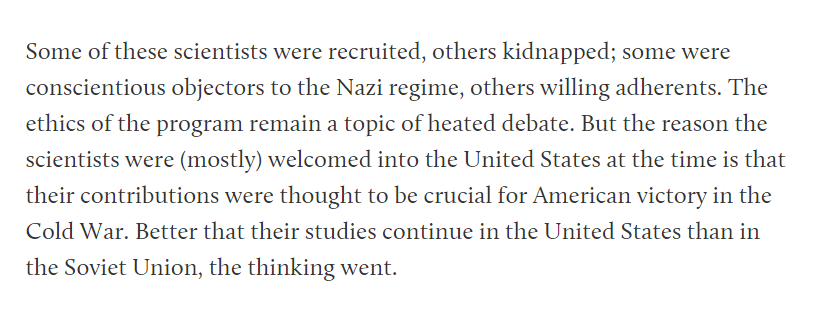
Perhaps an underrated element in the fall of the Soviet Union is how we absorbed most of their top scientific talent as faith in the regime was starting to falter.
— Caleb Watney (@calebwatney) July 6, 2020
A great 1990 NYT article on it here:https://t.co/NXBldbgoV0 pic.twitter.com/TEgytTYsJv
https://t.co/i0QMZeQaEa
Using the Nobel Prize in Physics as a rough proxy, American scientists were involved in only three of the thirty prizes awarded between 1901 to 1933.
And a huge share of these Nobel laureates have been either first- or second-generation immigrants from these three waves.
We were unquestionably the best location for scientific research and so most inventors/promising academics wanted to come here.
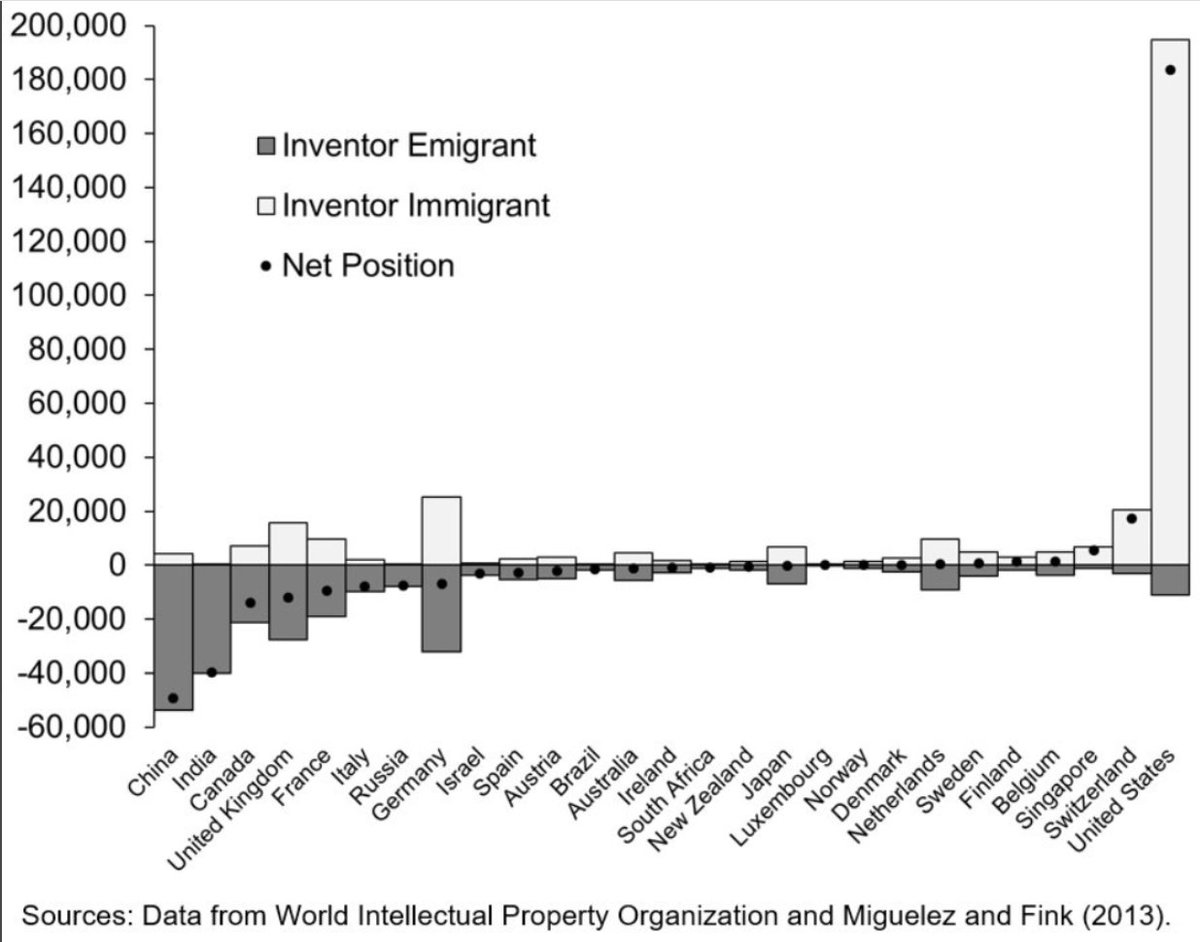
1) US immigration restrictions are growing more burdensome
2) There are better opportunities to contribute to cutting-edge research at home
https://t.co/EYSUhofYeO

Today we grudgingly let the most talented individuals apply to live here; we do not actively recruit them.
The main job of immigration agents seems to be “avoid letting in terrorists” rather than “maximize the growth potential of the United States.”
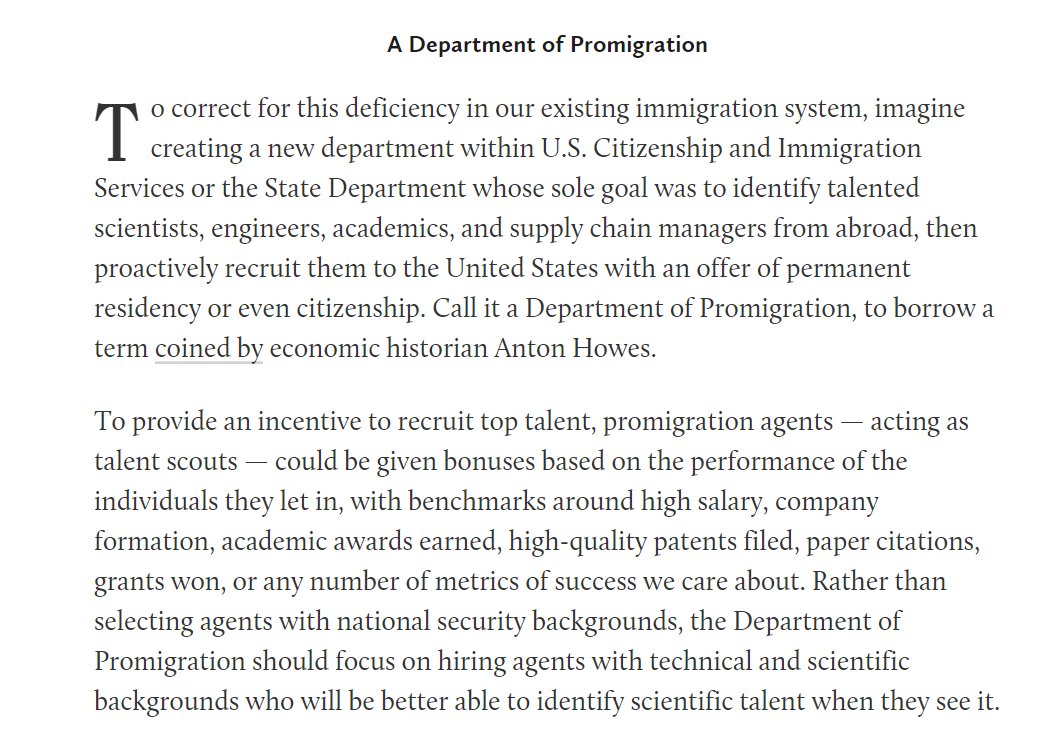
We are the R&D lab for the world and we should act like it.
https://t.co/jwGI6exill
More from Tech


You May Also Like





Margatha Natarajar murthi - Uthirakosamangai temple near Ramanathapuram,TN
#ArudraDarisanam
Unique Natarajar made of emerlad is abt 6 feet tall.
It is always covered with sandal paste.Only on Thriuvadhirai Star in month Margazhi-Nataraja can be worshipped without sandal paste.

After removing the sandal paste,day long rituals & various abhishekam will be https://t.co/e1Ye8DrNWb day Maragatha Nataraja sannandhi will be closed after anointing the murthi with fresh sandal paste.Maragatha Natarajar is covered with sandal paste throughout the year

as Emerald has scientific property of its molecules getting disturbed when exposed to light/water/sound.This is an ancient Shiva temple considered to be 3000 years old -believed to be where Bhagwan Shiva gave Veda gyaana to Parvati Devi.This temple has some stunning sculptures.
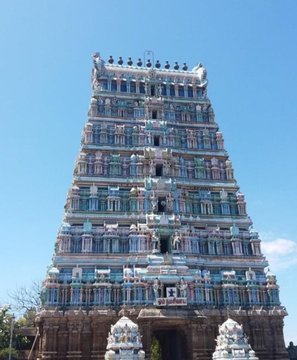
#ArudraDarisanam
Unique Natarajar made of emerlad is abt 6 feet tall.
It is always covered with sandal paste.Only on Thriuvadhirai Star in month Margazhi-Nataraja can be worshipped without sandal paste.
After removing the sandal paste,day long rituals & various abhishekam will be https://t.co/e1Ye8DrNWb day Maragatha Nataraja sannandhi will be closed after anointing the murthi with fresh sandal paste.Maragatha Natarajar is covered with sandal paste throughout the year
as Emerald has scientific property of its molecules getting disturbed when exposed to light/water/sound.This is an ancient Shiva temple considered to be 3000 years old -believed to be where Bhagwan Shiva gave Veda gyaana to Parvati Devi.This temple has some stunning sculptures.