
In some rural villages, not all tribal elders are pro-TB & some are pro-Kabul Regime (KR). (recall the son who is TB & father KR)
In this Tweet, Andrew's inquiry led me to reflect.
During my time in the Taliban, I wondered how the issue of tribal interplay will be solved.
I will provide a basic synapsis & some thoughts & examples.
Taliban often try to score political points by claiming they're not against women's education; that it's "the people" who don't want it. Why does a group that imposes its rule need "the people's" approval for anything?
— Andrew Quilty (@andrewquilty) December 30, 2020
In some rural villages, not all tribal elders are pro-TB & some are pro-Kabul Regime (KR). (recall the son who is TB & father KR)
Though the TB do sustain control, in some cases, due to the cultural context, they wont override an elder's position. Why?
Here's an example. Suppose Bobzai is a tribal elder
Though the TB maintain control over the area, if Bobzai orders his son that I don't want my daughters to leave the home,
Although, Islamically, the son is correct that his sisters should be allowed in school.
Yet, in this case, culturally, to save "face", the son may keep the dispute hidden.
Yet every discussion needs a time & place. This cultural issue is also prevalent in Kabul & other areas.
For ex., PTM with Pashtun nationalism, yet in Pashtunwali, what are women inheritance rights?
None.
Do I believe that a rural village that is being droned, bombed & air-struck non-stop, that their main focus is convincing Elders on women/men's education at this moment of time?
No. (except for me & Khalid)
Recall Mullah Umar (RH) issuing Edict 104 where one of the first times in Afghan modern history, women were not forced to marry their widow's brother as it is commanded in Pashtunwali.
For example in Logar, a tribal elder passed away & the sons refused to share the sale of the land with the sister.
She approached the Taliban & asked for help.
3 days later, her brothers apologized & gave her share of the land sale.
It really is a case by case analysis in this regard.
Explicit ruling mandates the Taliban to abide by the Quran & Sunnah.
This is similar in the U.S.
You have the orthodox Jews who solve their disputes amongst their community, refusing to go to courts.
It is non-existent in that regard as the Quran & Sunnah is the explicit Taliban policy.
Yet in some areas, an Imam could solve a dispute & may not inform the Taliban of whether he took culture into context.
Though they have control over that village, they may not interfere in some cultural customs.
Yet every society has their cultural customs to account for & requires time.
We are engaging in a remote area with Elders whose thought process cannot be forced to accept on one go.
This is where the Dawah occurs. Elders require time to adjust to the world we live in.
Rome was not built in a day.
The Taliban don't need to score political points.
The IEA maintains an Islamic system at its core based on the Quran & Sunnah.
We have been working to resolve these fringe issues.
Unfort., we were invaded by 140 countries in the process, so there is a slight delay.
For many, Pashtunwali is all they know to keep going.
As mentioned some tribal elders in remote parts of Paktia/Waziristan do not see women's/men's education as a top priority.
When you read about a family that is droned or killed, even if it is 1 person.
You have to now accept the possibility, that you are now at war with that entire village.
Sometimes, they are not as educated & still follow cultural customs.
More from Society


It is simply not correct to point fingers at wind & solar energy as we try to understand the situation in TX. The system (almost) had a plan for weather (almost) like this. 1/x
It relied on very little wind energy - that was the plan. It relied on a lot of natural gas - that was the plan. It relied on all of its nuclear energy - that was the plan. 2/x
There was enough natural gas, coal and nuclear capacity installed to survive this event - it was NOT "forced out" by the wind energy expansion. It was there. 3/x
Wind, natural gas, coal and nuclear plants all failed to deliver on their expectations for long periods of time. The biggest gap was in natural gas! The generators were there, but they were not able to deliver. 4/x
It may be fair to ask why there is so much wind energy in ERCOT if we do NOT expect it to deliver during weather events like this, but that is an entirely different question - and one with a lot of great answers!! 5/x
Conservatives are using the Texas power chaos to argue against climate policy even as fossil-generated power outages dwarf the amount of renewables knocked offline during the historic deep freeze. President Biden and progressives have been slow to respond.https://t.co/UajKhptEAU
— E&E News (@EENewsUpdates) February 17, 2021
It relied on very little wind energy - that was the plan. It relied on a lot of natural gas - that was the plan. It relied on all of its nuclear energy - that was the plan. 2/x
There was enough natural gas, coal and nuclear capacity installed to survive this event - it was NOT "forced out" by the wind energy expansion. It was there. 3/x
Wind, natural gas, coal and nuclear plants all failed to deliver on their expectations for long periods of time. The biggest gap was in natural gas! The generators were there, but they were not able to deliver. 4/x
It may be fair to ask why there is so much wind energy in ERCOT if we do NOT expect it to deliver during weather events like this, but that is an entirely different question - and one with a lot of great answers!! 5/x



You May Also Like








🌿𝑻𝒉𝒆 𝒔𝒕𝒐𝒓𝒚 𝒐𝒇 𝒂 𝑺𝒕𝒂𝒓 : 𝑫𝒉𝒓𝒖𝒗𝒂 & 𝑽𝒊𝒔𝒉𝒏𝒖
Once upon a time there was a Raja named Uttānapāda born of Svayambhuva Manu,1st man on earth.He had 2 beautiful wives - Suniti & Suruchi & two sons were born of them Dhruva & Uttama respectively.
#talesofkrishna https://t.co/E85MTPkF9W
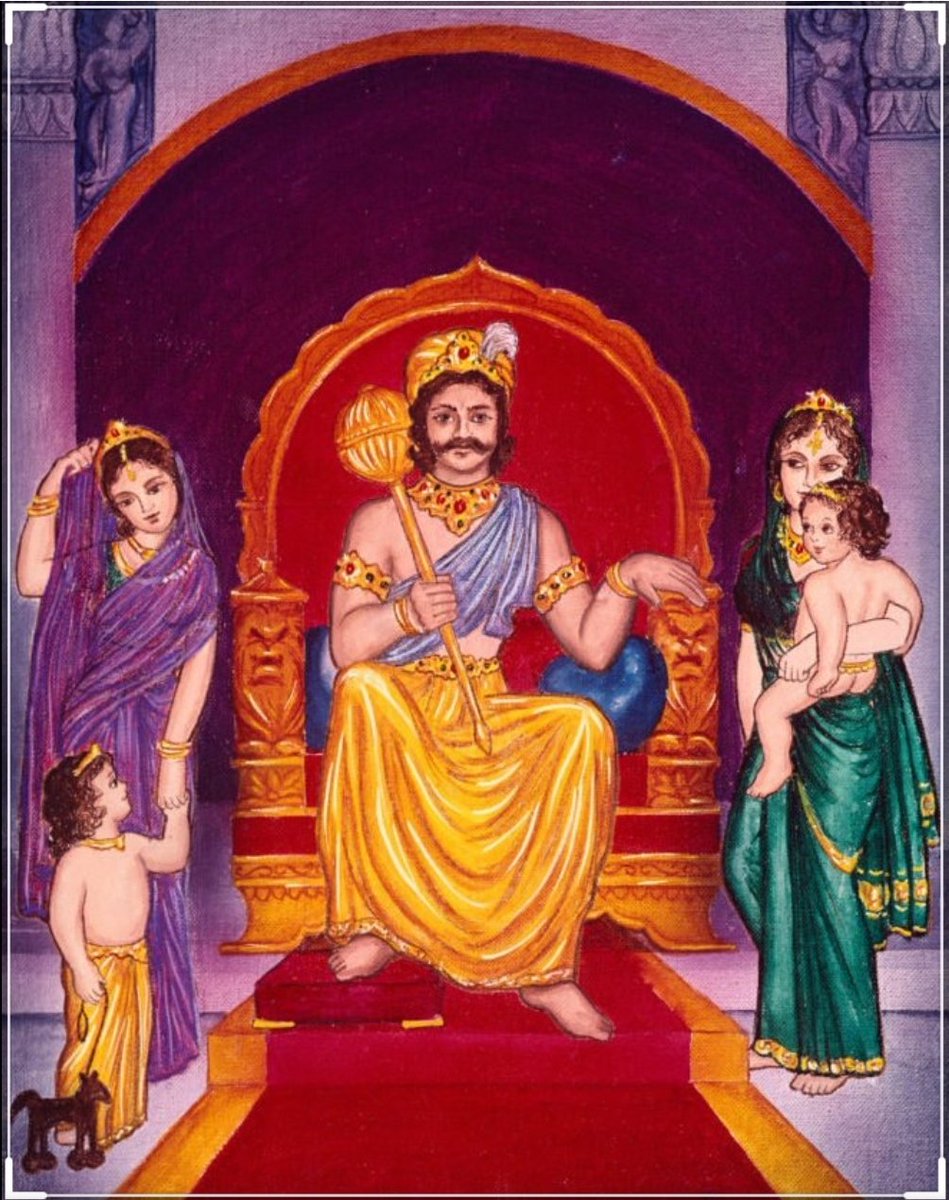
Now Suniti was the daughter of a tribal chief while Suruchi was the daughter of a rich king. Hence Suruchi was always favored the most by Raja while Suniti was ignored. But while Suniti was gentle & kind hearted by nature Suruchi was venomous inside.
#KrishnaLeela
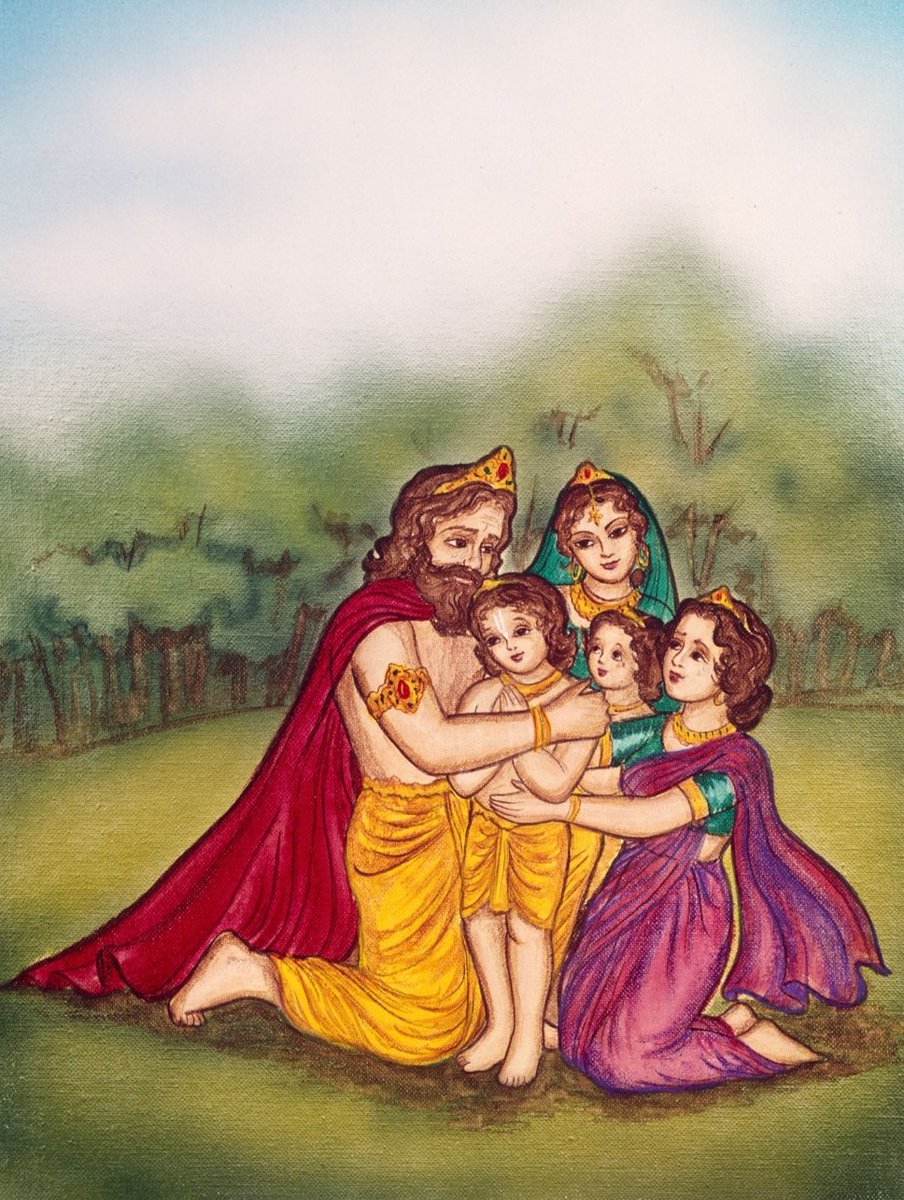
The story is of a time when ideally the eldest son of the king becomes the heir to the throne. Hence the sinhasan of the Raja belonged to Dhruva.This is why Suruchi who was the 2nd wife nourished poison in her heart for Dhruva as she knew her son will never get the throne.
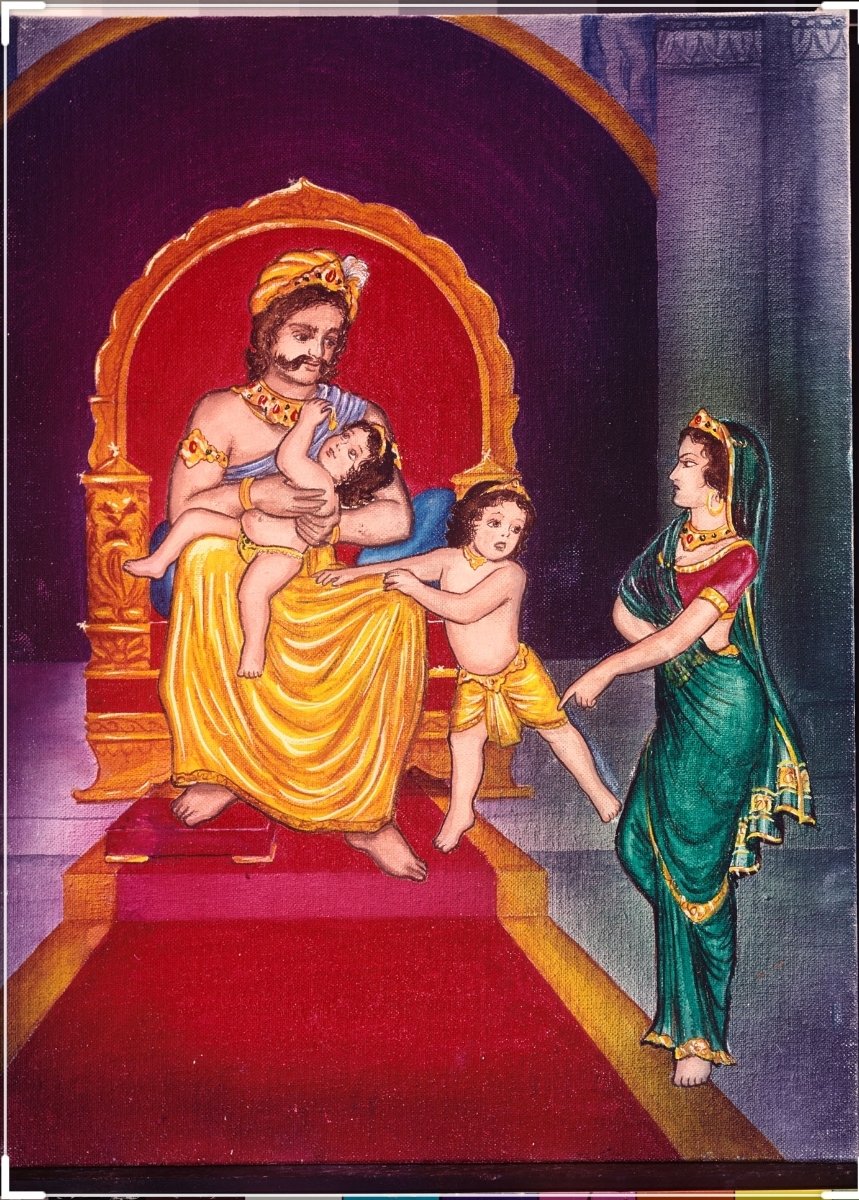
One day when Dhruva was just 5 years old he went on to sit on his father's lap. Suruchi, the jealous queen, got enraged and shoved him away from Raja as she never wanted Raja to shower Dhruva with his fatherly affection.
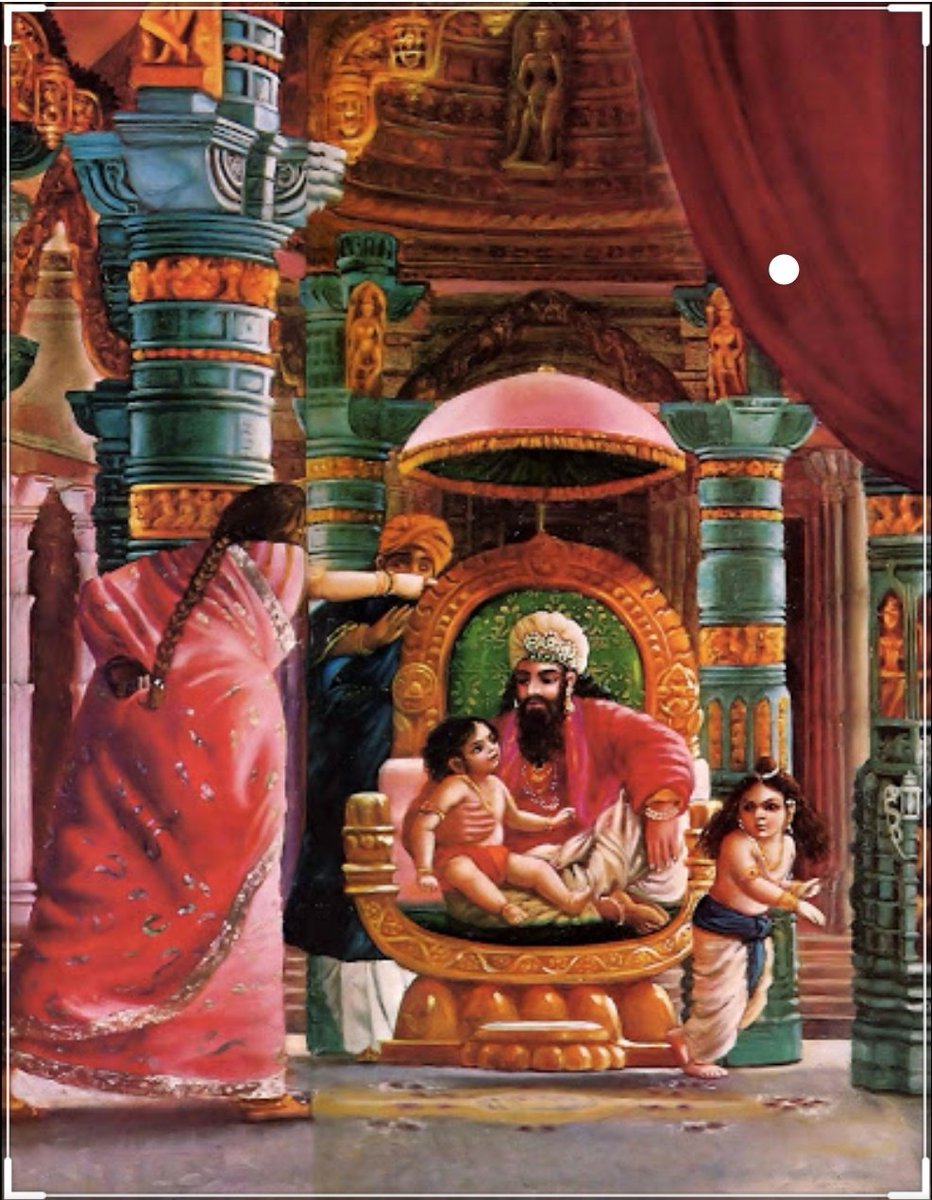
Dhruva protested questioning his step mother "why can't i sit on my own father's lap?" A furious Suruchi berated him saying "only God can allow him that privilege. Go ask him"
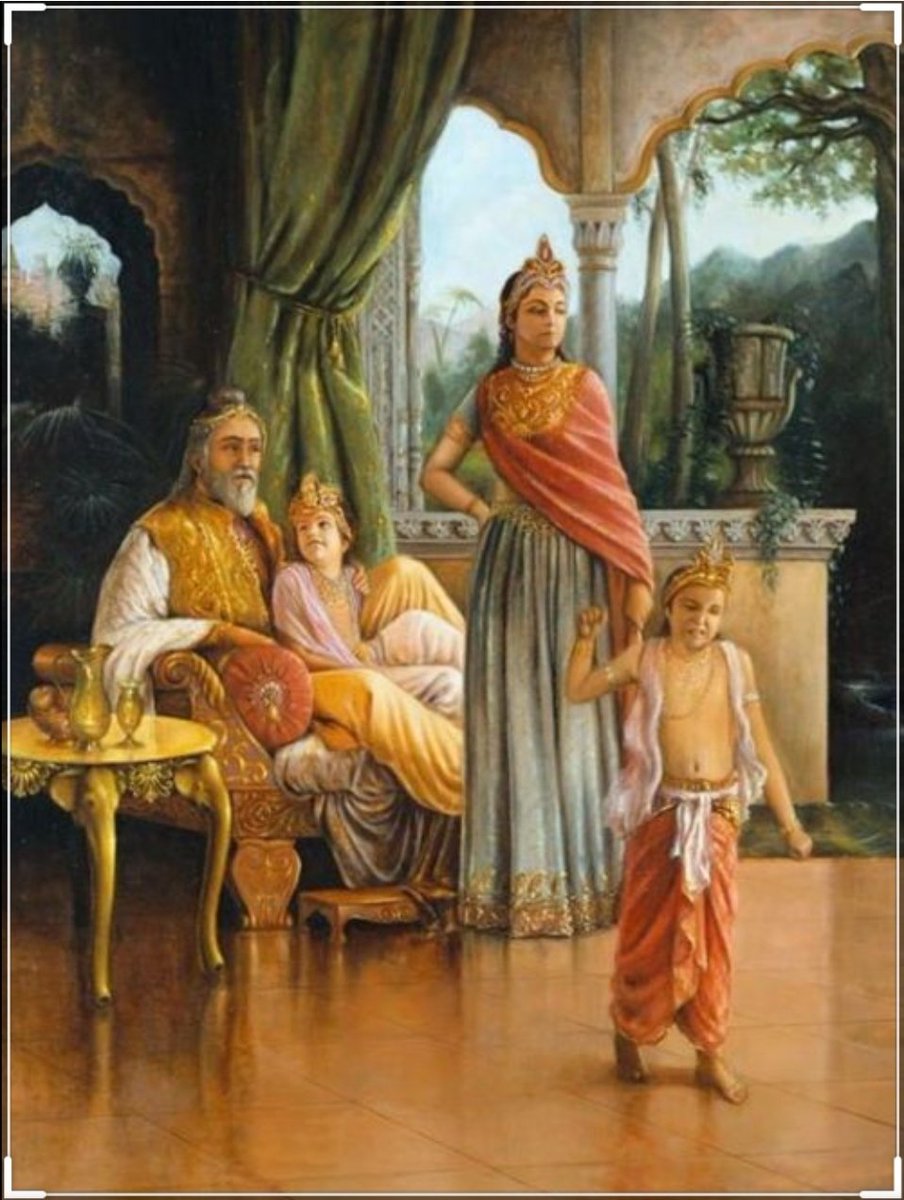
Once upon a time there was a Raja named Uttānapāda born of Svayambhuva Manu,1st man on earth.He had 2 beautiful wives - Suniti & Suruchi & two sons were born of them Dhruva & Uttama respectively.
#talesofkrishna https://t.co/E85MTPkF9W
Prabhu says i reside in the heart of my bhakt.
— Right Singh (@rightwingchora) December 21, 2020
Guess the event. pic.twitter.com/yFUmbfe5KL
Now Suniti was the daughter of a tribal chief while Suruchi was the daughter of a rich king. Hence Suruchi was always favored the most by Raja while Suniti was ignored. But while Suniti was gentle & kind hearted by nature Suruchi was venomous inside.
#KrishnaLeela
The story is of a time when ideally the eldest son of the king becomes the heir to the throne. Hence the sinhasan of the Raja belonged to Dhruva.This is why Suruchi who was the 2nd wife nourished poison in her heart for Dhruva as she knew her son will never get the throne.
One day when Dhruva was just 5 years old he went on to sit on his father's lap. Suruchi, the jealous queen, got enraged and shoved him away from Raja as she never wanted Raja to shower Dhruva with his fatherly affection.
Dhruva protested questioning his step mother "why can't i sit on my own father's lap?" A furious Suruchi berated him saying "only God can allow him that privilege. Go ask him"

1/x Fort Detrick History
Mr. Patrick, one of the chief scientists at the Army Biological Warfare Laboratories at Fort Detrick in Frederick, Md., held five classified US patents for the process of weaponizing anthrax.
2/x
Under Mr. Patrick’s direction, scientists at Fort Detrick developed a tularemia agent that, if disseminated by airplane, could cause casualties & sickness over 1000s mi². In a 10,000 mi² range, it had 90% casualty rate & 50% fatality rate

3/x His team explored Q fever, plague, & Venezuelan equine encephalitis, testing more than 20 anthrax strains to discern most lethal variety. Fort Detrick scientists used aerosol spray systems inside fountain pens, walking sticks, light bulbs, & even in 1953 Mercury exhaust pipes

4/x After retiring in 1986, Mr. Patrick remained one of the world’s foremost specialists on biological warfare & was a consultant to the CIA, FBI, & US military. He debriefed Soviet defector Ken Alibek, the deputy chief of the Soviet biowarfare program
https://t.co/sHqSaTSqtB
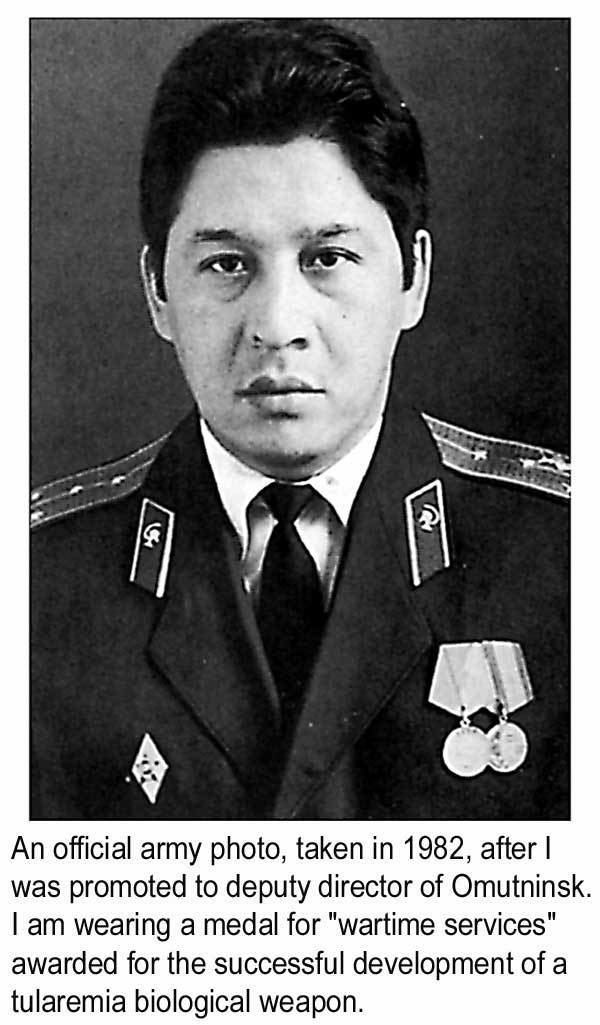
5/x Back in Time
In 1949 the Army created a small team of chemists at "Camp Detrick" called Special Operations Division. Its assignment was to find military uses for toxic bacteria. The coercive use of toxins was a new field, which fascinated Allen Dulles, later head of the CIA

Mr. Patrick, one of the chief scientists at the Army Biological Warfare Laboratories at Fort Detrick in Frederick, Md., held five classified US patents for the process of weaponizing anthrax.
2/x
Under Mr. Patrick’s direction, scientists at Fort Detrick developed a tularemia agent that, if disseminated by airplane, could cause casualties & sickness over 1000s mi². In a 10,000 mi² range, it had 90% casualty rate & 50% fatality rate
3/x His team explored Q fever, plague, & Venezuelan equine encephalitis, testing more than 20 anthrax strains to discern most lethal variety. Fort Detrick scientists used aerosol spray systems inside fountain pens, walking sticks, light bulbs, & even in 1953 Mercury exhaust pipes
4/x After retiring in 1986, Mr. Patrick remained one of the world’s foremost specialists on biological warfare & was a consultant to the CIA, FBI, & US military. He debriefed Soviet defector Ken Alibek, the deputy chief of the Soviet biowarfare program
https://t.co/sHqSaTSqtB
5/x Back in Time
In 1949 the Army created a small team of chemists at "Camp Detrick" called Special Operations Division. Its assignment was to find military uses for toxic bacteria. The coercive use of toxins was a new field, which fascinated Allen Dulles, later head of the CIA