(1/19) @philvischer & @SkyeJethani, I saw your video that questions whether overturning Roe is the key to reducing abortion.
Glad you're interested in the data. Evidence from the past 40 yrs shows electing pro-life candidates has helped reduce the U.S. abortion rate by over 50%
-Public funding limits on abortion
-Parental involvement laws
-Informed consent laws
-Waiting periods
-Partial-birth abortion bans
Meanwhile, judges appointed by Democratic Presidents almost always vote to strike down these common-sense, life affirming, pro-life laws.
https://t.co/rGI1Zj6ECU
There is a body of research which shows that limits on taxpayer funding of abortion reduce abortion rates.
https://t.co/wrV3xj8n5M
Sure, abortions were taking place before Roe v. Wade.
However, the evidence clearly shows that Roe v. Wade dramatically increased the abortion rate in the United States.
By 1980 -- just seven years after Roe - - there were almost 1.3 million abortions.
This is an increase of over 121% in just eight years!
A big reason why Delaware's abortion rate dropped 37% between 2014 and 2017 is that in 2016 an abortion facility owned by infamous abortionist Stephen Chase Brigham was shut down.
However, that is again because Kermit Gosnell's abortion clinic closed in 2011 and the Wilmington, DE Planned Parenthood closed in 2013.
On the other hand, there are plenty of good studies which show that various pro-life laws reduce the incidence of abortion.
There has been a long-term, durable decline in the U.S. abortion rate since 1980 that has persisted through both Democratic and Republican Presidential administrations.
As such, there was an increase in the number of state-level pro-life laws. Many of these laws were upheld by judges appointed by Republican Presidents.
It is likely because Planned Parenthood was simply getting more reimbursements from state Medicaid programs.
This shows the pro-life educational, service, and, yes, legislative efforts have all been effective at reducing the incidence of abortion.
More from Society


We finally have the U.S. Citizenship Act Bill Text! I'm going to go through some portions of the bill right now and highlight some of the major changes and improvements that it would make to our immigration system.
Thread:
First the Bill makes a series of promises changes to the way we talk about immigrants and immigration law.
Gone would be the term "alien" and in its place is "noncitizen."
Also gone would be the term "alienage," replaced with "noncitizenship."
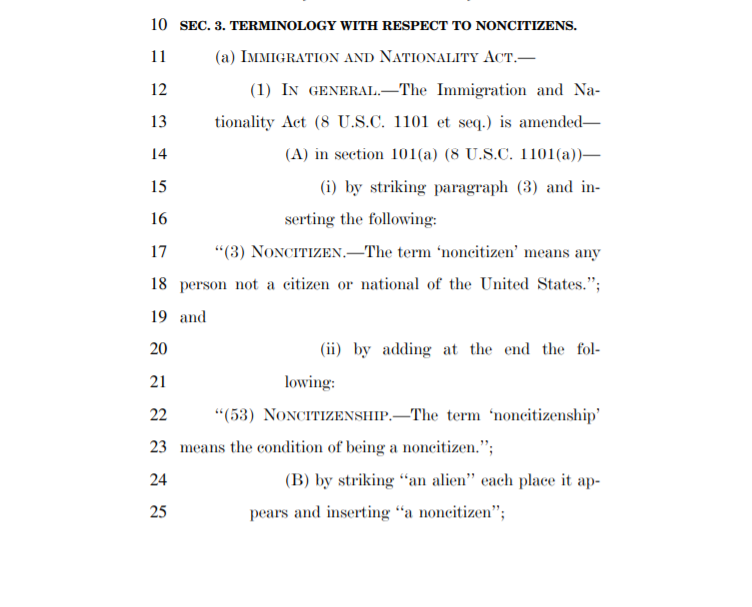
Now we get to the "earned path to citizenship" for all undocumented immigrants present in the United States on January 1, 2021.
Under this bill, anyone who satisfies the eligibility criteria for a new "lawful prospective immigrant status" can come out of the shadows.
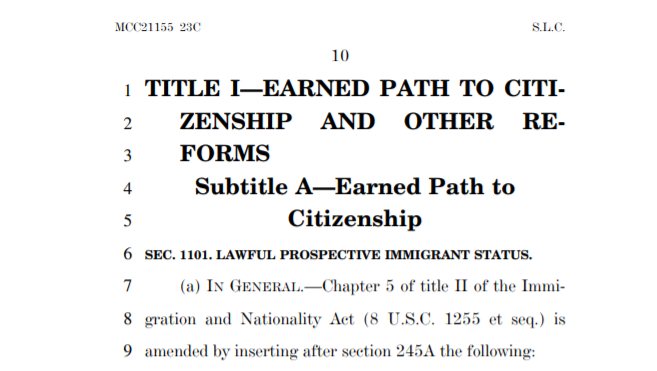
So, what are the eligibility criteria for becoming a "lawful prospective immigrant status"? Those are in a new INA 245G and include:
- Payment of the appropriate fees
- Continuous presence after January 1, 2021
- Not having certain criminal record (but there's a waiver)
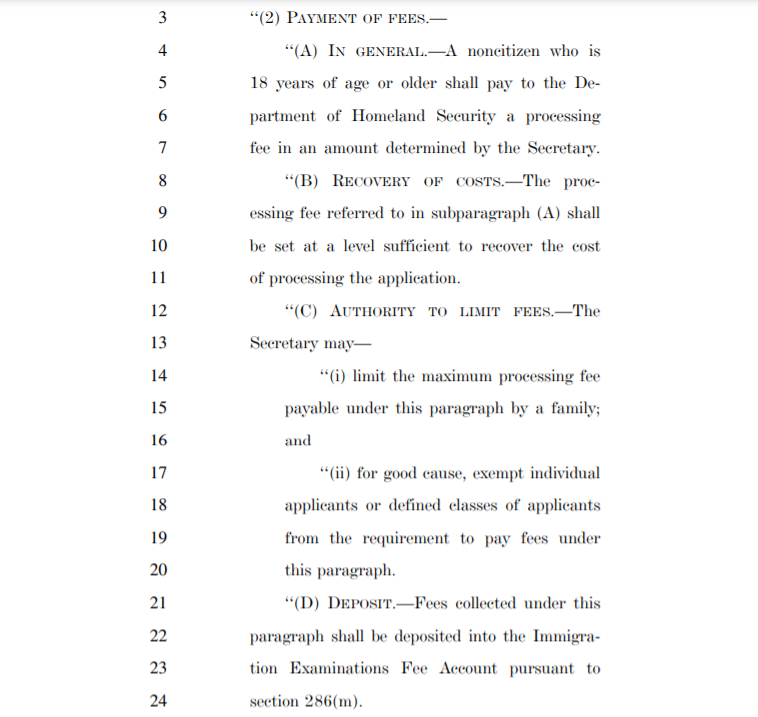
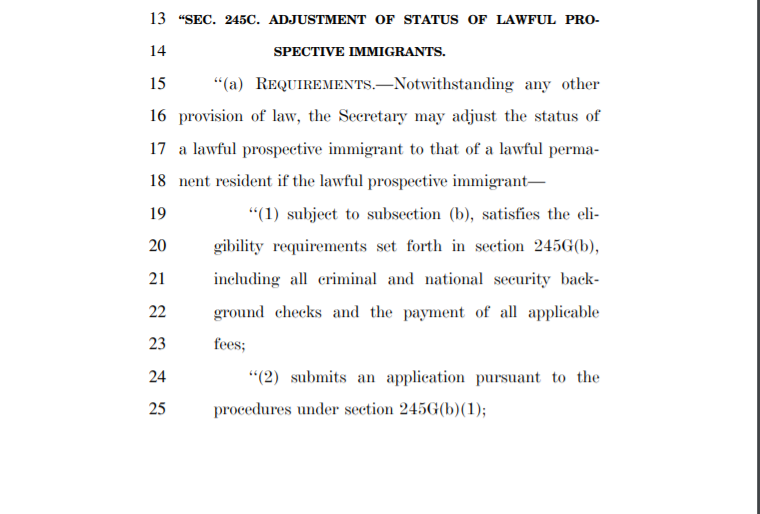
After a person has been in "lawful prospective immigrant status" for at least 5 years, they can apply for a green card, so long as they still pass background checks and have paid back any taxes they are required to do so by law.
However! Some groups don't have to wait 5 years.
Thread:
The immigration bill text is out!
— Nicole Narea (@nicolenarea) February 18, 2021
Senate version: https://t.co/aJUmtVW6Ir
House version: https://t.co/JMKjQaDi04
Excuse me while I go at this with a highlighter.
First the Bill makes a series of promises changes to the way we talk about immigrants and immigration law.
Gone would be the term "alien" and in its place is "noncitizen."
Also gone would be the term "alienage," replaced with "noncitizenship."
Now we get to the "earned path to citizenship" for all undocumented immigrants present in the United States on January 1, 2021.
Under this bill, anyone who satisfies the eligibility criteria for a new "lawful prospective immigrant status" can come out of the shadows.
So, what are the eligibility criteria for becoming a "lawful prospective immigrant status"? Those are in a new INA 245G and include:
- Payment of the appropriate fees
- Continuous presence after January 1, 2021
- Not having certain criminal record (but there's a waiver)
After a person has been in "lawful prospective immigrant status" for at least 5 years, they can apply for a green card, so long as they still pass background checks and have paid back any taxes they are required to do so by law.
However! Some groups don't have to wait 5 years.