
Recently heard the podcast by @sikhyaent on Saravana Bhavan founder P Rajagopal, who stalked the young daughter of an employee & had her husband killed. Observations: the podcast's title ('Dosa King') glorifies PR, the script trivialises his crime, calling it a mere "scandal"
https://t.co/MabYSa3U7r
— Vasanthi Hariprakash (@vasanthihari) December 12, 2020
You may have relished dosa at a Saravana Bhavan restaurant in India or outside but do you know the sensational story of its founder P Rajagopal? Happy to debut as narrator for Dosa King, 8part podcast dramatized by@sikhyaent , @Spotify original. @guneetm
More from Society


Tomorrow, January 6th, MAGA chuds, Proud Boys, and white supremacists are planned to descend on Washington D.C. to contest the election. Among them will be NSC-131, a New England based neo-Nazi organization. Let's welcome them by saying hi to one of their members, Eddie Stuart!
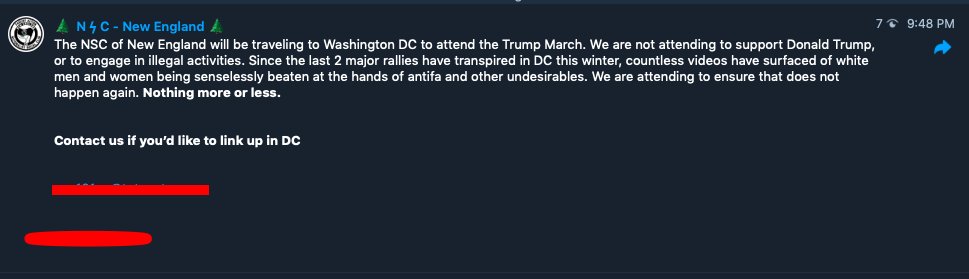
Edward Stuart, from Chester, New Hampshire, has been a member of Nationalist Social Club (NSC) since the very beginning and is a staple participant in their actions. He is known in NSC chats as "Carl Jung" and is well connected in the New England Nazi scene.
2/

NSC-131 is a neo-Nazi group that was started in Massachusetts in early 2020 by Chris Hood. You can learn more about NSC and it's members in these threads:
Eddie describes his ideology as "Esoteric Hitlerism" which is an occult form of Nazism that literally worships Adolf Hitler as a god, or, specifically, as an incarnation of the Hindu God Vishnu. Here is Ed holding the RigVeda with some of his occult Nazi pals. Interesting Ed!
4/
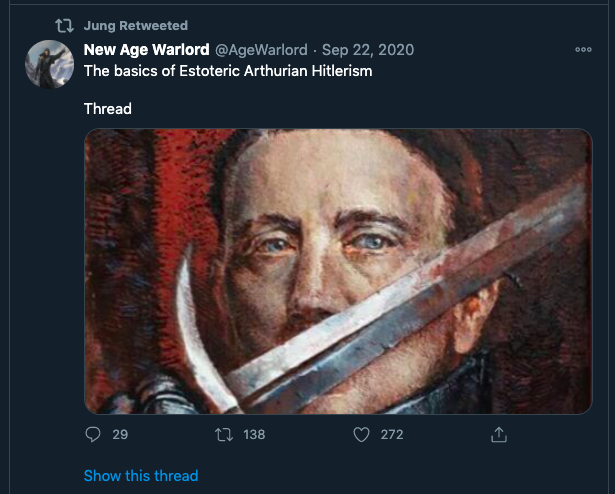
Much of this ideological insight was gained from Eddie's Twitter, where he originally used his "Carl Jung" persona and reposts explicit neo-fascist content and racist memes. In one edited picture, Eddie can be seen at an NSC event in late June 2020 holding a Nazi Sonnenrad flag
5
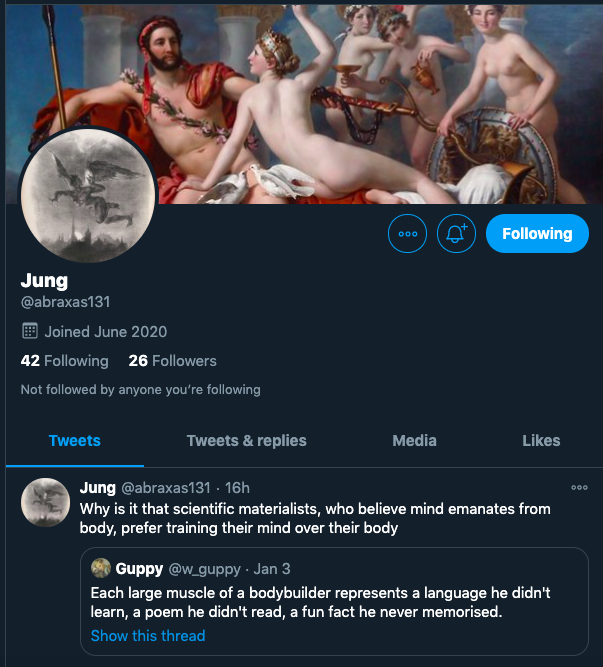
Edward Stuart, from Chester, New Hampshire, has been a member of Nationalist Social Club (NSC) since the very beginning and is a staple participant in their actions. He is known in NSC chats as "Carl Jung" and is well connected in the New England Nazi scene.
2/
NSC-131 is a neo-Nazi group that was started in Massachusetts in early 2020 by Chris Hood. You can learn more about NSC and it's members in these threads:
1/ Let\u2019s talk about a III%er turned Proud Boy turned Resist Marxism turned Patriot Front turned The Base affiliate.
— AntiFash Gordon (@AntiFashGordon) April 10, 2020
He now runs a new crew, the National Socialist Club, based on football hooliganism.\u2070\u2070
Some of you already know him.\u2070\u2070
His name is Chris Hood, of Boston, MA. pic.twitter.com/nXAxWugHcu
Eddie describes his ideology as "Esoteric Hitlerism" which is an occult form of Nazism that literally worships Adolf Hitler as a god, or, specifically, as an incarnation of the Hindu God Vishnu. Here is Ed holding the RigVeda with some of his occult Nazi pals. Interesting Ed!
4/
Much of this ideological insight was gained from Eddie's Twitter, where he originally used his "Carl Jung" persona and reposts explicit neo-fascist content and racist memes. In one edited picture, Eddie can be seen at an NSC event in late June 2020 holding a Nazi Sonnenrad flag
5




Imagine if Christians actually had to live according to their Bibles.
Imagine if Christians actually sacrificed themselves for the good of those they considered their enemies, with no thought of any recompense or reward, but only to honor the essential humanity of all people.
Imagine if Christians sold all their possessions and gave it to the poor.
Imagine if they relentlessly stood up for the widow, the orphan, and the foreigner.
Imagine if they worshipped a God whose response to political power was to reject it.
Or cancelled all debt owed them?
Imagine if the primary orientation of Christians was what others needed, not what they deserved.
Imagine Christians with no interest in protecting what they had.
Imagine Christians who made room for other beliefs, and honored the truths they found there.
Imagine Christians who saved their forgiveness and mercy for others, rather than saving it for themselves.
Whose empathy went first to the abused, not the abuser.
Who didn't see tax as theft; who didn't need to control distribution of public good to the deserving.
"If they start canceling these American presidents, they're gonna come after Bible characters next. Mark my words" -- Fox News "news side" host Bill Hemmer pic.twitter.com/qTPV0NERv8
— Aaron Rupar (@atrupar) February 19, 2021
Imagine if Christians actually sacrificed themselves for the good of those they considered their enemies, with no thought of any recompense or reward, but only to honor the essential humanity of all people.
Imagine if Christians sold all their possessions and gave it to the poor.
Imagine if they relentlessly stood up for the widow, the orphan, and the foreigner.
Imagine if they worshipped a God whose response to political power was to reject it.
Or cancelled all debt owed them?
Imagine if the primary orientation of Christians was what others needed, not what they deserved.
Imagine Christians with no interest in protecting what they had.
Imagine Christians who made room for other beliefs, and honored the truths they found there.
Imagine Christians who saved their forgiveness and mercy for others, rather than saving it for themselves.
Whose empathy went first to the abused, not the abuser.
Who didn't see tax as theft; who didn't need to control distribution of public good to the deserving.
You May Also Like


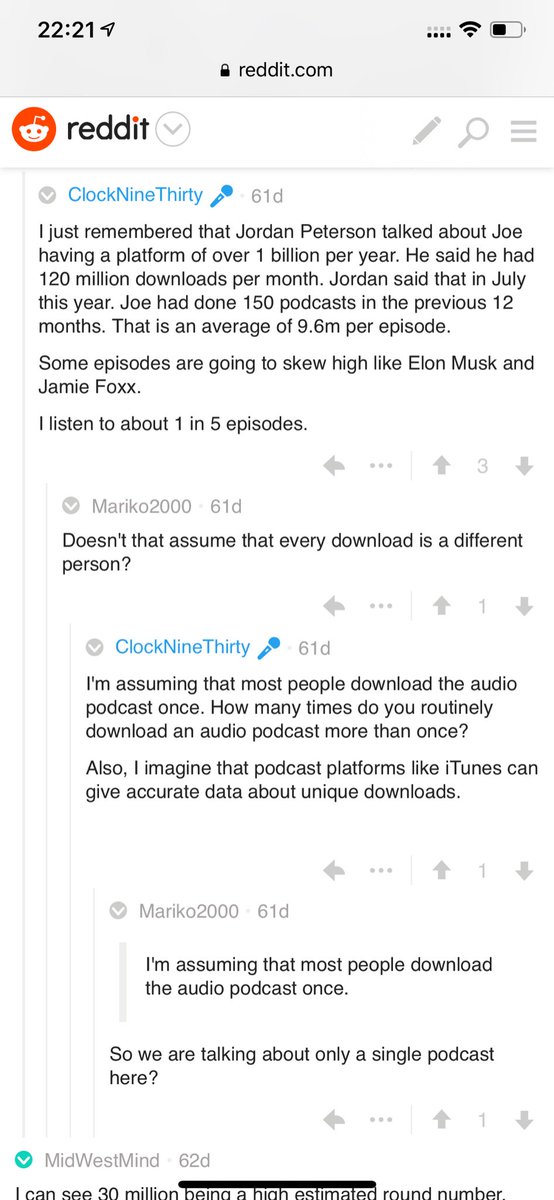
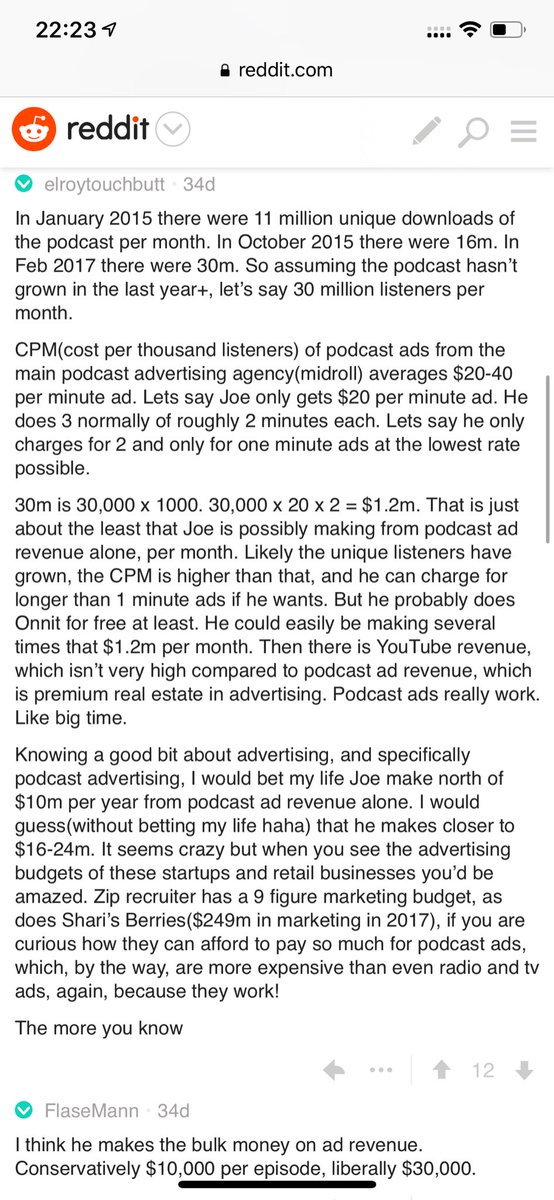
Joe Rogan's podcast is now is listened to 1.5+ billion times per year at around $50-100M/year revenue.
Independent and 100% owned by Joe, no networks, no middle men and a 100M+ people audience.
👏
https://t.co/RywAiBxA3s
Joe is the #1 / #2 podcast (depends per week) of all podcasts
120 million plays per month source https://t.co/k7L1LfDdcM
https://t.co/aGcYnVDpMu
Independent and 100% owned by Joe, no networks, no middle men and a 100M+ people audience.
👏
https://t.co/RywAiBxA3s
Joe is the #1 / #2 podcast (depends per week) of all podcasts
120 million plays per month source https://t.co/k7L1LfDdcM
https://t.co/aGcYnVDpMu

