I woke up this morning really pissed off that I had to write this thread because a senior guy who doesn’t like me very much just happened to write this article about things I was tweeting about and in the process downplayed homophobia and got the story wrong 😡
So let me be really clear: a lot of astronomers believe that new evidence has been uncovered that James Webb has been unfairly maligned as a homophobe. The evidence actually shows:
— \U0001f1e7\U0001f1e7 Ethereal Bisexual Chanda Prescod-Weinstein (@IBJIYONGI) January 25, 2021
- he wasn\u2019t the first homophobe (shock)
- after 1950 he knew about it, was in charge, did nothing
- justify historic homophobia
- attack a junior queer Black woman professor for being angry about homophobia because ...he doesn’t like her
More from Society


Tomorrow, January 6th, MAGA chuds, Proud Boys, and white supremacists are planned to descend on Washington D.C. to contest the election. Among them will be NSC-131, a New England based neo-Nazi organization. Let's welcome them by saying hi to one of their members, Eddie Stuart!
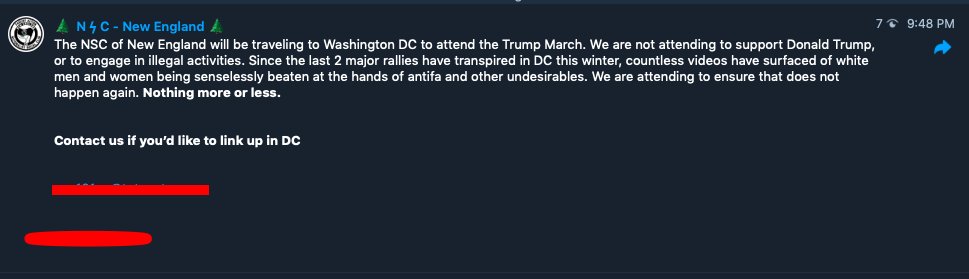
Edward Stuart, from Chester, New Hampshire, has been a member of Nationalist Social Club (NSC) since the very beginning and is a staple participant in their actions. He is known in NSC chats as "Carl Jung" and is well connected in the New England Nazi scene.
2/

NSC-131 is a neo-Nazi group that was started in Massachusetts in early 2020 by Chris Hood. You can learn more about NSC and it's members in these threads:
Eddie describes his ideology as "Esoteric Hitlerism" which is an occult form of Nazism that literally worships Adolf Hitler as a god, or, specifically, as an incarnation of the Hindu God Vishnu. Here is Ed holding the RigVeda with some of his occult Nazi pals. Interesting Ed!
4/
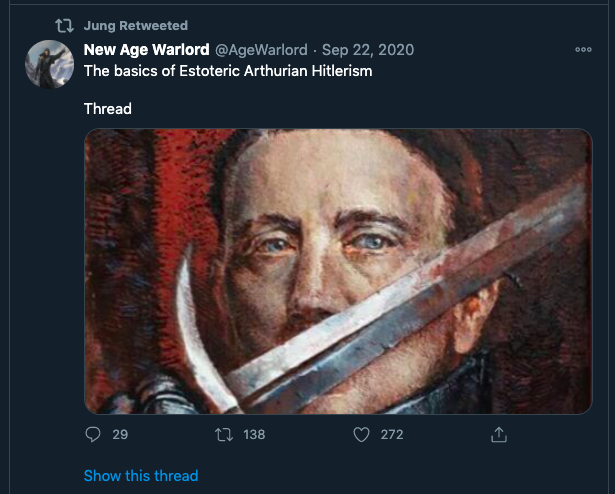
Much of this ideological insight was gained from Eddie's Twitter, where he originally used his "Carl Jung" persona and reposts explicit neo-fascist content and racist memes. In one edited picture, Eddie can be seen at an NSC event in late June 2020 holding a Nazi Sonnenrad flag
5
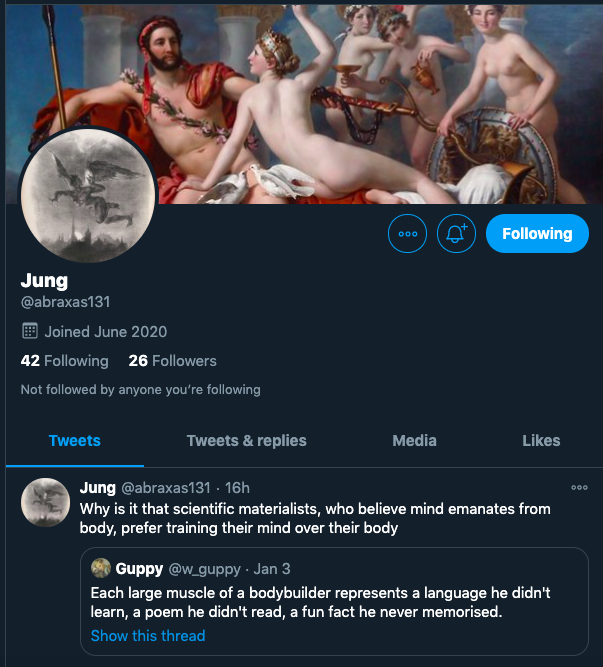
Edward Stuart, from Chester, New Hampshire, has been a member of Nationalist Social Club (NSC) since the very beginning and is a staple participant in their actions. He is known in NSC chats as "Carl Jung" and is well connected in the New England Nazi scene.
2/
NSC-131 is a neo-Nazi group that was started in Massachusetts in early 2020 by Chris Hood. You can learn more about NSC and it's members in these threads:
1/ Let\u2019s talk about a III%er turned Proud Boy turned Resist Marxism turned Patriot Front turned The Base affiliate.
— AntiFash Gordon (@AntiFashGordon) April 10, 2020
He now runs a new crew, the National Socialist Club, based on football hooliganism.\u2070\u2070
Some of you already know him.\u2070\u2070
His name is Chris Hood, of Boston, MA. pic.twitter.com/nXAxWugHcu
Eddie describes his ideology as "Esoteric Hitlerism" which is an occult form of Nazism that literally worships Adolf Hitler as a god, or, specifically, as an incarnation of the Hindu God Vishnu. Here is Ed holding the RigVeda with some of his occult Nazi pals. Interesting Ed!
4/
Much of this ideological insight was gained from Eddie's Twitter, where he originally used his "Carl Jung" persona and reposts explicit neo-fascist content and racist memes. In one edited picture, Eddie can be seen at an NSC event in late June 2020 holding a Nazi Sonnenrad flag
5